“It is not enough to know your enemy. You must know yourself.”
— Thrawn reflecting on his strategic philosophy.

Timothy Zahn (2017)
Genre
Fantasy / Science Fiction
Reading Time
9-11 hours
Key Themes
See below
Sign in to track this book
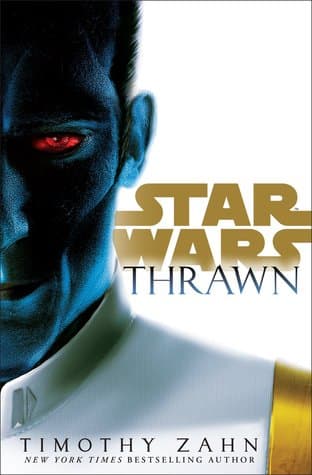
Exiled from his own people, the art-loving alien Thrawn outmaneuvers rivals and rebels, rising through the xenophobic Imperial ranks with strategic brilliance to become the Empire's most dangerous weapon.
Imperial Cadet Eli Vanto, on the Outer Rim patrol vessel 'Blood Crow,' finds a blue-skinned alien on the planet Moksha. This alien, a Chiss male named Thrawn, says he was exiled by his people. Despite initial suspicion, Thrawn's quick grasp of Basic and his observations about the Imperial patrol's tactics impress Commander Karyn Faro. Thrawn deduces their patrol patterns and identifies a weakness in their strategy. Recognizing his intellect, Faro reports the discovery, leading to Thrawn being brought before higher Imperial authorities, including Grand Moff Wilhuff Tarkin and Emperor Palpatine, who sees potential in him.
Emperor Palpatine, interested by Thrawn's claims and strategic mind, gives him a commission in the Imperial Navy. Eli Vanto is assigned as Thrawn's aide and translator, a role he initially dislikes but accepts as he sees Thrawn's brilliance. Thrawn's unusual methods and quick problem-solving skills make him a standout at the Academy, though they also anger some prejudiced instructors and cadets. He consistently outmaneuvers his peers in simulations and exercises, often using psychological warfare and understanding opponents' culture and art to predict their actions. His rise through the ranks is swift, marked by successful, if unorthodox, operations.
Thrawn and Vanto are sent on various missions, often tracking smugglers and pirates in the Outer Rim. Thrawn's approach is never direct; he studies the art and culture of the species involved, deducing their motivations and likely actions. For instance, he deciphers the patterns of a smuggling ring led by Nightswan, who is later revealed to be a former Imperial officer. During these investigations, Thrawn often clashes with Imperial protocols and the rigid thinking of his superiors, including Governor Arihnda Pryce, who is trying to secure her position and influence on Lothal. Thrawn's successes, however, cannot be ignored, even as his methods cause friction, subtly undermining Pryce's authority while aiding Imperial stability.
Thrawn continues pursuing Nightswan, realizing that the smuggler is not just a criminal but an intelligent and organized strategist with contacts and resources. Through careful analysis of cargo manifests, hyperspace routes, and artistic styles of criminal organizations, Thrawn pieces together Nightswan's plan. He discovers that Nightswan is orchestrating attacks and disruptions to destabilize key Imperial sectors. Thrawn's ability to see connections where others see chaos allows him to anticipate Nightswan's moves, leading to successful intercepts and capture of operatives. This prolonged engagement becomes a cat-and-mouse game between two brilliant minds.
Governor Arihnda Pryce, still trying to consolidate power on Lothal, faces a threat to a mining operation important to her influence. The threat is a coordinated attack, secretly planned by Nightswan. Thrawn, promoted to Captain, arrives on Lothal and, despite Pryce's initial reluctance to trust his methods, takes command. He quickly analyzes the terrain, the enemy's likely attack paths, and the psychological profile of the insurgents. Using unusual tactics and a deep understanding of logistics, Thrawn repels the attack and turns the tables on the aggressors, securing the mining operation and further embarrassing Pryce, though she benefits from his success. This victory boosts his standing in the Imperial hierarchy.
After a long chase and strategic maneuvers, Thrawn corners Nightswan. During their confrontation, Nightswan's true identity is revealed: Commander Nevil Cygni, a former Imperial officer who defected after becoming unhappy with the Empire's methods and its treatment of the Outer Rim. Nightswan explains his actions were not to destroy the Empire but to expose its weaknesses and force it to change its policies, especially concerning resource extraction and local governance. He believed that creating controlled chaos could highlight the Empire's weaknesses and provoke a more just response, a philosophy Thrawn understands, if not condones.
Instead of immediately arresting or eliminating Nightswan, Thrawn discusses the nature of order, chaos, and effective ways to achieve long-term stability with him. Thrawn listens to Nightswan's perspective, appreciating his strategic mind and understanding of the Outer Rim's complexities. Thrawn reveals his own long-term objectives: to protect the Chiss Ascendancy from a looming, unknown threat by strengthening the Galactic Empire as a buffer. This goal aligns in some ways with Nightswan's desire for a more stable galaxy. This conversation suggests a potential, if uneasy, alliance or mutual respect between the two strategists.
While Thrawn is busy with Nightswan, Governor Pryce continues to scheme, seeing Thrawn's rising influence as a threat to her aspirations. She uses her political connections and manipulates events to solidify her position on Lothal and gain more power. Pryce's ambition leads her to make decisions that, while benefiting her, often go against the Empire's broader strategic interests. She tries to discredit Thrawn by highlighting his unconventional methods and alien heritage, hoping to turn Imperial high command against him. Her political dealings become a significant internal obstacle for Thrawn, who must fight external threats and navigate Imperial bureaucracy and personal rivalries.
Despite Pryce's efforts, Thrawn's consistent victories and strategic insights continue to impress Emperor Palpatine and Grand Moff Tarkin. His ability to predict enemy movements, adapt to unforeseen circumstances, and achieve objectives with minimal Imperial losses is clear. The insights from his interaction with Nightswan, especially about potential future threats from beyond the known galaxy, further confirm his value. Recognizing his talent and the need for such a mind to protect the Empire, Palpatine promotes Thrawn to Grand Admiral, an unprecedented achievement for a non-human. This promotion places him among the highest levels of Imperial power.
With his new rank, Grand Admiral Thrawn begins to consolidate his power and implement his long-term strategies. Eli Vanto, now a trusted aide and fluent in Cheunh, remains by his side, having grown to understand and respect Thrawn's genius. The book ends with Thrawn focusing on a greater, unspecified threat from the Unknown Regions, the original reason for his exile and infiltration of the Empire. His ultimate goal is to understand and counter this danger, using the Empire's resources and power as a shield for his people, the Chiss Ascendancy. The stage is set for his continued service to the Empire, driven by a deeper, personal mission.
The Protagonist
From an exiled alien to a respected Grand Admiral, Thrawn navigates prejudice and politics to achieve unprecedented power within the Empire, all while pursuing a hidden agenda to protect the Chiss Ascendancy.
The Supporting
Eli transforms from an insecure, overlooked cadet into Thrawn's indispensable and highly skilled aide, learning to appreciate and contribute to Thrawn's unique strategic vision.
The Antagonist/Supporting
Pryce rises to governorship through ruthlessness and political maneuvering, but her personal ambition often blinds her to larger threats, leading to a complex, antagonistic relationship with Thrawn.
The Antagonist/Supporting
From a disillusioned Imperial to a complex insurgent leader, Nightswan challenges the Empire's authority with strategic brilliance, ultimately engaging Thrawn in a battle of wits that reveals shared ideals.
The Supporting
Tarkin observes Thrawn's rapid rise, moving from initial skepticism to becoming one of his most important patrons within the Empire.
The Supporting
Palpatine, recognizing Thrawn's unique value, facilitates his rise through the Imperial hierarchy, using him as a tool for his own designs.
The Supporting
Faro's initial decision to trust Thrawn's intellect sets in motion his entire Imperial career.
The Supporting
Savit initially obstructs Thrawn due to prejudice and adherence to protocol, but ultimately witnesses Thrawn's undeniable success.
The main theme of 'Thrawn' is the success of careful strategic planning, psychological insight, and intellectual superiority over conventional military strength. Thrawn consistently outmaneuvers opponents not by overwhelming them with firepower, but by deeply understanding their motivations, culture, and art. He predicts their moves, exploits their weaknesses, and turns their strengths against them, as seen in his dismantling of Nightswan's network or his solutions to tactical problems on Lothal. This theme shows that true power is in understanding and foresight, not just destructive capacity.
““A soldier can be trained to fight, but a strategist must be born with the ability to see beyond the obvious.””
The book explores the widespread prejudice within the human-centric Galactic Empire against non-human species. Thrawn, as a Chiss, faces constant skepticism, distrust, and veiled racism from many Imperial peers and superiors. His rapid rise is unusual, tolerated only because Palpatine and Tarkin prioritize results over species. Eli Vanto's journey also shows this, as he initially struggles with his assignment to an alien but eventually overcomes his own biases. This theme shows the challenges faced by those who are 'different' in a rigid, xenophobic system and the rare individuals who can overcome or use such biases.
““I am an alien. That is a fact. But I am also a servant of the Empire. That is a choice.””
The novel explores the political world of the Galactic Empire, where personal ambition often clashes with broader strategic goals. Governor Arihnda Pryce embodies this theme, constantly scheming to secure her own power, even if it means undermining allies or making short-sighted decisions. Thrawn himself, while seemingly not political, skillfully navigates this environment, understanding that political power is essential to achieving his long-term objectives. The dance between military command and political influence is a constant part of the story, showing how power is gained and kept within the Empire.
““Politics is not about logic. It is about power.””
Thrawn's exile from the Chiss Ascendancy is a basic part of his character and motivations. While he serves the Empire, his ultimate loyalty is to his people, whom he wants to protect from an unknown threat in the Unknown Regions. His service to the Empire is a way to get resources and knowledge. This theme explores the complexities of loyalty, sacrifice, and the lengths one will go to fulfill a greater duty, even if it means operating under false pretenses in a foreign system. Nightswan also deals with a form of self-imposed exile, driven by his duty to a better galaxy.
““To defeat an enemy, you must know them. Not simply their battle tactics, but their history, philosophy, art.””
The relationship between Thrawn and Eli Vanto is an example of mentorship and character growth. Thrawn takes Vanto under his wing, not just as a translator, but as a student, teaching him strategic thinking, cultural analysis, and observation. Vanto, initially reluctant and insecure, grows under Thrawn's guidance, developing his own strategic insights and becoming an aide. This theme shows how a strong mentor-mentee relationship can transform someone, passing down knowledge and unlocking potential, leading to the mentee's personal and professional development.
““The greatest victory is that which requires no battle.””
Thrawn's unique method of understanding and predicting opponents through their artistic and cultural expressions.
This is Thrawn's signature strategic approach. Instead of merely analyzing troop movements or weapon capabilities, Thrawn delves into the art, history, and culture of his adversaries. He believes that a species' artistic output reflects their psychological makeup, their values, their fears, and their strategic tendencies. By studying a painting, a sculpture, or even a musical piece, Thrawn can deduce an opponent's likely actions, their strengths, and their weaknesses. This device elevates warfare beyond mere combat, making it a cerebral and psychological game, and is central to every one of Thrawn's victories, such as his analysis of Nightswan's various criminal organizations.
Thrawn's status as an alien in a human-dominated Empire provides a unique, unbiased viewpoint.
Thrawn's Chiss heritage and his exile position him as an outsider within the Galactic Empire. This status, while causing prejudice, also grants him a unique perspective. He is not bound by Imperial dogma, human biases, or conventional thinking. He can see flaws and opportunities that native Imperials overlook due to their ingrained assumptions. This device allows him to challenge the status quo, employ unorthodox methods, and offer solutions that would be unthinkable to others, making him an invaluable, yet often controversial, asset to Palpatine and Tarkin. His cultural detachment enables pure, logical analysis.
The story is partially told through the eyes of a developing character, Eli Vanto, who learns from the protagonist.
Eli Vanto serves as the primary point-of-view character for much of Thrawn's early career. This narrative device allows the reader to experience Thrawn's genius through the eyes of someone initially bewildered and then increasingly awed by it. Vanto's initial skepticism and gradual understanding mirror the reader's own journey of discovery about Thrawn. His questions and internal monologues provide exposition and context, while his personal growth under Thrawn's mentorship offers a relatable human element to the otherwise calculating Chiss. This device makes Thrawn's brilliance more accessible and impactful.
The ongoing strategic duel between Thrawn and Nightswan, characterized by anticipation and counter-moves.
The prolonged conflict between Thrawn and Nightswan is framed as an elaborate chess match, where each move is carefully calculated and designed to anticipate the opponent's next action. Both strategists demonstrate remarkable foresight and an ability to think multiple steps ahead. This device builds suspense and highlights the intellectual prowess of both characters, turning the plot into a series of intricate puzzles and deductions. The 'game' is not just about physical confrontation but about outwitting the other, making every encounter a test of strategic brilliance.
“It is not enough to know your enemy. You must know yourself.”
— Thrawn reflecting on his strategic philosophy.
“The art of war is simple enough. Find out where your enemy is. Get at him as soon as you can. Strike him as hard as you can, and keep moving on.”
— Thrawn quoting a historical military figure to illustrate his tactics.
“A true victory is to make your enemy see they were wrong to oppose you in the first place. To force them to acknowledge your greatness.”
— Thrawn discussing his view of conquest and dominance.
“Fear is a tool. When the leaders project fear, you know they have lost control.”
— Thrawn analyzing the psychological aspects of leadership.
“The unknown is not to be feared. It is to be understood.”
— Thrawn encouraging exploration and analysis.
“In war, as in life, the simplest solution is often the most elegant.”
— Thrawn explaining his preference for straightforward strategies.
“To defeat an enemy, you must know them, not simply their battle tactics, but their history, philosophy, art.”
— Thrawn emphasizing the importance of cultural understanding in conflict.
“Power is not a matter of how many ships you command, but how effectively you use them.”
— Thrawn critiquing the Empire's reliance on brute force.
“The greatest weapon against an enemy is the enemy's own mind.”
— Thrawn discussing psychological warfare.
“Loyalty is a two-edged sword. It can protect you, or it can cut you down.”
— Thrawn reflecting on the complexities of allegiance within the Empire.
“Do not mistake my calm for lack of resolve. I am simply waiting for the right moment.”
— Thrawn addressing subordinates who question his patience.
“Art is a window into the soul of a people. To ignore it is to fight blind.”
— Thrawn explaining why he studies the art of alien species.
“Victory is not the end. It is merely the beginning of the next challenge.”
— Thrawn cautioning against complacency after success.
“In the chaos of battle, there is always a pattern. Find it, and you control the chaos.”
— Thrawn describing his approach to military engagements.
Ready to see how well you understood this book? Take our interactive quiz with 10 questions.

Biography coming soon.







