“The moon was always there, even when it was new, even when it was covered by clouds. It was there. It was just harder to see.”
— Miranda reflects on the moon's enduring presence despite the apocalyptic changes.

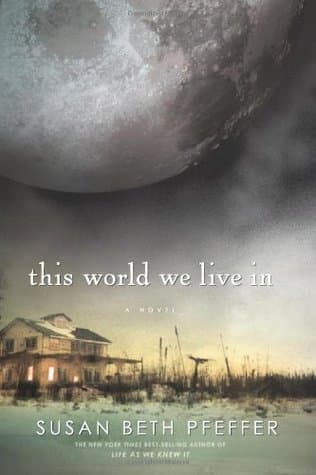
Susan Beth Pfeffer (2010)
Genre
Fantasy / Science Fiction / Young Adult / Romance
Reading Time
300 min
Key Themes
See below
Sign in to track this book
After a meteor strike pushes the moon closer to Earth, Miranda navigates a freezing, post-apocalyptic world, falling in love with a newcomer, Alex, and making a life-changing decision when a tornado threatens their survival.
One year after a meteor hit the moon and changed Earth, sixteen-year-old Miranda Evans lives with her mother, Laura, and younger brother, Matt, in their fortified Pennsylvania home. Their lives center on survival, rationing food, and dealing with extreme cold. Miranda writes in her diary about lost friends and the constant threat of hunger and sickness. Her mother, a former doctor, helps the community with medical needs, and Matt contributes to chores. Their initial shock has settled into a hard routine, but hope remains fragile.
One cold afternoon, Miranda's father, Hal, and her stepmother, Lisa, arrive at their house. They haven't seen them since before the meteor. To Miranda's surprise, they also bring a baby, Julie, and three other survivors: an elderly woman, Mrs. Nesbitt, and two teenage boys, Alex Morales and Brandon. Hal explains they barely made it from New York, using hoarded gasoline. Six new people in their already strained household immediately create tension and challenges with food and space, threatening the balance the Evans family had found.
The Evans family quickly works to make room for their guests. Hal and Lisa share stories of their difficult journey and the losses they suffered. Miranda becomes more aware of Alex, a quiet but strong and helpful boy. Despite initial awkwardness and the added strain on resources, the household begins to find a rhythm. Alex and Brandon help with chores like chopping wood and melting snow. Miranda notices Alex's kindness toward baby Julie and his respectful manner, stirring feelings she hasn't had since before the moon incident.
As weeks pass, Miranda and Alex spend more time together, often on tasks like foraging or clearing snow. They share their experiences and fears, finding comfort in each other. Miranda learns about Alex's past, his dreams of becoming a doctor, and his strong morals. Their conversations deepen their connection, and Miranda realizes her feelings for him are growing. Alex also seems to feel the same, showing subtle affection and care. Their developing romance offers a bit of warmth and hope in their otherwise difficult lives.
One evening, Alex tells Miranda about his future plans. He wants to travel south, specifically to Florida, hoping for a milder climate where he can eventually study medicine. He explains that his father, also a doctor, always stressed the importance of education. Miranda is upset by this news, realizing Alex's goals mean he will eventually leave her and her family. This revelation casts a shadow over their new relationship, as Miranda struggles to accept his firm decision to leave.
Miranda feels heartbroken and torn. She loves Alex and wants to be with him, but she also feels a strong bond to her mother and Matt, especially given their difficult situation. Leaving her family, who have already been through so much, seems impossible. She tries to convince Alex to stay and build a future with her in Pennsylvania, but he remains committed to finding a better life and pursuing his medical dreams. The tension between them grows as Miranda faces the painful choice of either following her heart and leaving her family or staying and losing Alex.
As Miranda and Alex's emotional struggle peaks, a new danger appears. A powerful tornado, unusual for their region in winter, sweeps through Howell. The family and their guests rush to the basement as the storm rages. The sounds of destruction are loud, and they emerge to find their home damaged and the surrounding area devastated. The tornado adds another difficulty to their already hard lives, destroying valuable resources and further isolating them.
After the tornado, the family assesses the damage and begins the hard work of recovery. The destruction, while terrible, also brings clarity for Miranda. Seeing how fragile life is and how important family is, she makes a decision: she will not leave her family. However, she also realizes she cannot let Alex go. Instead, she suggests a compromise: she will go south with Alex, but only if her whole family comes too. This bold move changes things, and after much thought, her mother, Laura, agrees to consider the journey, understanding Miranda's love and the chance for a better life.
With a renewed sense of purpose, the Evans family, along with Hal, Lisa, baby Julie, Mrs. Nesbitt, Alex, and Brandon, starts preparing for their big journey south. They combine their remaining resources, repair their vehicle as best they can, and carefully plan their route, knowing the trip will be dangerous. The decision to move south is a shared one, driven by the hope of finding a warmer climate, more food, and a chance to rebuild their lives. Miranda and Alex, now united, support each other, their love strengthened by their shared commitment to the future.
The journey south is as challenging as expected. They find abandoned towns, dangerous weather, and the constant threat of hunger and sickness. Gasoline is scarce, forcing them to walk long distances. They face moral dilemmas, like whether to take supplies from empty homes, and meet other desperate survivors, some hostile, some needing help they can't always give. Miranda and Alex work together, supporting young Matt and caring for baby Julie. The hardships test their resolve, but their shared goal of finding a new home keeps them moving, making their bonds as a makeshift family stronger.
The Protagonist
From a survivor resigned to a bleak future, Miranda evolves into a young woman willing to fight for love and a better life for her entire family.
The Supporting/Love Interest
Alex maintains his ambition to become a doctor but learns to integrate his personal dreams with the needs and love of his new family.
The Supporting
Laura evolves from a steadfast protector of her immediate family to a leader willing to embark on a perilous journey for a greater chance at life.
The Supporting
Matt matures from a child adapting to a new world into a resourceful young boy contributing actively to his family's survival.
The Supporting
Hal transitions from a somewhat dependent figure to a more active and supportive member of the extended family unit.
The Supporting
Lisa integrates into the Evans family, proving her resilience and becoming a valued member of the new extended family.
The Supporting
Julie's primary role is symbolic, representing the future and providing a focal point for the adults' protective instincts.
The Supporting
Mrs. Nesbitt remains a consistent figure, embodying the fragility and resilience of the older generation in a post-apocalyptic world.
The Mentioned
Brandon remains a steadfast, if less developed, member of the group, contributing to their collective survival.
The main theme is the characters' ongoing struggle to survive in a world changed by the meteor strike. This appears in their daily routines: finding food, melting snow, and fortifying their home. Hal and his group's arrival forces more changes in how they manage resources and interact. The final decision to travel south is the biggest act of adaptation, seeking a new place to improve their chances of survival. This theme is clear in Miranda's detailed diary entries about their small meals and the constant threat of hunger and illness.
“It's a strange kind of normal, this life we live now. A normal that means always being hungry, always being cold, always being afraid.”
Despite their difficult situation, love and hope are strong forces. Miranda's growing relationship with Alex provides emotional comfort and future possibilities. The love within the Evans family—Laura's dedication to her children, Miranda's care for Matt—is a key part of their resilience. Baby Julie represents innocence and new beginnings, inspiring the adults to fight for a better future. This theme is especially touching when Miranda, despite the danger, chooses to fight for her love with Alex and for her family's chance at a new life.
“Even in the darkest times, there are flickers of light. Sometimes those flickers are enough to keep you going.”
The idea of family, both by blood and by choice, is very important. The initial Evans family unit—Miranda, Laura, and Matt—shows strong bonds formed through shared hardship. The arrival of Hal, Lisa, and the others expands this definition, making them integrate new members and redefine their community. The challenges of sharing scarce resources and making group decisions highlight the complexities and strengths of this expanded family. Ultimately, Miranda's decision to ensure her entire family joins her and Alex south emphasizes that survival is a collective effort supported by family ties.
“We are a family, even if we're not all blood. We survive together, or we don't survive at all.”
The characters live with the constant shadow of loss. Miranda often thinks about friends and neighbors who died, and the world they once knew. Hal and Lisa arrive having lost almost everything and everyone in New York. The meteor strike is a global disaster, and the story acknowledges the shared sadness for a lost way of life. This theme highlights how precious what remains is and the constant threat of further loss, making every small victory and moment of connection more meaningful. The tornado's destruction further shows the ongoing nature of loss in their world.
“The world before is a ghost that haunts us, a memory of warmth and plenty that makes the present even colder.”
Miranda's personal diary entries provide intimate insight into her thoughts and the unfolding events.
The story is primarily told through Miranda's diary entries, offering a deeply personal and immediate perspective on the post-apocalyptic world. This device allows the reader to experience Miranda's fears, hopes, observations, and emotional development firsthand. It also lends authenticity to the narrative, as Miranda records the daily struggles, the small triumphs, and her evolving feelings for Alex. The diary format emphasizes the isolation of their existence and the importance of documenting their lives in a world where history is being rewritten.
The catastrophic meteor collision with the moon serves as the inciting incident and ongoing environmental threat.
The meteor striking the moon is the foundational event that reshapes the entire world. It acts as the inciting incident, plunging humanity into a struggle for survival due to climate change, lack of sunlight, and resource scarcity. This event isn't just a backstory; its ongoing effects—extreme cold, food shortages, and unpredictable weather like the tornado—are constant antagonists, driving the plot and forcing characters into difficult decisions. It establishes the high stakes and the continuous pressure under which all the characters operate.
The planned migration to a warmer climate functions as a goal and a quest for a better future.
The decision to journey south, initially Alex's ambition and later a family endeavor, serves as a major plot device. It provides a clear objective for the characters, shifting the narrative from static survival to an active quest. This journey introduces new challenges, expands the scope of the world, and forces the characters to confront external threats beyond their home. It symbolizes hope for a future beyond mere existence and acts as a catalyst for Miranda's most significant character development and her ultimate choice.
“The moon was always there, even when it was new, even when it was covered by clouds. It was there. It was just harder to see.”
— Miranda reflects on the moon's enduring presence despite the apocalyptic changes.
“We were all survivors, but some of us were more broken than others. And some of us were just plain mean.”
— Miranda observes the different ways people cope (or fail to cope) with the post-apocalyptic world.
“He said that every day was a gift, and we had to treat it like one, even if it was a gift we didn't want.”
— Matt's pragmatic philosophy on life in the aftermath of the moon's impact.
“The past was a luxury we couldn't afford to live in. The future was a dream we couldn't afford to have. All we had was now.”
— Miranda's internal monologue about the necessity of focusing on the present.
“Love didn't make the world stop turning, but it sure made it feel like it was worth turning for.”
— Miranda's thoughts on the importance of love amidst the harsh realities.
“We were all living on borrowed time, but then, weren't we always?”
— A philosophical musing from Miranda about the fragility of life, amplified by the disaster.
“Sometimes, the only way to keep going was to pretend you weren't scared.”
— Miranda's coping mechanism in the face of constant danger and uncertainty.
“Food was more than just sustenance; it was a connection to a world that was gone, a memory of comfort.”
— Miranda reflects on the emotional significance of food in a time of scarcity.
“The hardest part wasn't doing without, it was remembering what it was like to have.”
— Miranda struggles with the psychological impact of deprivation.
“Even in the darkest times, there was always a flicker of light, if you knew where to look.”
— A hopeful sentiment from Miranda about finding small joys or reasons to continue.
“We were a family, not just by blood, but by choice, by shared experience, by the sheer will to survive together.”
— Miranda's understanding of her evolving family unit.
“Nature didn't care about our plans, our hopes, our fears. It just was.”
— Miranda's realization about the indifference of the natural world to human suffering.
“He taught me that sometimes the bravest thing you can do is just keep breathing.”
— Miranda reflects on a lesson learned about simple endurance.
“The silence wasn't empty; it was full of everything we had lost, and everything we still had.”
— Miranda's perception of the pervasive quiet in the changed world.
Ready to see how well you understood this book? Take our interactive quiz with 10 questions.

Biography coming soon.







