“I know myself, but that is all.”
— Amory contemplates his self-awareness at a pivotal moment.

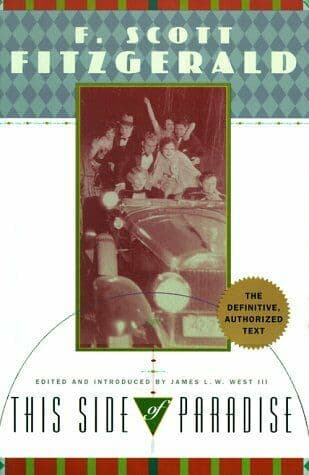
F. Scott Fitzgerald (1920)
Genre
Literary Fiction / Historical Fiction / Romance
Reading Time
360 min
Key Themes
See below
Sign in to track this book
Fitzgerald's semi-autobiographical debut explores the Jazz Age's glamorous parties and sad disappointments through the eyes of an idealistic Princeton student dealing with love, ambition, and a changing generation.
Amory Blaine, a rich and bright boy from Lake Geneva, Wisconsin, is introduced with his socialite mother, Beatrice, who gives him everything he wants. He goes to several prep schools, including St. Regis, where he struggles with schoolwork despite being smart. His early life is marked by a romantic view of himself and the world, often imagining himself as a hero. He becomes interested in literature and poetry, but his studies are less important than his social goals and a growing sense of his unique future. His time at prep school shows both his arrogance and his wish for acceptance, hinting at his later struggles.
Amory arrives at Princeton University with high hopes of becoming important. He initially struggles to fit in, feeling out of place among the more established students. He joins a literary club, the Triangle Club, and tries different activities, but his attempts at social and academic success have mixed results. He deals with the university's traditions and the pressure to conform, often feeling disappointed. His early years at Princeton are a time of self-discovery and the painful realization that his idealized vision of college life does not match reality.
World War I interrupts Amory's college life, and he joins the army, serving briefly as an instructor. When he returns, he meets Rosalind Connage, a beautiful, witty, and sophisticated flapper from a wealthy New York family. They fall deeply in love, sharing a passionate and intense romance. Rosalind, however, is practical and materialistic, valuing money and social status above all else. She admires Amory's charm and intelligence but cannot commit to a future with him because he lacks money, leading to their painful separation. This relationship deeply affects Amory, leaving him heartbroken and more cynical.
After graduating from Princeton, Amory moves to New York City, trying to start a career in advertising. He lives a bohemian life, going to social gatherings and trying to keep his image as a charming intellectual. However, he struggles financially, often relying on his family's shrinking inheritance. His attempts at professional success are half-hearted, and he feels increasingly disappointed with the superficiality of the social world he lives in. He longs for deeper meaning and purpose, but his lack of direction and practical skills hinder his progress, leading to a period of aimlessness and self-doubt.
Before Rosalind, Amory has two other notable romantic experiences. During his prep school days, he falls for Isabelle Borgé, a charming but somewhat shallow girl. Their relationship is a young, idealized romance, with innocent flirting and a growing understanding of love. Later, during his Princeton years, he is briefly involved with Clara Page, a more intellectual and thoughtful woman. Their relationship involves deep conversations and a shared interest in literature, but it ends due to Amory's immaturity and inability to commit. These early relationships give Amory different views on love and women, preparing him for the intensity of his relationship with Rosalind.
After his heartbreak with Rosalind, Amory travels to Maryland and meets Eleanor Savage, a fiery, intelligent, and unconventional young woman. Their relationship involves intense intellectual discussions, shared cynicism, and a mutual appreciation for beauty and art. They spend their time debating philosophy, literature, and the meaning of life, forming a deep intellectual and emotional bond. Their connection is more spiritual and less materialistic than his previous relationships. However, their shared sadness and existential worry, along with Eleanor's unstable nature, prevent their relationship from becoming a stable partnership, and they eventually separate.
Amory's financial situation steadily worsens. His family's once large fortune shrinks, leaving him with very little. He faces the harsh realities of poverty and struggles to maintain his former lifestyle. Adding to his financial problems, he experiences several significant losses: his mother, Beatrice, dies, followed by his close friend, Dick Humbird, who is killed in the war. These deaths, combined with his failed romances and lack of professional success, contribute to Amory's growing sense of isolation, disappointment, and existential crisis. He feels increasingly lost in a world that offers him no comfort or purpose.
As Amory deals with his personal losses and financial ruin, he becomes increasingly disappointed with his generation's values and hopes. He questions the meaning of life, love, and success, finding himself unable to match his romantic ideals with the harsh realities of the modern world. He has long philosophical discussions, often showing a deep cynicism about society and human nature. His once bright idealism is replaced by a deep sense of aimlessness and a desperate search for an authentic self and a purpose beyond superficiality. This period marks his deepest intellectual and emotional struggle.
In a key moment, Amory decides to walk from Philadelphia to Princeton, a journey that symbolizes his attempt to return to his roots and face his past. During this solitary walk, he thinks about his life, his failed relationships, his unfulfilled ambitions, and the lessons he has learned. He meets various people along the way, having brief, often philosophical, conversations that further shape his perspective. This journey is a time of intense self-reflection, allowing him to process his grief, his disappointments, and his changing understanding of himself and the world around him.
During his walk, Amory meets Myra St. Claire, an older, wealthy woman who had known his mother. She offers him a ride and talks to him about his past and future. Myra represents a different generation and a more traditional view of life, contrasting with Amory's modern cynicism. Their interaction is brief but important, as Myra offers Amory some comfort and a sense of connection to his past, even as he struggles to build a new identity. She embodies a kind of stability and experience that Amory, in his youthful confusion, has yet to find.
While walking, Amory hitches a ride with a man who identifies as a socialist. They have a lively debate about societal inequality, wealth distribution, and America's future. This conversation exposes Amory to radical political ideas that challenge his privileged upbringing and conventional views. Although he doesn't fully embrace socialism, the encounter forces him to consider other perspectives on social justice and the economic differences of the Jazz Age. This interaction marks a further step in his intellectual development, pushing him beyond his personal concerns to a broader understanding of societal issues.
Amory finally arrives back at Princeton, finding the campus mostly empty. He sits alone, thinking about his journey and his future. In this moment of solitude, he has a deep realization: he is no longer defined by his social class, his past failures, or others' expectations. He recognizes his own individuality and the need to create his own path, independent of the inherited wealth and status that once defined him. He accepts his losses and embraces a new sense of self-reliance, saying, 'I know myself... but that is all.' This marks a significant turning point, suggesting a mature acceptance of his identity and an uncertain but hopeful future.
The Protagonist
Amory transitions from a naive, self-absorbed idealist to a disillusioned but ultimately self-aware individual who accepts his own identity and the uncertainties of life.
The Love Interest
Rosalind remains largely consistent in her pragmatic nature, serving as a foil to Amory's idealism and a symbol of the era's materialism.
The Love Interest
Eleanor's character remains largely consistent, providing a temporary intellectual and emotional respite for Amory.
The Supporting
Beatrice's character remains static, representing the fading aristocratic world from which Amory originates.
The Mentioned
Isabelle's role is primarily to initiate Amory's romantic experiences; she does not undergo significant development.
The Mentioned
Clara serves as a stepping stone in Amory's romantic education, without significant personal arc.
The Supporting
Dick's arc is cut short by his death, serving as a symbol of the 'Lost Generation'.
The Supporting
Myra's role is minor but significant, offering a moment of external perspective to Amory.
Amory Blaine's journey is a long search to define himself amid the changing values of the early 20th century. He constantly tries on different roles – the intellectual, the lover, the socialite – but finds each ultimately unsatisfying. His disappointment with inherited wealth and social expectations, especially after his financial ruin and Rosalind's rejection, forces him to face his true self. The novel ends with his realization, 'I know myself... but that is all,' showing he accepts his individuality, even if his purpose is still unclear. This theme is central to the 'Lost Generation' experience.
“I know myself, but that is all.”
The novel shows Amory's gradual disappointment with his youthful romantic ideals and the superficiality of the Jazz Age. His early idealistic views of love, success, and college life are systematically broken down by real-world experiences. Rosalind's materialism shatters his romantic illusions, the war takes his friend Dick Humbird, and his family's financial decline forces him to face harsh realities. This theme reflects the larger societal shift after World War I, where traditional values were questioned, and a sense of cynicism spread among the younger generation. His intellectual debates with Eleanor further explore this widespread sense of aimlessness.
“I don't want to be a product of my environment. I want my environment to be a product of me.”
Love is a central but often painful theme, explored through Amory's various relationships. His idealized, romantic ideas of love are repeatedly challenged by the practicalities and materialism of the women he meets. Isabelle Borgé represents youthful infatuation, Clara Page a more intellectual connection, but Rosalind Connage shows the conflict between love and wealth. Her choice of financial security over Amory's charm highlights the era's growing focus on material success. Even his deep connection with Eleanor Savage, while intellectual, cannot escape the limits of their shared sadness and lack of stability, suggesting that love alone is not enough in a changing world.
“Rosalind was a product of the Jazz Age, and Amory, for all his fine phrases, was a product of Rosalind.”
The novel clearly shows the cultural setting of the Jazz Age, marked by a sense of freedom, pleasure-seeking, and moral uncertainty, especially among the wealthy youth. Amory and his friends go to parties, drink, and generally question traditional values. This era also gives rise to the 'Lost Generation' – young people disappointed by World War I and struggling to find meaning in a world that seemed to have lost its way. Amory's aimlessness, his philosophical thoughts, and his eventual financial ruin are all typical of this generation's search for identity and purpose in a rapidly changing, often superficial, society.
“We're all so lost, so lost – and we're so young.”
The theme of class and wealth is woven throughout the story, defining Amory's initial privilege and his later struggles. Born into a wealthy family, Amory takes his social standing for granted, but his inherited wealth shrinks, forcing him to face the harsh realities of financial insecurity. Rosalind's rejection of Amory because he lacks money clearly shows how class and wealth determine social mobility and romantic possibilities in this era. Amory's eventual acceptance of his lack of fortune means he detaches from superficial signs of success and moves toward a more authentic self, free from the constraints of his inherited class.
“It was Rosalind's practicality which was her undoing, and Amory's lack of it which was his.”
A coming-of-age story tracking Amory Blaine's moral and psychological growth.
The novel is a quintessential Bildungsroman, following Amory Blaine from his privileged youth through his college years and into early adulthood. It meticulously chronicles his intellectual, emotional, and moral development as he navigates various relationships, academic challenges, and societal changes. Amory's journey is characterized by a series of disillusionments and self-discoveries, ultimately leading him to a mature, albeit cynical, understanding of himself and the world. The narrative structure emphasizes his internal growth and the lessons learned through experience.
Narrative technique that reveals Amory's thoughts and feelings directly.
Fitzgerald frequently employs elements of stream of consciousness and interior monologue, especially in depicting Amory's introspective nature. The reader gains direct access to Amory's thoughts, philosophical musings, and emotional turmoil, often presented in a less structured, more fluid manner. This device allows for a deep psychological exploration of the protagonist, revealing his idealism, his self-doubt, and his evolving worldview. It underscores Amory's intellectualism and his constant self-analysis, making his journey of self-discovery more intimate and profound.
Princeton represents idealized youth, tradition, and Amory's personal growth.
Princeton University serves as a powerful symbol throughout the novel. Initially, it embodies Amory's idealized vision of academic and social success, a place where he expects to achieve greatness. As his time there progresses, it becomes a symbol of his disillusionment with traditional institutions and the limitations of his own ambitions. His final walk back to Princeton, deserted and quiet, symbolizes his return to a place of origin, but with a new, more mature perspective. It represents the crucible where his youthful ideals are tested and ultimately transformed into a more realistic self-awareness.
Incorporation of letters and poems to reveal character and advance plot.
Fitzgerald occasionally incorporates letters and poems written by characters, particularly Amory and Eleanor, into the narrative. These epistolary elements serve multiple functions: they provide direct insight into the characters' inner lives, their intellectual capabilities, and their emotional states; they advance the plot by revealing key developments or decisions; and they enhance the novel's literary quality by showcasing Fitzgerald's prose and poetic sensibility. The letters between Amory and Eleanor, for example, highlight the depth of their intellectual connection.
“I know myself, but that is all.”
— Amory contemplates his self-awareness at a pivotal moment.
“He was a great deal too brilliant to be an American.”
— A comment on Amory Blaine's perceived intellectualism and detachment.
“I don't want to be a product of my environment. I want my environment to be a product of me.”
— Amory's ambitious declaration of his desire to influence his surroundings.
“It was always the becoming he loved best. The becoming of things, people, and, above all, himself.”
— Describing Amory's fascination with transformation and growth.
“Youth is a dream, a form of intoxication, a fever of the mind.”
— A reflective observation on the nature of youth and its intense experiences.
“The only thing he could do was stand still and let the world roll over him.”
— Amory's feeling of helplessness in the face of overwhelming circumstances.
“She was beautiful, but not like those girls in the magazines. She was beautiful, like a hurricane.”
— Describing Rosalind Connage's captivating and powerful beauty.
“I'm not a romantic, I'm a realist. I don't believe in fairy tales. I believe in money.”
— Rosalind's pragmatic and cynical view on love and life.
“He knew that in the end he would be a failure—that the best he could hope for was a sort of dignified mediocrity.”
— Amory's moments of self-doubt and fear of not living up to his potential.
“The world was a blur, a haze of alcohol and bright lights.”
— Amory's experience of a decadent party, reflecting the Jazz Age atmosphere.
“Life was a damned muddle... a-muddle of love and pain and hope and fear and sex and hunger and thirst.”
— Amory's philosophical musing on the complex and often chaotic nature of existence.
“He had discovered that the only way to be happy was to be unhappy.”
— A paradoxical thought Amory entertains about the nature of happiness and sorrow.
“There was a great deal of the 'sad young man' about him.”
— A recurring description of Amory's melancholic and introspective nature.
“I was within and without, simultaneously enchanted and repelled by the inexhaustible variety of life.”
— Amory's internal conflict and complex feelings about the world around him.
Ready to see how well you understood this book? Take our interactive quiz with 10 questions.
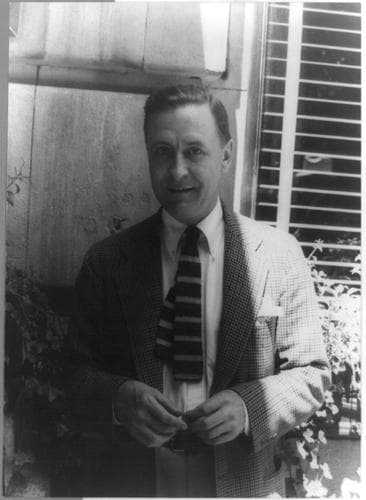
Francis Scott Key Fitzgerald was an American novelist, essayist, and short story writer. He is best known for his novels depicting the flamboyance and excess of the Jazz Age—a term he popularized in his short story collection Tales of the Jazz Age. During his lifetime, he published four novels, four story collections, and 164 short stories. Although he achieved temporary popular success and fortune in the 1920s, Fitzgerald received critical acclaim only after his death and is now widely regarded as one of the greatest American writers of the 20th century.







