“The city was a great beast, and we were the lice upon its skin.”
— Reflecting on the struggles of the tunnel workers and their place in the grand scheme of New York City's development.

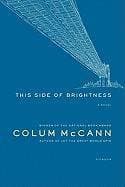
Colum McCann (1998)
Genre
Literary Fiction / Historical Fiction
Reading Time
300 min
Key Themes
See below
Sign in to track this book
An African American sandhog's dangerous work connecting Brooklyn and Manhattan beneath the East River creates a multi-generational family story of connection and conflict, uniting diverse men in shared peril.
In 1916, Nathan Walker, a young black man from South Carolina, arrives in New York City, drawn by the promise of work on the city's growing infrastructure projects. He quickly finds himself among the 'sandhogs,' men who dig tunnels beneath the rivers, a dangerous profession. Nathan joins a crew working on the East River tunnels, where intense pressure and the constant threat of 'the bends' or cave-ins are daily realities. He learns the job from experienced workers, navigating the physical dangers and the complex social dynamics of a diverse crew of Irish, Italian, and other immigrant groups, all united by the shared danger of their underground existence.
During a dangerous shift, a cave-in occurs deep within the tunnel. Nathan and several fellow sandhogs, including the Irish foreman, are trapped in the darkness, cut off from the surface. The air grows thin, and the water level rises, testing their will to survive. In this extreme situation, racial and ethnic differences disappear as the men work together, sharing stories and fears, relying on each other for hope and strength. Their near-death experience creates a strong bond, particularly between Nathan and certain white sandhogs, a connection that goes beyond societal divisions above ground.
After the tunnel collapse, Nathan emerges a changed but living man. He soon meets and falls in love with Eleanor, a strong woman. They marry and begin to build a life in Harlem, a thriving black cultural center but still subject to the era's segregation. Nathan continues his dangerous work as a sandhog, supporting his growing family. The community is close-knit, but the shadow of his underground job and the tunnel memories linger, shaping his outlook and his relationships, especially with Eleanor, who constantly worries about his safety.
Decades later, Nathan and Eleanor's son, Clarence, grows up. Unlike his father, Clarence is drawn to Harlem's lively, often dangerous, street life. He struggles with his father's expectations and the contrast between Nathan's disciplined, hardworking life and the appeal of easy money and excitement. Clarence's path diverges significantly from his father's, leading him into petty crime and a life on the fringes. This creates a deep rift between father and son, as Nathan struggles to guide Clarence away from a destructive future, and Clarence resents his father's perceived judgment.
Clarence's involvement in criminal activities escalates, eventually leading to his arrest and imprisonment. This devastates Nathan and Eleanor, who had hoped for a better life for their son. While incarcerated, Clarence thinks about his life choices and their impact on his family. Prison forces him to confront his past and the legacy he is creating. His experiences behind bars further solidify the distance between him and his aging parents, and he emerges a hardened man, marked by his mistakes and lost years.
The story shifts to the third generation, focusing on Treefrog, Clarence's son and Nathan's grandson. Treefrog grows up in a New York City different from his grandfather's, yet still dealing with systemic inequalities. He inherits his family's complex legacy: Nathan's resilience, Clarence's struggles, and the unspoken weight of their histories. Treefrog is a sensitive, artistic boy, often observing the world with a keen eye. He feels the pull of his family's past, especially the tunnel stories, though he doesn't fully understand their deep meaning.
As Treefrog matures, he becomes increasingly interested in the stories of his grandfather, Nathan, and the tunnels. He feels a deep, almost instinctual connection to the city's underground, a place he's never personally experienced. He begins to actively seek information about the sandhogs and his grandfather's life, putting together fragments of family history. This search for understanding comes from a desire to connect with his roots and make sense of his own place in the world, given his family's complex and often painful past, especially the strained relationship between Nathan and Clarence.
Treefrog's journey of discovery leads him to confront the unspoken traumas and love that define his family. He grapples with the lasting effects of racism, poverty, and the choices his father and grandfather made. He realizes how the tunnels' dangers, the bonds made there, and the struggles above ground have shaped Nathan, Clarence, and himself. These memories and experiences become a significant part of his identity as he tries to reconcile the different threads of his family's story.
Driven by his strong connection to his family's history and the tunnels, Treefrog finds an outlet for his emotions and understanding through art, specifically graffiti. He begins to paint murals and images that reflect the stories of the sandhogs, the city's forgotten laborers, and his own lineage. This artistic expression is his way of honoring his grandfather's legacy, acknowledging his father's pain, and finding his own voice. It is a creative act that bridges generations, turning the past's burdens into a strong statement of resilience and connection.
The novel ends by showing the lasting legacy of the sandhogs and the Walker family. Treefrog's art provides a tangible link to the past, ensuring that Nathan's sacrifices and triumphs are not forgotten. While poverty and systemic inequality continue, Treefrog's ability to express his family's story artistically offers hope and continuity. The title's 'brightness' hints at the enduring human spirit that shines through even the darkest tunnels and most challenging urban environments, passed down through generations.
The Protagonist
Nathan transforms from a hopeful migrant into a stoic survivor and patriarch, grappling with the challenges of raising a family in a segregated city and the disappointment of his son's choices.
The Supporting
Eleanor maintains her quiet strength and love through decades of hardship, becoming the emotional backbone of the Walker family.
The Supporting
Clarence descends into a life of crime and imprisonment, experiencing regret and a broken relationship with his father, ultimately becoming a cautionary tale for his son.
The Protagonist
Treefrog evolves from a curious boy into an artist who uses his creativity to honor his family's legacy and make sense of his own place in the world.
The Supporting
Big Moe remains a steady, guiding presence, symbolizing the enduring spirit of the sandhog community.
The Supporting
The Foreman's initial professional demeanor transforms into one of shared humanity after the tunnel collapse, illustrating the power of shared trauma.
The Mentioned
The city evolves from a place of raw industrial growth to a complex urban landscape, mirroring the societal changes and challenges faced by its inhabitants.
The novel portrays the extreme dangers and physical cost of working as a sandhog, where men risked their lives daily to build the city's infrastructure. Scenes of tunnel collapses and decompression sickness ('the bends') show the brutal reality of their labor. Yet, within this brutality, a strong sense of brotherhood emerges. Racial and ethnic differences—between black, Irish, and Italian workers—disappear when facing shared danger, especially during the tunnel collapse where Nathan and his crew rely solely on each other for survival. This bond goes beyond the segregation and prejudice above ground, showing a powerful, if temporary, unity.
“Down there, in the dark, you were just a man. Just flesh and bone, trying to breathe.”
Nathan Walker's experiences in the tunnels leave a lasting mark on him, physically and psychologically, and this trauma affects later generations. Nathan's quiet strength and his son Clarence's struggles with identity and imprisonment are indirect results of the family's foundational experiences. However, the theme also emphasizes resilience. Despite hardships, the Walker family endures, finding strength and hope. Treefrog, the grandson, shows this resilience by turning the family's history of struggle into art, ensuring their story is remembered and honored.
“The brightness was not just the light, but the memory, the thing that lasted.”
The novel explores complex relationships and misunderstandings across three generations of the Walker family. Nathan, the sandhog, embodies a strong work ethic and a direct connection to the city's construction. His son, Clarence, struggles to find his place, rejecting his father's path and giving in to street life's temptations, creating a deep gap between them. Treefrog, the grandson, tries to bridge this divide by actively seeking to understand and honor the past, especially Nathan's experiences, and reconcile them with Clarence's struggles. This theme highlights how family history, both successes and failures, shapes individual identities and relationships.
“He knew his father carried the tunnels inside him, and his father's father before that.”
From Nathan Walker's arrival in a segregated New York City to Treefrog's modern urban experience, the novel consistently addresses the complexities of race and identity. Below ground, in the tunnels, racial distinctions briefly fade under the shared threat of death, creating a unique equality among the sandhogs. However, above ground, segregation, prejudice, and systemic inequality deeply affect the Walker family's opportunities and struggles. The characters navigate their identities as black men in America, confronting both clear racism and the more subtle effects of limited access and societal expectations, shaping their choices and destinies.
“Up top, they were black, white, Irish, Italian. Down below, they were just men, breathing the same air.”
The physical tunnel symbolizes the characters' inner struggles and societal divisions.
The tunnels beneath the East River are not merely a setting but a powerful, multi-layered metaphor. Physically, they represent extreme danger, the struggle for survival, and the literal foundation of the city. Metaphorically, they symbolize the 'underground' struggles of the working class, the hidden bonds formed in adversity that transcend racial lines, and the deep, often buried, traumas that shape generations. The darkness of the tunnel contrasts with the 'brightness' of hope and memory, and the act of digging reflects the arduous process of uncovering truth and understanding one's past.
The story spans three generations, highlighting the enduring impact of family history.
The novel employs a generational narrative structure, beginning with Nathan Walker in the early 20th century, moving to his son Clarence, and concluding with his grandson Treefrog. This structure allows the author to explore the long-term effects of historical events, individual choices, and societal changes on a single family. It emphasizes the cyclical nature of struggle and resilience, showing how the experiences of one generation (e.g., Nathan's work ethic and trauma) directly or indirectly influence the lives and identities of subsequent generations (Clarence's struggles, Treefrog's quest for understanding).
Past events are recalled to illuminate present circumstances and character motivations.
While largely chronological, the narrative is enriched by moments of memory and reflection, particularly as Treefrog delves into his family's past. These 'flashbacks' or evocations of memory serve to connect the dots between past traumas and present realities. They reveal the lasting impact of Nathan's experiences in the tunnels and Clarence's struggles, providing context for Treefrog's own search for identity. Memory acts as a living force, shaping the characters' understanding of themselves and their place within their family's complex history.
The contrast between light and darkness represents hope, despair, and the hidden aspects of life.
The interplay of light and darkness is a recurring symbolic device. The literal darkness of the tunnels represents danger, fear, and the unknown, but also a space where superficial differences dissolve. The 'brightness' of the title, in contrast, symbolizes hope, resilience, the enduring human spirit, and the illumination of truth or understanding. This dichotomy extends beyond the physical, reflecting the characters' internal states—their moments of despair and their eventual capacity to find hope and meaning even in the most challenging circumstances, such as Treefrog's art bringing light to his family's story.
“The city was a great beast, and we were the lice upon its skin.”
— Reflecting on the struggles of the tunnel workers and their place in the grand scheme of New York City's development.
“There are some things you carry with you, like a stone in your pocket, and you can't ever quite let them go.”
— Exploring the enduring nature of trauma and memory, particularly for those who built the tunnels.
“The past is not a foreign country; it is a room in your own house, and you keep going back to it.”
— A character's rumination on how history and personal past continue to influence the present.
“We were building something that would outlast us, a monument to our own anonymity.”
— The tunnel workers' bittersweet understanding of their contribution to the city's infrastructure.
“Hope was a small, flickering thing, easily extinguished, but sometimes, just sometimes, it caught fire.”
— Describing the fragile nature of hope amidst difficult circumstances.
“The sound of the river, always there, a constant whisper beneath the city's roar.”
— Sensory detail emphasizing the persistent natural element beneath the urban sprawl.
“Love, he thought, was a series of small, impossible victories.”
— A character's philosophical take on the challenges and triumphs of love.
“Every tunnel has two ends, and what you find at one end might not be what you expect at the other.”
— A metaphorical statement about journeys, expectations, and the unpredictable nature of life.
“The silence in the earth was different from any other silence, a heavy, ancient quiet.”
— Describing the unique atmosphere and profound quiet experienced by the sandhogs deep underground.
“He carried the ghosts of his past like a second skin, invisible to others, but heavy on him always.”
— Illustrating the lasting impact of personal history and loss on an individual.
“The city was built on the backs of men, and their stories were buried deep beneath its streets.”
— Highlighting the untold sacrifices and hidden histories behind New York City's construction.
“To be forgotten was the true death, not the stopping of a heart, but the fading of a name.”
— A character's fear of insignificance and the desire for lasting remembrance.
“Brightness, he realized, was not just the sun, but the memory of it, the promise of its return.”
— Reflecting on the meaning of the book's title and the concept of hope and enduring light.
Ready to see how well you understood this book? Take our interactive quiz with 10 questions.

Colum McCann is an Irish-born novelist known for his critically acclaimed works that often explore themes of connection and displacement. His novel "Let the Great World Spin" won the National Book Award for Fiction, and "This Side of Brightness" was a New York Times Notable Book. McCann's writing is celebrated for its lyrical prose and ambitious scope.







