“Everyone always says high school is supposed to be the best time of your life. They’re wrong.”
— Early in the book, setting a grim tone for the school experience.

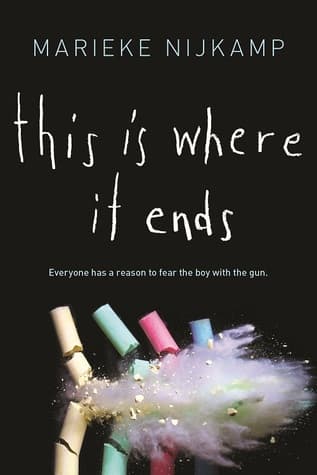
Marieke Nijkamp (2016)
Genre
Thriller / Young Adult
Reading Time
286 min
Key Themes
See below
Sign in to track this book
Four students confront their deepest fears and fight for survival when a shooter traps them in their school auditorium.
The novel opens on the first day of the new semester at Opportunity High School. Principal Amari gives a welcome speech to the student body in the auditorium. As the assembly ends, students try to leave, but the doors are locked. Suddenly, shots are fired, and panic starts. Students hide under seats and behind the stage. Claire, a track star, and Chris, her boyfriend, are among those trapped. Many quickly identify the shooter as Tyler Browne, a student with a history of anger and a troubled past, who targets people he feels have wronged him or his sister, Autumn.
Amidst the chaos, students react differently. Tomás, a tech enthusiast, immediately tries to alert authorities and help others using his hacking skills. Fareed, a popular student and former friend of Tyler's, tries to calm classmates and assess the situation. Autumn Browne, Tyler's sister, also trapped, is horrified and conflicted, knowing her brother is the shooter. Outside, police and media gather but cannot enter. Inside, whispers and shouts fill the air as students try to understand what is happening and how to escape.
Autumn Browne is torn between her love for her brother, Tyler, and the reality of his actions. She knows his history of abuse and mental health struggles, but never thought he would go this far. Tyler targets specific students, including Autumn's ex-girlfriend, Sylvia, and other students involved in an incident that led to Tyler's suspension. Autumn tries to understand Tyler's reasons while fearing for her own life and her friends' lives. She struggles with the urge to confront him or stop him, knowing the danger.
Claire, a track athlete, uses her agility and knowledge of the school to move through the auditorium, trying to find an exit or a way to help her friends. She leads in her area, guiding students to safer spots and looking for escape routes. Her boyfriend, Chris, tries to stay near her, but her determination often puts her in more dangerous situations. Claire's main goal is to protect those around her, especially Chris and her best friend, who are also trapped.
Tomás, hidden backstage, hacks into the school's communication system. He starts broadcasting information and pleas for help to the outside, giving updates to the police and worried parents. Meanwhile, Fareed, a natural leader, tries to organize students, offering comfort and guidance during the terror. He tries to talk to Tyler, appealing to their past friendship, hoping to calm the situation, but Tyler's rage is too strong. Fareed's efforts, though brave, often put him in direct danger.
As the shooting continues, Tyler's targets become clear. He goes after students he believes wronged him, including Sylvia, Autumn's ex-girlfriend, and student council members involved in his past disciplinary issues. Flashbacks show the events leading to the shooting, including Tyler's troubled home life with an abusive father, his suspension, and his growing anger. The story shows how a series of small slights and betrayals, plus his mental health issues, led to this event. The students realize how deep Tyler's pain and anger are.
During the ordeal, several students show great bravery. Chris, despite his fear, tries to shield Claire. Fareed puts himself in harm's way to distract Tyler from others. Autumn, despite her fear, tries to reason with Tyler, appealing to their shared past and family bond. These acts of heroism, though sometimes useless, show the students' resilience and their commitment to protect each other during unimaginable terror. The auditorium becomes a test where true character is shown under extreme pressure.
The police outside get live updates from Tomás and other students, but they hesitate to enter without a clear plan, fearing more casualties. Inside, Tyler's rampage continues, and the death count rises. Principal Amari talks with the police, agonizing over hard choices. Tension builds as the 54-minute time limit nears. A key moment comes when the police decide on a tactical entry, realizing that waiting longer will only cause more tragedy. The students prepare for the inevitable fight.
The climax happens as police enter the auditorium. Tyler, cornered and desperate, makes a final stand. Autumn, in a sad moment, tries one last time to reach her brother, begging him to stop. But Tyler's rage and despair have consumed him. In the chaos, shots are exchanged. Several students are caught in the crossfire or injured during the standoff. The principal and police focus on stopping the threat, leading to Tyler's death. The auditorium falls silent, but the damage is done, and everyone's lives are changed forever.
In the immediate aftermath, the auditorium is a scene of destruction. First responders rush in to help the wounded and count the dead. Survivors are led out, traumatized and in shock. The novel ends with the characters dealing with their survival and the loss of their friends. Claire, Chris, Autumn, Tomás, and Fareed are forever changed by that day. The community of Opportunity, Alabama, is left to mourn and rebuild, facing hard questions about how such a tragedy happened and how to prevent it again. The 54 minutes are over, but the effects will last a lifetime.
The Protagonist
Autumn moves from passive fear to active confrontation, ultimately trying to save her brother even as he endangers her and others.
The Antagonist
Tyler's arc is one of escalating rage and despair, culminating in his violent rampage and ultimate death.
The Protagonist
Claire evolves from a focused athlete to a selfless leader, putting her own life at risk to save others.
The Protagonist
Tomás transforms from a background character into a vital information broker, demonstrating his heroism through technology.
The Protagonist
Fareed's arc shows him moving from a position of popular leadership to one of desperate, self-sacrificing intervention.
The Supporting
Chris's arc highlights the struggle between fear and loyalty, as he tries to protect Claire despite his own terror.
The Supporting
Principal Amari's arc focuses on the crushing weight of responsibility and the difficult choices she faces as the crisis unfolds.
The Supporting
Sylvia's arc is brief but impactful, serving as a catalyst for Autumn's internal conflict and Tyler's rage.
The novel explores how past trauma and bullying can lead to destructive actions. Tyler Browne's violence is directly linked to his abusive home life and the constant bullying he faced at school, including incidents with the student council and his father's violence. The story does not excuse his actions but tries to explain the psychological breakdown that caused them. This theme is clear in Autumn's struggle as she deals with her brother's past and present, understanding the source of his pain while recoiling from his violence.
“He didn't start like this. He wasn't born a monster.”
Amidst the terror, the book shows acts of great bravery and self-sacrifice. Characters like Claire, who tries to protect others, and Fareed, who tries to reason with Tyler despite the danger, show this theme. Tomás's actions in broadcasting the crisis to the outside are also heroic. These moments show the human ability for courage and compassion even in the worst situations, showing how people rise to protect loved ones and fellow students.
“You don't just stand there. You help.”
Several characters deal with feelings of responsibility and guilt. Autumn blames herself for not seeing the signs or doing enough to help Tyler. Principal Amari carries the heavy burden of her students' safety. Even characters like Fareed, who had been Tyler's friend, wonder if they could have done more. This theme explores the psychological aftermath of tragedy, showing how survivors often blame themselves and struggle with 'what ifs,' even when events were beyond their control. It is a powerful look at the emotional cost of such a catastrophic event.
“I should have known. I should have seen it coming.”
The fast and brutal nature of the school shooting highlights how fragile life is and how quickly a normal day can become a nightmare. The once-safe Opportunity High School is shattered, and the community is changed forever. The novel explores how such an event tears apart a community, leaving lasting scars on survivors, families, and the town. It shows the vulnerability of young lives and the devastating effect of violence on everyone's well-being.
“Fifty-four minutes. That’s all it took to change everything.”
The story explores the important role of human connection, both when it is there and when it is missing. Bonds between friends, siblings, and romantic partners are tested and strengthened during the crisis. In contrast, Tyler's deep feeling of disconnection from his peers and family, made worse by his trauma, is a main reason for his actions. The struggle to communicate, both inside the auditorium and with the outside, further shows how important connection is for survival and understanding. Tomás's use of technology to connect is a direct example of this theme.
“We're all in this together. We have to be.”
The story is told through alternating points of view of four students.
The novel employs multiple first-person perspectives, primarily from Autumn, Claire, Tomás, and Fareed. This device allows the reader to experience the unfolding tragedy from different vantage points, offering varied emotional responses, physical locations within the auditorium, and insights into Tyler's motivations through their personal connections to him. It builds suspense and provides a comprehensive, albeit fragmented, understanding of the event.
The entire story unfolds within a 54-minute timeframe.
The narrative meticulously tracks the events of the shooting in real-time, emphasizing the urgency and limited window of opportunity for escape or intervention. This device creates intense suspense and a sense of immediacy, making every second count. The constant ticking clock heightens the stakes and the feeling of claustrophobia within the locked auditorium, mirroring the characters' increasing desperation.
Brief glimpses into the past of Tyler and other characters.
Interspersed throughout the real-time narrative are brief flashbacks, primarily revealing Tyler Browne's troubled past, including his abusive home life and the incidents that led to his suspension. These flashbacks provide crucial context for his motivations and the underlying resentments that fuel his rampage. They also offer insights into the relationships between the characters before the shooting, deepening the emotional impact of their current struggles.
Tweets and news reports provide an outside perspective.
The novel incorporates snippets of social media posts (tweets) and news reports from outside the school. This device serves to broaden the scope of the story beyond the auditorium, showing the public's reaction, the gathering of first responders, and the fear of parents. It contrasts the immediate, visceral horror inside with the desperate, often misinformed, attempts to understand and respond from the outside world, highlighting the communication challenges during a crisis.
“Everyone always says high school is supposed to be the best time of your life. They’re wrong.”
— Early in the book, setting a grim tone for the school experience.
“We are all just stories in the end, aren't we? Stories waiting to be told. Stories waiting to be heard.”
— A character reflects on the nature of identity and memory.
“Sometimes you have to break a few rules to save yourself.”
— One of the protagonists considers taking drastic action to survive the lockdown.
“Fear can make you do things you never thought you were capable of.”
— A character observes the changing behavior of students during the crisis.
“Silence can be louder than any scream.”
— Describing the terrifying quiet moments during the shooting.
“You can never truly know what goes on inside someone else's head.”
— A character ponders the shooter's motivations and the mystery of others.
“Hope is a dangerous thing. It can keep you alive, but it can also break your heart.”
— A character's internal monologue about the double-edged sword of optimism in a crisis.
“Every hero has a breaking point. Every villain has a reason.”
— Reflecting on the complex motivations and limits of individuals.
“Sometimes the most dangerous places are the ones you think are safe.”
— Highlighting the irony of a school, a presumed safe space, becoming a death trap.
“The past isn't just behind us. It's inside us.”
— A character dealing with past trauma and how it influences their present actions.
“It's easy to judge from the outside. It's harder to understand when you're trapped inside.”
— A commentary on the outside world's perception versus the characters' harrowing reality.
“We all make choices. Some big, some small. But every choice has a consequence.”
— Characters facing life-or-death decisions and their immediate repercussions.
“Even in the darkest moments, there can be light. You just have to look for it.”
— A glimmer of hope or resilience amidst the despair.
Ready to see how well you understood this book? Take our interactive quiz with 10 questions.

Biography coming soon.







