“The world is full of obvious things which nobody by any chance ever observes.”
— Reflecting on how people overlook the supernatural and bizarre in everyday life.

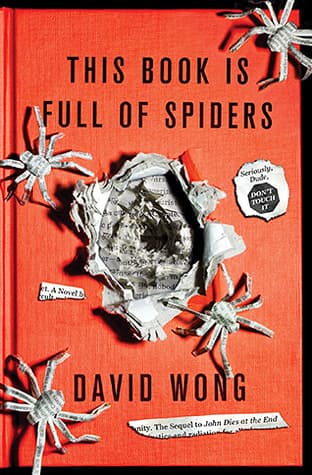
David Wong (2012)
Genre
Fantasy / Science Fiction
Reading Time
450 min
Key Themes
See below
Sign in to track this book
Two friends, David and John, are incompetent and attract cosmic horrors. They must save humanity from a zombie apocalypse that isn't happening, battling shape-shifting entities worse than any undead.
The story begins with David and John, still recovering from past supernatural encounters, investigating strange events at a local shopping mall. They find themselves in a chaotic scene where people are infected by an invisible entity that causes them to hallucinate and act violently. This entity, later called the 'Whispers,' seems to spread through closeness and suggestion, making its victims believe they are seeing terrifying things or being attacked by non-existent threats. David, immune because of his past exposure to the 'Soy Sauce,' struggles to understand what is happening, while John, also immune, tries to fight off the perceived threats, often with disastrous and funny results. The mall quickly becomes a quarantine zone, with authorities trying to contain the strange outbreak, which seems to grow from fear and paranoia.
As the 'Whispers' outbreak gets worse, David and John, with Amy, try to understand the situation. They discover that the 'Whispers' are not a physical entity but a psychic contagion, causing mass hysteria and making people perceive threats that are not there. This leads to public panic where people believe a zombie apocalypse is happening, even though there are no actual zombies. Amidst the chaos, they meet a grotesque, deformed man known as the 'Meatball Man,' who seems to be a victim of the 'Whispers' but also has a disturbing connection to its origin. He is a key figure in the mystery, his presence a horrifying sign of the psychic infection's power and its ability to warp reality.
A cult called the 'Whispering Eye' starts to grow, spreading conspiracy theories and claiming the 'Whispers' are a divine judgment or a way to a higher truth. Their leader, a charismatic but insane person, manipulates the terrified public, further increasing the panic. Meanwhile, Dr. Albert Marconi, the mysterious paranormal investigator who introduced David and John to the Soy Sauce, reappears. He gives cryptic warnings about the true nature of the 'Whispers,' hinting at a much larger, older evil at play. Marconi's return brings a sense of urgency and dread, as his past involvement with supernatural phenomena suggests the current crisis is far more dangerous than anyone realizes, and he seems to know more than he lets on.
Amy, David's girlfriend, gets infected by the 'Whispers.' Her infection shows as increasingly disturbing hallucinations and a gradual loss of her grip on reality, making her a danger to herself and others. This personal tragedy motivates David and John, who are determined to find a cure or a way to stop the psychic contagion. Their search leads them down a dangerous path, forcing them to confront not only the physical dangers of the infected but also the psychological toll of the 'Whispers' on their own minds. Amy's worsening condition is a constant reminder of what is at stake and the urgency of their mission, pushing them to their limits.
Through their investigations and Marconi's guidance, David and John learn that the 'Whispers' are not just a psychological phenomenon but a manifestation of parasitic, interdimensional entities called the 'Shadow Men.' These beings feed on fear and paranoia, using the 'Whispers' to manipulate and control humanity, preparing for a full-scale invasion. The 'Meatball Man' is a human host warped by these entities, a living gateway. The duo, with Amy's worsening condition as motivation, realizes they must enter the 'other dimension' — a terrifying, abstract realm where these entities live — to confront them directly and break their connection to Earth. This revelation changes the conflict from a local outbreak to an interdimensional war for humanity's survival.
With the limited understanding Marconi provided and their own strange experiences, David and John make the dangerous journey into the 'other dimension.' This realm is a nightmarish place of shifting realities, impossible shapes, and mind-bending horrors, where the Shadow Men are in control. They navigate this treacherous environment, constantly battling the psychic attacks and illusions thrown at them by the entities. Their goal is to reach the infection's 'heart,' the central place where the Shadow Men are planning the 'Whispers' outbreak on Earth. The journey tests their sanity and their friendship, forcing them to rely on their unique abilities from the Soy Sauce and their combined, though often incompetent, courage.
Deep within the other dimension, David and John confront the true form of the Shadow Men, massive, incomprehensible entities that exist beyond human perception. They are not physical beings in the traditional sense, but a collective consciousness feeding on fear. During the final confrontation, the 'Meatball Man' plays a surprising and tragic role. He sacrifices himself, using his distorted body as a conduit or a distraction, giving David and John a momentary advantage. His sacrifice, a twisted act of redemption, provides the opening they need to disrupt the Shadow Men's connection to Earth, temporarily stopping their influence and weakening the 'Whispers' contagion.
With the Shadow Men's connection broken, the 'Whispers' outbreak on Earth begins to lessen. People slowly regain their sanity, the mass hysteria calms down, and the perceived zombie apocalypse disappears. However, the world is permanently changed. The memory of the 'Whispers' remains, causing doubt and paranoia, and the existence of interdimensional threats is now a terrifying reality for a few. Amy begins a slow recovery, though the experience leaves her deeply scarred. David and John, though they won, are left exhausted and changed by their ordeal. They know this is not the end, just a temporary break, and the world still has unseen horrors waiting for their next chance to strike.
The 'Soy Sauce,' the mysterious black liquid that gives David and John their unique abilities and immunity, is confirmed as an important part of their ongoing fight against supernatural threats. Its origins and full capabilities are still largely unknown, but it is clear that it is both a help and a hindrance. The 'Whispers' outbreak solidifies David and John's reluctant roles as defenders against the paranormal. They understand that their lives will always be connected to these strange events. The ending leaves a sense of uneasy peace, with the suggestion that more bizarre and terrifying threats are always coming, ensuring that their strange adventures are far from over.
The Protagonist
David reluctantly embraces his role as a paranormal investigator, growing from a passive observer to an active, if still bumbling, participant in fighting cosmic horrors.
The Protagonist
John continues to embrace his bizarre role with a mix of recklessness and surprising effectiveness, showcasing his unique brand of heroism.
The Supporting
Amy is transformed from an outsider to a direct victim of the supernatural, enduring immense psychological trauma but showing remarkable strength.
The Supporting
Marconi continues his role as a mysterious guide, providing crucial information while maintaining his enigmatic distance, reinforcing his status as a knowledgeable but detached observer.
The Supporting
The Meatball Man transforms from a grotesque enigma to a tragic figure whose sacrifice is instrumental in fighting the Shadow Men.
The Supporting
Mobley remains a skeptical but increasingly overwhelmed figure, forced to grapple with events beyond his comprehension while trying to uphold the law.
The Antagonist
The Shadow Men are revealed as the true masterminds behind the 'Whispers,' their influence temporarily thwarted but their existence a lingering threat.
This theme is central to the 'Whispers' contagion, which makes people hallucinate and believe in non-existent threats, especially a zombie apocalypse. David and John, with their 'Soy Sauce' enhanced perception, are often the only ones who can tell what is truly happening versus what people *think* is happening. This shows how fragile shared reality is and how easily mass hysteria can be manipulated. The book constantly questions what is real, especially when the antagonists are entities that manipulate perception itself, making characters doubt their own senses and sanity.
“What if the monsters aren't out there? What if the monsters are in our heads, and they're contagious?”
The 'Whispers' outbreak directly shows this theme. The entities feed on and increase human fear, leading to widespread panic and irrational behavior. People turn on each other, believe strange conspiracy theories, and react violently to perceived threats that do not exist. The book satirizes how easily society can fall into chaos when faced with the unknown, and how quickly people will look for scapegoats or simple answers to complex, terrifying problems. The 'Whispers' exploit the human tendency to fear the 'other' and project internal anxieties onto external forces.
“The problem wasn't that the world was ending. The problem was that everyone believed it was.”
David and John are not typical heroes; they are slackers who often save the world through a mix of dumb luck, strange abilities, and sheer, often mistaken, determination. Their heroism is always reluctant, marked by self-doubt, sarcasm, and deep incompetence. Despite their flaws, they are often the only ones who can see and fight the true threats, showing that heroism can come from unexpected, flawed sources. Their journey is less about grand acts and more about surviving one absurd, terrifying situation after another.
“We weren't heroes. We were just two guys who kept accidentally stumbling into the apocalypse.”
The threat of the 'Shadow Men' and the 'other dimension' firmly places the book in the cosmic horror genre. These entities are incomprehensible, existing beyond human understanding and morality. Their motives are alien, and their presence warps reality and sanity. The book emphasizes humanity's smallness in the face of such vast, ancient, and uncaring forces. The 'Whispers' are just a taste of a much larger, more terrifying reality that David and John must confront, constantly reminding them of how fragile their world and their minds are.
“Some things aren't meant to be understood. Some things are just meant to exist, and for us to be very, very afraid of them.”
A mysterious black liquid granting psychic abilities and immunity
The 'Soy Sauce' is a central supernatural plot device. It's a black, sentient, and highly addictive liquid that, once ingested, grants David and John (and others) enhanced senses, psychic abilities, immunity to certain supernatural effects, and a disturbing awareness of interdimensional realities. It also links them to a vast, alien network of consciousness. In 'This Book Is Full of Spiders,' it's crucial for their ability to perceive the true nature of the 'Whispers' and navigate the 'other dimension,' acting as both a tool and a source of constant, unsettling influence on their lives.
The primary mechanism of the 'Whispers' contagion
This device is the core of the 'Whispers' outbreak. It's a psychic contagion that causes victims to collectively hallucinate and believe in a shared, terrifying reality (specifically, a zombie apocalypse). This isn't a physical infection but a mental one, feeding on fear and suggestion. It highlights the power of belief and paranoia to shape reality for a large group of people, making the invisible entities far more dangerous. It forces David and John to fight not just monsters, but the distorted perceptions of an entire populace, making them question what is truly real.
A bizarre, surreal realm inhabited by the Shadow Men
The 'other dimension' serves as a key setting for the climax of the story. It is a surreal, non-Euclidean realm that exists parallel to Earth, where the 'Shadow Men' reside and orchestrate their influence. It's a place where the laws of physics and logic are warped, designed to disorient and terrify. David and John must physically (or perhaps psychically) enter this dimension to confront the source of the 'Whispers.' This device allows for highly imaginative and terrifying descriptions, pushing the boundaries of cosmic horror and providing a stark contrast to the mundane world.
David's often sarcastic and self-deprecating narrative voice
David's narration is highly unreliable, filled with his cynical observations, self-deprecating humor, and a constant questioning of his own sanity and the events around him. While he provides the main perspective, his often exaggerated descriptions, tangent-filled explanations, and personal biases mean the reader must constantly interpret his account. This device enhances the comedic and absurd elements of the story, but also contributes to the pervasive sense of unease and doubt, mirroring the theme of perception versus reality, and making the reader wonder just how much of what's described is truly 'real' even within the book's bizarre universe.
“The world is full of obvious things which nobody by any chance ever observes.”
— Reflecting on how people overlook the supernatural and bizarre in everyday life.
“You don't have to be a hero to save the world. You just have to be willing to try.”
— Encouraging ordinary people to take action against overwhelming threats.
“Fear is the mind-killer. But so is boredom, and nobody ever talks about that.”
— A humorous twist on the idea of fear, comparing it to mundane dangers.
“The only thing more terrifying than a monster is the person who created it.”
— Discussing the origins of supernatural horrors and human responsibility.
“Reality is just a shared hallucination. We all agree to see the same things.”
— Philosophizing about the nature of reality and societal consensus.
“Sometimes the best way to fight evil is to be really, really annoying.”
— Using humor and persistence as unconventional tactics against threats.
“The past is a ghost that haunts us, but the future is a monster we create.”
— Reflecting on how actions shape future consequences and horrors.
“You can't save everyone, but you can try to save the ones who matter.”
— A pragmatic take on heroism and personal connections in crises.
“The universe doesn't care about your plans. It just keeps spinning.”
— Commenting on the indifference of the cosmos to human struggles.
“Madness is just sanity in a world that's lost its mind.”
— Exploring how normalcy shifts in the face of supernatural chaos.
“The only thing worse than being alone is being surrounded by people who don't understand.”
— Highlighting isolation and misunderstanding in social situations.
“We are all spiders in a web of our own making.”
— Metaphor for how people create and are trapped by their own actions.
“Courage isn't the absence of fear. It's the decision to act anyway.”
— Defining bravery in the context of facing terrifying unknowns.
“The truth is a weapon, and sometimes it's better left sheathed.”
— Discussing the dangers of revealing harsh realities.
Ready to see how well you understood this book? Take our interactive quiz with 10 questions.

David Wong is the pseudonym of Jason Pargin, author of the darkly comedic horror novel "This Book Is Full of Spiders, Seriously, Don't Eat It." Known for his unique blend of visceral horror, absurd humor, and philosophical undertones, Pargin gained a cult following through the website Cracked.com before publishing his novels.







