“The past is a country we all inhabit, not just the dead. It is the soil from which we grow, the air we breathe.”
— Early reflection on the enduring presence of the past in the narrator's life.

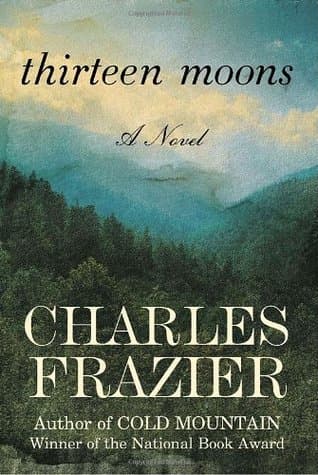
Charles Frazier (2006)
Genre
Historical Fiction
Reading Time
10-12 hours
Key Themes
See below
Sign in to track this book
A twelve-year-old orphan's journey to run a remote trading post in the Cherokee Nation becomes a lifelong story of love, belonging, and finding identity in a changing world.
At age twelve, Will Cooper, an orphan from the East, receives a horse, a key, and a rough map. He is bound as a boy-clerk to run a remote trading post deep in the Cherokee Nation, an unfamiliar and wild place. His solitary journey west marks his sudden shift from childhood to an independent life. He finds the trading post to be a simple, isolated cabin. His first meetings with the local Cherokee people are marked by mutual curiosity and caution. Will, despite his youth, quickly learns how to trade, bartering with the Cherokee for furs and other goods, establishing himself in this new, untamed land.
Will's loneliness eventually ends with the strong but kind presence of Chief Bear, a respected elder and leader of a local Cherokee band. Bear sees Will's resilience and resourcefulness and takes the young boy under his care. Through a formal adoption ceremony, Will becomes a member of Bear's family and, by extension, the Cherokee Nation. This integration is deep; Will learns the Cherokee language, customs, and survival skills, leaving much of his old identity behind. He hunts, tells stories, and attends tribal councils, developing deep respect and love for his adopted people and their way of life, especially valuing Chief Bear's wisdom.
Amid his new life with the Cherokee, Will meets Claire, a beautiful and mysterious young white woman who lives with the powerful and unstable white trader, Featherstone. Claire, though white, has grown up among the Cherokee, speaking their language and understanding their ways, yet she remains an outsider in many respects. Will is instantly drawn to her intelligence, spirited nature, and the mystery around her. Their early interactions are careful but filled with a growing attraction, setting the stage for a lifelong, complex love affair that will define much of Will's life and future choices.
Featherstone, a powerful and often cruel white trader, holds much influence in the territory and acts as Claire's guardian. The nature of their relationship is unclear and disturbing. He sees Will as a rival, both in trade and for Claire's affection, and his presence casts a long, threatening shadow over Will's life. Featherstone's unstable temper and ruthlessness make him a dangerous opponent, and Will must handle their interactions carefully. His desire for Claire is tied to the difficult challenge of facing or avoiding Featherstone's authority, adding danger to their forbidden romance.
As years pass, white settlement increases, leading to the devastating policy of Indian Removal. Will, now deeply part of the Cherokee Nation, sees firsthand the deep injustice and suffering brought upon his adopted people. He observes their desperate attempts to resist, through legal means and, for some, armed defiance, as their ancestral lands are systematically taken. The forced marches, the loss of culture, and the heartbreak of displacement become central to Will's experience, solidifying his loyalty to the Cherokee and fueling his anger towards the US government's brutal policies.
The start of the American Civil War further complicates life in the Cherokee Nation. The Cherokee themselves are divided, some siding with the Confederacy, others with the Union, mainly to protect their remaining lands and sovereignty. Will, now an adult, finds himself caught in the conflict, fighting alongside his Cherokee kin. He experiences the brutal realities of war, the moral ambiguities, and its devastating impact on the Cherokee people, already suffering from forced removal. The war further weakens their already fragile existence and reshapes the political landscape of the territory.
Will's life is marked by a constant pursuit of Claire, a love repeatedly blocked by circumstances, Featherstone's interference, and Claire's elusive nature. He experiences times of great joy and connection with her, mixed with long periods of separation and sadness. Throughout these years, Will also suffers many personal losses: the death of Chief Bear, the displacement of his adopted people, and the general decline of the Cherokee way of life he had come to love. These experiences harden him, yet his love for Claire remains a constant, driving force.
After the Civil War and continued upheaval, Will, showing his natural business sense, moves into the cattle business. He uses his knowledge of the land and his relationships to build a large cattle empire, gaining considerable wealth. This venture is partly driven by a desire for stability and security, not just for himself but also to potentially offer a better life for Claire and to help the surviving Cherokee. The cattle drives and the challenges of the open range provide a new area for Will to show his resilience and leadership, but his heart remains tied to Claire.
In his later years, Will Cooper, now an old man, lives a solitary life, often thinking about his long journey. He tells his story as an elder, looking back on his childhood as a bound boy, his adoption by the Cherokee, his lasting love for Claire, and the major changes he saw in the Cherokee Nation. His memories are clear, tinged with both nostalgia and regret, but also a deep gratitude for the life he lived and the people who shaped him. He continues to search for meaning in his experiences, especially in his lifelong devotion to Claire.
Despite decades passing, the trials of war, and gaining wealth, Will's love for Claire remains the most central and moving part of his life. Their relationship, marked by moments of intense closeness and long separations, is never fully resolved in a traditional way. Claire remains a mysterious figure, a symbol of beauty, independence, and a past Will can never fully get back. His story is deeply filled with this longing, making it clear that his pursuit of Claire was not just a youthful crush but a defining, lifelong quest that shaped his identity and gave purpose to his often turbulent existence.
The Protagonist
Will transforms from a vulnerable orphan into a man of substance and influence, deeply shaped by his adopted Cherokee identity and his enduring, often unfulfilled, love for Claire.
The Love Interest
Claire remains largely enigmatic, her independence and circumstances often keeping her just out of Will's reach, embodying the unattainable aspect of his enduring love.
The Supporting
Bear guides Will into adulthood and Cherokee culture, embodying the wisdom and resilience of his people before the tragic displacement.
The Antagonist
Featherstone remains a consistent obstacle to Will's happiness and a representation of the corrupting forces in the wilderness.
The Supporting
Wade remains a steadfast friend and ally to Will, representing the enduring bond between Will and his adopted people.
The Supporting
Young John matures alongside Will, reflecting the shared experiences of their generation amidst cultural upheaval.
The Protagonist
The Old Man's arc is one of retrospective wisdom, finding meaning and acceptance in a life filled with both joy and sorrow.
Will Cooper, an orphan, spends his life looking for a place where he truly belongs. He first finds this home within the Cherokee Nation, adopted by Chief Bear and integrated into their culture. This adoption gives him a family and a cultural identity he never had. The forced removal of the Cherokee shatters this sense of home, forcing Will to constantly adapt and rebuild himself. His later pursuit of wealth and a stable life is partly an attempt to create a secure 'home,' often hoping to share it with Claire. This theme highlights the human need for roots and community amid profound displacement, seen in Will's lifelong connection to the land and the Cherokee people, even after they are gone.
“I had left one home and found another, though it was a home that would prove as ephemeral as smoke.”
Will's lifelong love for Claire is the main emotional focus of the novel. From their first meeting, she drives many of his decisions and actions. This love is not just romantic but almost obsessive, a persistent longing that crosses time, distance, and many obstacles, including the formidable Featherstone. Claire's elusive nature and the circumstances that repeatedly separate them only make Will's devotion stronger. This theme explores the power of an unwavering passion, how it can both support and torment a person, and how an idealized love can shape an entire life, even if never fully achieved in a traditional way. It is a love that defines Will's identity.
“She was the moon to my tides, the compass to my lost way, the fixed point in a turning world.”
The novel clearly shows the devastating conflict between white expansion and Native American cultures, especially the Cherokee Nation. Will, as a white boy adopted by the Cherokee, offers a unique view of this conflict. He witnesses the systematic loss of Cherokee independence, the brutality of forced removal (the Trail of Tears), and later attempts to rebuild a damaged culture. This theme highlights the resilience of the Cherokee people in the face of immense suffering and injustice, as they try to keep their traditions, language, and identity. Will's own divided loyalties and his deep empathy for his adopted people show the tragic human cost of this historical conflict.
“We were a nation of ghosts, wandering a land that was ours no longer.”
The wildness of the Cherokee Nation is a strong setting and a character itself. It represents freedom, danger, and a different way of life, sharply contrasting with the growing 'civilization' of white settlers. Will's early life is closely tied to the wilderness, learning its rhythms and survival skills from the Cherokee. As the story continues, the wilderness is gradually tamed, fenced, and divided, symbolizing the loss of Native American lands and the imposition of a new order. This theme explores the tension between these two forces and how the landscape shapes the characters, especially Will, who finds both comfort and hardship in its vastness.
“The wildness in me was a thing learned from the land, from the Cherokee, from the necessity of living.”
An elderly Will Cooper recounts his life story from a distant future.
The entire novel is narrated by an elderly Will Cooper, looking back on his life from a great distance in time. This retrospective viewpoint allows for a rich, reflective, and often melancholic tone. The older Will can comment on the significance of past events, foreshadow future developments, and offer philosophical insights that his younger self could not have possessed. It imbues the story with a sense of destiny and the weight of history, while also allowing the narrator to express deep yearning and the poignancy of lost time and love. This device creates intimacy between the reader and Will's inner world.
Will's life is framed by physical and metaphorical journeys.
From his initial journey as a twelve-year-old orphan into the Cherokee Nation, Will Cooper's life is a continuous series of literal and metaphorical journeys. These include his physical travels across the wilderness, his participation in cattle drives, and his forced migrations alongside the Cherokee. Metaphorically, his life is a journey of self-discovery, cultural assimilation, and the lifelong pursuit of love and belonging. Each journey brings new experiences, challenges, and transformations, highlighting his adaptability and resilience in a constantly changing world. It emphasizes the transient nature of life and the continuous search for meaning.
The moon represents time, cycles, and the enduring nature of love and memory.
The title 'Thirteen Moons' itself suggests the significance of lunar cycles, representing the passage of time, the rhythms of nature, and the cyclical nature of life, loss, and renewal. The moon often appears in key moments, symbolizing Claire's elusive beauty and Will's enduring longing for her. It also connects to Native American traditions, where the moon holds cultural and spiritual importance. For Will, the moon becomes a constant, unchanging presence in a world of flux, a silent witness to his joys and sorrows, and a reminder of his persistent love for Claire across the decades.
A central setting that symbolizes the intersection and conflict of cultures.
The remote trading post where Will begins his adult life serves as a crucial plot device and symbolic space. It is a physical location where white and Cherokee cultures directly interact, exchanging goods, stories, and sometimes conflict. It represents Will's initial bridge between his own background and his adopted culture. Over time, as the Cherokee are displaced and the wilderness is settled, the trading post's significance shifts, reflecting the changing landscape and the gradual erosion of the traditional way of life it once facilitated. It's a microcosm of the larger cultural clash unfolding in the territory.
“The past is a country we all inhabit, not just the dead. It is the soil from which we grow, the air we breathe.”
— Early reflection on the enduring presence of the past in the narrator's life.
“There are times when a man, or a boy, must simply endure. Must push on through the cold and the dark and the fear, because there's nothing else to do.”
— Reflecting on the hardships faced during his journey to the Cherokee lands.
“Love is a thing that happens to you, whether you want it to or not. It's a force, like a river, and you can either float with it or drown.”
— Considering his deep and complex feelings for Claire.
“The world is full of wonders, if you only take the time to look. And full of horrors too, if you're not careful.”
— Observing both the beauty and brutality of the natural world and human existence.
“A man learns more from his mistakes than from his triumphs. If he's wise enough to pay attention.”
— Reflecting on his past errors and the lessons learned from them.
“Grief is a heavy cloak. It wraps around you and keeps you from the light.”
— Mourning the loss of loved ones and the weight of his sorrow.
“Some things, once broken, can never be fully mended. You can patch them up, but the cracks always show.”
— Considering the lasting impact of betrayal and broken trust.
“The land remembers. It holds the echoes of all who have walked upon it, all who have lived and died here.”
— Feeling a deep connection to the land and its history, particularly the Cherokee ancestral lands.
“It's a strange thing, time. It stretches and shrinks, rushes and crawls, all at its own whim.”
— Reflecting on the passage of time over his long life and its subjective nature.
“Fear is a cold companion, but it can also keep you alive if you listen to it right.”
— Navigating dangerous situations and the role of fear in survival.
“Every life is a story, and every story has its share of shadows and light.”
— A philosophical reflection on the complexity of human experience and personal narrative.
“To truly know a place, you have to walk its paths, drink its water, and listen to its silence.”
— Describing the immersive experience of living among the Cherokee and understanding their connection to the land.
“What we seek is often right in front of us, if we only had the eyes to see it.”
— Realizing a truth or a solution after a long period of searching or misunderstanding.
“The heart, like a compass, points to what it needs, even when the mind tries to argue otherwise.”
— Struggling with his own desires and the logical choices he felt he should make.
Ready to see how well you understood this book? Take our interactive quiz with 10 questions.

Charles Frazier is an American novelist celebrated for his evocative portrayals of the American South. His breakout novel, "Cold Mountain," won the National Book Award and was adapted into an Academy Award-winning film. His other notable works include "Thirteen Moons" and "Nightwoods," often exploring themes of history, landscape, and the human condition with lyrical prose.







