“Sometimes, the things you can't explain are the very things that define you.”
— Jacob's early reflections on his new powers.

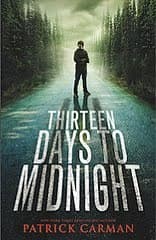
Patrick Carman (2010)
Genre
Fantasy / Mystery / Science Fiction / Young Adult / Romance
Reading Time
360 min
Key Themes
See below
Sign in to track this book
Three whispered words grant Jacob invincibility, but this gift quickly becomes a ticking curse. With his new crush, Ophelia, Jacob must navigate heroism's intoxicating pull before his power transforms him into a conduit for death.
Jacob Fielding's foster father, Mr. Fielding, lies on his deathbed. In his final moments, he whispers three words to Jacob: 'You are indestructible.' Jacob dismisses this as a dying man's delirium. However, at Mr. Fielding's funeral, a catastrophic car accident occurs. Jacob, without thinking, pushes a young boy out of the path of a speeding car, only to be hit himself. To his astonishment, he emerges unharmed, realizing the truth of his foster father's last words. This event marks the beginning of Jacob's new reality, as he grapples with a power he neither asked for nor understands.
After the funeral incident, Jacob struggles to comprehend his power. He begins testing his limits in secret, jumping from increasing heights, enduring painful falls, and allowing himself to be hit by objects, always emerging without a scratch. Initial fear gives way to a strange sense of exhilaration. He realizes he can withstand virtually any physical harm. This period is marked by isolation as he processes his unique gift, unsure if anyone else could ever understand or believe him, and wary of revealing such an extraordinary secret.
A new girl, Ophelia James, moves to town and enrolls at Jacob's school. She is beautiful, enigmatic, and possesses a daring spirit that immediately intrigues Jacob. Ophelia seems unusually observant, and it is not long before she witnesses one of Jacob's accidental displays of indestructibility. Rather than fear or disbelief, she shows understanding and fascination. Their shared secret forms an immediate, intense bond, pulling Jacob out of his solitary contemplation of the power and into a partnership with someone who seems to grasp its potential.
Ophelia convinces Jacob that his power should be used for good. Together, they embark on a series of heroic acts, saving people from various dangers, including a house fire, a drowning incident, and a car crash. Jacob, guided by Ophelia, becomes a local, anonymous hero. However, with each life saved, Jacob experiences a peculiar phenomenon: his power seems to grow, intensifying his senses and making him feel more alive, but also bringing an eerie sense of foreboding. He notices that the lives he saves seem to have a strange, almost fated connection to him, as if he is interfering with a natural order.
The true, sinister nature of the power begins to manifest. After saving multiple lives, Jacob starts seeing cryptic dates and times associated with people he encounters. He realizes these are not random; they are the exact moments when these individuals are fated to die, and he is compelled to be present. The power is not just about saving lives; it is about witnessing death. He sees the Grim Reaper's shadow, a manifestation of impending doom, attached to these fated individuals. This revelation shatters his initial idealism, transforming his gift into a terrifying burden and a twisted form of premonition.
As the visions of fated deaths intensify, Jacob is plunged into an agonizing moral crisis. He understands that saving one person might mean letting another die, or worse, that his interference simply postpones death, leading to a more tragic outcome later. He is forced to confront the impossible choice of playing God, deciding who is worthy of his intervention. The pressure builds as he sees more 'death dates,' making him question the true cost of his power and Ophelia's motives for pushing him into heroism. The line between right and wrong blurs, and Jacob feels the immense weight of his actions.
Jacob's suspicion of Ophelia grows as he investigates the power's origins. He discovers that Ophelia is not just a passive observer but an active participant, guiding him towards specific individuals. He learns that she has a deeper, more personal connection to the power and its history than she let on. She reveals that she is a descendant of a long line of individuals who have either wielded or understood this power, and that she has been searching for someone like Jacob. Her initial altruism gives way to a more complex, almost manipulative desire to control or understand the power for her own family's legacy.
Through a hidden journal left by his foster father, Jacob uncovers the full, horrifying truth about the power. It is not merely indestructibility but a curse passed down through generations. The journal reveals that the power is a pact with death itself: the wielder gains immortality but is also forced to witness and, to some extent, manage death. The 'Grim Reaper's shadow' is a manifestation of the curse, marking those whose lives are inextricably linked to the wielder's interventions. The journal explains that the power grows stronger with each intervention, eventually consuming the wielder and turning them into a conduit for death, rather than a savior.
The journal also contains a chilling countdown: 'Thirteen Days to Midnight.' Jacob realizes this is the deadline before the power completely takes him over, transforming him into the next Grim Reaper, fully bound to the curse, no longer able to choose. The heroic acts, the saved lives, have accelerated this process. He feels the power changing him, making him more detached and fatalistic. The urgency of his situation becomes paramount, forcing him to seek a way to break the curse before his own 'midnight' arrives, or face an eternity of ushering souls to their demise.
With the 'Thirteen Days to Midnight' looming, Jacob and Ophelia frantically search for a way to break the curse. They examine ancient texts and the remaining clues in Mr. Fielding's journal, looking for any ritual or loophole. Ophelia, despite her initial motivations, genuinely wants to help Jacob escape this fate. They learn that the only way to sever the connection is to transfer the power, but this means finding someone else willing to bear the burden, or confronting the source of the curse directly. Time is ticking, and the pressure intensifies as Jacob feels the insidious influence of the power growing within him.
The solution they uncover is harrowing: the power can be transferred to another person, but it requires a specific, ritualistic act and a willing (or unwitting) recipient. Jacob is horrified by the prospect of condemning someone else to this fate, even to save himself. He grapples with the ethical implications of passing on such a terrible burden. Ophelia, driven by a desperate desire to save Jacob, considers suitable, yet justifiable, recipients. This moral quandary pushes Jacob to his limits, forcing him to question if saving himself is worth damning another.
As the final 'midnight' approaches, Jacob makes a momentous decision. Refusing to condemn an innocent, he chooses a different path. He confronts the essence of the power itself, seeking to break the cycle rather than perpetuate it. This involves a sacrifice, where he must fully embrace the power's destructive potential to ultimately nullify it, or transfer it to someone who understands its full implications and might be able to control it. The climax is a desperate struggle against fate and the insidious nature of the curse, with Jacob's very essence hanging in the balance, determining whether he becomes the next Grim Reaper or finds a way to truly set himself, and potentially others, free.
The Protagonist
Jacob transforms from a hesitant, isolated teen into a self-sacrificing hero, accepting the burden of his power and making a profound choice to break a generational curse.
The Supporting/Antagonist (initially)
Ophelia evolves from a secretive, guiding figure with her own agenda to a loyal, supportive partner who genuinely wants to help Jacob break the curse, even at personal risk.
The Mentioned/Supporting (posthumous)
Though deceased, his arc is revealed posthumously as a man who lived with the curse, struggled with its implications, and ultimately sought to provide his successor with the means to understand and potentially break it.
The Antagonist (conceptual)
It remains a constant, growing threat, symbolizing the relentless nature of fate and the curse, pushing Jacob towards his 'midnight.'
The Mentioned/Supporting
Their individual fates are altered or revealed, serving to advance Jacob's understanding of the power's true scope and cost.
The novel explores the idea that immortality, often desired, can become a curse. Jacob's indestructibility, initially a gift, quickly transforms into a heavy burden as he witnesses death and grapples with the moral implications of his power. Every heroic act comes with a cost, showing that great power often leads to great responsibility and suffering. This is evident as Jacob's visions of death intensify after each life he saves, making him question the true 'goodness' of his gift.
“You are indestructible. Three whispered words that changed everything.”
A central theme is the agonizing moral choices Jacob must make when faced with the ability to save lives. The power forces him into the position of 'playing God,' deciding who lives and who dies, or when to intervene. This creates intense internal conflict, as he realizes that saving one person might inadvertently lead to another's demise or merely postpone an inevitable fate. The struggle to reconcile his desire to do good with the terrifying consequences of his actions is a constant source of tension, especially as he grapples with the 'Thirteen Days to Midnight' countdown.
“How to decide who lives and who dies?”
The story examines the philosophical debate of fate versus free will. Jacob's power gives him glimpses into preordained deaths, suggesting a fixed destiny for many. However, his ability to intervene and save lives challenges this notion, implying that fate can be altered. Yet, the curse's mechanism—where saving one life seems to 'schedule' another death for him to witness—suggests a more complex interplay, perhaps indicating that while individual events can be changed, the overall balance of life and death remains constant. Jacob's ultimate choice to break the cycle shows the power of free will.
“The Grim Reaper doesn't disappear. . . . He catches up.”
While Jacob tries to use his power for good, the novel explores how even well-intentioned power can corrupt or consume an individual. The more Jacob uses his indestructibility, the more he becomes entangled with death, feeling its presence and becoming a conduit for it. The 'Grim Reaper's shadow' growing around him literally shows this corruption. The countdown to 'midnight' signifies the point of no return, where he would lose his humanity and become enslaved by the curse, illustrating how absolute power can lead to an absolute loss of self.
“But with every heroic act, the power grows into the specter of a curse.”
The method of power transfer through dying words.
The power is transferred to Jacob through the dying words of his foster father, 'You are indestructible.' This device immediately establishes the mysterious and almost mystical nature of the power, suggesting it's not a scientific anomaly but something ancient and perhaps supernatural. It also creates a direct, personal link between Jacob and his predecessor, setting up the posthumous guidance from Mr. Fielding's journal.
Premonitions of impending death that accompany the power.
This device manifests as cryptic visions or feelings that Jacob experiences, showing him specific dates and times when people are fated to die, often accompanied by a shadowy presence. It serves as the primary mechanism for the curse's burden, forcing Jacob to confront death directly and creating his central moral dilemma: whether to intervene or let fate take its course. It also acts as a ticking clock, intensifying the suspense as Jacob sees more and more 'death dates.'
A hidden journal providing exposition and guidance from the past.
The journal left by Jacob's foster father is a classic plot device used to deliver crucial backstory and exposition. It reveals the true history and nature of the curse, the 'Thirteen Days to Midnight' countdown, and the potential ways to break or transfer the power. It functions as a mentor figure from beyond the grave, guiding Jacob through his predicament and providing the necessary information for him to understand his fate and make his final choices.
A literal ticking clock that signifies Jacob's impending transformation.
This countdown is a powerful device that creates immense urgency and suspense. It signifies the limited time Jacob has before the power fully consumes him and he loses his free will, becoming the next 'Grim Reaper.' It pushes the narrative forward, forcing Jacob and Ophelia to frantically search for a solution and escalating the stakes dramatically. It externalizes Jacob's internal struggle against the curse, making his race against time palpable for the reader.
“Sometimes, the things you can't explain are the very things that define you.”
— Jacob's early reflections on his new powers.
“Every choice has a consequence, and some consequences echo through eternity.”
— A recurring thought as Jacob grapples with the implications of his decisions.
“The greatest power isn't the ability to change the world, but the strength to accept what you cannot.”
— Jacob's realization about his limitations, despite his vast powers.
“Love isn't about finding someone perfect, it's about seeing an imperfect person perfectly.”
— Jacob's thoughts on his relationship with Sarah.
“Some secrets are meant to stay buried, not because they're dangerous, but because their truth would shatter everything.”
— Reflecting on the deeper mysteries surrounding the origin of his powers.
“When you have all the time in the world, the real challenge is figuring out what to do with it.”
— Jacob's musings on his immortality and the burden of endless time.
“The past is a stubborn ghost, always lingering, always reminding you of what was lost.”
— Jacob's struggle with his memories and past regrets.
“Even the most powerful among us can be brought down by the simplest of human emotions.”
— Jacob's vulnerability to love and grief.
“There's a difference between living forever and truly living.”
— Jacob contemplating the quality of his eternal existence.
“Fear is a powerful motivator, but hope is an even stronger one.”
— Jacob's internal debate when facing a difficult decision.
“The world doesn't care about your powers; it cares about what you do with them.”
— A moment of clarity for Jacob about responsibility.
“Sometimes, the greatest battle is fought not with fists or magic, but within your own mind.”
— Jacob's internal struggles with his sanity and purpose.
“You can't outrun destiny, but you can choose how you face it.”
— Jacob's acceptance of his ultimate fate.
“The quiet moments are often the loudest, when your thoughts are the only company you have.”
— Jacob's solitude and introspection.
Ready to see how well you understood this book? Take our interactive quiz with 10 questions.







