“The sea was a harsh mistress, but she was also a generous mother, if you knew how to ask.”
— Reflecting on the Vikings' relationship with the ocean.

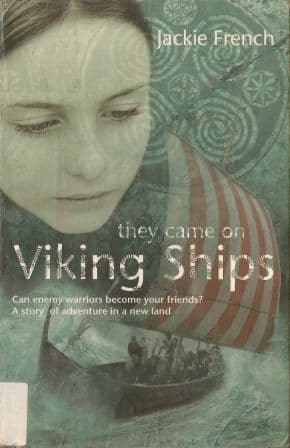
Jackie French (2005)
Genre
Children's / Historical Fiction / Young Adult / Romance
Reading Time
360 min
Key Themes
See below
Sign in to track this book
Captured by Vikings and taken to a world of fierce warriors and unknown seas, a young girl named Hekja must navigate betrayal, form unexpected bonds, and outrun her past to find her place.
The story begins in a small, isolated village in what is likely northern England or Scotland. Hekja, a young girl known for her swiftness, lives a simple life with her family and her loyal dog, Riki Snarfari. One day, Viking longships arrive, breaking the peace. The raiders, led by Freydis, pillage the village, kill many inhabitants, and capture the survivors. Hekja, despite trying to flee with Riki, is caught and taken aboard a Viking ship. Her world changes. She watches her home burn and realizes she is now a slave in an alien world, far from everything she knows.
On the longship, Hekja experiences the harsh realities of Viking life. She is assigned as a thrall (slave) to Freydis, a fierce and respected Viking woman who is Leif Erikson's sister. Freydis is initially cold and demanding, testing Hekja's resilience. Hekja, though terrified, quickly learns to adapt, performing tasks under the crew's watchful eyes. Her only comfort is Riki Snarfari, who protects her. During the long voyage, Hekja observes the Vikings, slowly understanding their customs and community dynamics, even as she longs for freedom.
The longship reaches Greenland, where Freydis and her crew settle. Hekja works in the Viking settlement, doing daily chores and assisting Freydis. She struggles with the language barrier and unfamiliar environment but gradually learns Old Norse words. Here, she meets Bjorn, a kind-hearted Viking man who shows her more compassion than others. Bjorn, intrigued by Hekja's spirit and her dog, often tries to communicate with her, offering small gestures of kindness that begin to lessen Hekja's distrust and loneliness, making her feel less like an outsider.
Life in the Greenland settlement is challenging but helps Hekja grow. She learns about farming, fishing, and survival in the cold northern climate. Her speed, which once saved her, proves useful in hunting and gathering. Freydis, while still strict, starts to see Hekja's intelligence and resourcefulness. Hekja also forms a cautious friendship with other thralls and some younger Vikings, including Bjorn, whose kindness becomes a quiet comfort. She begins to see the Vikings not just as brutal raiders, but as complex people with their own lives and struggles.
Driven by the promise of new lands and resources, Freydis organizes an expedition to Vinland, the land her brother, Leif Erikson, discovered. Hekja, as Freydis's thrall, must join the voyage. The journey is long and dangerous, with storms and unknown ocean vastness. During this time, Hekja's bond with Riki Snarfari deepens, as does her unspoken connection with Bjorn. She observes Freydis's leadership and ambition, gaining a deeper, though still fearful, understanding of the Viking spirit of exploration and conquest. The anticipation of reaching Vinland fills her with dread and curiosity.
The expedition reaches Vinland, a lush and fertile land that contrasts sharply with Greenland's harshness. The Vikings establish a temporary settlement, and Hekja is tasked with duties, including foraging. Soon, they meet the native inhabitants, whom the Vikings call 'Skraelings.' Initially, there are attempts at peaceful trade, with Hekja often acting as an intermediary due to her quick learning of gestures and her non-threatening appearance. However, cultural misunderstandings and a growing sense of territoriality lead to skirmishes and conflict, placing Hekja in a dangerous position between two clashing cultures.
As the Vinland settlement faces challenges, including dwindling resources and increasing hostility from the Skraelings, tensions rise within the Viking camp. Freydis, driven by her desire for wealth and glory, becomes more ruthless and manipulative. She clashes with other leaders, particularly her brother-in-law, Thorvald, and his men. Hekja sees Freydis's cunning and brutality firsthand, realizing the extent of her mistress's ambition. This period increases Hekja's fear, as she is caught in the crossfire of the Vikings' internal power struggles and their external conflicts with the Skraelings.
The conflict ends in a brutal act by Freydis, who betrays and murders many men from the other ship, including Thorvald, to gain sole control of the Vinland resources. Hekja is horrified by this atrocity and realizes she cannot stay with Freydis. With Riki Snarfari by her side, and aided by Bjorn, who is also disgusted by Freydis's actions, Hekja decides to flee the Viking settlement. This escape is a desperate gamble for survival. She must now navigate Vinland's unknown wilderness, pursued by Freydis's remaining loyalists and facing the dangers of the native land.
Hekja and Bjorn, with Riki Snarfari, brave the Vinland wilderness. They rely on Hekja's survival skills and Bjorn's hunting knowledge. They face hunger, exposure, and the constant threat of discovery by Freydis's men or hostile Skraelings. During this perilous journey, their relationship deepens from cautious friendship to love and partnership. They eventually meet a small, peaceful group of Skraelings who, after initial suspicion, offer them shelter and assistance. This encounter gives Hekja a new perspective on the native people, challenging her ideas and offering a glimpse of a different way of life.
Hekja and Bjorn, having survived the Vinland wilderness, eventually make their way back to Greenland, by a different route or means than Freydis. They arrive to find the settlement in disarray, with rumors and suspicions about Freydis's actions in Vinland. Hekja, with Bjorn's support, bravely confronts the community leaders, including Leif Erikson, and reveals the full extent of Freydis's treachery and murders. Her testimony, corroborated by Bjorn, exposes Freydis's acts, leading to a trial or community judgment against her. This act of courage shows Hekja's complete change from a frightened thrall to a strong, independent woman.
After Freydis is dealt with (often depicted as being ostracized or facing consequences), Hekja is free. She chooses to stay in Greenland with Bjorn, having found love and a sense of belonging with him. They establish their own farm, building a life together in the harsh but beautiful land. Hekja, no longer a thrall or an outsider, embraces her new identity. She and Bjorn start a family, blending their different cultures and experiences. The story ends with Hekja finding physical safety, emotional peace, and a deep connection to her chosen home and the man she loves, surrounded by her new family.
The Protagonist
Hekja transforms from a frightened, enslaved girl into a strong, independent woman who finds love, family, and a sense of belonging in a new land.
The Antagonist
Freydis remains largely static in her ruthless ambition, ultimately facing consequences for her treacherous actions.
The Supporting
Bjorn grows in courage and conviction, choosing love and morality over loyalty to a tyrannical leader, ultimately building a family with Hekja.
The Supporting
Riki Snarfari's loyalty remains steadfast, serving as a constant source of comfort and a symbol of Hekja's enduring spirit.
The Mentioned
Leif's character remains consistent as a respected, just leader, ultimately presiding over Freydis's judgment.
The Supporting
Their portrayal shifts from an unknown 'other' to a people with their own culture and, for Hekja, potential allies.
The Supporting
Thorvald's arc is tragically cut short by Freydis's betrayal, serving as a catalyst for Hekja's escape.
Hekja's journey is about finding where she belongs after being removed from her homeland. Initially, she struggles with her identity as an outsider among the Vikings. As she adapts, she questions if she can ever truly be free or find a home. Her love for Bjorn and her choice to build a life in Greenland show her creation of a new identity and a chosen family. Belonging is not solely tied to one's birthplace but can be forged through shared experiences and love. This is clear when she settles with Bjorn, no longer defined by her past as a slave but by her present as a free woman and partner.
“She was no longer Hekja of the burning village, nor Freydis's thrall. She was Hekja, of this land, with Bjorn.”
The harsh realities of the Viking world, the perilous sea voyages, and Vinland's unforgiving wilderness test Hekja's will to survive. From the initial raid on her village to her escape through the Vinland forests, Hekja shows remarkable resilience. Her quick thinking, physical agility, and ability to adapt to new languages and customs are crucial to her survival. This theme is powerfully shown in her journey with Bjorn through the Vinland wilderness, where they must rely on their wits and strength to overcome hunger, cold, and danger, highlighting the human capacity to endure and overcome extreme adversity.
“To stay alive was a choice, one she made every waking moment.”
The story shows the collision of different cultures: Hekja's peaceful village life, the expansionist Viking society, and Vinland's indigenous cultures. Hekja acts as a bridge, observing and slowly understanding the Vikings, and later interacting with the Skraelings. This theme explores the misunderstandings, prejudices, and violence that arise when distinct cultures meet, but also the potential for empathy and mutual respect. The initial trade, followed by conflict with the Skraelings, and Hekja's eventual acceptance by a native group illustrate the complex nature of cultural encounters.
“They spoke with their hands, and with their hearts, finding understanding where words failed.”
Love and loyalty are central to Hekja's emotional journey. Her bond with Riki Snarfari gives her constant comfort and a connection to her past. The growing love between Hekja and Bjorn offers her hope, companionship, and a reason to fight for a future. Bjorn's loyalty to Hekja, even over his own people's more brutal customs, is a turning point in her life. These relationships show the power of emotional connection to sustain individuals through hardship and to provide a foundation for a new life, contrasting sharply with Freydis's treachery and ambition.
“In the cold, vast world, their hands found each other, a warmth against the ice.”
Hekja's physical voyages mirror her internal transformation and search for identity.
The numerous physical journeys Hekja undertakes—from her village to the longship, across the ocean to Greenland, and then to Vinland, and finally back to Greenland—serve as a powerful metaphor for her internal journey. Each new location and voyage forces her to adapt, confront new challenges, and shed old identities. The harshness of the sea and land reflects the emotional turmoil she experiences, while her eventual choice to settle and build a life in Greenland symbolizes her finding inner peace and a true sense of belonging. The journey is not just about reaching a destination, but about the profound changes wrought within her along the way.
Riki Snarfari embodies unwavering loyalty and provides Hekja with emotional support.
Riki Snarfari, Hekja's dog, is a classic example of a loyal animal companion. He serves multiple functions: he is a source of emotional comfort and a tangible link to Hekja's lost past, offering her solace in her darkest moments. He also acts as a protector, often sensing danger and providing an early warning. His unwavering presence highlights the theme of loyalty and serves as a constant reminder of Hekja's own inner goodness and capacity for love, contrasting with the often brutal human world she inhabits. Riki's survival alongside Hekja symbolizes her own resilience.
Freydis's ruthlessness and ambition highlight Hekja's compassion and morality.
Freydis serves as a crucial foil to Hekja. While both characters are strong and capable in their own ways, Freydis embodies ambition, ruthlessness, and a willingness to commit any act for power and personal gain. Her actions, particularly the betrayal and murder of her fellow Vikings in Vinland, sharply contrast with Hekja's inherent morality, compassion, and desire for peace and justice. Freydis's character underscores the dangers of unchecked ambition and provides the primary external conflict that drives Hekja's escape and subsequent quest for justice, ultimately affirming Hekja's values.
Vinland represents both opportunity and danger, and a place of ultimate decision.
Vinland, the newly discovered land, acts as a significant plot device. It is initially presented as a land of opportunity and resources, enticing the Vikings with its promise of wealth. However, it quickly becomes a place of extreme danger, marked by conflict with the native Skraelings and, more critically, by Freydis's heinous betrayal. For Hekja, Vinland is the crucible where she is forced to make her ultimate choice: to remain a thrall under a tyrant or to risk everything for freedom and a different future. It is the setting for her greatest trials and the forging of her relationship with Bjorn.
“The sea was a harsh mistress, but she was also a generous mother, if you knew how to ask.”
— Reflecting on the Vikings' relationship with the ocean.
“Fear can be a useful tool, a sharp knife to cut through indecision, but it can also be a heavy chain.”
— A character contemplating the role of fear in battle and life.
“Sometimes the greatest strength is knowing when to bend, not break.”
— A lesson learned about adaptability and resilience.
“Love, like the longships, could carry you to new lands, but it also demanded a steady hand on the tiller.”
— A metaphor for the challenges and rewards of romance.
“The whispers of the past are never truly silent; they just wait for ears willing to listen.”
— Emphasizing the importance of history and legacy.
“A true leader doesn't just point the way; they walk it, even when the path is dark.”
— Describing the qualities of effective leadership.
“There are many kinds of courage. The kind that wields an axe, and the kind that holds a heart steady in the face of loss.”
— Distinguishing between different forms of bravery.
“The sagas tell of heroes, but they rarely speak of the quiet strength of those who waited at home.”
— Highlighting the often-unseen struggles of those left behind.
“To truly see a new land, you must first let go of the old one in your heart.”
— About embracing change and new beginnings.
“The gods may spin the threads of fate, but it is our hands that weave the pattern.”
— A reflection on free will versus destiny.
“Even the mightiest oak began as a tiny seed, vulnerable but full of potential.”
— A reminder of growth and hidden strength.
“A song can carry more truth than a thousand shouted words.”
— Discussing the power of art and storytelling.
“The wind carries the scent of distant lands, and with it, the promise of adventure.”
— Evoking the allure of exploration and the unknown.
“Home is not always a place, but a feeling, a warmth shared with those you love.”
— A comforting definition of home, especially for wanderers.
Ready to see how well you understood this book? Take our interactive quiz with 10 questions.

Biography coming soon.

Dan Gemeinhart
4.5

Kate O'Hearn
4.4

Jeanne Birdsall
4.4

Jen Wang
4.4

Wendelin Van Draanen
4.3

John Marsden
4.3

Chris Van Allsburg
4.3

Jennifer A. Nielsen
4.2