“You can live your whole life in a day if you make it count.”
— Rufus contemplating how to spend his last day.

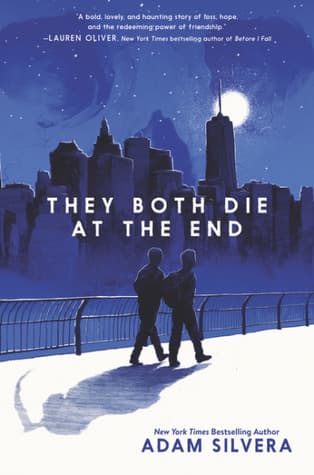
Adam Silvera (2017)
Genre
Fantasy / Science Fiction / Young Adult / Romance
Reading Time
360 min
Key Themes
See below
Sign in to track this book
On a day when a futuristic service announces their impending deaths, two strangers connect through an app to find love and live an entire lifetime of adventure before their final goodbyes.
On September 5th, shortly after midnight, Mateo Torrez receives a call from Death-Cast informing him that he will die within the next 24 hours. A reclusive and anxious seventeen-year-old, Mateo is alone in his apartment, his father in a coma and his mother deceased. Across the city, Rufus Emeterio, also seventeen, receives the same call while in a foster home. Rufus, an orphan, has just violently beaten his ex-girlfriend's new boyfriend, Peck, after discovering Peck was responsible for the death of Rufus's family months prior. Fearing arrest and wanting to spend his End Day freely, Rufus flees the foster home, leaving his friends Tagoe, Malcolm, and Aimee to face the consequences.
Mateo, overwhelmed by panic and loneliness, initially considers spending his End Day alone. But the thought of dying without truly living pushes him to action. He downloads the Last Friend app, a platform for Deckers (those called by Death-Cast) to find companionship. He almost connects with his friend Lidia, but decides against it, not wanting her to witness his final moments. Meanwhile, Rufus, after a brief encounter with Peck's friends who want revenge, also turns to the Last Friend app. He initially searches for someone to simply hang out with, but his profile catches Mateo's attention, leading them to match.
Mateo, summoning courage, decides to meet Rufus. They arrange to meet at the Make-A-Moment travel experience, a virtual reality simulation center. Their initial encounter is awkward, with Mateo's shyness contrasting with Rufus's more outgoing, yet guarded, demeanor. Rufus, still reeling from the events with Peck, is hesitant to fully open up. They share their first 'moment' in a virtual simulation of traveling the world, and Mateo begins to shed some of his inhibitions, feeling a connection with Rufus despite their differences and the grim circumstances of their meeting.
Determined to truly live, Mateo suggests they do something dangerous. They go to a tattoo parlor, where Mateo gets an infinity symbol and Rufus gets a broken heart. They then visit a 'Graveyard of the Unlived,' a memorial for Deckers, which affects Mateo deeply. Later, they go to a high-rise building and illegally climb onto the roof, looking out over the city. This experience is terrifying yet exhilarating for Mateo, who has always played it safe. Rufus encourages him, helping him confront his fears and embrace the present moment, deepening their bond.
As the day progresses, Mateo and Rufus begin to confide in each other. Mateo reveals his regret about not visiting his comatose father more often and his fear of dying alone. Rufus shares the tragic story of his family's death and his guilt over his actions against Peck. They visit Mateo's father at the hospital, where Mateo finally says goodbye, finding peace. They then go to a karaoke bar, where Mateo, surprisingly, sings with Rufus, further breaking free from his shell. Their shared vulnerability brings them closer, blurring the lines between friendship and something more.
Mateo and Rufus continue their adventure, visiting a diner where they talk about their lives and dreams. They share their first kiss, a moment of unexpected tenderness and passion that solidifies their romantic connection. They spend time at a local park, enjoying the simple beauty of nature. As evening approaches, they realize their time is running out. They acknowledge their growing feelings for each other, recognizing the bittersweet irony of finding love on their End Day. They decide to spend their final hours together, cherishing every last moment.
With the night deepening, Mateo and Rufus return to Mateo's apartment, seeking comfort and intimacy in their final hours. They make love, a deeply emotional and significant act for both of them, especially for Mateo, who had never experienced such intimacy. They talk about their hopes and fears, wishing they had more time. Rufus expresses his love for Mateo, and Mateo reciprocates, acknowledging that their brief time together has been the most meaningful of his life. The weight of their impending deaths hangs heavy, but their connection offers solace.
While Rufus is in the bathroom, Mateo decides to make some tea. He lights the gas stove, but then hears Rufus call for him. Distracted, Mateo forgets to turn off the gas fully. As he walks away from the stove, a small explosion occurs from the leaking gas. Mateo is instantly killed, dying not from a grand gesture or a dramatic event, but from a mundane accident. Rufus emerges from the bathroom to find Mateo dead, his heart shattered. The suddenness and ordinariness of Mateo's death show the unpredictable nature of their End Day.
Devastated by Mateo's death, Rufus holds him, consumed by grief and loneliness. He knows his own time is running out. He contacts his foster siblings, Tagoe, Malcolm, and Aimee, who are relieved he's safe, and he tells them he loves them. He walks out of the apartment, unable to stay in the place where Mateo died. He walks through the city, remembering his life, his family, and the love he found with Mateo. He finds a quiet spot in a park, feeling Mateo's presence and remembering their shared day.
As Rufus sits in the park, remembering the day, a car drives by, and the driver, distracted by his phone, swerves onto the sidewalk. Rufus is hit by the car and dies instantly. His death, like Mateo's, is sudden and unexpected, not a grand, romanticized demise. The novel concludes with both protagonists having died on their End Day, fulfilling the Death-Cast prophecy. Their story, though short and tragic, shows the beauty of living fully and finding connection, even when loss is inevitable.
The Protagonist
Mateo transforms from a reclusive, fearful individual to someone who embraces life, love, and risk, finding profound connection and peace before his death.
The Protagonist
Rufus moves from a place of anger, guilt, and grief to finding healing, love, and acceptance through his connection with Mateo, ultimately finding peace.
The Supporting
Lidia's arc is less central, serving more as a grounded anchor for Mateo and a representation of the life he leaves behind.
The Supporting
Tagoe's arc revolves around his loyalty to Rufus and dealing with the consequences of Rufus's actions.
The Supporting
Malcolm's arc, like Tagoe's, centers on his loyalty and support for Rufus.
The Supporting
Aimee's role is to provide emotional support and highlight the strength of the Plutos' bond.
The Mentioned
Death-Cast serves as a catalyst for the plot; it doesn't have an arc but drives the characters' development.
The Supporting
Peck's role is largely catalytic, driving Rufus's initial actions and subsequent flight.
The central theme of the novel explores how individuals choose to live when confronted with their impending death. Both Mateo and Rufus, despite their different personalities, are driven to experience life and make meaningful connections in their final hours. Mateo overcomes his lifelong anxiety to embrace adventure and intimacy, while Rufus seeks to find peace and make amends. The story shows that true living is not about the quantity of days, but the quality and depth of experience within them. It urges readers to cherish every moment.
“Maybe it's better to live 1 day as a lion than 100 as a sheep.”
On their End Day, Mateo and Rufus are forced to confront who they are and who they want to be. Mateo, always timid, discovers a brave, adventurous, and loving side he never knew existed. Rufus, burdened by guilt and anger, finds healing and vulnerability through his connection with Mateo. Their journey together allows them to shed old ideas of themselves and embrace new aspects of their identities, demonstrating that even when facing death, there is still room for personal growth and self-acceptance.
“I spent my entire life thinking I was this one kind of person, and in the last few hours, I've been someone else entirely.”
The novel portrays the power of human connection and the unexpected emergence of love, even under tragic circumstances. Mateo and Rufus, strangers at the beginning of their End Day, develop a deep, intimate, and romantic bond that transcends their impending deaths. Their love story, though brief, is profound and transformative, offering solace and meaning in their final hours. It highlights that love can flourish anywhere, anytime, and that the impact of connection can outweigh the sorrow of loss.
“I love you, Mateo. And I'm so glad I got to spend my last day with you.”
While Death-Cast predicts the day of death, the novel shows that the exact moment and manner of death remain unpredictable. Both Mateo and Rufus die from unexpected, mundane accidents, rather than grand, heroic gestures. This highlights the arbitrary nature of death and subverts expectations of a dramatic climax. It reinforces that life's end can come at any moment, regardless of planning or premonition. This theme shows the preciousness of each moment and the futility of trying to control the uncontrollable.
“No one gets out of life alive.”
Both protagonists grapple with different forms of grief. Rufus carries the burden of losing his entire family and the guilt over his actions. Mateo grieves his deceased mother and his comatose father, along with the life he feels he hasn't lived. Their shared journey allows them to confront and process these emotions. By the end, they find a degree of acceptance, not just of their own deaths, but of their past losses, finding peace in their final moments and in the connection they formed.
“Grief is a house that has no doors or windows. But it also has no roof, and the sky is always there.”
A fictional organization that predicts and announces the day of death.
Death-Cast is the primary plot device, acting as the catalyst for the entire story. Its calls to Mateo and Rufus set their End Day in motion, forcing them to confront their mortality and make choices about how to spend their final hours. While its methods are unexplained, its existence creates the urgent, finite timeline that drives the characters' actions, accelerates their emotional development, and underscores the novel's themes of living fully and finding connection.
A mobile application for Deckers to find companionship on their End Day.
The Last Friend app serves as the crucial mechanism that brings Mateo and Rufus together. Without it, their paths would likely never cross. It highlights the human need for connection and shared experience, especially in moments of extreme isolation and fear. The app is a modern, tangible representation of the desperate search for meaning and companionship when facing the ultimate unknown, directly facilitating the central relationship of the story.
The story is told from the alternating first-person perspectives of Mateo and Rufus.
The novel employs a dual narrative structure, switching between Mateo's and Rufus's first-person perspectives in alternating chapters. This allows readers deep insight into each character's thoughts, fears, and emotional journey, fostering empathy and understanding for both. It also builds suspense and provides a more comprehensive view of their shared End Day, highlighting their individual struggles and their developing connection from two distinct viewpoints.
Brief glimpses into the lives and deaths of other characters.
Throughout the narrative, the story occasionally shifts to brief, third-person perspectives of minor characters whose lives intersect, however briefly, with Mateo and Rufus, or who are also Deckers on their End Day. These vignettes often subtly foreshadow the protagonists' eventual fates or illustrate the widespread impact of Death-Cast, adding a layer of realism and reminding the reader that death is a universal, yet personal, experience for many beyond the main characters. It reinforces the theme of unpredictability in death.
The emphasis on experiencing things for the first time, knowing they are also the last.
The narrative heavily relies on the symbolism of 'firsts' that are simultaneously 'lasts.' For Mateo, this includes his first real adventure, first tattoo, first kiss, and first sexual experience. For both, it's their first time truly living without inhibition. This device intensifies the emotional impact of each event, highlighting the bittersweet beauty of their short-lived love and the tragic irony of finding profound experiences only when faced with their imminent end, underscoring the theme of living fully.
“You can live your whole life in a day if you make it count.”
— Rufus contemplating how to spend his last day.
“Maybe we're not supposed to know what happens next. Maybe we're just supposed to live.”
— Mateo grappling with the uncertainty of his last day.
“The only way to truly live is to know you're going to die.”
— A philosophical thought about appreciating life.
“We’re all just trying to make it to the end, whatever that end may be.”
— A reflection on the universal human experience.
“It’s not about how long you live, it’s about what you do with the time you have.”
— A common theme emphasized throughout the book.
“Sometimes an ending is just a new beginning.”
— A hopeful perspective on the nature of life and death.
“You can’t cheat death, but you can live your life so that death doesn’t cheat you.”
— A powerful statement about taking control of one's life.
“Every person you meet is living a life you know nothing about.”
— A reminder of empathy and the hidden lives of others.
“The greatest adventure is finding someone to share it with.”
— Mateo realizing the importance of companionship on his last day.
“We die. We live. We love. We lose. And then we do it all again.”
— A cyclical view of life's experiences.
“Even on our last day, we’re still capable of so much.”
— A message of potential and resilience until the very end.
“Life isn't about avoiding the pain, it's about finding the joy despite it.”
— A mature outlook on facing life's challenges.
“It's never too late to make a new memory.”
— Encouraging living in the present and creating experiences.
“Some people are just meant to cross paths, even if only for a day.”
— Reflecting on the unique connection between Mateo and Rufus.
Ready to see how well you understood this book? Take our interactive quiz with 10 questions.
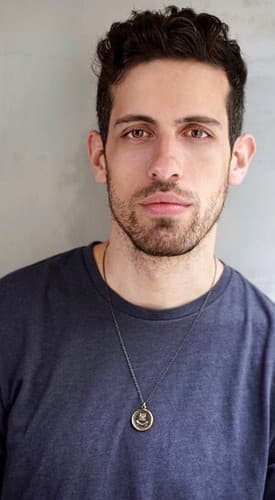
Adam Silvera is a contemporary LGBTQ+ author known for his poignant and emotionally resonant young adult fiction. His most acclaimed novel, "They Both Die at the End," explores themes of mortality, love, and living in the moment. Silvera's work often features diverse characters and tackles complex emotional landscapes, earning him a dedicated readership.







