“Today is August 4, 2026.”
— The house clock announces the date at the very beginning of the story.

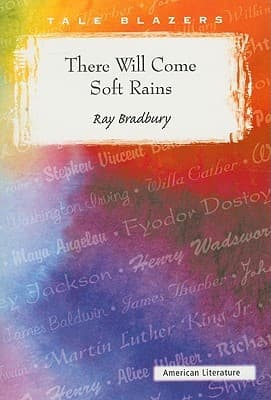
Ray Bradbury (2000)
Genre
Fantasy / Science Fiction
Reading Time
30 min
Key Themes
See below
Sign in to track this book
In a post-human world, a fully automated house meticulously carries out its daily routines, oblivious to the nuclear annihilation that has silenced its inhabitants, painting a poignant portrait of technology's enduring, yet ultimately futile, devotion.
On August 4, 2026, at 7:00 AM, an automated house in Allendale, California, begins its day. Robotic voices announce the time and prepare breakfast, despite no inhabitants being present. The house's systems function meticulously: toasters pop, eggs are cooked, and coffee brews. Silence is broken only by the house's mechanical efficiency. Outside, the sun rises over a ruined city, but the house remains oblivious, or perhaps indifferent, to the devastation beyond its walls. It is a surreal scene of domesticity in a post-apocalyptic setting, highlighting the stark contrast between the house's continued operation and the absence of human life.
As the day progresses, the house continues its programmed tasks, making beds, cleaning floors, and watering the garden. The narration reveals the ghostly imprints of the former occupants: four silhouettes burned into the west side of the house – a man mowing, a woman picking flowers, a boy with his hands up, and a girl with a ball. These permanent shadows are the only remaining evidence of the family, suggesting they were vaporized instantly by a nuclear blast. The house's persistent efforts to maintain a normal household, including preparing baths and laying out clothes, become increasingly poignant as no one is there to use them.
Around 2:15 PM, the family dog, once fat and healthy, now a skeletal, diseased creature, crawls through the kitchen door. Its fur is matted, its eyes glowing with radiation sickness. It whimpers, sniffing at the phantom scent of its owners, desperate for recognition and food. The house, in its programmed response, attempts to identify it and clean up the mess it makes. However, the dog is too far gone. It runs in circles, barking frantically at the stairs, then collapses and dies from radiation exposure. The house's cleaning mechanisms swiftly dispose of its body, leaving no trace of its brief, tragic return.
At 4:30 PM, the house requests a poem. Mrs. McClellan's favorite, 'There Will Come Soft Rains' by Sara Teasdale, is recited from the study ceiling. The poem describes nature's indifference to humanity's destruction, a chilling parallel to the story's setting. The house's calm, melodic voice reads the verses about spring, frogs, and robins, creating a stark contrast with the silent, ruined world outside. This moment highlights nature's ultimate resilience and humanity's insignificance in the face of its own destructive power, as the house, a product of human ingenuity, mechanically fulfills its program amidst the desolation.
As night falls, a strong wind blows a tree branch through a kitchen window, knocking over a bottle of cleaning solvent onto the stove. The solvent ignites, and a small fire begins. The house's automated systems immediately spring into action, attempting to extinguish the blaze. Sprinklers activate, metallic mice scurry to clean up debris, and robotic voices issue warnings. However, the fire spreads rapidly, overwhelming the house's defenses. The initial small spark quickly escalates into a major conflagration, marking the beginning of the end for the once-impenetrable smart home.
The house fights fiercely against the spreading fire. Water is sprayed, fire-fighting robots are deployed, and alarms blare. However, the flames are relentless. The fire, described as having 'hundreds of fiery mouths,' consumes the walls, ceilings, and furniture. Each room succumbs, one by one, with the house's voice growing more frantic and mechanical. The automated systems, designed for maintenance and comfort, are ill-equipped for such a catastrophic event. The struggle is a poignant spectacle of technology's limits against nature's destructive power, even if that nature is indirectly unleashed by humanity.
The battle is lost. The house, once a beacon of technological advancement and domestic order, collapses into a heap of burning rubble and twisted metal. Walls crumble, wires melt, and the last of its automated voices shriek in agony before falling silent. By dawn, only one wall remains standing, a skeleton of its former self, still containing a single, insistent voice. The devastation is complete, leaving behind a stark monument to the futility of human creation in the face of ultimate destruction. The once bustling home is reduced to a smoldering ruin, mirroring the fate of the city around it.
From the lone standing wall, a single, persistent voice repeats, over and over, 'Today is August 5, 2026, at 7:00 AM.' This final, mechanical announcement is a chilling reminder of the house's programmed resilience, even in utter ruin. It is a voice without purpose, without an audience, yet it continues its programmed function, a final, ironic echo in the desolate landscape. The endless repetition of the date and time suggests a cyclical, unceasing march of time, indifferent to the rise and fall of civilizations, and the complete annihilation of human life.
The Protagonist
The house begins as an ordered, functional entity, then descends into chaos and self-destruction, ultimately reduced to a single, repetitive voice.
The Mentioned
They are already gone, their arc completed before the story begins, serving as a catalyst for the themes.
The Supporting
The dog appears, suffers, and dies, serving as a tragic symbol of the war's impact on living creatures.
The Antagonist
The fire grows from a spark to an overwhelming conflagration, culminating in the complete destruction of the house.
The Supporting
They perform their cleaning duties, then futilely attempt to fight the fire, before being destroyed.
This theme explores how both the natural world and advanced technology continue their cycles and functions, utterly unconcerned with human existence or its demise. The automated house meticulously prepares meals and cleans rooms, oblivious to the fact that its owners were vaporized. Similarly, the poem 'There Will Come Soft Rains' emphasizes nature's indifference, with birds singing and frogs croaking, heedless of humanity's absence. The story suggests that humanity, despite its technological prowess, is ultimately a fleeting presence, and the world will continue without it. The house's final, repetitive announcement of the date from the rubble highlights this persistent, indifferent march of time.
“And not one would mind, neither bird nor tree, / If mankind perished utterly; / And Spring herself, when she woke at dawn, / Would scarcely know that we were gone.”
The story is a stark warning against humanity's destructive capabilities, particularly nuclear warfare. The complete annihilation of the McClellan family and the desolation of the city are direct consequences of human actions. The advanced technology of the house, designed for human comfort, ironically outlives its creators, becoming a monument to their self-destruction. The absence of any human survivors and the lingering radioactive landscape paint a grim picture of a future where human ambition and conflict lead to ultimate ruin. The house's eventual destruction by a mundane accident, rather than another bomb, further emphasizes the fragility of human constructs in a post-apocalyptic world.
“The house stood alone in a city of rubble and ashes. This was the one house left standing. At night the ruined city gave off a radioactive glow which could be seen for miles.”
Bradbury vividly illustrates how quickly life and the structures of civilization can be eradicated. The immediate vaporization of the McClellan family, leaving only their silhouettes, highlights the suddenness and totality of the destruction. The once-bustling city is reduced to 'rubble and ashes,' emphasizing the ephemeral nature of human achievements. Even the technologically advanced house, a symbol of human ingenuity, is ultimately vulnerable and succumbs to a simple fire. The story suggests that despite our advancements, life itself is tenuous, and civilization can be torn apart in an instant, leaving only mechanical echoes and desolate landscapes.
“The dog was gone. The house was clean.”
The story is steeped in the irony of advanced technology. The automated house, designed to serve and protect its human occupants, continues its functions long after its creators are gone, making breakfast for no one and cleaning up messes that will never be made again. This creates a haunting contrast between the house's efficient routines and the profound emptiness it inhabits. The technology, meant to enhance human life, ultimately highlights humanity's absence and the futility of its own creations when its purpose is removed. The house's final, desperate, and ultimately failed struggle against the fire further underscores the irony that even the most sophisticated technology has its limits and can be destroyed by seemingly mundane forces.
“The house was an altar with ten thousand attendants, big, small, servicing, attending, in choirs. But the gods had gone away, and the ritual of the religion continued senselessly, uselessly.”
Giving human-like qualities and actions to the automated house.
Bradbury personifies the house, giving it actions and even emotions typically associated with living beings. It 'sings' to itself, 'whistled' to the toaster, 'shrieked' in agony during the fire, and 'died' a 'slow, agonized death.' This technique makes the house a central character, allowing readers to emotionally connect with its futile struggle and its lonely existence. It also highlights the irony of a machine displaying more 'life' than the absent humans it was built to serve, making the story's message about human extinction more impactful and poignant.
Vivid descriptions of emptiness, silence, and destruction.
The story relies heavily on imagery to convey the desolation of the post-apocalyptic world. Descriptions of the 'silent' house, the 'ruined city,' the 'radioactive glow,' and the 'skeletal' dog all contribute to a powerful sense of absence and decay. The most striking example is the 'four opposing blazes' – the silhouettes of the family burned into the house's side – which graphically depict their instantaneous demise. This imagery creates a haunting atmosphere, emphasizing the profound loss and the complete eradication of human life, making the house's continued operation even more unsettling.
The audience knows more than the house, creating tension and poignancy.
Dramatic irony is central to the story's emotional impact. The reader immediately understands that the human family is gone due to a catastrophic event, while the house continues its programmed routines as if they are still present. This creates a profound sense of sadness and futility as the house prepares breakfast, reads poetry, and cleans up for occupants who will never return. The house's ignorance of the wider devastation highlights its mechanical nature and the tragic irony of its continued, purposeless existence, amplifying the story's anti-war message.
The inclusion of Sara Teasdale's poem 'There Will Come Soft Rains' as a direct thematic parallel.
The recitation of Teasdale's poem is a powerful symbolic device. The poem itself, written after World War I, describes nature's indifference to humanity's destruction. By having the automated house read this specific poem in a post-nuclear setting, Bradbury directly reinforces the story's central theme: that nature and the mechanical world will persist, unaffected by human self-annihilation. The poem acts as a meta-commentary, explicitly stating the very message the short story is conveying, making its impact undeniable and deeply resonant with the narrative's bleak outlook.
“Today is August 4, 2026.”
— The house clock announces the date at the very beginning of the story.
“The house was an altar with ten thousand attendants, big, small, significant, insignificant.”
— Describing the automated house and its numerous functions.
“No trace of the family. Perhaps they were on a picnic, at the store, at the beach.”
— The house's internal monologue speculating on the absence of its inhabitants.
“The house stood alone in a city of rubble and ashes. This was the one house left standing.”
— Revealing the devastating aftermath of a cataclysmic event.
“At ten o'clock the house began to die.”
— The house catches fire and begins its struggle for survival.
“The nursery walls glowed. Animals took shape: yellow giraffes, blue lions, pink antelopes, lilac panthers cavorting in crystal-clear paradises.”
— Description of the automated nursery, still functioning after the family's disappearance.
“The dog was gone. Its skeleton lay on the floor, the flesh eaten away by radiation.”
— A chilling detail revealing the fate of the family pet.
“There Will Come Soft Rains and the Smell of the Ground, And Swallows circling with their shimmering sound; And Frogs in the pools singing at night, And Wild plum-trees in tremulous white;”
— The house recites a poem by Sara Teasdale, oblivious to the irony of its situation.
“Not one would mind, neither bird nor tree, if mankind perished utterly.”
— A line from Sara Teasdale's poem, highlighting nature's indifference to human fate.
“And Spring herself, when she woke at dawn, Would scarcely know that we were gone.”
— Another line from Teasdale's poem, emphasizing humanity's insignificance in the grand scheme.
“The house tried to save itself.”
— As the fire rages, the house's automated systems desperately try to extinguish it.
“In the kitchen, an instant oatmeal, already warm, was steaming.”
— A detail highlighting the house's continued, pointless routine.
“Dawn came, but not the sun.”
— The final moments of the story, as the house collapses and only one wall remains.
“Today is August 5, 2026.”
— The sole remaining wall of the house, with its clock, announces the new day.
Ready to see how well you understood this book? Take our interactive quiz with 10 questions.
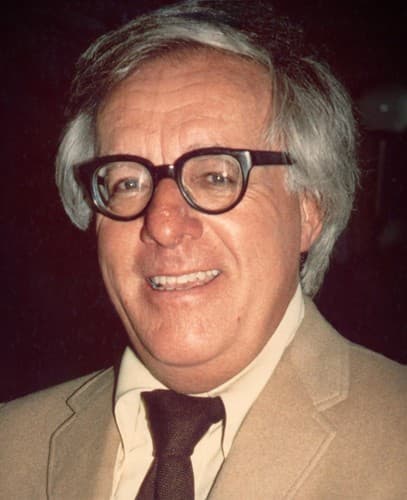
Ray Douglas Bradbury was an American author and screenwriter. One of the most celebrated 20th-century American writers, he worked in a variety of modes, including fantasy, science fiction, horror, mystery, and realistic fiction.







