“Then I saw something that made my heart jump. A small boy, about my age, was hiding in the shadows.”
— Felix encounters another child while hiding from Nazis in occupied Poland.

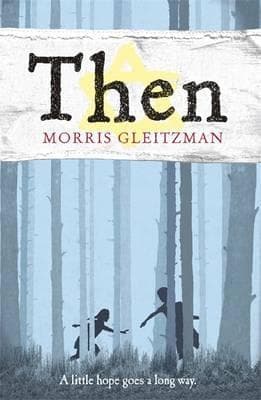
Morris Gleitzman (2008)
Genre
Children's / Historical Fiction / Young Adult
Reading Time
180 min
Key Themes
See below
Sign in to track this book
In Nazi-occupied Poland, a young Jewish orphan named Felix plans a make-believe escape, thinking new parents and safety await, even as a train to a concentration camp carries him and his friend Zelda further into danger.
Felix and Zelda, captured by Nazis, are in a cattle car on a train to a concentration camp. Felix holds onto hope, fueled by his promise to Zelda that they will find new parents and be safe. He tries to comfort Zelda, who is scared. Zelda, a young Jewish girl who has suffered much, relies on Felix's stories and optimism, even when it seems untrue. Felix, always the storyteller, makes up tales of their future freedom, trying to distract Zelda from the train's terrifying reality. The journey is hard, with little food or water, and constant fear.
As the train slows, Felix sees a chance. He notices a loose plank in the cattle car's floor. With effort and help from other prisoners, they open it. During a moment of confusion and gunfire outside, Felix pushes Zelda through the opening. He follows, landing hard. They scramble away from the tracks, avoiding shots from Nazi guards who know of the escapes. The escape is chaotic, with gunfire and shouts behind them. They run into the dense forest, hearts pounding, driven by the need to survive.
Felix and Zelda are lost in a large forest, cold, hungry, and scared. Felix tries to keep Zelda's spirits up with stories and by pretending they are on an adventure. They look for food, finding small berries and roots. The forest is dangerous, with unknown sounds and shadows. They fear being found by Nazi patrols. Zelda, though strong, is often scared and tired, relying on Felix to lead. Felix acts as protector, his optimism a shield against their harsh reality. They find temporary shelter in hollow trees and under thick bushes, always moving, always looking for safety.
After days of walking, Felix and Zelda find a hidden camp in the forest. It is a group of Polish resistance fighters, led by a stern but kind man named Genia. At first, the fighters are careful of the children, fearing they might be spies or attract attention. But Felix's honesty and Zelda's vulnerability convince them to offer shelter. The fighters are a diverse group, united by their fight against the Nazis. They live a hard, disciplined life, always on guard. Felix and Zelda see the realities of war through these fighters, seeing their courage and their sadness.
Life with the resistance fighters is hard. Felix and Zelda are given small jobs, like cooking or gathering wood. They learn about the fighters' missions, struggles, and losses. Felix tries to help, even telling stories to the tired fighters. He becomes close to Genia, seeing him as a possible new father. Zelda, still scared, finds some comfort in the routine and having other people around. But the constant threat of discovery by the Nazis remains. They see the fighters' determination but also their despair and the war's brutal results, showing them the grim reality of their world.
One day, Nazi soldiers find and attack the resistance camp. Gunfire and explosions fill the forest. Felix, Zelda, and the fighters fight, but they are outnumbered. During the battle, many fighters are killed or caught. Genia, trying to save the children, tells Felix to take Zelda and run, to find a safe place. Felix, sad but determined to protect Zelda, pulls her away from the fighting. He sees the violence and loss as they escape into the woods again, leaving behind their temporary home and the people who gave them hope.
After the attack, Felix and Zelda are alone again, shaken by the violence. They walk through the war-torn area, trying to avoid Nazis and destruction. Felix's optimism is tested, but he holds onto it for Zelda. They meet hungry peasants, see bombed villages, and face constant danger. Zelda becomes weaker and more frail. Felix tries to find food and shelter, his stories becoming more frantic as he tries to shield Zelda from the harsh truth of their struggle in a world that seems to want to destroy them.
Felix and Zelda eventually find a small, isolated farm. The farmer, a kind Polish man, and his wife, despite their own problems, feel sorry for the children and offer them food and shelter. They have a daughter, Bronia, who is Felix's age. For a short time, Felix and Zelda have a normal life, helping with farm work and sharing meals. Felix finds a friend in Bronia, and Zelda enjoys the simple comforts. But this peace is fragile; the threat of Nazis is always there, and the farmer worries about the risk of hiding Jewish children.
Sadly, Nazi soldiers eventually raid the farm. The farmer and his family try to hide Felix and Zelda. In the chaos, the farmer makes a sacrifice, creating a distraction for the children to escape. Felix and Zelda see the Nazis' cruelty again, and the deep kindness and sacrifice of their temporary protectors. They flee into the night, heartbroken and carrying the weight of the farmer's sacrifice. This event further breaks Felix's hope; he deals with the repeated loss of those who help them and the war's endless cruelty.
After the farm raid, Zelda's health quickly worsens. She becomes very sick, weak, and cannot walk. Felix, desperate, carries her through the snowy landscape, his own strength fading. He tries to keep her alive with his stories, but even his imagination starts to fail under the pressure. He finds a small, abandoned shed for shelter, trying to keep Zelda warm. He is filled with fear and sadness, realizing his promise to find new parents and safety might not be possible. His usual optimism is replaced by helplessness as Zelda slips away.
As Zelda's condition becomes critical, Felix faces an unbearable choice. He knows she is suffering greatly and that her end is near. In an act of love, Felix decides to end Zelda's suffering, giving her a quiet, peaceful departure. He holds her close, whispering his most comforting stories, making sure her last moments are filled with love and warmth instead of fear. This sad moment marks the end of his journey with Zelda, leaving Felix alone and devastated, his childhood innocence shattered by the horrors he has seen and the choices he had to make.
After Zelda's death, Felix is alone, full of grief but also hardened by his experiences. He buries Zelda carefully and continues his journey, no longer driven by the need to protect her, but by a deeper will to survive. His stories now hold loss and memory. He is no longer the innocent boy who believed in happy endings, but a survivor who has seen humanity's worst. The details of his continued journey are somewhat open, but it is clear that Felix, though scarred, will carry the memory of Zelda and his experiences, changed forever by the war.
The Protagonist
Felix transforms from a naive boy who believes in happy endings to a hardened survivor who has witnessed profound loss and made unimaginable sacrifices, yet retains a core of humanity.
The Supporting
Zelda's arc is one of increasing vulnerability and suffering, ultimately succumbing to the harsh realities of the war.
The Supporting
Genia remains a steadfast leader, making difficult choices to protect his people, even at great personal cost.
The Supporting
Bronia's arc is brief, serving as a symbol of lost innocence and the fleeting nature of safety during wartime.
The Supporting
Their arc culminates in a heroic sacrifice, demonstrating the ultimate cost of compassion during the Holocaust.
The Antagonist
The Nazi soldiers serve as a static, oppressive force, consistently representing the threat and brutality of the war.
Felix uses storytelling as a way to cope, for himself and to comfort Zelda. His stories often involve finding new parents and a happy future, offering hope in dark times. For instance, on the train or lost in the forest, Felix invents stories to distract Zelda from fear, hunger, and cold. This theme shows how imagination can help people survive psychologically, creating a temporary shield against unbearable truth, even when it becomes hard to maintain.
“"I had a plan for me and Zelda. Pretend to be someone else. Find new parents, be safe forever."”
The novel shows how war affects children. Felix and Zelda face terrible things, seeing violence, death, and betrayal. Felix loses his childhood innocence as he takes on the job of protecting Zelda and making adult decisions, leading to the difficult choice he makes about Zelda's suffering. Their journey is a constant struggle that removes any normal childhood, replacing it with trauma, fear, and an early understanding of human cruelty and sacrifice.
“"I wasn't a child any more. I was a protector. A survivor. A person who had seen too much."”
Throughout the story, Felix balances hope and despair. His optimism pushes him and Zelda forward, even when things are bad, like their escape from the train or time with the resistance fighters. However, this hope is constantly challenged by the Holocaust's realities—losing loved ones, constant threats, and repeated failures to find lasting safety. The novel explores how hope can motivate, but also how it can be fragile and broken by suffering, leading to deep despair.
“"A little hope goes a long way. But sometimes, even a lot of hope wasn't enough."”
The book contrasts the Nazis' extreme cruelty with others' kindness. The Nazis treat Jewish people as less than human, leading to persecution and genocide. In contrast, the Polish resistance fighters, the farmer and his family, and some other prisoners on the train show great compassion, courage, and selflessness, risking their lives to help Felix and Zelda. This theme explores the moral choices people make during wartime, showing human endurance and the ability to feel empathy even when there is widespread evil.
“"Some people, I thought, even in the middle of all this horror, still found a way to be kind."”
Narrative told through the eyes of young Felix, shaping the reader's understanding.
The story is told entirely from Felix's first-person perspective. This device allows the reader to experience the horrors of the Holocaust through the eyes of a child, making the events more immediate, personal, and profoundly impactful. Felix's naive interpretations, his attempts to make sense of the incomprehensible, and his reliance on storytelling create a unique lens through which the brutal realities are filtered. This perspective emphasizes the loss of innocence and the psychological toll of war on children, often juxtaposing Felix's hopeful internal monologue with the grim external reality, heightening the emotional impact.
Felix's imaginative tales serve as a shield against trauma for himself and Zelda.
Felix constantly invents stories and scenarios, particularly for Zelda, to explain their harsh reality in more palatable terms or to offer a vision of a hopeful future. This isn't just a character trait but a core narrative device. It highlights the psychological need for narrative during extreme trauma, acting as a form of self-preservation. As the story progresses and the reality becomes too grim to ignore, Felix's stories become more desperate and eventually falter, mirroring his own declining hope and the overwhelming nature of their suffering. This device underscores the theme of the power and limits of imagination.
The constant movement of Felix and Zelda symbolizes their displacement and search for safety.
Felix and Zelda are almost constantly on the move: escaping the train, wandering through the forest, seeking refuge with partisans, moving to a farm, and then fleeing again. This perpetual journey is not merely a plot driver but a powerful symbol of the displacement, homelessness, and relentless pursuit faced by Jewish people during the Holocaust. It represents their lack of a safe place, their forced rootlessness, and the unending search for an elusive sanctuary. Each temporary haven is eventually destroyed, reinforcing the theme of constant threat and the fragility of safety during wartime.
Felix's persistent hope often subtly hints at the inevitable challenges and disappointments.
Felix's unwavering optimism, while a coping mechanism, often serves as a form of tragic foreshadowing. When he confidently declares they will find new parents or that a situation will turn out well, the reader, with the benefit of historical context, understands the immense unlikelihood of such an outcome. This creates dramatic irony and builds tension, as the reader anticipates the inevitable shattering of Felix's hopes. For example, his conviction that the partisans will be their new family is soon dashed by the camp attack, making the subsequent events even more heartbreaking. It underscores the profound innocence Felix is losing.
“Then I saw something that made my heart jump. A small boy, about my age, was hiding in the shadows.”
— Felix encounters another child while hiding from Nazis in occupied Poland.
“I promised myself I would never forget what happened here. Not ever.”
— Reflecting on the atrocities witnessed during the Holocaust.
“Sometimes the best way to stay alive is to pretend you're already dead.”
— Felix learns survival strategies in a dangerous environment.
“Books are like friends. They keep you company when you're lonely.”
— Felix finds solace in reading amidst chaos.
“We have to be careful who we trust. Not everyone is who they say they are.”
— A lesson learned from dangerous interactions with strangers.
“Even in the darkest times, there are still good people.”
— Felix experiences kindness from unexpected sources.
“I wish I could go back to before, when everything was simple.”
— Felix longs for his pre-war life and innocence.
“Stories help us remember who we are.”
— Felix uses storytelling to preserve identity and history.
“Sometimes being brave means doing nothing at all.”
— Learning that survival can require patience and stillness.
“The world is a big place, but right now it feels very small.”
— Felix feels trapped and isolated in hiding.
“We have to keep moving, or they'll find us.”
— A constant reminder of the peril faced by Felix and others.
“I don't understand why people hurt each other.”
— Felix questions the violence and hatred around him.
“Every day is a gift, even the hard ones.”
— Finding value in survival and small moments of joy.
“We have to stick together, no matter what.”
— Emphasizing the importance of solidarity in difficult times.
Ready to see how well you understood this book? Take our interactive quiz with 10 questions.

Biography coming soon.
Dan Gemeinhart
4.5

Kate O'Hearn
4.4

Jeanne Birdsall
4.4

Jen Wang
4.4

Wendelin Van Draanen
4.3

John Marsden
4.3

Chris Van Allsburg
4.3
Jennifer A. Nielsen
4.2