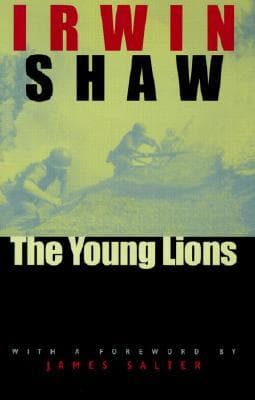
New Year's Eve in the Alps
The novel opens on New Year's Eve, 1938, in an Austrian ski resort. Christian Diestl, a handsome ski instructor, watches the crowd, including American tourists Michael Whitacre and Noah Ackerman. Christian is an idealistic young man, already a Nazi Party member, who believes in a revitalized Germany. He is initially portrayed as naive, drawn to the party's talk of national pride. He briefly flirts with an American woman, Margaret Freemantle, showing his initial innocence before the war's horrors consume him. This scene sets up Christian's character and the pre-war atmosphere.
Michael Whitacre's Hollywood Discontent
In 1940, in Hollywood, Michael Whitacre, a successful but cynical film producer, lives in a superficial world. He has privilege and intellectual leanings, but feels disillusioned. He is having an affair, and his life feels empty despite its glamour. News of the war in Europe is a distant hum, but it begins to bother him. He struggles with the moral implications of American neutrality and his own comfortable life while the world burns. His initial reluctance to get involved reflects a common feeling among some Americans before Pearl Harbor, setting up his eventual change.
Noah Ackerman's Love and Early Struggles
Noah Ackerman, a shy, intelligent Jewish man, is in love with Hope Plowman. They marry just as the United States enters the war after Pearl Harbor. Noah, driven by duty, enlists in the army. He immediately faces brutal antisemitism from fellow recruits during basic training. He is harassed, especially by Private Rickett, who shows the prejudice of the era. Despite his gentle nature, Noah refuses to back down, showing an inner strength that will define his wartime experience. Hope's support helps him.
Christian's Early War Experiences
Christian Diestl's initial enthusiasm for the war quickly fades as he experiences combat. He participates in the invasion of France, seeing atrocities and the dehumanizing effects of war. Later, he transfers to the Eastern Front, where fighting is even more savage. The vastness of the Russian landscape and the cold take a toll. He begins to question his ideals, seeing cruelty and futility firsthand. His moral compass shifts, and his initial idealism erodes from the horrors he endures and commits.
Michael's Enlistment and Training
Motivated by a growing sense of responsibility, Michael Whitacre enlists in the army, surprising his friends and colleagues. As an older, educated man, he finds the rigid discipline and camaraderie of basic training difficult. He struggles to adapt to the loss of his former status and the mundane routines of army life. He forms a friendship with Private Boyle, a rough but loyal soldier. Michael sheds his civilian cynicism and finds new purpose, though it is uncomfortable and filled with self-doubt.
Noah's Endurance and Leadership
Despite the antisemitism he faces, Noah Ackerman stands out for his courage and intelligence. During training and later in combat, he performs his duties with bravery. He earns the respect of some fellow soldiers, even those who were prejudiced, like Private Rickett, who grudgingly acknowledges Noah's strength. Noah's letters to Hope comfort and motivate him, reminding him what he fights for. He shows that quiet resilience can be a powerful resistance against hatred.
Christian's Descent into Brutality
As the war progresses and the Nazi regime becomes desperate, Christian Diestl changes. He is assigned to an SS unit and participates in brutal acts, including executions of civilians and mistreatment of prisoners. His initial idealism vanishes, replaced by cold pragmatism and indifference to human suffering. He becomes a willing participant in atrocities, showing how war can corrupt even well-intentioned individuals. His journey is one of moral decay.
The European Front: Michael and Noah
Michael Whitacre and Noah Ackerman, in different units, fight across Europe, experiencing the Western Front. Michael, now an officer, uses his intelligence and leadership skills, often questioning strategic decisions. Noah, still a private, shows quiet bravery, his inner strength a constant against the chaos of battle. They are part of the Allied advance, seeing war's devastation and the liberation of towns, moving closer to Germany and their eventual meeting with Christian.
The Concentration Camp
Towards the end of the war, Christian Diestl is present when retreating German forces discover a concentration camp. He does not directly participate in the camp's operations, but the horror of what he sees — emaciated bodies, evidence of extermination — shakes him. For a moment, the enormity of the Nazi regime's evil and his own complicity registers. This scene marks a fleeting flicker of conscience in Christian, a momentary break in his hardened exterior, though it does not change his path.
The Final Confrontation
In the chaotic final days of the war, as Allied forces push into Germany, Michael Whitacre and Noah Ackerman are in a small German town. Christian Diestl, now a desperate soldier, is also there, trying to escape capture. The three men, whose lives the war has intertwined, finally cross paths. In a tense and tragic confrontation, Christian Diestl kills Noah Ackerman. Michael Whitacre then avenges Noah's death, shooting Christian. This climax brings the three stories to a violent and poignant end, showing the arbitrary cruelty of war.
Aftermath and Reflection
After the war, Michael Whitacre returns home, forever changed. He carries the weight of Noah's death and other lost lives. His former cynicism is replaced by a somber understanding of humanity's capacity for good and evil. He reflects on the senselessness of war and its impact on him and the world. The ending is not triumphant, but one of weary survival and deep loss, emphasizing the novel's anti-war message and the lasting scars of conflict. He thinks of Hope and her future without Noah.