“The past is a stubborn ghost, always lurking, always whispering.”
— Reflecting on the enduring impact of childhood experiences and family history on the protagonist's life.

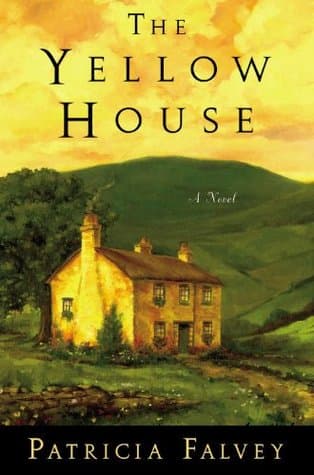
Patricia Falvey (2009)
Genre
Historical Fiction / Spirituality / Romance
Reading Time
450 min
Key Themes
See below
Sign in to track this book
In early 20th-century Northern Ireland, Eileen O'Neill navigates sectarian strife and hidden family secrets, determined to reclaim her ancestral 'Yellow House' and mend her fractured family amidst political and religious turmoil.
The story opens in 1901 with young Eileen O'Neill living in the Northern Irish village of Ballynahown. Her family, once prosperous and united, is now fractured. Her mother, Mary, a devout Catholic, struggles to raise Eileen and her younger brother, Michael, after her husband, Patrick, a Protestant, abandoned them years prior. Patrick's departure was spurred by religious tensions in the community and a tragic incident involving their ancestral home, 'The Yellow House,' which burned down. Eileen often visits her maternal grandmother, Granny O'Neill, who gives her a strong sense of family history and a longing for the lost unity and prosperity represented by their former home. The pervasive sectarianism constantly affects their daily lives.
As Eileen grows older, her family's financial strain becomes unbearable. Determined to contribute and save money to eventually reclaim 'The Yellow House,' she gets a job at the local linen mill. The work is grueling and dangerous, with long hours and meager pay, but Eileen is resilient. She quickly learns the ropes and observes the harsh conditions faced by the working class, both Catholic and Protestant. At the mill, she befriends other young women, sharing their dreams and struggles. She also encounters the mill owner, Mr. Thompson, a Protestant, and his son, David, who represents a different social class and a potential for both conflict and connection.
Eileen's father, Patrick O'Neill, is reintroduced, now living with his Protestant family, the Thompsons, who are prominent mill owners. It is revealed that Patrick, under the name 'Peter Thompson,' is married to Mr. Thompson's daughter and has children with her. This revelation deepens the mystery surrounding his abandonment of Eileen's mother and the burning of 'The Yellow House.' Eileen learns that Patrick/Peter carries his own burdens and secrets, including a past involvement with the Orange Order and a desire to distance himself from his Catholic heritage. The intertwined histories of the O'Neills and Thompsons, and the role of 'The Yellow House' in their past, begin to unravel, hinting at a darker truth.
While working at the mill, Eileen finds herself drawn to David Thompson, the mill owner's son and her half-brother. Initially, their interactions are formal and strained due to their differing social statuses and the unspoken tensions between their families. However, as they spend more time together, a mutual respect and attraction develop. David, though Protestant and from a privileged background, shows a genuine interest in the welfare of the mill workers and a more open-minded perspective than his father. Their budding romance is complicated by the deep-seated sectarian divides, the secrets of their shared family history, and the potential for scandal should their true connection be revealed.
The political landscape of Northern Ireland becomes increasingly volatile. Tensions between Catholics and Protestants escalate, fueled by economic hardship and the ongoing struggle for Home Rule. The mill workers, including Eileen and her friends, become involved in strikes demanding better working conditions and fairer wages. These industrial actions further highlight the class divisions and sectarian loyalties within Ballynahown. Eileen finds herself caught between her loyalty to her community and her growing feelings for David, who, as the mill owner's son, is on the opposing side of these disputes. The strikes bring both solidarity among the workers and violent clashes with authorities.
Driven by her desire to understand her family's past and reclaim her heritage, Eileen meticulously gathers clues about 'The Yellow House' and her father's abandonment. Through conversations with her grandmother, old family acquaintances, and even cautious inquiries with David, she uncovers the full, tragic story. It is revealed that 'The Yellow House' was not simply burned by sectarian violence, but was involved in a more personal betrayal linked to Patrick's desperate attempts to navigate the sectarian divide and protect his family. The truth involves a secret marriage, a forced conversion, and the desperate actions of a man caught between two worlds, ultimately leading to the destruction of his family home and his initial family.
Armed with the full truth, Eileen confronts her father, Patrick/Peter. The confrontation is emotionally charged, as Patrick is forced to reckon with the consequences of his past choices. He reveals the circumstances that led him to abandon Mary and Eileen, including pressure from the Thompson family and the desperate measures he took to survive in a religiously divided society. This revelation, while providing answers, also brings a sense of betrayal and further complicates Eileen's feelings towards him. The truth about his second family and his identity as Peter Thompson further solidifies the deep-seated pain and secrets that have plagued both sides of the family for years.
As Eileen looks deeper, she uncovers the extent of the Thompson family's involvement in her family's misfortunes. Mr. Thompson, David's father, played a significant role in coercing Patrick to abandon his Catholic family and assume a Protestant identity to marry his daughter. Their desire to maintain social standing and consolidate power within the Protestant community led to the systematic disinheritance and marginalization of the O'Neills. This revelation casts a shadow over David and his family, forcing Eileen to grapple with the moral complexities of her relationship with him and the legacy of injustice she is fighting against. The Thompsons are revealed to be more than just powerful mill owners; they are architects of family division.
With all the truths laid bare, Eileen faces a crossroads. She must decide whether to pursue her relationship with David, despite the deep-seated family animosity and the class divide, or to prioritize her family's reclamation and her own independence. She ultimately chooses a path that honors her heritage and her sense of justice. She works tirelessly, saving money and gathering support from her community. Her resolve to rebuild 'The Yellow House' becomes a symbol not just of a physical structure, but of healing and unity for her family and a rejection of the sectarianism that tore them apart. Her decision marks a step towards forging a new, stronger identity for herself and her lineage.
Eileen begins the arduous process of rebuilding 'The Yellow House.' This act symbolizes her efforts to mend the fractured pieces of her family and community. While the physical reconstruction is challenging, the emotional and social rebuilding is even more complex. She works to bridge the divide between her Catholic and Protestant relatives, seeking understanding and forgiveness. Her actions slowly start to inspire others in Ballynahown to look beyond sectarian hatred. David, despite the challenges, remains by her side, offering support and working towards his own reconciliation with his family's past actions. The rebuilding of the house becomes a beacon of hope for a more unified future.
Eileen and David's relationship deepens, showing love's ability to transcend societal and religious divides. They face prejudice and disapproval from both sides of their communities, but their commitment to each other remains strong. Their love story is not without its challenges, as they must constantly confront the lingering bitterness and historical wounds. However, their shared vision for a more tolerant future and their mutual respect help them overcome obstacles. Their union becomes a powerful symbol of hope, demonstrating that reconciliation and unity are possible even in a deeply fractured society like Northern Ireland. They represent a new generation trying to break free from the past.
The novel concludes with Eileen having successfully reclaimed and rebuilt 'The Yellow House,' transforming it into a symbol of resilience and reconciliation. She has reunited her fragmented family and has also played a role in fostering greater understanding within her community. Her relationship with David flourishes, representing a future where love and shared humanity can overcome historical animosities. Eileen's journey is one of personal growth, determination, and an unwavering commitment to justice and unity. The story ends on a hopeful note, suggesting that while the scars of the past remain, a new generation is capable of forging a more inclusive and peaceful future in Northern Ireland, beginning with the foundation of 'The Yellow House'.
The Protagonist
Eileen transforms from a hopeful but naive girl into a strong, independent woman who actively bridges sectarian divides and rebuilds her family's legacy.
The Supporting/Antagonist
Patrick's arc involves a slow, painful confrontation with his past and a reluctant acceptance of the consequences of his choices, leading to a degree of reconciliation.
The Supporting
Mary's arc is one of enduring suffering and quiet resilience, eventually finding a measure of peace through Eileen's efforts to reunite the family.
The Supporting/Romantic Interest
David evolves from a somewhat detached observer of social injustice to an active participant in challenging his family's legacy and supporting reconciliation.
The Supporting
Granny O'Neill remains a steadfast source of wisdom and support, witnessing the beginning of the family's healing through Eileen's actions.
The Antagonist
Mr. Thompson's arc is largely static, representing the unchanging forces of prejudice and power that Eileen must overcome, though he faces challenges to his authority.
The Supporting
Michael's arc is primarily one of growing up in the shadow of family trauma and slowly coming to understand the history Eileen is fighting to mend.
The pervasive and destructive nature of sectarianism between Catholics and Protestants is a central theme. The novel vividly portrays how religious intolerance tears apart families, dictates social standing, and fuels violence. Eileen's family is directly fractured by it, with her father forced to abandon his Catholic identity to survive in a Protestant-dominated society. The burning of 'The Yellow House' is a direct consequence of these tensions, and the mill's workforce is divided along religious lines, leading to strikes and unrest. The theme highlights the personal cost of such deep-seated prejudice and the struggle to overcome it.
“In Ballynahown, your religion was more than a faith; it was your destiny, your family, your very name.”
Characters grapple with their sense of identity, often defined by their religious and family heritage. Eileen's quest to reclaim 'The Yellow House' is a search for her family's lost identity and her own place within it. Her father, Patrick/Peter, embodies the crisis of identity, forced to shed one name and faith for another, leading to a fragmented self. The longing for belonging, both to a family and a community, drives many of the characters' actions. The struggle to reconcile their personal desires with the expectations and divisions of society is a constant internal conflict.
“The Yellow House wasn't just bricks and mortar; it was the bones of who we were, the memory of a name that had almost been erased.”
Despite being torn apart, the enduring power of family bonds and the significance of ancestral heritage are paramount. Eileen's unwavering determination to reunite her family and reclaim 'The Yellow House' stems from a deep respect for her heritage and a desire to heal generational wounds. Granny O'Neill acts as the keeper of this heritage, passing down stories that fuel Eileen's quest. The novel demonstrates how family history, even painful parts, shapes individuals and communities, and how reclaiming that history can be a powerful act of healing and resistance against forces that seek to divide.
“A house isn't just a place to sleep; it's where your roots grow, where your story begins.”
The stark differences between the working class, primarily represented by the mill workers, and the wealthy mill owners like the Thompsons, is a significant theme. Eileen's experiences at the mill expose the harsh realities of poverty, dangerous working conditions, and exploitation. The economic disparities often align with sectarian divides, exacerbating tensions. The strikes and labor disputes highlight the struggle for basic rights and fair treatment, showing how class distinctions further complicate the already fractured society of Northern Ireland. The novel illustrates how economic power can be used to perpetuate social control and injustice.
“We worked our fingers raw, breathing lint, while they sat in their grand houses, counting our sweat as profit.”
The novel explores the difficult but ultimately hopeful path towards reconciliation and forgiveness. Eileen's journey involves not only uncovering truths but also finding a way to forgive her father and bridge the divide between the O'Neills and Thompsons. Her relationship with David symbolizes the possibility of transcending sectarian hatred through love and understanding. The rebuilding of 'The Yellow House' is a metaphor for rebuilding broken relationships and creating a more inclusive community, suggesting that healing can begin when individuals choose empathy over ingrained prejudice.
“To forgive was not to forget, but to choose a different path forward, away from the bitterness that had consumed generations.”
A powerful symbol of family heritage, loss, and the hope for reconciliation.
The Yellow House is not merely a setting but a central symbolic plot device. Initially, it represents the O'Neill family's lost prosperity, unity, and Catholic heritage, having been burned down due to sectarian tensions. Eileen's quest to reclaim and rebuild it drives the entire narrative. As the story progresses, it transforms into a symbol of resilience, healing, and the possibility of reconciliation between divided communities. Its physical reconstruction mirrors Eileen's efforts to mend her fractured family and bridge sectarian divides, ultimately becoming a beacon of hope for a more unified future in Northern Ireland.
Secrets surrounding Eileen's father and the burning of the house drive the mystery and plot progression.
The hidden family secrets, particularly those surrounding Patrick O'Neill's abandonment and his new identity as Peter Thompson, serve as a primary plot device. These secrets create suspense, motivate Eileen's investigative efforts, and gradually unravel the complex history of both the O'Neill and Thompson families. The revelation of these secrets exposes the deep-seated prejudices and manipulations that have shaped the characters' lives, providing crucial plot twists and driving the emotional core of the narrative. The slow unveiling of truth allows the reader to piece together the tragic past alongside Eileen.
The story is told through Eileen's eyes, providing intimate access to her thoughts and struggles.
The use of first-person narration from Eileen O'Neill's perspective is a key plot device, allowing readers to experience the events, emotions, and political climate of Northern Ireland directly through her eyes. This intimate viewpoint fosters empathy for Eileen's struggles, her determination, and her internal conflicts as she navigates family secrets, sectarian divides, and a forbidden romance. It also allows the author to gradually reveal information and build suspense as Eileen herself uncovers the truth, making her quest feel more personal and immediate to the reader. Her voice anchors the historical context in personal experience.
The linen mill functions as a condensed representation of Northern Irish society's class and religious divides.
The linen mill where Eileen works serves as a powerful microcosm of Northern Irish society. It is a place where different social classes (owners vs. workers) and religious groups (Catholic vs. Protestant) are forced to interact, often with friction. The working conditions, labor disputes, and daily interactions within the mill reflect the larger societal tensions, economic inequalities, and sectarian prejudices prevalent in Ballynahown. It is also where Eileen meets David Thompson, highlighting the possibility of connections across divides, even within a system designed to separate. The mill is a stage where societal conflicts play out on a smaller scale.
“The past is a stubborn ghost, always lurking, always whispering.”
— Reflecting on the enduring impact of childhood experiences and family history on the protagonist's life.
“Faith is not about having all the answers, but about trusting in the questions.”
— A spiritual reflection by Father Michael as he guides Eileen through her doubts and struggles.
“Love, true love, isn't a gentle breeze; it's a storm that uproots everything you thought you knew.”
— Eileen's realization about the transformative and often disruptive nature of her romantic feelings.
“Sometimes, the greatest courage is simply to keep breathing, to keep putting one foot in front of the other.”
— Eileen's internal monologue during a period of immense personal hardship and loss.
“A house isn't just bricks and mortar; it's the echoes of laughter and tears, the ghosts of lives lived.”
— Describing the emotional significance of the titular Yellow House and its history.
“Secrets are heavy burdens, and they have a way of poisoning everything they touch.”
— Discussing the long-term consequences of hidden truths within the family.
“To forgive is not to forget, but to release yourself from the prison of resentment.”
— A piece of wisdom offered to Eileen as she grapples with past betrayals.
“The heart has reasons that reason knows nothing of.”
— Eileen trying to understand her inexplicable attraction and connection to certain individuals.
“History isn't just written in books; it's etched into the land, into the very stones beneath our feet.”
— Reflecting on the deep historical and cultural roots of Ireland and its people.
“We build walls around ourselves, thinking they keep us safe, but often they just keep us lonely.”
— Eileen's realization about her own emotional guardedness and its impact on her relationships.
“Sometimes the greatest journey is not across oceans, but into the depths of one's own soul.”
— Eileen's spiritual and personal quest for self-discovery and understanding.
“Hope is a fragile thing, easily crushed, but utterly essential for survival.”
— During a period of widespread hardship and uncertainty for the characters.
“The music of a place, the songs people sing, they carry the spirit of generations.”
— Appreciating the role of traditional Irish music in preserving heritage and memory.
“It's not about escaping the past, but learning how to live with its echoes.”
— Eileen's final acceptance of her family's history and her place within it.
Ready to see how well you understood this book? Take our interactive quiz with 10 questions.







