“It was a thing of the wilderness, and of the wilderness she was a part.”
— Jody's mother, Ora, reflecting on her connection to the Florida scrub.

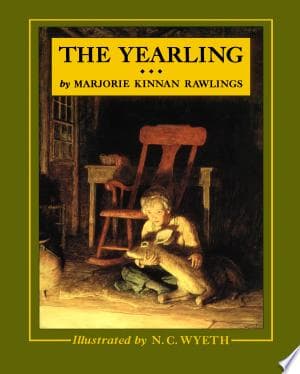
Marjorie Kinnan Rawlings (2021)
Genre
Children's / Historical Fiction / Young Adult
Reading Time
9-10 hours
Key Themes
See below
Sign in to track this book
In the Florida scrubland, a boy's bond with a rescued fawn becomes a heartbreaking lesson about survival and sacrifice.
Jody Forrester is an imaginative boy living with his parents, Penny and Ora, in the difficult but beautiful scrubland of rural Florida in the late 19th century. Their lives involve farming, hunting, and constant struggle against nature. Jody often feels lonely because his siblings have all died, and his mother, Ora, is still sad and often strict. Penny, his father, is kinder and understands Jody's love for the wilderness, often telling him stories. Jody's days are filled with chores, exploring, and wanting a companion.
While hunting with his father, Penny Forrester is bitten by a rattlesnake. To save Penny's life, Jody and Penny follow an old remedy, hunting a female bear. They kill the bear to use its liver and heart as a poultice for Penny's wound. After Penny recovers, they discover the bear had a fawn, now alone. Jody immediately feels a strong connection to the tiny creature, seeing in it the companionship he has always wanted. Penny, seeing Jody's strong desire, reluctantly agrees to let him keep the fawn, despite Ora's initial objections.
Jody names the fawn Flag and spends all his time raising it. He feeds Flag with a bottle, teaches it to follow him, and spends every moment possible with his new pet. Flag quickly becomes Jody's constant companion, bringing him great joy and comfort. Their bond is strong and immediate; Flag follows Jody everywhere, even to school when Jody goes briefly. This companionship fills a big empty space in Jody's life, helping him deal with the isolation of their remote home and the emotional distance he sometimes feels from his mother. Flag represents innocence, loyalty, and the wild beauty of their Florida home.
As Flag grows, his natural instincts start to cause problems for the Forrester family. The fawn, now a yearling, begins to raid their small crops, eating the corn, sweet potatoes, and beans that are essential for their survival through winter. Ora Forrester, who was always wary of Flag, becomes increasingly angry. She sees Flag as a danger to their survival and a symbol of impractical feelings. Penny, though he understands Jody's love for Flag, also recognizes how serious the situation is and the real risk of starvation if their crops are destroyed.
A destructive hurricane sweeps through the Florida scrub, ruining the Forrester farm. The storm destroys almost all their remaining crops, floods their fields, and badly damages their home. This natural disaster pushes the family to the edge of poverty, increasing the pressure on their already limited resources. The loss of the crops makes Flag's continued damage even harder to bear, as every plant he eats now represents a critical blow to the family's ability to survive. The storm shows the unforgiving nature of their environment and how fragile their lives are.
With their crops destroyed and Flag still eating the few remaining plants, Ora Forrester reaches her limit. She declares that Flag must be removed from the property, stating that the family cannot survive if the deer keeps destroying their food supply. Her demand forces Penny and Jody to face their painful reality. Penny, despite his own fondness for the fawn and his understanding of Jody's deep love, knows Ora is right. He tries to explain the harsh necessities of life in the scrub to Jody, preparing him for a hard choice.
To try and balance Jody's love for Flag with the family's need to survive, Penny and Jody try to build a strong fence to keep the yearling out of their crops. They work hard, hoping to find a solution that doesn't harm Flag. However, Flag, driven by instinct and hunger, repeatedly finds ways to get past the fence, continuing to eat the precious plants. This failure confirms the truth: Flag, as a wild animal, cannot be contained or trained to ignore his natural urges, and his presence directly threatens the family's existence. The fence's failure shows that trying to tame the wild is useless.
Realizing there is no other choice, Penny gives Jody the painful task of taking Flag into the woods and releasing him, hoping the deer will go back to the wild. Jody, heartbroken but understanding, tries to do this. However, Flag, loyal and used to people, repeatedly returns to the farm, unable to understand why Jody is pushing him away. This persistent return forces Penny to make an even harder decision, realizing that simply releasing Flag isn't enough to solve the problem. The deer's continued presence threatens to break the family apart and ensure they starve.
When Flag returns again and starts to destroy the newly planted crops, Ora demands that Penny shoot the deer. Penny, unable to do it, tells Jody to take the rifle and shoot Flag. In great pain and confusion, Jody tries to shoot Flag but misses, only wounding the deer. Flag runs off, injured. Jody, devastated, then tracks Flag down. He finds the suffering animal and, with a heavy heart and tears, delivers the fatal shot, ending Flag's life to ensure his family's survival. This act is a major and traumatic moment in Jody's childhood.
Overwhelmed with grief, guilt, and anger at his harsh world and his parents' perceived cruelty, Jody runs away from home. He feels betrayed and alone, unable to accept the love he had for Flag with the brutal act he was forced to commit. He wanders aimlessly through the scrub, enduring hunger, thirst, and fear of the wilderness. This flight is an act of rebellion and a desperate attempt to escape the pain of his loss. During his journey, he experiences the true isolation and dangers of the wild, a sharp contrast to the comfort Flag once provided.
Jody's journey through the wilderness is dangerous. He faces hunger, thirst, and encounters with wild animals, forcing him to use his instincts and the survival skills his father taught him. He eventually finds a small settlement but feels out of place and misses his home. During this time, he thinks about Flag's death and starts to understand the difficult choices his parents faced. The harsh realities of the wild outside his home make him grow up quickly, realizing the necessity of the choices made. He eventually decides to return home, a changed boy.
Jody eventually returns home, exhausted and humbled. His parents, especially Ora, are relieved and embrace him with new tenderness. Penny explains the difficult truths of life and sacrifice, helping Jody understand that the choice to kill Flag was out of necessity, not meanness. Jody, though still hurting from Flag's death, has gained a deep understanding of life's complexities, loss, and the responsibilities that come with survival. He has matured, losing some of his childish innocence and beginning to accept the harsh realities of the adult world. His relationship with his mother also softens, as she sees his pain and growth.
The Protagonist
Jody transforms from an innocent, somewhat naive boy into a young man who understands the harsh realities of life, loss, and responsibility.
The Supporting
Penny remains a steadfast and wise figure, guiding Jody through difficult lessons while grappling with his own responsibilities.
The Supporting
Ora gradually softens, showing more overt affection and understanding towards Jody after his traumatic experience and return.
The Supporting
Flag's arc is tragic; he grows from an innocent pet into a symbol of the conflict between human survival and the wild, leading to his inevitable demise.
The Supporting
Fodder-wing's arc is static; he consistently represents joy and a pure connection to nature.
The Supporting
The Baxters serve as a constant presence, embodying the community and its challenges, without a specific arc of their own.
The Mentioned
Lem's role is primarily to provide a contrast to Penny's chosen life.
The main theme is Jody's journey from childhood innocence to a more mature understanding of life's harsh realities. His deep bond with Flag shows his pure childhood joy and connection to nature. Being forced to kill Flag breaks this innocence, making him face the brutal need for sacrifice and the pain of loss. His running away and return symbolize his struggle with these truths and his eventual acceptance of the complexities of adulthood, where hard choices are often unavoidable. This is clear when Penny tells Jody, 'A man's got to take his grief an' grow with it.'
“''T ain't a man's game, killin' a thing ye love.'”
The novel clearly shows the constant struggle between human attempts to survive and control nature, and nature's inherent wildness and power. The Forresters' lives are shaped by the land—their crops, the weather, and wild animals. Flag, at first a pet, ultimately shows this conflict, as his natural instincts to find food directly threaten the family's survival. The devastating storm further highlights nature's indifference to human efforts, emphasizing how fragile their lives are and the need to adapt to or confront the wild environment.
“'The scrub had a way of teachin' ye. It taught ye to be tough, or it killed ye.'”
The story explores the complex mix of love, especially Jody's deep affection for Flag, and the heavy responsibilities that come with life and family. Penny's love for Jody and his practical understanding of their survival needs force him to make the difficult decision about Flag. Ora's strictness, while seeming harsh, comes from her deep love and responsibility for her family's well-being. The story shows that true love sometimes requires making very hard, painful choices for the greater good, teaching Jody that love is not always joyful but often tied to sacrifice and duty.
“'You've got to learn that you can't have everything you want, and that sometimes you have to give up things you love to live.'”
The theme of poverty and survival runs through the story, defining the Forresters' daily lives. Their existence is a constant fight against hunger, crop failure, and the difficult environment of the Florida scrub. Every crop, every hunt, every resource is critical. This constant struggle shows why the decision about Flag was necessary; his destruction of their crops is not just an inconvenience but a direct threat to their very survival. The family's strength and resourcefulness in hardship highlight the brutal realities of their lives, where every choice is a matter of life or death.
“'We got to live, Jody. We got to live, and that means we got to have corn.'”
Flag symbolizes Jody's innocence, the wildness of nature, and the conflict between the two.
Flag, the fawn, serves as a powerful symbol throughout the novel. Initially, he represents Jody's innocent childhood, his deep connection to the natural world, and his yearning for companionship. As Flag grows, he embodies the untamed, unpredictable aspects of nature, eventually becoming a symbol of the harsh conflict between human needs (survival, cultivation) and the wild's inherent destructive power (eating crops). His eventual death symbolizes the irreversible loss of Jody's innocence and his forced entry into the complex, often painful, realities of adulthood.
Early warnings and events hint at Flag's inevitable fate.
Foreshadowing is used to build tension and prepare the reader for Flag's tragic end. Ora's initial strong objections to keeping the fawn, citing its potential to destroy crops, serve as an early warning. Penny's reluctance and his pragmatic discussions about the realities of keeping a wild animal also hint at the difficulties to come. These early indicators create a sense of unease and inevitability, making the eventual decision about Flag's fate understandable, albeit heartbreaking, within the context of the Forresters' struggle for survival.
The Florida scrub acts as a living, influential entity.
The Florida scrub itself functions almost as a character in the novel, a powerful and influential force shaping the lives of the Forresters. It is beautiful yet unforgiving, providing sustenance but also presenting constant challenges like droughts, floods, and dangerous wildlife. The scrub dictates their daily struggles, their survival, and their worldview. Its vastness and wildness contribute to Jody's isolation but also foster his deep connection to nature. The environment is not merely a backdrop but an active participant in the narrative, driving conflict and character development.
The story is structured around Jody's psychological and emotional development.
The entire novel is framed as a coming-of-age story, focusing on Jody's journey from childhood to maturity. The plot follows his experiences, challenges, and the lessons he learns, particularly through his relationship with Flag. The narrative arc traces his emotional growth, his changing understanding of the world, and his acceptance of adult responsibilities and difficult truths. Key events, like the death of Flag and Jody's subsequent flight and return, serve as rites of passage that propel his development, marking his transition from innocence to a more complex understanding of life.
“It was a thing of the wilderness, and of the wilderness she was a part.”
— Jody's mother, Ora, reflecting on her connection to the Florida scrub.
“Man has to take what God sends him.”
— Penny Baxter often says this, teaching Jody resilience in the face of hardship.
“Every man has to make his own way. What's good for one ain't good for another.”
— Penny advises Jody on individuality and finding his own path.
“A boy has to do what's a man's work. It's the way of things.”
— Jody grappling with the responsibilities expected of him as he grows up.
“The scrub had an ancient, enduring quality, as though it would remain long after all men had vanished.”
— Description of the timeless and powerful Florida scrub environment.
“He knew then that a man should not love anything if he would not be hurt.”
— Jody's painful realization after a significant loss.
“There was no end to the things a man could learn if he kept his eyes and ears open.”
— Penny's philosophy on continuous learning and observation.
“Life was a thing of give and take, of joy and sorrow, and the two were so interwoven that one could not be had without the other.”
— A reflection on the dualities of life and the inevitability of both good and bad.
“He was a small, lonely boy in a great, lonely world, and the loneliness was his only friend.”
— Jody feeling isolated and finding solace in his solitude.
“The scrub was his home, his world, and he belonged to it as surely as the deer and the bear.”
— Jody's deep connection and sense of belonging to his natural surroundings.
“A man's got to do what's right, even if it hurts.”
— Penny instilling in Jody the importance of moral duty, even when difficult.
“The wild things were not to be tamed, only understood.”
— Jody's evolving understanding of the wild animals and their nature.
“Every boy has a right to something of his own, to care for and to love.”
— Penny's belief in the importance of a child having a special companion or possession.
“It was the way of life, and she must accept it, as she accepted the sun and the rain and the long, slow passage of the seasons.”
— Ora's stoic acceptance of life's realities, mirroring the natural cycles.
Ready to see how well you understood this book? Take our interactive quiz with 10 questions.
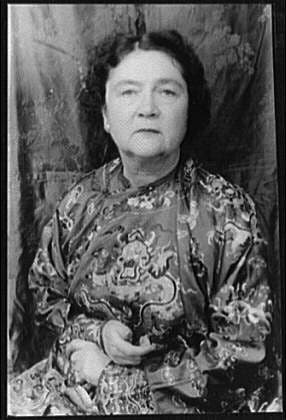
Marjorie Kinnan Rawlings was an American writer who lived in rural Florida and wrote novels with rural themes and settings. Her best known work, The Yearling, about a boy who adopts an orphaned fawn, won a Pulitzer Prize for fiction in 1939 and was later made into a movie of the same name. The book was written before the concept of young adult fiction, but is now commonly included in teen-reading lists.
Dan Gemeinhart
4.5
Kate O'Hearn
4.4

Jeanne Birdsall
4.4

Jen Wang
4.4
Wendelin Van Draanen
4.3

John Marsden
4.3

Chris Van Allsburg
4.3
Jennifer A. Nielsen
4.2