“Water, water, everywhere, Nor any drop to drink.”
— Toby reflects on the scarcity of clean water after the Flood, referencing the 'Rime of the Ancient Mariner'.

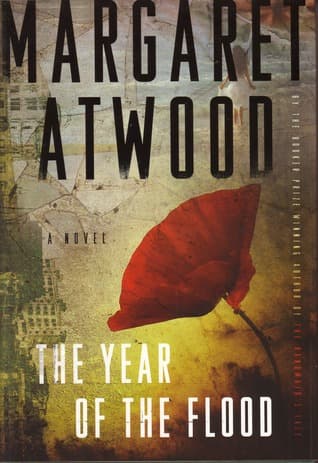
Margaret Atwood (2009)
Genre
Fantasy / Science Fiction
Reading Time
9-12 hours
Key Themes
See below
Sign in to track this book
After a global flood, a trapeze dancer and a God's Gardener emerge from their shelters to navigate a world of gene-spliced creatures and violent gangs, searching for loved ones and a way forward.
The novel begins after the 'Waterless Flood' – a global pandemic designed to kill most people. Toby, a former God's Gardener, hides in the AnooYoo Spa, where she worked as a chef. She rations supplies, practices survival skills, and remembers her past with the God's Gardeners, a nature-loving, religious group. Meanwhile, Ren, a trapeze artist, is trapped in Scales and Tails, a high-end club where she worked. She is locked in the 'Cocoon' with another dancer, Amanda, a bioartist, who soon dies from the plague. Ren endures days of isolation, fear, and hunger, unaware of the outside world's destruction, relying on her aerial skills to survive and stay sane.
Through Toby's memories, the story shows her life before the Flood. She was a dedicated member of the God's Gardeners, a community led by Adam One, who preached environmentalism, veganism, and a simpler life, predicting an apocalypse. Toby joined after escaping a traumatic past with the 'Painballers' and found comfort and purpose with the Gardeners. She learned survival skills, herbal medicine, and the history of corporate greed and environmental destruction that the Gardeners opposed. These flashbacks set up the conflict between the Gardeners' ideals and the consumerist, genetically modified world they lived in.
Ren's flashbacks describe her life as a 'Pleasure Pal' at Scales and Tails, an exclusive club for the rich. She talks about the strict hierarchy, the different 'animals' (dancers), and the club managers' oppressive control. Her friend, Amanda, a bioartist, often shared cynical observations about their world. Ren also thinks about her complex relationship with Jimmy (Snowman-the-Crake from 'Oryx and Crake'), a fellow artist and musician who often visited the club. These memories show a society where luxury and entertainment hid deep corruption and exploitation, a sharp contrast to the God's Gardeners' beliefs.
Throughout the story are excerpts from Adam One's weekly sermons to the God's Gardeners. These sermons mix ecological warnings with religious prophecy, condemning the 'CorpOrators' (corporations) and their destructive practices, like genetic engineering and environmental damage. Adam One consistently preaches about the coming 'Waterless Flood' as divine punishment for humanity's sins against nature. His words provide a moral and philosophical framework for the God's Gardeners' beliefs and actions, contrasting sharply with the amoral, technologically advanced world outside their compound.
After weeks alone, Toby decides she must leave the AnooYoo Spa to search for other survivors and supplies. She carefully plans her route, navigating the deserted, decaying city. She finds signs of the disaster: abandoned vehicles, skeletal remains, and the eerie silence of a world without human activity. She also sees many genetically modified creatures, like 'pigoons' (pigs with human brain tissue) and 'lion/lambs,' now roaming freely. This first trip confirms her worst fears about the Flood's impact and civilization's complete collapse, strengthening her survival instincts.
After Amanda's death and a period of near-starvation, Ren manages to pick the lock of the Cocoon and escape Scales and Tails. She emerges into a desolate city, like Toby's observations of widespread death and decay. Her immediate goal is to find Jimmy, her on-again, off-again lover. She navigates the dangerous streets, encountering grotesque, gene-spliced animals and chilling silence. Her journey is driven by a desperate hope that Jimmy has survived, a fragile anchor in the terrifying new world she now inhabits. She avoids any potential human encounters, fearing the unknown.
During one of her scavenging trips, Toby meets a group of 'Painballers,' brutal former prisoners from a sadistic reality game show. These men, known for their violence and lack of empathy, are a significant threat in the post-Flood world. Toby's past trauma with the Painballers resurfaces, and she uses her combat and survival skills, learned with the God's Gardeners, to evade them. This encounter shows the extreme dangers of the new world and the regression of human society to a more primal, violent state, emphasizing the need for caution and self-reliance.
Ren, weak and desperate, eventually reaches the AnooYoo Spa, drawn by the possibility of shelter and supplies. Toby, initially wary of human contact, discovers Ren. After a tense standoff, they slowly begin to trust each other, sharing their experiences and limited resources. Toby, with her practical skills and knowledge, becomes a mentor to Ren, who is more fragile and less prepared for survival. Their alliance marks a turning point, as their individual struggles merge into a shared quest for survival and meaning in the desolate landscape.
As Ren and Toby bond, they discuss the possibility of other survivors. Ren mentions her stepfather, Zeb, a prominent God's Gardener and known eco-activist. Toby, having known Zeb from her time with the Gardeners, agrees he would likely have survived and be a valuable ally. They decide to embark on a perilous journey to search for Zeb and any other God's Gardeners, hoping to find a community and a path forward. This decision shifts their focus from just survival to actively seeking connection and rebuilding.
During their travels, Ren and Toby encounter more of the gene-spliced creatures that now fill the landscape. They see the intelligence and evolving behavior of the 'pigoons,' the predatory instincts of the 'lion/lambs,' and other engineered life forms. They also face environmental hazards and the constant threat of the Painballers, who still roam the ruins. These encounters highlight the irreversible changes caused by human scientific arrogance and the precariousness of their existence in a world where the natural order is disrupted.
Just as Ren and Toby are close to despair, Zeb and a small group of other God's Gardeners, including Adam One and Swift, arrive at a pre-arranged meeting point. Zeb, a strong and resourceful character, brings vital knowledge and a survival plan. His arrival, along with the other Gardeners, provides a much-needed sense of community and purpose. They share stories of their own survival and the devastation they've witnessed, confirming that they are among the very few left. This reunion offers fragile hope for rebuilding and a future, however uncertain.
With Zeb and the other God's Gardeners, Ren and Toby now form a small, diverse group of survivors. They begin to plan for long-term survival, resource management, and the possibility of a new society. The novel ends with the survivors gathered, facing the immense challenge of rebuilding in a world changed by the Waterless Flood. The ending is open, suggesting that while the immediate threat of isolation is over, the work of creating a new existence in a broken world has only just begun. Hope, resilience, and the lasting power of human connection are central themes.
The Protagonist
From isolated survivor haunted by her past, Toby evolves into a leader and protector, finding renewed purpose in helping to rebuild a community.
The Protagonist
Ren transforms from a sheltered, dependent performer to a resourceful survivor, finding her own resilience and purpose in a devastated world.
The Supporting
Adam One remains a steadfast spiritual guide, his prophecies validated, now leading his flock in the wake of the apocalypse he foretold.
The Supporting
Zeb arrives as a beacon of hope and practical knowledge, continuing his role as a protector and strategist for the surviving Gardeners.
The Mentioned
His arc is primarily explored in 'Oryx and Crake'; in this novel, he serves as a symbol of lost love and a catalyst for Ren's journey.
The Supporting
Amanda's arc is cut short by the Flood, serving as a poignant example of the widespread devastation.
The Antagonists
The Painballers remain a persistent, violent threat, symbolizing the collapse of order and the regression to primal brutality.
The Mentioned
The Pigoons, having escaped, evolve into a complex, self-sufficient species, becoming an integral part of the new ecosystem.
The novel warns about environmental damage and humanity's destructive relationship with nature. The 'Waterless Flood' is a direct result of unchecked corporate greed, genetic engineering, and the exploitation of natural resources. The God's Gardeners are the moral guides, advocating for sustainable living and respect for the natural world. Scenes of desolate, polluted cities and many gene-spliced animals clearly show the catastrophic impact of human arrogance, emphasizing fragile ecosystems and the dire consequences of ignoring scientific warnings.
“What is the Lord God's plan? To let the human race, which has made such a mess of the planet, be swept away by the Waterless Flood, and then to let the plants and animals, and a few of us, start over.”
At its heart, the novel explores the human will to survive in extreme catastrophe. Both Toby and Ren show great resilience, adapting to extreme isolation, hunger, and danger. Toby's careful planning and practical skills, and Ren's ability to find inner strength despite her fragility, show different aspects of survival. Their journey from solitary struggle to forming an alliance, and eventually finding a community, highlights the importance of both individual strength and collective effort. The story constantly tests their physical and psychological limits, revealing the lasting power of hope and the instinct to live.
“This is what you're up against, Toby thought. Don't be a victim. Don't be a victim. Don't be a victim.”
The novel sharply criticizes the unchecked power of corporations ('CorpOrators') and the ethical problems of advanced genetic engineering. The world before the Flood is a dystopia where corporations control everything, from food to entertainment and even human biology. The 'Waterless Flood' itself is a genetically engineered plague, a product of scientific hubris. The creation of 'pigoons,' 'lion/lambs,' and other 'genetically modified organisms' (GMOs) shows the dangerous blurring of ethical lines and the potential for science to be weaponized or create unforeseen ecological imbalances. The God's Gardeners' opposition to these practices forms a central ideological conflict.
“The CorpOrations had taken over, they had the money, they had the power, they had the say. They had the scientists, they had the media, they had the armies.”
Memories of the world before the Flood are important in shaping the characters' current experiences and motivations. Both Toby and Ren often remember their past lives, relationships, and the societal structures that existed before the catastrophe. These flashbacks provide essential context for understanding their characters and the world that was lost. For Ren, memories of Jimmy are a driving force; for Toby, her past traumas with the Painballers and her time with the God's Gardeners inform her survival strategies. Remembering helps them process loss, maintain their identity, and understand how their current problems started.
“The past was a different country, they did things differently there. No, the past was this country, but it was buried under a landslide.”
Religion and spirituality are explored through the God's Gardeners. Their faith mixes environmental activism, respect for nature, and a belief in a divine plan that includes a cleansing apocalypse. Adam One's sermons provide a spiritual framework for understanding the Flood and the Gardeners' purpose. While their beliefs might seem extreme, they offer community, hope, and moral guidance in a world without traditional institutions. The novel examines how faith can provide comfort, structure, and motivation, even when faced with overwhelming despair, and how it can adapt to new, catastrophic realities.
“We are the gardeners of God, and we must tend His garden, even if it is full of weeds and thorns and poison ivy.”
Interspersed memories providing context and character depth.
Flashbacks are extensively used to reveal the pre-Flood world, the characters' backstories, and the societal conditions that led to the apocalypse. They alternate between Ren's life at Scales and Tails and Toby's experiences with the God's Gardeners. This device allows Atwood to slowly build a comprehensive picture of the dystopian society, explain the motivations of the characters, and provide crucial exposition about the 'Waterless Flood' and its origins. The fragmented nature of the flashbacks also mimics the characters' own struggle to piece together their past and understand their present.
Weekly sermons from the God's Gardeners' leader, serving as exposition and prophecy.
Adam One's sermons function as a unique narrative device, interspersed throughout the chapters. They serve multiple purposes: providing the ideological framework of the God's Gardeners, foreshadowing the 'Waterless Flood,' offering social commentary on the pre-Flood world (particularly corporate greed and genetic engineering), and giving a sense of the Gardeners' history and beliefs. These sermons act as a moral and philosophical anchor, contrasting the Gardeners' worldview with the destructive path taken by mainstream society, and serving as a Greek chorus of impending doom.
Engineered creatures that populate the post-Flood world, symbolizing scientific hubris.
The various genetically modified organisms, such as 'pigoons' (pigs with human brain tissue), 'lion/lambs' (genetically engineered predators), and 'Mo'hair' sheep, are not just background elements but active plot devices. They represent the ultimate consequences of unchecked scientific ambition and corporate control over life itself. These creatures serve as both resources and threats to the survivors, highlighting the altered ecosystem and the new dangers of the post-Flood world. Their presence constantly reminds the characters and the reader of humanity's past mistakes and the profound, irreversible changes to the planet.
Symbolic locations of isolation and temporary refuge for the protagonists.
The 'Cocoon' in Scales and Tails, where Ren is trapped, and the 'AnooYoo Spa,' where Toby finds refuge, function as significant plot devices. They are initial spaces of isolation and containment, forcing the protagonists to confront their immediate survival alone. Symbolically, the Cocoon represents Ren's former sheltered (and exploited) existence, while the Spa, ironically, becomes a place of gritty survival rather than luxury. These locations serve as starting points for their individual journeys, providing the initial setting for their post-Flood experiences and highlighting their resourcefulness in confined spaces before venturing into the wider, devastated world.
“Water, water, everywhere, Nor any drop to drink.”
— Toby reflects on the scarcity of clean water after the Flood, referencing the 'Rime of the Ancient Mariner'.
“The past is a phantom that can reach out and grab you.”
— Toby considers the lingering impact of past events and relationships on her present.
“Only when we are no longer afraid do we begin to live.”
— A philosophical thought that resonates with the characters' struggles to overcome their fears in the post-apocalyptic world.
“Humans are such a hopeful species, even when all hope is gone.”
— Reflecting on the resilience and sometimes irrational optimism of humanity despite overwhelming odds.
“The world had ended, but life, stubbornly, continued.”
— A recurring theme highlighting the persistence of life even after a global catastrophe.
“Every paradise is a prison, if you're not allowed to leave.”
— Toby's internal thought about the nature of freedom and confinement, even in seemingly ideal situations.
“Ignorance is not bliss. Ignorance is a choice, and it's a dangerous one.”
— The novel critiques willful ignorance, especially concerning environmental and social issues that led to the Flood.
“We were made for love, but we were also made for war.”
— A reflection on the dual nature of humanity, capable of both great affection and destructive conflict.
“The world was full of wonders, even after it broke.”
— Despite the devastation, characters still find moments of beauty and awe in the natural world.
“Sometimes, the only way to go forward is to go back.”
— A paradoxical statement suggesting that understanding or revisiting the past can be crucial for future progress.
“The truth was a slippery thing, hard to hold on to.”
— Characters grapple with conflicting narratives and the difficulty of discerning truth in a chaotic world.
“Survival is not a game. It's a constant, brutal negotiation.”
— Emphasizing the harsh realities and continuous effort required to stay alive in the post-Flood landscape.
“We are all connected, whether we like it or not.”
— A theme of interconnectedness, both ecological and social, which is evident in the novel's examination of humanity's impact on the planet.
“What is a human being, if not a story?”
— Reflecting on the importance of narrative and identity, especially in the face of loss and societal collapse.
Ready to see how well you understood this book? Take our interactive quiz with 10 questions.
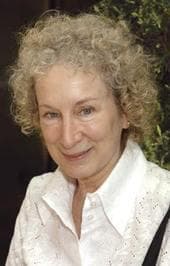
Margaret Eleanor Atwood is a Canadian poet, novelist, literary critic, essayist, teacher, environmental activist, and inventor. Since 1961, she has published eighteen books of poetry, eighteen novels, eleven books of non-fiction, nine collections of short fiction, eight children's books, two graphic novels, and a number of small press editions of both poetry and fiction. Atwood has won numerous awards and honors for her writing, including two Booker Prizes, the Arthur C. Clarke Award, the Governor General's Award, the Franz Kafka Prize, Princess of Asturias Awards, and the National Book Critics and PEN Center USA Lifetime Achievement Awards. A number of her works have been adapted for film and television.







