“Every time I think I'm going to be able to make a sensible decision, my heart just sort of leaps out of my chest and starts doing a crazy dance.”
— Lindy contemplating her feelings for various boys.

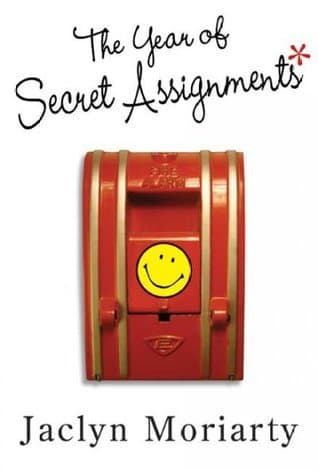
Jaclyn Moriarty (2005)
Genre
Young Adult / Romance
Reading Time
360 min
Key Themes
See below
Sign in to track this book
Three Aussie pen pals navigate mistaken identities, secret crushes, and schoolyard revenge through letters, emails, and diaries, all while trying to save their pen pal project.
The story begins with a pen pal project between Ashbury High and Brookfield High. Emily, Lydia, and Cassie, best friends at Ashbury, are assigned pen pals. Emily is paired with Sebastian (Seb) Barnes, Lydia with Charlie, and Cassie with Matthew. Early letters are formal. Emily finds Seb's letters interesting, and Lydia likes Charlie's humor. Cassie, however, receives a strange, almost threatening letter from Matthew, which makes her pen pal experience different from her friends'.
As the letters continue, Emily and Seb's correspondence grows into a real connection, with shared interests and playful talk. Lydia and Charlie's letters are equally engaging, showing humor and a growing attraction. Cassie's experience with Matthew becomes more unsettling. His letters go from vague threats to clear menaces, implying he knows secrets about her and her friends. Despite her friends' concerns, Cassie keeps writing, driven by fear and a strange curiosity about Matthew's motives.
Emily and Lydia, along with Seb and Charlie, worry more about Cassie's interactions with Matthew. They try to convince her to stop writing, but she hesitates. Matthew's letters become more manipulative, sometimes sweet and apologetic, then quickly menacing again. This erratic behavior makes it hard for Cassie to disengage. The friends start to suspect Matthew is not who he claims, or that there is a deeper reason for his strange messages, leading them to investigate discreetly.
Cassie finally arranges to meet Matthew. The meeting is a disaster. Matthew is an older, cruel man who admits he was pretending to be a student. He mocks Cassie, revealing he used the pen pal project for some unknown, malicious purpose. Cassie is devastated and humiliated, feeling betrayed and foolish. She tells Emily and Lydia, who are furious and determined to help her get justice.
After Cassie's terrible meeting, the group, including Seb and Charlie, works together to find the truth. They discover that the 'Matthew' Cassie corresponded with was an imposter. The real Matthew is a shy student at Brookfield High who was also targeted and whose identity was stolen. This adds another layer to the situation; the real Matthew is also a victim, and the imposter's motives remain unclear but clearly malicious.
Angry about the imposter's actions and Cassie's distress, Charlie decides to get revenge. He plans a prank that goes wrong, causing significant vandalism at Brookfield High. This act, meant to punish the imposter and defend Cassie, creates a major scandal and puts the pen pal project at risk. The schools get involved, threatening to cancel the program, which worries Emily, Lydia, Seb, and Charlie, who value their connections.
Facing the possible cancellation of the pen pal project and the ongoing threat of the imposter, the group decides to work together to find and expose the true culprit. Emily, Lydia, Cassie, Seb, and Charlie combine their resources, using clues from letters and their investigative skills. They are determined to clear Charlie's name from the vandalism and ensure the imposter faces consequences for his manipulation and the emotional harm he caused Cassie and the real Matthew.
Through careful detective work, including analyzing handwriting, cross-referencing information from letters, and discreet inquiries, the friends identify the imposter. He is a former student with a grudge against Brookfield High and a history of manipulative behavior. His goal was to disrupt the pen pal project and cause chaos, using Cassie and the real Matthew as pawns. This revelation confirms the group's suspicions about his malicious intent.
The friends present their evidence to the school authorities, leading to the imposter's exposure and punishment. The truth about the fake Matthew is revealed, clearing Charlie's name regarding the vandalism and vindicating Cassie. The pen pal project, initially in danger, is saved due to the students' courage and teamwork. This resolution brings closure and justice, strengthening their bonds.
With the crisis resolved, Emily and Seb, and Lydia and Charlie, continue their relationships, which have deepened through shared challenges. Cassie, though hurt, begins to heal and forms a real friendship with the true Matthew. The experience strengthens the bonds between all the students, showing the power of communication, trust, and mutual support. The pen pal project, despite its dramatic start, ultimately leads to meaningful connections and personal growth for everyone.
The Protagonist
Emily grows in confidence and assertiveness, learning to trust her instincts and take a more active role in solving problems.
The Protagonist
Lydia learns to temper her impulsiveness with strategic thinking, channeling her energy into constructive action.
The Protagonist
Cassie overcomes a traumatic betrayal, learning to trust her friends and herself, and finds strength in vulnerability.
The Supporting
Seb develops a deeper sense of responsibility and courage through his involvement in the investigation.
The Supporting
Charlie learns the consequences of impulsive actions and channels his passion into more constructive methods for justice.
The Antagonist
The Imposter's arc is one of exposure and downfall, as his malicious scheme is ultimately thwarted.
The Supporting
Matthew moves from being a passive victim to an active participant in resolving the conflict, finding friendship and trust.
The novel explores identity, especially how it can be hidden or changed through written communication. The imposter 'Matthew' creates a false identity to deceive Cassie, showing the risks of anonymity and how easily one can create a fake self. This deception makes characters question who people truly are, not just who they appear to be, and highlights the need for honesty in relationships. Cassie's journey, in particular, involves dealing with the false identity she interacted with and accepting the truth.
““It's amazing how much you can hide behind a piece of paper, isn't it? You can be anyone you want to be.””
Told through letters, emails, and diary entries, the book champions written communication. It shows how words can create deep connections, build trust, and reveal private thoughts (Emily and Seb, Lydia and Charlie). Conversely, it also shows how communication can be used for manipulation and harm (Cassie and the imposter). Writing drives character development and plot, emphasizing its dual potential to connect and deceive. The entire pen pal project relies on the belief that written communication can bridge distances.
““A letter is a wonderful thing. It's like a little piece of you, sent across the world to someone else.””
The strong bond between Emily, Lydia, and Cassie is central to the novel. Their loyalty is tested by Cassie's experience with 'Matthew', but it ultimately strengthens their friendship. The girls' determination to protect Cassie and seek justice, along with support from Seb and Charlie, shows the importance of solidarity. This theme extends to the growing friendships between the Ashbury and Brookfield students, showing how shared experiences and challenges can create strong, lasting connections.
““You don't just abandon your friends when things get difficult. That's when they need you most.””
The pursuit of justice drives the latter half of the story. After Cassie's betrayal and the vandalism at Brookfield, characters are motivated to expose the imposter and correct wrongs. Charlie's initial act of revenge, though misguided, shows a strong desire for payback. However, the story ultimately promotes a more collaborative, evidence-based approach to justice, emphasizing that true resolution comes from finding the truth and holding wrongdoers accountable through proper channels, rather than through impulsive acts.
““It wasn't just about getting even. It was about making things right.””
The entire novel is told through letters, emails, and diary entries.
This device is fundamental to the book's structure and charm. By presenting the story solely through written correspondence, the author allows readers direct access to the characters' inner thoughts, personalities, and developing relationships. It creates a sense of intimacy and immediacy, as the reader piece together the plot from various perspectives. The different writing styles of each character are highlighted, enhancing their individuality and making the narrative feel authentic and engaging.
Each character's perspective is limited, creating suspense and mystery.
Because the story is told through individual letters and diary entries, each character acts as a partial, and at times, unreliable narrator. No single character possesses full knowledge of the situation, especially regarding the imposter 'Matthew'. This creates suspense and forces the reader to actively synthesize information, mirroring the characters' own investigative process. It also emphasizes the subjective nature of perception and how different individuals interpret events.
Clues and character actions are used to mislead the reader about the imposter's identity.
Throughout Cassie's correspondence with the imposter 'Matthew', the author employs misdirection to keep his true identity and motives a mystery. Letters contain vague threats, sudden shifts in tone, and hints that could point to various individuals. This device builds suspense and allows the eventual revelation of the imposter to be surprising and impactful, challenging the reader's assumptions and keeping them guessing about the true nature of the threat.
The project represents connection, trust, and the unknown.
The pen pal project itself serves as a significant symbol. Initially, it represents the potential for new friendships and broadening horizons. As the plot unfolds, it symbolizes the fragility of trust and the hidden dangers that can exist in seemingly innocent interactions. Ultimately, its preservation after the crisis signifies the triumph of genuine connection and honesty over deception, and the enduring power of human relationships.
“Every time I think I'm going to be able to make a sensible decision, my heart just sort of leaps out of my chest and starts doing a crazy dance.”
— Lindy contemplating her feelings for various boys.
“I think the best way to get over someone is to get under someone else. Or, you know, just eat a lot of chocolate.”
— Francesca offering advice to Emily about a breakup.
“It's a strange thing, falling in love. It's like your brain just decides to pack up and go on holiday, and your heart takes over the steering wheel.”
— Emily reflecting on her romantic feelings.
“Sometimes I think the whole world is just one big secret assignment, and we're all trying to figure out what our mission is.”
— Lindy musing on life's purpose.
“Being a teenager is like being stuck in a really long, really complicated pop song. You know all the words, but you don't always understand what they mean.”
— Emily's internal monologue about adolescence.
“There are some things you just know, deep down, without anyone ever having to tell you. Like how much you love a certain book, or how much you hate Mondays.”
— Francesca reflecting on intuition and personal truths.
“Love isn't about being perfect. It's about being perfect for someone, even if you're a complete mess.”
— Lindy's realization about the nature of love.
“The best kind of secrets are the ones you share with someone who understands exactly what you mean, without you having to say a single word.”
— Emily describing the bond of close friendship.
“Sometimes you just have to trust that things will work out, even when they look completely impossible. That's what hope is for, I guess.”
— Lindy trying to stay positive in a difficult situation.
“It's funny how you can spend your whole life thinking you know someone, and then one day they do something that completely surprises you.”
— Francesca observing the complexities of people.
“Being brave isn't about not being scared. It's about being scared, and doing it anyway.”
— Emily contemplating courage in the face of fear.
“I think maybe the whole point of growing up is to realize that not everything has a neat little answer. Some things are just messy, and that's okay.”
— Lindy's evolving understanding of life.
“You can't force someone to feel something they don't, no matter how much you want them to. Love is a choice, and it has to be theirs.”
— Francesca's pragmatic view on unrequited love.
“The world is full of amazing things if you just bother to look, and sometimes, the most amazing things are right in front of you.”
— Emily finding beauty and wonder in everyday life.
Ready to see how well you understood this book? Take our interactive quiz with 10 questions.