“The sea gives and the sea takes away.”
— Laura reflects on the unpredictable nature of life on the Scilly Isles.

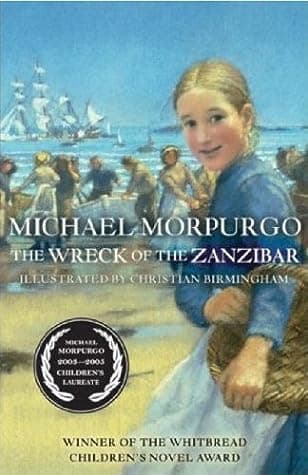
Michael Morpurgo (1995)
Genre
Children's / Historical Fiction / Young Adult
Reading Time
90 min
Key Themes
See below
Sign in to track this book
In 1907, on the stormy Scilly Isles, fourteen-year-old Laura records her wish to join a shipwreck rescue in her diary. Her wish comes true when the sea brings a wreck to her shores.
Fourteen-year-old Laura Perryman lives with her family on Bryher, a small, storm-battered island in the Isles of Scilly, in 1907. Her life is recorded in her diary, a gift from her father. She writes about the realities of island life: the constant wind and rain, the difficulty of making a living from fishing and farming, and the danger of the sea. Laura wants to help with a heroic shipwreck rescue, a common event in their dangerous waters, even though she is told it is a man's job. She often helps her grandfather with his lobster pots and watches the islanders, including her Uncle Billy and her dog, Scruff.
Laura's Uncle Billy, a fisherman, worries the family. He drinks a lot and often owes money, frequently arguing with Laura's father. Despite his faults, Laura likes him. One day, Billy gets a new fishing boat, 'The Zanzibar,' which he says he won in a card game. This makes the islanders suspicious, especially Laura's father, who knows Billy's luck and money situation well. The mystery around 'The Zanzibar's' sudden arrival adds to the family's worries about their difficult life.
As autumn continues, the weather on Bryher gets worse. Laura writes about the strong winds and heavy rain, feeling a big storm is coming. The islanders, used to fighting the elements, start their preparations: securing boats, strengthening homes, and bringing livestock to shelter. Laura's father and grandfather talk about the bad signs, knowing a truly damaging storm is possible. The island's tension grows as the sky darkens and the sea gets rougher, threatening to unleash its full power.
The storm hits Bryher with great force. Laura describes the sounds of the wind howling and waves crashing against the shore, shaking their small cottage. During the storm, news spreads that Uncle Billy's new boat, 'The Zanzibar,' has broken free and smashed against the rocks, completely destroyed. Billy is upset, not just about losing the boat, but also because he had hidden a valuable gold pocket watch, a family item, on board. The loss of 'The Zanzibar' is a big blow to Billy and a sad topic among the islanders.
After the storm, Laura goes out with her dog, Scruff, to see the wreck of 'The Zanzibar.' Among the broken wood and debris on the shore, Scruff starts digging. Following him, Laura finds a small, carved wooden box. Inside, she finds the gold pocket watch Uncle Billy wanted to get back. She understands the watch's importance, knowing it is valuable and personal to Billy, connecting him to his past and representing his lost hopes. Laura decides to keep her discovery secret for a while, thinking about the best way to return it.
Weeks later, an even more violent storm covers the islands. This time, the danger is greater. A large steamship, the 'SS Myrmidon,' is seen in trouble, being pushed towards the dangerous rocks of the Scilly Isles. The islanders, including Laura's father and grandfather, get ready for a rescue. Lifeboats are prepared, and lookouts are posted. Laura, watching from her window, feels fear and excitement, knowing this could be the shipwreck she has always wanted to help with, but also understanding the great danger for everyone.
As night falls and the storm gets worse, visibility is almost zero. The St. Mary's lifeboat, trying to reach the 'SS Myrmidon,' struggles to navigate the reefs and rough seas. Laura, watching from shore, realizes they are lost. Remembering her grandfather's stories of guiding ships with lights, she bravely takes her father's storm lantern and, with Scruff, climbs to the highest safe point. She waves the lantern, making a light in the darkness, guiding the lifeboat crew through the dangerous waters towards the sinking steamer. Her light helps the lifeboat reach the 'Myrmidon' and start the rescue.
Thanks to Laura's act, the lifeboat reaches the 'SS Myrmidon,' and its crew is brought ashore safely. The islanders work to give warmth and comfort to the rescued sailors. Afterwards, Laura's father, at first angry about her dangerous solo trip, realizes how important her role was. Her actions are praised by the lifeboat crew and the thankful sailors, making her a part of the island's history of heroism. Laura, though tired, feels satisfied and proud, having completed her dream of helping with a shipwreck rescue.
After the 'Myrmidon' rescue, Laura decides to return the gold watch to Uncle Billy. She approaches him, revealing her secret find. Billy is thankful and relieved, explaining the watch was a gift from his father. Emotional, he tells the true story of 'The Zanzibar.' He had not won it in a card game; he had bought it with money he planned to use to pay a debt to a local merchant, hoping to earn enough from fishing to cover both. The confession improves his relationship with Laura and her father, leading to understanding and forgiveness.
Life on Bryher slowly returns to normal, but Laura is changed. She continues to write in her diary, thinking about the storms, the wrecks, and her bravery. Her relationship with Uncle Billy is better, and he starts to improve his life. The gold watch, now with him, reminds him of his past and his new hope. Laura understands that heroism is not just about big actions but also about quiet courage and kindness. She continues to face the challenges of island life with new confidence and appreciation for her family and the community around her.
The Protagonist
Laura transforms from an observant, dreaming girl into a recognized heroine, proving her capability and courage in a time of crisis.
The Supporting
He learns to accept and celebrate his daughter's unconventional bravery, moving beyond traditional expectations.
The Supporting
He serves as a constant source of wisdom and quiet encouragement, reinforcing traditional island values while also subtly fostering Laura's independence.
The Supporting
Billy moves from a state of denial and irresponsibility to one of honesty and redemption, finding peace through Laura's help.
The Supporting
Scruff remains a steadfast and loyal companion throughout the story, symbolizing unwavering support.
The Supporting
She remains a steadfast and supportive figure, embodying the quiet strength of the island women.
The Supporting
Their collective journey highlights the perils of sea rescue and the importance of community effort.
The Mentioned
They are saved from certain death, symbolizing the triumph of human courage over natural disaster.
Courage is a main theme, shown by Laura's actions during the 'Myrmidon' rescue. Despite her age and being a girl, and against old ideas, she bravely goes into the storm with her lantern to guide the lifeboat. This shows that heroism can come from anyone. The courage of the lifeboat crew and the strength of all the islanders against the sea also show this theme, demonstrating collective bravery when facing nature's power.
“''I was only fourteen, but I felt like I was the only person in the world who could help them.'”
The strong and often harsh power of the sea runs through the book. The islanders' lives depend on the weather, from daily fishing to shipwrecks. The storms are not just background; they are active threats, endangering homes, jobs, and lives. The story clearly shows the constant fight between people's efforts and the overwhelming, unpredictable forces of nature, highlighting both the dangers and the beauty of living in such a place.
“''The sea was our life, but it was also our constant enemy, waiting to snatch away our boats, our livelihoods, and sometimes, our very lives.'”
The strong connections of family and the close community of Bryher are important for survival. Laura's family, despite internal issues (like those with Uncle Billy), supports each other. The whole island community comes together during crises, sharing resources and risking lives for everyone's benefit, especially during shipwrecks. This theme emphasizes the importance of working together, helping each other, and forgiving in a difficult environment, showing how group strength helps people overcome problems.
“''On Bryher, we were all family, whether by blood or by the sea. When the storms came, we stood together.'”
Laura's struggle to be taken seriously and help with shipwreck rescues challenges the typical gender roles of 1907. She is told that such dangerous work is 'for men,' but she wants to be a hero. Her act of guiding the lifeboat proves her ability, breaking down these social barriers and earning her the respect of the male-dominated community. This theme explores the quiet fight against strict roles and the power of individual will to go beyond them.
“''They said it was a man's job, to go out in the storms. But I knew in my heart that if I could help, I would.'”
Laura's journey in the book shows her moving from childhood to a more adult understanding of herself and her world. In her diary, she processes her observations, fears, and hopes. Her experiences with the storms, finding the watch, and especially her act during the 'Myrmidon' rescue, make her face danger and take responsibility. These events lead to a strong sense of self-worth and a clearer understanding of her place in her family and the island community, shaping who she is.
“''I wasn't just Laura anymore, the girl who wrote in her diary. I was Laura, who had helped save lives.'”
The story is told entirely through Laura's diary entries.
The entire novel is presented as Laura Perryman's diary, written in her own voice. This device provides an intimate and immediate perspective on her thoughts, feelings, and experiences. It allows readers to directly access her observations of island life, her dreams, fears, and her personal growth. The diary format lends authenticity to the historical setting and emphasizes Laura's personal journey, making her inner world accessible and enhancing the emotional impact of the events she describes, particularly her evolving understanding of heroism and family dynamics.
A fishing boat symbolizing hope, deception, and ultimate loss.
'The Zanzibar' is Uncle Billy's new fishing boat, which he claims to have won. It initially symbolizes a fresh start and a glimmer of hope for his troubled life, but its mysterious acquisition also hints at his ongoing struggles with honesty and debt. Its dramatic wreck during a storm not only represents a significant financial loss but also serves as a catalyst for the discovery of the hidden gold watch, which ultimately leads to Billy's confession and redemption. The boat's fate mirrors Billy's own journey from secrecy to truth.
An heirloom symbolizing family legacy, guilt, and forgiveness.
The gold pocket watch, hidden by Uncle Billy on 'The Zanzibar' and later discovered by Laura, is a powerful symbol. It represents Billy's connection to his family's past and his own father, highlighting his hidden vulnerabilities and his deep-seated attachment to an heirloom that he fears losing. Its loss and subsequent recovery, facilitated by Laura, become a catalyst for Billy's confession about the boat and the underlying reasons for his irresponsible behavior. The watch ultimately symbolizes forgiveness, trust, and the mending of strained family ties.
A beacon of hope, guidance, and Laura's agency.
The storm lantern, which Laura uses to guide the lifeboat to the 'SS Myrmidon,' is a potent symbol of hope, guidance, and Laura's burgeoning agency. Initially an ordinary household object, it transforms into a crucial tool for survival in Laura's hands. It represents her courage, quick thinking, and ability to make a significant impact despite her youth and gender. The light she casts through the darkness not only literally guides the lifeboat but also metaphorically illuminates her own path to self-discovery and heroism, challenging traditional notions of who can be a rescuer.
A remote, storm-battered archipelago shaping character and plot.
The remote and rugged setting of the Isles of Scilly, particularly Bryher, is more than just a backdrop; it acts as a character itself. Its isolation, treacherous waters, and constant exposure to severe weather dictate the islanders' way of life, their resilience, and their dependence on each other. The frequent storms and shipwrecks are not just plot points but inherent features of the environment, shaping the characters' daily struggles, their traditions, and ultimately providing the stage for Laura's heroic act. The setting emphasizes the theme of man vs. nature and the strength of community.
“The sea gives and the sea takes away.”
— Laura reflects on the unpredictable nature of life on the Scilly Isles.
“We are all wreckers at heart, waiting for the sea to bring us something.”
— Laura contemplates the islanders' dependence on shipwrecks for survival.
“Sometimes you have to do what you believe is right, even if it means going against everyone else.”
— Laura decides to help a stranded German sailor during World War I.
“The Zanzibar was more than a ship; she was a dream that turned into a nightmare.”
— Describing the ill-fated ship that gives the book its title.
“In the end, it's not the storms that define us, but how we sail through them.”
— Laura's grandfather offers wisdom during a difficult time.
“Every shell on the beach has a story, if you're willing to listen.”
— Laura finds solace in nature while dealing with loneliness.
“Home isn't just a place; it's the people who make you feel you belong.”
— Laura realizes the importance of community after returning from evacuation.
“War makes strangers of neighbors and neighbors of strangers.”
— Reflecting on the impact of World War I on the isolated island community.
“The lighthouse doesn't just guide ships; it reminds us that even in darkness, there is light.”
— Laura finds metaphor in the island's lighthouse during a personal crisis.
“You can't change the wind, but you can adjust your sails.”
— Practical advice from a fisherman about dealing with life's challenges.
“Some treasures aren't gold or silver, but memories that time cannot rust.”
— Laura values her diary and experiences over material wealth.
“The sea speaks in whispers to those who know how to listen.”
— Describing the deep connection islanders have with the ocean.
“Courage isn't the absence of fear, but the decision that something else is more important.”
— Laura musters bravery to face a dangerous storm.
“We are all pieces of driftwood, shaped by the currents that carry us.”
— Philosophical reflection on fate and personal journey.
Ready to see how well you understood this book? Take our interactive quiz with 10 questions.

Biography coming soon.

Dan Gemeinhart
4.5
Kate O'Hearn
4.4

Jeanne Birdsall
4.4

Jen Wang
4.4

Wendelin Van Draanen
4.3

John Marsden
4.3

Chris Van Allsburg
4.3
Jennifer A. Nielsen
4.2