“When you are young, you think you will never die. You just go on and on, and then one day you find you are old, and the end is in sight.”
— Suzie Wong reflecting on life and aging.

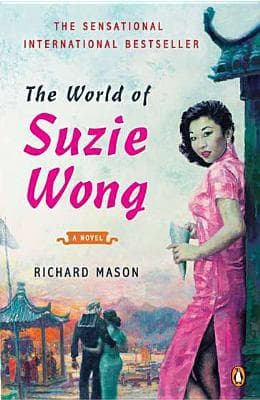
Richard Mason (1957)
Genre
Historical Fiction / Romance
Reading Time
350 min
Key Themes
See below
Sign in to track this book
In 1950s Hong Kong, a British artist finds his muse and forbidden love in a Chinese prostitute, risking everything they hold dear.
Robert Lomax, a disillusioned British architect, arrives in Hong Kong to pursue painting. He seeks a cheap place to live and find subjects for his art, which leads him to the Nam Kok Hotel in Wanchai. The hotel, known for its transient clients and poor reputation, initially shocks Robert. He quickly realizes that most female residents are prostitutes and male guests are their clients. Despite the unusual setting, Robert is drawn to the chaotic energy, believing it offers the authentic Hong Kong experience he wants for his art. He gets a room, determined to immerse himself in this new world.
Robert first meets Suzie Wong in the Nam Kok Hotel bar. Suzie, a striking and seemingly innocent young Chinese woman, approaches him, claiming to be a virgin seamstress from a good family who has been abandoned and needs money for a train ticket to Canton. Robert, though charmed, quickly sees through her lie, realizing she is a prostitute. Despite her deception, he is intrigued by her spirit, beauty, and directness. Suzie's playful yet manipulative approach sets the tone for their complex relationship. Robert finds himself drawn to her despite her profession and his own moral reservations.
As Robert settles into the Nam Kok, he begins painting the hotel's inhabitants and the surrounding Wanchai district. Suzie Wong, with her captivating looks and personality, becomes his most frequent model. Initially, their interactions are professional, with Suzie posing for a fee. However, the intimacy of the artist-and-muse relationship soon goes beyond simple transactions. Robert sees past her profession, recognizing her resilience, vulnerability, and unique beauty. Suzie, in turn, is flattered by his attention and genuine interest, an interest different from her clients'. Their time together in his studio builds a growing emotional bond.
As Robert continues to paint Suzie, their relationship grows from a professional arrangement to one of affection and mutual respect. Robert finds himself falling in love with Suzie, appreciating her honesty and vivacity. Suzie, despite her tough exterior, develops deep feelings for Robert, seeing him as different from her usual clients. However, their romance faces constant challenges from the social realities of mid-1950s Hong Kong. Suzie's profession makes her an unacceptable partner for a European man in colonial society. Robert struggles with loving a woman from such a different background, especially concerning his reputation and art.
To escape the scrutinizing eyes and restrictive environment of the Nam Kok Hotel, Robert and Suzie decide to move and build a life together. They find an old sampan, a traditional Chinese boat, and make it their home. This move symbolizes their attempt to create a private sanctuary away from the judgment of both the Chinese community and the European expatriate society. Life on the sampan is challenging but offers them freedom and independence. It becomes a space where their love can deepen without the constant interference of their past lives, though the practicalities of Suzie's work still linger.
A moment in their relationship occurs when Robert discovers Suzie's secret: she has a young son named William. Suzie had hidden William, fearing Robert would reject her if he knew about her child, a common stigma for prostitutes. William lives with a foster family in the New Territories. Robert, initially shocked and hurt by the deception, understands Suzie's reasons and embraces William as part of their lives. This revelation deepens Robert's commitment to Suzie, as he sees her maternal love and sacrifice, strengthening their unconventional family unit.
Tragedy strikes the small family when William falls gravely ill. Despite Robert and Suzie's desperate efforts to get medical help and care for him, William's condition worsens. The child eventually dies, leaving both Robert and Suzie devastated. William's death is a blow, testing their relationship. Suzie is consumed by grief and guilt, while Robert struggles to comfort her and cope with his own sorrow. This shared loss, however, binds them even more tightly, showing the depth of their love and resilience in the face of immense pain.
After William's death, Robert and Suzie slowly begin to rebuild their lives. Their shared grief and healing bring them closer, solidifying their commitment. During this period, Robert's paintings, many depicting Suzie and Hong Kong life, gain recognition. He holds a successful exhibition, and his art is acknowledged and praised by critics and the public. This artistic success provides stability and hope for their future, allowing them to imagine a life together that goes beyond the social limits that once defined them, proving their love can endure.
Despite Robert's artistic success and their deep love, the shadow of Suzie's past as a prostitute remains. Robert frequently encounters judgmental attitudes from the European expatriate community, who struggle to accept his relationship with Suzie. He is often ostracized or subtly ridiculed for his unconventional choice of partner. However, Robert consistently defies these societal pressures, openly acknowledging his love for Suzie and defending her character. He refuses to let outdated social conventions dictate his happiness, choosing to stand by Suzie and challenge the prejudices of colonial society, showing the strength of their bond.
By the novel's end, Robert and Suzie have endured significant challenges, including social disapproval, personal tragedy, and the realities of their disparate backgrounds. Their love, however, has proven resilient. With Robert's artistic career gaining momentum, they have a more stable foundation. The future remains uncertain, as they must continue to navigate the complexities of their interracial, inter-class relationship in a society that is not always accepting. Yet, they face it together, bound by a deep and unconventional love that has overcome adversity. They are ready to forge their own path, defining their own happiness on their own terms.
The Protagonist
Robert transforms from a somewhat detached observer to a deeply committed partner, learning to accept love and challenge societal norms for it.
The Protagonist
Suzie evolves from a guarded, cynical survivor to a woman who allows herself to love and be loved, finding hope and stability.
The Supporting
William's brief life and death serve as a tragic catalyst, deepening the bond between Robert and Suzie.
The Supporting
Mabel remains largely static, representing the unchanging reality of many women in her profession.
The Supporting
Gwennie serves as a fleeting alternative for Robert, representing the conventional path he rejects.
The Supporting
Mr. O'Neill remains a static character, a background figure illustrating the Nam Kok's world.
The Supporting
The Landlord remains a static, business-oriented figure, a fixture of the Nam Kok.
The central theme explores the possibility and challenges of love across vast social, cultural, and class boundaries. Robert, a British artist from a respectable background, falls in love with Suzie, a Chinese prostitute. Their relationship defies the rigid colonial social structure of mid-1950s Hong Kong, where interracial relationships, especially with a woman of Suzie's profession, were heavily frowned upon. The novel shows the constant judgment and ostracization they face from both European expatriates and conservative Chinese society. Despite these external pressures, their love is genuine and resilient, suggesting that true connection can overcome prejudice and societal expectations, as seen when Robert chooses to live with Suzie on the sampan and embrace William, despite the consequences.
“He loved her, and he knew that was enough. The rest was just noise, the world's noise.”
The novel explores the characters' search for their true identities and authentic lives. Robert comes to Hong Kong to escape a conventional life and find his artistic voice, seeking a 'real' experience. Suzie, though a prostitute, wants a life beyond her profession and struggles with the identity society imposes on her versus who she truly is – a loving mother and a woman capable of deep affection. Both characters shed societal expectations and facades to reveal their genuine selves to each other. The Nam Kok Hotel, despite its reputation, becomes a place where they can strip away pretenses, as Robert finds his muse and Suzie finds someone who sees beyond her profession.
“She was Suzie Wong, and she was no one else. That was her great strength, and her great weakness.”
Set in British colonial Hong Kong, the novel portrays the cultural clashes and power dynamics between British expatriates and the local Chinese population. The British community maintains a distinct social hierarchy and often views the Chinese with condescension. Robert's relationship with Suzie directly challenges these colonial attitudes, highlighting the hypocrisy and prejudice in the system. The novel explores the distinct worlds of the 'gweilo' (foreigners) and the local Chinese, showing how difficult it is to bridge these divides, even for love. The societal disapproval Robert faces for loving Suzie is a direct result of these entrenched colonial attitudes.
“Hong Kong was a place of two halves, and never the twain should meet, not properly.”
Art, specifically painting, is a theme and plot device. For Robert, it is not just a profession but a way to understand the world and express his deepest emotions. Suzie becomes his primary muse, and painting her gives Robert insight into her character, her struggles, and her beauty beyond her profession. Painting allows him to see past the surface and connect with the authenticity of life in Wanchai. His artistic success also provides financial stability and independence from societal judgments, showing that art can be both a personal journey and a means of societal commentary.
“He painted her not as a prostitute, but as a woman, full of life, pain, and hope.”
A symbolic setting that serves as a microcosm of Wanchai life and a catalyst for the plot.
The Nam Kok Hotel is more than just a setting; it's a character in itself. It serves as a microcosm of the Wanchai district, a vibrant, chaotic, and morally ambiguous space where different worlds collide. For Robert, it's an initial shock but quickly becomes a source of artistic inspiration and the place where he meets Suzie. For Suzie and the other women, it's a place of work and community. The hotel's transient nature and its reputation as a 'house of ill repute' frame the initial stages of Robert and Suzie's relationship, highlighting the social barriers they must overcome. It's a place of both confinement and unexpected connection.
A symbol of independence, escape, and the couple's unconventional love.
The sampan, the traditional Chinese boat that Robert and Suzie eventually make their home, functions as a powerful symbol. It represents their attempt to escape the societal judgments and rigid structures of land-based colonial Hong Kong. Living on the water signifies a desire for independence and a life lived on their own terms, away from prying eyes. It is a space of intimacy and privacy where their unconventional love can flourish without constant scrutiny. The sampan underscores their chosen path of forging a new kind of family and challenging established norms, even though its practicalities still tie Suzie to her past.
A narrative device for character development, theme exploration, and plot progression.
Robert's paintings are a crucial plot device. They serve multiple functions: they are the initial reason for his arrival in Hong Kong and his connection with Suzie, making her his muse. Through his art, Robert gains deeper insight into Suzie's character and the complex world of Wanchai, allowing the reader to see these elements through his artistic lens. The paintings also represent his personal and professional growth, culminating in his successful exhibition, which provides a path to financial stability and a measure of societal acceptance. His art becomes a testament to his love for Suzie and his commitment to an authentic life.
“When you are young, you think you will never die. You just go on and on, and then one day you find you are old, and the end is in sight.”
— Suzie Wong reflecting on life and aging.
“She was a prostitute, yes, but she was also a woman, and a very beautiful one, with a spirit that no amount of hardship could entirely extinguish.”
— Robert Lomax's internal thoughts about Suzie.
“Love is not about possession, but about appreciation. And sometimes, appreciation means letting go.”
— A philosophical musing on the nature of love.
“Hong Kong was a city of contrasts, of immense wealth and grinding poverty, of ancient traditions and modern aspirations.”
— Description of Hong Kong's atmosphere.
“He knew then that he could not save her, not in the way he had first imagined. But perhaps he could love her, and that might be enough.”
— Robert's realization about his relationship with Suzie.
“The past is a stubborn thing. It clings to you, no matter how hard you try to shake it off.”
— Suzie's struggle with her past.
“Art, he realized, was not just about what you saw, but about what you felt, and what you made others feel.”
— Robert Lomax's thoughts on the purpose of his painting.
“There are some things in life you cannot change, only endure.”
— A pragmatic observation about hardship.
“She had a way of looking at him that made him feel both utterly exposed and completely understood.”
— Robert's perception of Suzie's gaze.
“Money could buy many things, but it could not buy respect, nor could it buy true happiness.”
— A reflection on the limitations of wealth.
“The line between good and bad, respectable and disreputable, was often blurred in a city like Hong Kong.”
— Observation about moral ambiguity in Hong Kong.
“To truly see someone, you had to look beyond their circumstances, beyond the labels, to the person underneath.”
— Robert's evolving understanding of Suzie.
“Sometimes, the most beautiful things are found in the most unexpected places.”
— A general theme reflecting the romance between Robert and Suzie.
“Hope was a fragile thing, easily broken, but essential for survival.”
— Suzie's internal thoughts on maintaining hope.
Ready to see how well you understood this book? Take our interactive quiz with 10 questions.
Biography coming soon.







