“The past is never dead. It's not even past.”
— Reflecting on unresolved events from twenty years earlier.

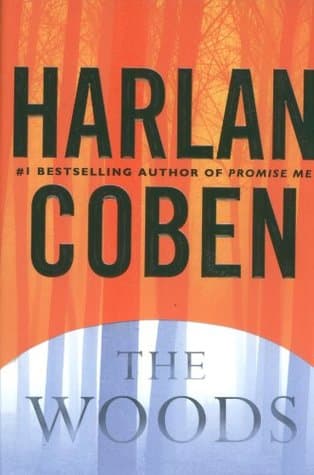
Harlan Coben (2007)
Genre
Thriller / Mystery
Reading Time
800 min
Key Themes
See below
Sign in to track this book
A prosecutor, haunted by his sister's disappearance at summer camp two decades ago, finds his past violently colliding with his present when a new murder case reopens old wounds and shatters everything he thought he knew about that night in the woods.
Paul Copeland, an Essex County prosecutor, is called to a murder scene. The victim, a college professor named Paul Saviano, has a distinct tattoo. This tattoo reminds Paul of one worn by Lucy Dane, a woman he knew twenty years ago at Camp Chewonki. Lucy was one of four teenagers who disappeared from the camp that summer, including Paul's sister, Camille. Two bodies were found, but Lucy and Camille's were not. The case was blamed on a serial killer, Ira Friedler. Saviano's murder reopens old wounds and raises questions about what happened that summer.
The investigation into Saviano's murder leads Paul to a discovery: Lucy Dane is alive. She is now a successful attorney living under a new name. Their reunion is tense and full of unspoken secrets. Lucy confirms that Saviano was one of the other campers present during the summer of the disappearances, though not one of the four missing. Her sudden reappearance changes Paul's belief that Camille was dead. He becomes determined to find out what happened to Camille and the others, convinced that Lucy has important pieces of information. This new hope, mixed with fear, makes Paul re-examine every detail of that summer.
At the same time, Paul is prosecuting Robert Conklin, a wealthy man accused of raping and murdering Sheila Buckman. As the trial continues, Paul's investigations into the Camp Chewonki disappearances start to connect with the Conklin case. He discovers that Conklin had ties to the camp, through his father, a judge who owned land nearby. This link makes Paul suspect the Conklin family might have been involved in a cover-up related to the events twenty years ago. Paul's work duties conflict with his personal search, making him question the justice system and the people in it.
Paul looks into Ira Friedler's original confession to the Chewonki murders. He finds inconsistencies and doubts if Friedler was solely responsible. Friedler, who was mentally unstable, confessed to killing all four teens, even though only two bodies were found. Paul learns that Friedler knew Judge Conklin, who had presided over a previous case involving Friedler. This revelation further involves the Conklin family and suggests a deeper conspiracy to protect someone. Paul realizes that the official story of the Chewonki murders was likely false, making him more determined to find the real person responsible and Camille's fate.
The story often flashes back to the summer of Camp Chewonki, showing Paul and Lucy's secret, intense relationship. They would meet in the woods, away from others. These flashbacks show the summer becoming dangerous when the disappearances start. Paul remembers the fear, the frantic searches, and his hope that Camille would be found alive. He also remembers arguments and tensions among the campers, especially involving a manipulative counselor named Todd and a troubled camper named Max. These memories are important as Paul tries to put together the truth of that summer.
Paul discovers that Judge Conklin, Robert Conklin's father, helped cover up the Chewonki disappearances. The Judge used his power and influence to control the police investigation, making sure Ira Friedler was blamed. He did this to protect his son, Robert, who was involved in the events leading to the disappearances. The Judge bribed officials and hid evidence. Paul realizes that the corruption was deep, and many people helped keep the lie for two decades. This shatters his trust in the system he works for.
Paul finds that Max, one of the original missing campers, and Todd, the manipulative counselor, were both involved in a drug incident with Robert Conklin on the night of the disappearances. Robert Conklin killed Max during a fight, and Todd, afraid of consequences, helped Robert get rid of Max's body. The two bodies found twenty years ago were Max and a drifter, not the original missing campers as people thought. This means Camille and the other missing girl, Laura, were not among the initial victims, making Paul hope that Camille might still be alive and that Lucy knows more.
Under pressure from Paul, Lucy confesses the full truth. She says Camille was not killed by Ira Friedler. Instead, Camille fought with Robert Conklin after she saw him attacking another camper. During the struggle, Robert accidentally pushed Camille, causing her to fall and hit her head, killing her. Lucy, who was there, helped Robert cover up the death. She was scared of the consequences and manipulated by Robert and his powerful father, Judge Conklin. They buried Camille's body in a remote part of the woods. Lucy had kept this secret for twenty years, burdened by guilt and fear, believing it was the only way to protect herself and Paul from the Conklin family.
With Lucy's confession and his own investigation, Paul confronts Robert Conklin. He uses the new evidence in the Conklin trial to expose Robert's past crimes and his father's cover-up. During a tense confrontation, Robert Conklin, cornered and desperate, tries to escape and is killed, either by accident or by a calculated action, by the authorities. This brings an end to the man responsible for Camille's death and the two-decade-long lie. The truth about the Camp Chewonki disappearances finally comes out, showing the corruption and the lengths a powerful family would go to protect their own.
After Lucy's detailed confession, Paul and the authorities return to the woods near Camp Chewonki. After a long search, Camille's remains are found, exactly where Lucy said they would be. The discovery, while sad, gives Paul a deep sense of closure. He can finally bury his sister, twenty years after her disappearance. The experience has changed Paul, making him re-evaluate his understanding of justice, truth, and family. He finds some peace, knowing that the truth, however painful, has finally been revealed and that his sister can now rest.
The Protagonist
Paul moves from a state of unresolved grief and suppressed trauma to confronting the painful truth about his sister's death, ultimately finding a measure of peace and closure.
The Supporting
Lucy transitions from living in fear and secrecy to finally revealing the truth, finding her own form of liberation and closure.
The Supporting/Victim
Camille's story is one of an unresolved tragedy that finally receives justice and closure after two decades.
The Antagonist
Robert's arc is one of an unpunished criminal whose past finally catches up to him, leading to his demise.
The Antagonist
Judge Conklin's arc sees his decades-long cover-up slowly unravel, leading to his public disgrace and the exposure of his corruption.
The Mentioned/Victim
Ira's arc is one of an innocent man wrongly imprisoned, whose story helps unravel the truth.
The Supporting
Hester remains a steadfast and supportive presence, helping Paul navigate his emotional and legal challenges.
The Supporting
Loren develops from a standard detective to an active participant in uncovering a decades-old conspiracy, growing in her understanding of corruption.
The Supporting
Tara provides emotional anchor for Paul, remaining a constant in his life as he confronts his past.
The novel shows how past events, especially unresolved trauma, continue to shape and haunt the present. Paul Copeland's adult life is affected by his sister Camille's disappearance, influencing his career and relationships. Lucy Dane's reappearance and Paul Saviano's murder force Paul to confront the twenty-year-old mystery. This shows that secrets, no matter how hidden, eventually resurface. The past is an active force that requires resolution, impacting every character's choices and behaviors.
“"The past, Paul knew, was never truly past. It just waited, patient and deadly, for its moment to strike."”
A central theme is the connection between legal justice and uncovering the full truth. Paul, as a prosecutor, believes in the legal system. However, he finds that powerful figures deliberately hid the truth about Camille's disappearance. The initial 'justice' of Ira Friedler's confession was a lie, meant to protect the guilty. Paul's personal search for the truth about Camille often conflicts with his work duties, making him question the system he supports. The novel suggests that true justice needs an honest look at the truth, no matter how inconvenient or painful.
“"He was a prosecutor, dedicated to justice. But what if justice had been a lie all along?"”
The novel shows how corruption works, especially within the justice system, and how power can be misused to protect the privileged. Judge Conklin uses his influence, connections, and wealth to cover up his son Robert's crimes for decades, manipulating police, evidence, and public opinion. This corruption allows Robert to avoid justice for twenty years, showing how powerful people can operate above the law. Paul's fight is not just against a killer, but against a system designed to protect the powerful, making his search for truth more difficult and dangerous.
“"Some people, Paul realized, were simply too powerful to ever truly be held accountable."”
The emotional core of the story is Paul's unresolved grief for his sister, Camille. For two decades, he has lived with the uncertainty of her disappearance and the belief that a serial killer took her, without a body or a clear understanding of what happened. Reopening the case forces him to confront this lingering grief. Finding Camille's remains and learning the full truth of her death gives Paul a deep, though painful, sense of closure, allowing him to finally mourn and begin to heal. The novel explores the human need for understanding and resolution after loss.
“"Closure, he thought. It was a word people used, but he'd never truly understood it until now."”
The story looks at how memory, especially after trauma, can be fragmented, unreliable, and suppressed. Paul's flashbacks to Camp Chewonki are initially unclear, with gaps and distortions from time and grief. Lucy's memories are similarly affected by fear and guilt, causing her to hide details for years. Finding the truth involves putting together these fragmented memories, acknowledging their subjective nature, and understanding how trauma can make people repress or change their recollections to cope. The novel shows the psychological effect of traumatic events and the long process of remembering accurately.
“"Memory was a tricky thing, especially when tinged with pain and fear. It could twist, omit, even invent."”
Alternates between Paul's present-day investigation and his memories of Camp Chewonki.
The novel employs a dual timeline structure, frequently shifting between Paul Copeland's present-day life as a prosecutor investigating a new murder and his vivid, often fragmented, memories of the summer at Camp Chewonki twenty years prior. This device effectively builds suspense, gradually revealing crucial details about the past that directly impact the present investigation. The flashbacks not only provide context for the core mystery but also deepen character understanding, showing the origins of Paul's relationship with Lucy and the innocent world shattered by the disappearances, making the eventual revelations more impactful.
Paul's initial understanding of the past is based on incomplete and fabricated information.
While Paul Copeland is the primary narrator, his perspective on the Camp Chewonki events for two decades is based on a fabricated narrative (Ira Friedler's confession) and his own suppressed, incomplete memories. This makes his initial understanding of the past 'unreliable' in the sense that it is fundamentally flawed. As he investigates, he must deconstruct his own long-held beliefs, making the journey of discovery more personal and challenging. The reader experiences the unraveling of the truth alongside Paul, sharing in his shock and disbelief as the true events are revealed, highlighting how easily 'truth' can be manipulated.
Misleading clues and suspects designed to divert the reader's attention.
Coben masterfully uses red herrings to keep the reader guessing. The initial belief that Ira Friedler was the sole killer, the focus on the 'serial killer' angle, and the various connections Paul uncovers that seem to point in different directions all serve as diversions. For example, the early suspicion around other campers or counselors, and the initial lack of clarity around Paul Saviano's connection, are designed to mislead. These carefully placed misdirections heighten the mystery and ensure that the ultimate revelation of Robert Conklin's and Judge Conklin's involvement is genuinely surprising and impactful.
The absence of Camille's body fuels hope and uncertainty for two decades.
The fact that Camille Copeland's body was never found after her disappearance is a crucial plot device. This absence prevents true closure for Paul and allows for the lingering hope that she might still be alive. It also creates ambiguity around the official story of the serial killer, as only two out of four bodies were recovered. This missing body is a constant source of tension and motivation for Paul, driving his relentless pursuit of the truth and ensuring that the ultimate discovery of her remains provides a powerful, emotional climax to the narrative, finally bringing resolution to a twenty-year mystery.
“The past is never dead. It's not even past.”
— Reflecting on unresolved events from twenty years earlier.
“Sometimes the only way to move forward is to go back.”
— Paul Copeland decides to reopen the cold case.
“Fear is a powerful motivator, but so is hope.”
— During a tense moment in the investigation.
“The woods hold secrets that the trees whisper only to the wind.”
— Describing the eerie setting of the crime scene.
“Trust is a fragile thing, easily broken and hard to rebuild.”
— Paul's strained relationships with family and colleagues.
“In the darkness, even the smallest light can guide you home.”
— A moment of clarity amidst the chaos of the case.
“The truth is a double-edged sword; it can set you free or cut you deep.”
— Uncovering painful revelations about the past.
“We are all haunted by the ghosts of our choices.”
— Paul reflecting on his decisions from twenty years ago.
“Justice is not always found in a courtroom; sometimes it's in the woods.”
— The pursuit of justice outside legal boundaries.
“Silence can be louder than any scream.”
— The unspoken tensions between characters.
“The line between good and evil is often blurred in the shadows.”
— Questioning the morality of characters' actions.
“Every lie we tell plants a seed that grows into a forest of deceit.”
— The consequences of hidden truths unraveling.
“Courage is not the absence of fear, but the will to face it.”
— Paul pushing forward despite overwhelming odds.
“In the end, we are all just trying to find our way out of the woods.”
— A metaphorical reflection on life's challenges.
Ready to see how well you understood this book? Take our interactive quiz with 10 questions.

Biography coming soon.







