“For the woman who can stand alone is the woman who can best stand by the man who would stand by her; and such is the one above all others whom he should choose.”
— Giles Winterborne's thoughts on Marty South.

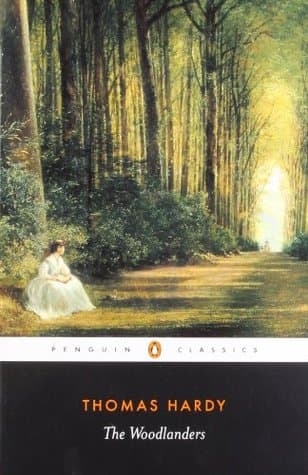
Thomas Hardy (1800)
Genre
Historical Fiction / Romance
Reading Time
560 min
Key Themes
See below
Sign in to track this book
In a secluded Dorset woodland, a woman's loyalty to nature and a good man conflicts with the allure of social status, leading to heartbreak and moral compromise.
The novel begins with Marty South, a young, poor woodlander, selling her long hair to Mrs. Charmond's maid for a wig for Mrs. Charmond. This act shows Marty's quiet acceptance of her fate and her deep, unacknowledged love for Giles Winterborne, a cider-maker and timber merchant. Meanwhile, Grace Melbury, the educated daughter of timber merchant George Melbury, returns to her village of Little Hintock after school. Her father, ambitious for Grace, sent her away to refine her, hoping to raise her social standing. Giles, who has always loved Grace, is happy about her return, and the village expects them to marry, as they have a long-standing understanding.
Grace's father, Mr. Melbury, first supports the match between Grace and Giles, even discussing a possible marriage agreement. However, his social hopes for Grace soon overshadow his initial approval. He starts to find fault with Giles's rustic manners and lower social status, believing Grace deserves someone more refined. This conflict increases with the arrival of Dr. Edred Fitzpiers, a charming but morally complex surgeon who has moved to the village. Fitzpiers, with his intellectual pursuits and polished manner, immediately attracts Grace and her father's admiration. Mr. Melbury begins to discourage Grace's relationship with Giles, pushing her towards Fitzpiers.
Giles Winterborne, wanting to secure his financial future for Grace, tries to renew the lease on his family's property, which includes his house and cider-apple orchard. However, due to a legal oversight and the actions of a local lawyer, his lease is invalid, making him a tenant-at-will. This financial insecurity further lowers his standing in Mr. Melbury's eyes. At the same time, Fitzpiers actively courts Grace, using his intellectual conversation and romantic gestures. Under pressure from her father and drawn to Fitzpiers's sophistication, Grace breaks off her understanding with Giles and accepts Fitzpiers's proposal, devastating Giles.
Grace Melbury and Edred Fitzpiers marry, and Grace moves into his house. However, the happiness does not last long. Fitzpiers soon shows his true character. He neglects Grace, spending his evenings studying and pursuing other interests. His flirtatious nature, which Grace first thought harmless, becomes a deep concern. He is soon found to be having an affair with Felice Charmond, the wealthy lady of the manor, who is also Grace's former schoolmistress. Grace is heartbroken and disappointed by her husband's unfaithfulness and coldness, realizing the mistake she made in choosing him over Giles.
Distraught by Fitzpiers's affair with Mrs. Charmond, Grace tells her father, who regrets his role in pushing her towards Fitzpiers. Grace decides to leave her husband and returns to her father's house. During this time, Fitzpiers has a riding accident, falling from his horse and getting seriously injured. He is brought back to his house, and Grace, despite her anger and pain, feels she must nurse him back to health. This shared experience leads to a temporary reconciliation, as Fitzpiers, weakened and seemingly sorry, expresses remorse for his actions, and Grace hopes for a real change in his character.
Despite the brief reconciliation, Fitzpiers soon returns to his old habits. His affair with Mrs. Charmond restarts, and he also flirts with other women, including Suke Damson, a local girl. Grace's hope for a changed husband is shattered. She seeks legal advice about a divorce, but she finds that under strict Victorian divorce laws, she cannot easily get one. Her husband's adultery alone is not enough; she would also need proof of cruelty or desertion, which she lacks. This legal problem leaves Grace feeling trapped and miserable in her marriage, unable to escape her unfaithful husband.
Mrs. Charmond, feeling some regret and perhaps sensing the pointlessness of her affair with Fitzpiers, decides to leave Little Hintock and travel abroad. Her departure temporarily removes one cause of Grace's marital distress, though it does not fix Fitzpiers's basic character flaws. Throughout Grace's ordeal, Giles Winterborne remains a loyal and supportive presence. He continues to love Grace selflessly, offering her quiet comfort and practical help when she needs it, never pushing his own desires but always there for her. His steady devotion contrasts with Fitzpiers's inconsistent and selfish behavior, showing the difference between the two men.
Fitzpiers, having learned of Mrs. Charmond's death abroad, returns to Little Hintock, intending to get his wife back. Grace, still legally bound to him and fearing his return, hides in a hut owned by Giles Winterborne. Giles, always protective of Grace, refuses to let her stay outside and, despite his own poor health, insists on sleeping outside the hut to protect her from the damp and cold, giving her his only blanket. This act of self-sacrifice causes Giles to catch a severe cold, which quickly becomes pneumonia. He gets worse fast, and Grace, upset, nurses him, but it is too late.
Giles Winterborne dies from his illness. His death is a tragedy for Grace, who realizes too late the depth of his love and the great loss she suffered by not choosing him. His death also leaves her in a complicated legal position. While she is now free of Fitzpiers's immediate presence, she is still legally married to him. The village mourns Giles, recognizing his quiet integrity and goodness. Marty South, who also loved Giles, is devastated, sharing Grace's grief in her own silent way. Grace is left to deal with her sorrow, her regret, and the realities of her past choices.
After Giles's death, Grace is pressured by societal expectations and her legal status to reconcile with Fitzpiers. Her father, tired of the scandal and wanting stability for his daughter, also encourages this. Grace, feeling resigned and having no other legal option, eventually agrees to live with Fitzpiers again, though her love for him is gone. The novel ends with Grace and Fitzpiers returning to a married life that lacks passion or true affection. Marty South, however, remains loyal to Giles's memory, visiting his grave and silently confirming her lasting love for him, recognizing his goodness above all others.
The Protagonist
Grace begins as an innocent, hopeful young woman, becomes a disillusioned, suffering wife, and ultimately a resigned, pragmatic one, having lost her true love.
The Protagonist/Tragic Hero
Giles begins as a hopeful suitor, endures rejection and financial hardship, and ultimately dies a tragic, selfless death, becoming a symbol of true love and sacrifice.
The Antagonist
Fitzpiers remains largely unchanged throughout the novel, consistently acting on his selfish impulses, though he experiences brief moments of feigned repentance.
The Supporting
Marty's arc is one of enduring, unrequited love and quiet resignation, culminating in her becoming the sole keeper of Giles's memory.
The Supporting
Mr. Melbury moves from ambitious father to a regretful one, witnessing the tragic consequences of his social climbing.
The Supporting
Mrs. Charmond's arc involves a brief, passionate affair, followed by remorse and a tragic, sudden death.
The Mentioned
Suke's brief involvement highlights Fitzpiers's philandering nature.
The Mentioned
Timothy serves as part of the background of the woodland community.
This theme is central to 'The Woodlanders,' contrasting the natural, simple life of the woodland with the artificial, often damaging influences of society and education. The woodland itself is almost a character, showing ancient rhythms, honesty, and a certain fatalism. Giles Winterborne and Marty South are deeply connected to this natural world, representing its virtues of loyalty, integrity, and simple goodness. In contrast, characters like Fitzpiers and the educated Grace, when she tries to rise above her origins, bring societal complications, unfaithfulness, and unhappiness. The novel suggests that moving too far from one's natural roots, or letting societal hopes control one's life, leads to suffering. The woodland is shown as both nurturing and uncaring, reflecting natural laws that often seem harsher than human ones.
“Nature was bountiful, but with a strange reserve, as if to say, 'I give you of my plenty, but do not presume upon my bounty.'”
The novel explores the strict social hierarchies of Victorian England and the difficulty of social mobility. Mr. Melbury's ambition for Grace to marry above her station drives the plot. He believes that education and a 'better' marriage will elevate her, but these attempts only make her unhappy. Giles, despite his goodness and skill, is seen as unsuitable for Grace because of his lower social standing and lack of formal education. Fitzpiers, with his professional status, represents the 'desirable' match, yet his moral character is worse than Giles's. Hardy shows how social differences often override real affection and worth, trapping individuals in roles set by birth or perceived status, leading to tragic outcomes for those who try to cross these boundaries.
“'He's hardly polished enough for her now,' said Melbury, his eye critically scanning Giles's rougher hands and simpler dress.”
Hardy examines different forms of love and the institution of marriage, ultimately presenting a bleak view of both. Grace's marriage to Fitzpiers shows disappointment, built on superficial attraction and societal pressure rather than true affection or moral compatibility. Fitzpiers's unfaithfulness and Grace's legal inability to escape the marriage expose the realities and gender inequalities of Victorian marriage laws. In contrast, Giles's and Marty's loves are pure, selfless, and lasting, but both are unrequited or tragically cut short. The novel suggests that true love often goes unrewarded, while marriages based on convenience or ambition lead to unhappiness, causing deep emotional suffering for the characters.
“She had married him because she had been trained to marry a professional man, and Giles was not one.”
A strong sense of fate runs through 'The Woodlanders.' Characters often seem to be victims of unfortunate coincidences, legal details, and their own past decisions or societal limits, rather than entirely free agents. Giles's loss of his lease due to a legal oversight, Mrs. Charmond's death, and Grace's inability to divorce Fitzpiers due to restrictive laws all show how outside circumstances work against the characters, especially those who are morally good. The natural setting often mirrors this indifference, with storms and illnesses playing a role in the characters' fates. This theme suggests that human efforts are often stopped by forces beyond their control, leading to an inescapable sense of tragedy and resignation.
“It was the accident of a legal flaw, of a mere oversight, that had ruined Giles Winterborne, not his own act.”
The novel looks at the limited power given to women in Victorian society. Grace Melbury, despite her education, is largely powerless in her marriage. She is pressured by her father into a union she comes to dislike, and then legally trapped in it due to restrictive divorce laws that favor men. Her options are severely limited, forcing her into passive suffering and eventual resignation. Mrs. Charmond, though wealthy, is also a victim of societal expectations and her own romantic problems, leading to her tragic end. Marty South, while strong, lives a life of quiet sacrifice and unacknowledged devotion. The book shows the inequalities faced by women, whose lives and happiness are often decided by male decisions and societal norms.
“A woman's lot was to suffer, and a man's to inflict it, or to endure it with stoicism.”
Use of weather and natural environment to reflect character moods and plot developments.
Hardy frequently employs pathetic fallacy to heighten the emotional atmosphere and foreshadow events. The changing seasons of the woodland often mirror the emotional states of the characters, particularly Grace and Giles. For instance, the lushness of spring and summer can reflect initial hopes and burgeoning love, while the harshness of winter, with its cold and damp, directly contributes to Giles's fatal illness and underscores the bleakness of Grace's situation. The woodland itself, with its ancient trees and untamed beauty, serves as a backdrop that is both comforting and indifferent to human suffering, emphasizing the characters' vulnerability to natural forces and fate.
The woodland represents natural order, ancient wisdom, and the characters' roots.
The woodland is perhaps the most significant symbol in the novel, embodying a timeless, natural order that contrasts with the transient, artificial world of human society. The trees, particularly the ancient ones, symbolize endurance, continuity, and an inherent wisdom, but also a certain indifference to human affairs. Characters like Giles and Marty, who are deeply connected to the woodland, represent natural goodness, integrity, and authenticity. The felling of trees can symbolize loss, change, or the disruption of natural harmony. The woodland provides both a sanctuary and a source of livelihood, but also a setting for hardship and tragedy, reflecting its dual nature as both nurturing and unforgiving.
The audience is aware of truths or consequences that characters are not.
Hardy frequently uses dramatic irony to underscore the tragic trajectory of the plot. The reader often understands the true character of Fitzpiers long before Grace or Mr. Melbury fully grasp it, making Grace's decision to marry him all the more agonizing. Similarly, the reader perceives the depth and purity of Giles's love and worth, recognizing the profound mistake Grace makes in rejecting him. This creates a sense of foreboding and inevitability, as the audience watches characters make choices that they know will lead to their unhappiness, amplifying the tragic impact of the story and highlighting the characters' limited perspectives.
Unjust laws and legal oversights directly impact characters' fates.
Hardy uses legal technicalities as a powerful plot device to demonstrate the arbitrary cruelty of human systems and their devastating impact on individuals. Giles Winterborne's loss of his family lease due to a legal oversight, despite his long-standing rightful claim, is a prime example. This event directly contributes to his diminished social standing and ultimately his inability to secure Grace's hand. Even more critically, Grace's inability to obtain a divorce from Fitzpiers, despite his blatant infidelity, due to the restrictive Victorian divorce laws, traps her in a miserable marriage. These legal injustices highlight the vulnerability of the individual to impersonal, often unfair, societal structures.
“For the woman who can stand alone is the woman who can best stand by the man who would stand by her; and such is the one above all others whom he should choose.”
— Giles Winterborne's thoughts on Marty South.
“She was a woman of much flexibility, and of a nature so impressionable that a fine day, a pretty flower, or a new dress, could make her quite another creature.”
— Describing Grace Melbury's character.
“The trees were alive, and though they were only trees, they were living things, and they had a language, if you could only understand it.”
— Marty South's deep connection to the woods.
“A man's life is an appendix to his heart.”
— A philosophical observation within the narrative.
“What was the good of her pretty face, if it were not to get her a good husband?”
— Mrs. Charmond's pragmatic view on beauty and marriage.
“To be loved to madness, such as that, is to be neither loved nor pitied.”
— Reflecting on Fitzpiers' intense but unstable affection.
“Her hair was so long that when she walked it almost swept the grass.”
— A vivid description of Marty South's most striking feature.
“There are some women who are born to be loved, and some who are born to be admired, and some who are born to be pitied.”
— General reflection on women's fates.
“The most prosaic man, if he has any feeling at all, will find his heart stirred by the sight of a woman who is doing her best to earn her living in a straightforward, industrious way.”
— Observation on the appeal of honest labor, particularly for women.
“Nature had not intended Giles Winterborne for a husband of the genteel, but for the companion of the woodland.”
— Highlighting Giles's true nature and place.
“Happiness is but a chance; misery is a certainty.”
— A pessimistic outlook on life's prospects.
“The great thing is to be rich; that's the only way to be happy.”
— Mr. Melbury's materialistic view on happiness.
“She had all a woman's desire to be loved, and none of a woman's art to obtain it.”
— Describing Grace Melbury's emotional vulnerability and lack of cunning.
“A woman's love is a dangerous thing, when it is given to a man who does not know how to value it.”
— Reflecting on the consequences of misplaced affection.
Ready to see how well you understood this book? Take our interactive quiz with 10 questions.
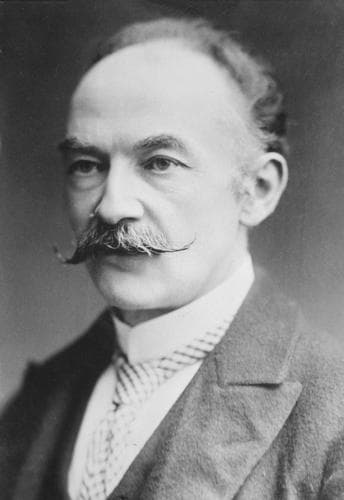
Thomas Hardy was an English novelist and poet. A Victorian realist in the tradition of George Eliot, he was influenced both in his novels and in his poetry by Romanticism, including the poetry of William Wordsworth. He was highly critical of much in Victorian society, especially on the declining status of rural people in Britain, such as those from his native South West England.







