“It is a curious thing, the fate of a book.”
— From 'The Wonderful Story of Henry Sugar', reflecting on the journey of the book Henry finds.

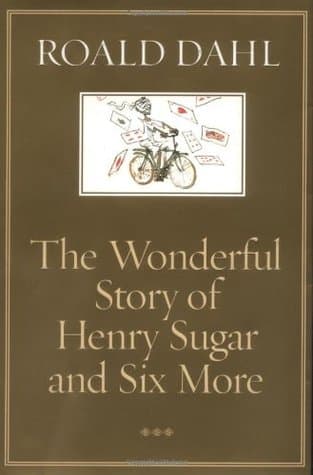
Roald Dahl (1977)
Genre
Fantasy / Children's / Young Adult
Reading Time
240 min
Key Themes
See below
Sign in to track this book
From a man who learns to see without his eyes to a boy who talks with a giant turtle, Roald Dahl tells stories where the unusual is always close, showing that even a pickpocket can be a hero and lost treasure holds a sad truth.
On Grand Cayman island, tourists find a huge sea turtle, weighing over 500 pounds, on a beach. It cannot get back to the sea alone and becomes a sight for people. Mr. Tufnell, a hotel owner, decides to keep it as a tourist attraction, naming it Esmeralda. A young, sensitive boy, David, feels very upset by the turtle's situation and the crowds' thoughtless curiosity. He feels a strong bond with the creature and spends hours with it, trying to talk to it, believing it understands him and is sad about being held captive. David's parents and the hotel staff find his unusual focus amusing, but David's care for the turtle is real and strong.
David, increasingly bothered by Esmeralda's captivity and the hotel's plan to make her into turtle soup, makes a big decision. One morning, Esmeralda is gone from the beach, and David is also missing. A note from David says that he and Esmeralda have gone to a place where they will be free. Despite wide searches by police and local officials, no one ever sees David or the giant turtle again. The event becomes a local story, with some believing David truly could talk to animals and chose to live away from people, protecting creatures like Esmeralda.
The narrator, driving his new BMW, picks up a hitchhiker on a country road. The hitchhiker, a small, thin man with quick eyes, says he is a 'fingersmith,' a professional pickpocket. He talks about his work with pride, explaining the exactness and skill it takes. The narrator is at first unsure but becomes interested by the man's honesty. The hitchhiker shows his skills by quietly taking the narrator's watch and wallet without him noticing, then returning them. He says he only targets rich people and never uses violence, seeing himself as a highly skilled professional, not a common criminal. The narrator, despite his first worries, is impressed by the man's quickness and charming confidence.
As they continue their drive, a police officer stops the narrator for speeding. The officer, a serious man, gets ready to write a ticket. The hitchhiker, watching, quietly uses his skills. While the officer is busy with his notepad, the hitchhiker manages to pickpocket the officer's ticket book and pen. When the officer turns back to the car, he finds his items missing and is completely confused. The hitchhiker, pretending to be innocent, suggests the officer might have lost them. The officer, annoyed and puzzled, eventually gives up and lets them go, unable to finish the ticket. The narrator is amazed and amused by the hitchhiker's bold and clever trick.
In 1942, during World War II, a farmer named Gordon Butcher is plowing a field near Mildenhall, Suffolk, England. His friend, Sydney Ford, a tractor driver, helps him. As Sydney plows, his tractor hits something hard. They check it out and find a large, detailed silver platter. Realizing it is an old artifact, they keep digging and soon uncover a grand collection of Roman silver, including bowls, dishes, and other fancy pieces. The treasure is in great condition and clearly has huge historical and money value. Sydney, understanding how important it is, wants to report it right away, but Gordon, worried about official problems and losing the treasure, at first hesitates.
Gordon Butcher, fearing he would lose the treasure to the government without fair payment, hides the Mildenhall Treasure for years. He and Sydney sometimes show pieces to friends, but it stays mostly secret. Eventually, officials learn about the treasure. Under the Treasure Trove Act, any old gold or silver found in the ground, where the first owner cannot be found, belongs to the Crown, but the finder gets a reward equal to its market value. However, because Gordon had hidden the treasure for so long and not reported it right away, it was argued that it was no longer 'in the ground' when reported. As a result, they received only a small part of what the treasure was worth, just £1000, while the British Museum got the priceless artifacts for the country.
Henry Sugar is a very rich and self-centered man, living a life of ease and gambling. One day, while visiting a friend's country home, he finds an old exercise book in the library. The book, written by Dr. Z.Z. Chatterjee, tells the true story of Imhrat Khan, an Indian man who said he could see without his eyes. Khan had learned this amazing skill through years of deep meditation and self-control, taught by a mysterious guru. The book describes Khan's demonstrations, where he could identify objects and even read while blindfolded, surprising audiences and doctors. Henry is fascinated by this story, seeing it as a way to win even more money at the casino.
Inspired by Imhrat Khan's story, Henry Sugar, despite being usually lazy, starts a strict and lonely training plan to get the same ability. He follows the instructions and meditation methods in Dr. Chatterjee's book, practicing for three years. His first reason is purely selfish: he plans to use this power to cheat at cards and roulette, winning huge amounts of money. He keeps to himself, dealing with discomfort and boredom, slowly but surely making progress. Finally, through sheer hard work, he succeeds. He gains the ability to see through playing cards, dice, and even into people's minds, understanding their thoughts and plans. His new power is complete and frightening in what it could do.
With his amazing ability, Henry Sugar travels to different casinos around the world, steadily winning huge sums of money at blackjack and roulette. He is careful in his method, winning enough to cause suspicion but never so much that he is caught cheating directly. He collects millions, far more than he could ever spend. However, instead of feeling happy or satisfied, Henry feels an unexpected emptiness. The excitement of gambling is gone, replaced by a hollow certainty. Winning becomes mechanical and meaningless, leaving him deeply unhappy. He realizes that his initial greedy goal has led him to a dead end, and his vast wealth brings him no joy.
Overwhelmed by his ill-gotten gains and a deep lack of purpose, Henry Sugar has a sudden realization. He decides to use his extraordinary skill for good. He starts giving his winnings to orphanages, but finds simply giving money away is not enough. He then creates a system: he keeps winning at casinos, but now he does it openly, showing his powers to the casino owners. He demands they match his winnings, threatening to show how vulnerable they are to his powers if they refuse. He then uses all the money to start and fund a large network of orphanages worldwide, providing food, shelter, and education for countless children. He becomes a modern-day Robin Hood, secretly helping those in need, finally finding real happiness and meaning in his life.
Henry Sugar continues his work for many years, traveling the world, winning money from casinos, and funding his charities. He works in secret, always careful to avoid full public exposure, though his legend grows in the gambling world. After his death, his accountant, John Winston, tells the full story of Henry Sugar's life and his good deeds. Winston explains how Henry carefully managed the huge amounts of money, making sure every penny went to the orphanages. The story shows Henry's change from a selfish, idle rich man to a kind helper, using an almost magical ability to make a big positive difference in the world, leaving a legacy of kindness and generosity that is much greater than his first greedy plans.
The Protagonist
David transforms from a quietly empathetic observer to a decisive actor, abandoning human society to live with animals.
The Supporting
The Hitchhiker remains consistent, showcasing his skills and philosophy without significant personal change, serving as a catalyst for the narrator's adventure.
The Protagonist
Henry undergoes a profound transformation from a selfish, idle gambler to a dedicated, anonymous philanthropist, finding true meaning in helping others.
The Supporting
Imhrat Khan's story is already complete, serving as a static source of inspiration and instruction for Henry Sugar.
The Supporting
Esmeralda's arc is one of captivity and eventual, mysterious freedom, facilitated by David.
The Protagonist
Gordon moves from accidental discoverer to someone who makes a regrettable decision, leading to a diminished reward.
The Supporting
Sydney's arc is tied to Gordon's, as he initially wants to report the treasure but is swayed by his friend's reluctance, leading to a shared loss.
The Supporting
John Winston acts as the storyteller, revealing Henry Sugar's completed arc after his death.
This idea is clearest in 'The Wonderful Story of Henry Sugar.' Henry first wants a special ability for selfish, greedy reasons—to win a lot of money gambling. While he achieves his goal, the huge wealth brings him no joy, only emptiness. This leads to his big change, where he finds real purpose and happiness by using his special skill and wealth to help others, specifically by funding orphanages globally. His journey shows that money alone is not enough, and true happiness comes from giving without expecting anything in return.
“He had achieved his ambition. He had become a millionaire ten times over. But he had not become a happy man. Instead, he felt absolutely rotten.”
Several stories explore the idea that the human mind has hidden, almost magical, abilities. Imhrat Khan in 'Henry Sugar' shows he can see without his eyes through meditation, inspiring Henry to do the same. David in 'The Boy Who Talked With Animals' seems to have a natural ability to talk to creatures, hinting at a connection beyond normal human understanding. This idea suggests that with practice, belief, or a special sensitivity, people can go beyond usual human limits.
“What a mind can do, what a mind can achieve, is truly beyond the comprehension of most ordinary men.”
This idea is central to 'The Boy Who Talked With Animals.' The story contrasts the thoughtless use of the giant sea turtle, Esmeralda, by the hotel owner and curious tourists, with David's deep care and wish to protect her. The human desire to own or profit from nature is shown as harmful, while David's connection represents a balanced, respectful relationship. His final disappearance with Esmeralda symbolizes an escape from human society's bad effects on nature, suggesting that true balance might only be found away from it.
“The great turtle lay absolutely still, as though resigned to her fate, and David felt a huge lump forming in his throat.”
This idea is explored in 'The Mildenhall Treasure' and subtly in 'The Hitchhiker.' In 'Mildenhall,' the legal system (Treasure Trove Act) is shown to be strict and unyielding, denying the honest finders a fair reward because of a technicality caused by their first fear and lack of knowledge. This shows how rules, even good ones, can lead to unfairness. In 'The Hitchhiker,' the pickpocket works outside the law but claims a moral code, targeting the rich and showing a kind of 'justice' against an impersonal speeding ticket, suggesting that official systems can sometimes be outsmarted or are less 'just' than they seem.
“The law is a funny thing. It's often not about what's right or wrong, but about what's written down.”
A story told by one character, often the author, about another's experiences, or a story found within another story.
This device is prominently used in 'The Wonderful Story of Henry Sugar' and 'The Mildenhall Treasure.' In 'Henry Sugar,' Roald Dahl himself acts as the narrator, explaining how he came to know the 'true' story of Henry Sugar, which then includes Henry reading Dr. Chatterjee's account of Imhrat Khan. This layering adds a sense of authenticity and wonder. In 'The Mildenhall Treasure,' the story is presented as a 'true' account, with the narrator recounting events as if they were historical facts, enhancing its impact and credibility.
An unexpected power or event saving a seemingly hopeless situation.
While not a literal 'god from the machine,' the sudden acquisition of extraordinary abilities by characters like Henry Sugar and David (the boy who talked with animals) functions similarly. Henry's ability to see through objects, learned through extreme discipline, is a fantastical solution to his gambling boredom, allowing him to embark on his philanthropic quest. David's presumed ability to communicate with Esmeralda and lead her to freedom is also a convenient, magical resolution to the turtle's seemingly hopeless captivity, allowing for a fantastical escape from an impossible situation.
A narrator whose credibility has been compromised or is questionable.
This device is subtly at play in stories like 'The Hitchhiker' and even 'The Boy Who Talked With Animals.' In 'The Hitchhiker,' the narrator (the driver) is so captivated by the hitchhiker's charm and skill that he largely accepts the pickpocket's self-serving philosophy and exaggerated claims without critical analysis. The reader is invited to question if the hitchhiker is truly a 'professional artist' or just a clever thief. In 'The Boy Who Talked With Animals,' the miraculous disappearance of David and Esmeralda is presented through the lens of local legend, leaving room for skepticism about the supernatural elements, even as the narrative encourages belief.
A short story designed to illustrate or teach some truth, religious principle, or moral lesson.
Many of these stories, particularly 'The Wonderful Story of Henry Sugar,' function as moral parables. Henry's journey from greedy self-indulgence to selfless philanthropy teaches a clear lesson about the emptiness of material wealth and the fulfillment found in generosity. Similarly, 'The Boy Who Talked With Animals' carries a moral message about empathy for nature and the consequences of human exploitation. Even 'The Mildenhall Treasure' implicitly warns against greed and the folly of circumventing legal processes.
“It is a curious thing, the fate of a book.”
— From 'The Wonderful Story of Henry Sugar', reflecting on the journey of the book Henry finds.
“If a person has a thing that he can do better than anyone else in the world, then he should do it.”
— From 'The Wonderful Story of Henry Sugar', Henry's realization about his unique ability.
“The greatest secrets are always hidden in the most unlikely places.”
— From 'The Wonderful Story of Henry Sugar', referring to the obscure book Henry discovers.
“You can always tell a first-class human being by the way he treats an animal.”
— From 'The Champion of the World', commenting on the character of the poachers.
“There are no secrets in the world that time does not reveal.”
— From 'The Wonderful Story of Henry Sugar', a general observation about the nature of secrets.
“The best way to get rid of an enemy is to make him a friend.”
— From 'The Boy Who Talked to Animals', a philosophical point about conflict resolution.
“It is not so much what you say, as the way you say it.”
— From 'The Swan', emphasizing the importance of delivery and tone.
“Imagination is a quality that cannot be taught.”
— From 'The Wonderful Story of Henry Sugar', discussing the innate nature of certain abilities.
“A little nonsense now and then is relished by the wisest men.”
— A common Roald Dahl sentiment, applicable to the playful nature of his stories.
“Money is a blessing when it is used for good, and a curse when it is used for evil.”
— From 'The Wonderful Story of Henry Sugar', Henry's contemplation on his newfound wealth.
“He had discovered the greatest secret of all, which is that a man's true wealth is not in the things he owns but in the good he does.”
— From 'The Wonderful Story of Henry Sugar', Henry's ultimate realization about life.
“The world is full of people who are trying to catch you.”
— From 'The Champion of the World', reflecting the cautious nature of the poachers.
“You must be very careful when you are reading a book, and when you are writing one.”
— From 'The Wonderful Story of Henry Sugar', a meta-commentary on the act of engaging with literature.
“There is no such thing as an impossible dream.”
— A recurring theme in Dahl's works, encouraging belief in the extraordinary.
Ready to see how well you understood this book? Take our interactive quiz with 10 questions.
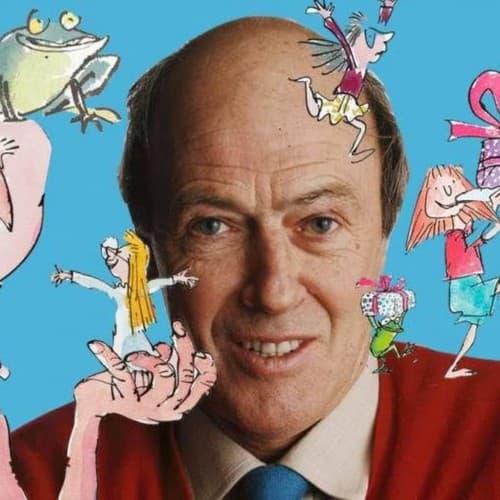
Roald Dahl was a British popular author of children's literature and short stories, a poet, and wartime fighter ace. His books have sold more than 300 million copies worldwide. Dahl has been called "one of the greatest storytellers for children of the 20th century".







