“It was a rule that if you wanted to keep a secret, you had to write it down. Then it was like the words went into the paper and stayed there.”
— Charlie Anne's method for keeping secrets safe.

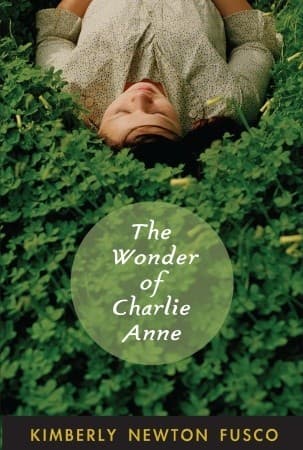
Kimberly Newton Fusco (2009)
Genre
Children's / Historical Fiction / Young Adult
Reading Time
270 min
Key Themes
See below
Sign in to track this book
During the Depression, a girl named Charlie Anne, living with a strict cousin and farm chores, finds an unexpected friend in Phoebe, an African American girl, challenging small-town prejudice and showing love's power.
In 1934, during the Great Depression, ten-year-old Charlie Anne Mason's life in rural North Carolina changes when her father, Silas, leaves their farm to find work building roads up north. Charlie Anne, her older brother Joel, and younger sister Lucy are left with their rigid cousin, Mirabel. Mirabel enforces strict chores and offers little joy, making Charlie Anne miss her mother, who died three years prior. Charlie Anne finds comfort only by the river, a place she connects with her mother, and struggles with the changes and her father's absence.
Charlie Anne's routine changes with the arrival of Old Mr. Jolly's new wife, Rosalyn. Rosalyn is a modern woman, notably wearing red pants, a scandalous sight in their conservative community. She brings Phoebe, a lively African American girl about Charlie Anne's age who has also recently lost her mother. Phoebe's arrival immediately sparks Charlie Anne's interest, contrasting with the dullness of her own home and Cousin Mirabel's strict rules. Phoebe's independent spirit and playful nature offer a needed distraction for Charlie Anne.
At first, Charlie Anne and Phoebe are hesitant due to the racial prejudices in their community. They begin a tentative friendship. Phoebe, smart and curious, introduces Charlie Anne to new ideas and games, including reading and shared stories. Their interactions often happen in secret, away from neighbors and Cousin Mirabel, who disapproves of their cross-racial friendship. They find common ground in their shared experiences of loss and loneliness. Their bond deepens as they navigate their lives, finding comfort and understanding in each other.
As their friendship grows, Charlie Anne and Phoebe spend their days exploring the woods and riverbanks, sharing secrets and dreams. Phoebe, having lived in a different place, shares stories and knowledge that broaden Charlie Anne's world. They learn from each other's cultures and experiences. Phoebe shows Charlie Anne the beauty in strength, and Charlie Anne shares her love for nature around their farm. Their bond becomes a source of strength and joy, a secret haven from harsh realities, and a sign of their ability to see past societal differences.
The peaceful, though secret, friendship between Charlie Anne and Phoebe faces increasing threats from rising racial tensions in their small town. Whispers and judgmental looks turn into open acts of prejudice, fueled by economic worries of the Depression and deep-seated biases. Cousin Mirabel's disapproval of Phoebe and growing hostility from other townsfolk make it clear that their friendship goes against established norms. The girls become aware of the dangerous undercurrents of hatred that aim to divide them.
The simmering prejudice boils over during a visit to the general store. Charlie Anne, Phoebe, and Rosalyn encounter clear discrimination and hostility from some white townspeople. Phoebe is openly disrespected and made to feel unwelcome. Rosalyn's attempts to defend her are met with scorn. This public incident deeply affects both girls, making the realities of racial hatred undeniable and personal. It forces Charlie Anne to confront prejudice directly and strengthens her resolve to protect her friendship with Phoebe, despite the fear it causes.
The escalating hatred leads to a horrific act: Rosalyn and Phoebe's home is set on fire, believed to be arson motivated by racial prejudice. The fire is a devastating blow, destroying their home and threatening their safety. This event shakes the entire community, forcing many to face the extreme results of unchecked hatred. For Charlie Anne, it is a terrifying realization of the danger her friend faces, solidifying her commitment to standing up for what is right, even when it is difficult and scary.
After the fire, the community is divided. Some, like Charlie Anne's brother Joel and a few compassionate neighbors, offer support and help rebuild. Others remain hostile or fearful. Charlie Anne and Joel actively help Rosalyn and Phoebe, showing their solidarity. This period highlights the moral choices individuals must make when facing injustice, showing that even in a prejudiced society, some are willing to be kind and fight for what is right, even if it means going against social norms.
Inspired by Rosalyn's courage and Phoebe's strength, Charlie Anne finds her voice. She confronts Cousin Mirabel about her prejudices and, more importantly, stands up to other townspeople who spread hatred. This is a significant moment in her character growth. She moves from a quiet child to someone willing to advocate for justice and her friend. Her actions show the power of individual courage to challenge widespread prejudice, proving that even a child can make a difference when facing intolerance.
Through the combined efforts of Charlie Anne, Joel, Rosalyn, and other sympathetic individuals, Rosalyn and Phoebe begin to rebuild their lives. The events force many in the town to rethink their prejudices. While not all hearts change, a significant shift occurs. The fire, though tragic, helps some to confront their biases and embrace empathy. Charlie Anne's father eventually returns, bringing stability, and he, too, comes to understand the importance of Charlie Anne's friendship with Phoebe. The ending offers a hopeful message about the capacity for people to grow and for communities to heal.
The Protagonist
Charlie Anne transforms from a timid, grieving child into a courageous advocate for justice and friendship, finding her voice and expanding her understanding of love and community.
The Supporting
Phoebe endures racial hatred with resilience, finding strength in her friendship with Charlie Anne and inspiring others to confront injustice.
The Supporting
Rosalyn bravely stands against the town's racism, enduring personal tragedy but inspiring change and demonstrating unwavering love and protection for Phoebe.
The Antagonist/Supporting
Mirabel remains largely unchanged in her prejudices, serving as a foil to Charlie Anne's developing empathy and highlighting the entrenched nature of some biases.
The Supporting
Joel develops into a reliable and morally upright young man, standing by his sister and offering practical support in the face of injustice.
The Supporting
Silas returns home, providing stability and demonstrating an expanded understanding of community and acceptance.
The Supporting
Old Mr. Jolly witnesses the harsh realities of prejudice and supports his new family, even if he is not the most vocal advocate.
The Supporting
Lucy largely remains a child, serving to highlight Charlie Anne's growing maturity and responsibility.
The main theme is the friendship between Charlie Anne and Phoebe. Despite racial prejudices and societal rules for separation, their bond goes beyond these barriers. Their shared experiences of loss and loneliness, along with their individual strengths, allow them to connect deeply. This friendship offers comfort, broadens their perspectives, and empowers them to resist hatred. For example, their secret meetings by the river symbolize a safe space where societal rules do not apply, letting their true connection grow.
“Our hearts are always able to expand.”
The story directly addresses the widespread racial prejudice of the 1930s American South. It shows how hatred can grow in a community, leading to discrimination, fear, and violence, as seen in the general store incident and the arson of Rosalyn and Phoebe's home. The story emphasizes the importance of individual courage in facing such injustice. Charlie Anne's journey from quiet observer to outspoken advocate, and Rosalyn's firm defiance, show the moral need to stand up for what is right, even when it is dangerous or unpopular.
“It was like the town was holding its breath, waiting to see what would happen if someone dared to step out of line.”
The characters, especially Charlie Anne and Phoebe, show remarkable strength. Charlie Anne deals with her father's absence, her mother's death, and Cousin Mirabel's harshness. Phoebe endures her mother's loss, displacement, and the constant threat of racial hatred. Rosalyn also shows great strength after losing her home. Their ability to find joy, hope, and strength in each other and within themselves, despite hardship and tragedy, shows the human spirit's ability to keep going. The rebuilding efforts after the fire powerfully symbolize this theme.
“Even when everything felt broken, there was still a piece of beauty to find.”
The book explores different kinds of family—traditional, chosen, and broken. Charlie Anne's initial family is broken by economic hardship and death, leading to a strained relationship with Cousin Mirabel. However, the story highlights how a community can either hinder or support people. The kindness shown by Joel and other neighbors in helping Rosalyn and Phoebe rebuild demonstrates the positive potential of community. The prejudice of others shows its destructive side. Ultimately, the story suggests that true family and community go beyond blood ties to include those who offer love, support, and acceptance, challenging narrow societal definitions.
“Family wasn't just blood. It was who you chose to stand with.”
A place of solace, memory, and freedom.
The river holds deep symbolic meaning for Charlie Anne. It is where she feels closest to the memory of her deceased mother, a place of quiet contemplation and emotional release. Crucially, it also becomes a secret meeting place for Charlie Anne and Phoebe, away from the prying eyes and judgmental norms of the town. At the river, they can be themselves, freely express their friendship, and share their dreams, making it a powerful symbol of sanctuary, freedom, and the natural flow of connection that defies societal constraints.
A visual symbol of defiance and individuality.
Rosalyn's red-pepper-colored pants serve as an immediate and striking visual symbol of her unconventional nature, individuality, and defiance of societal expectations. In the conservative 1930s rural setting, a woman wearing brightly colored pants is scandalous and unheard of. This detail instantly marks Rosalyn as an outsider and a nonconformist, foreshadowing her willingness to challenge other social norms, particularly those related to racial prejudice. The pants are a bold declaration of self that sets her apart and makes her a target, but also an inspiration.
A catalyst for change and a stark representation of hatred.
The arson of Rosalyn and Phoebe's home is a pivotal plot device. It serves as a stark, dramatic manifestation of the racial hatred simmering in the community, escalating the conflict to a terrifying level. While devastating, the fire also acts as a catalyst. It forces the characters, especially Charlie Anne, to confront the extreme consequences of prejudice and strengthens her resolve to act. It also galvanizes the more compassionate members of the community to come together and offer support, initiating a process of healing and challenging the status quo, even if slowly.
Provides intimate insight into a child's experience of complex issues.
The story is told from Charlie Anne's first-person perspective, allowing readers to experience the events through the eyes of a ten-year-old girl. This narrative choice effectively conveys her emotional landscape—her grief, loneliness, curiosity, fear, and eventual courage. It also makes the complex issues of racial prejudice and economic hardship accessible to a younger audience, grounding them in a child's personal observations and feelings. This perspective highlights the innocence that is confronted by harsh realities and makes her journey of understanding and advocacy particularly impactful.
“It was a rule that if you wanted to keep a secret, you had to write it down. Then it was like the words went into the paper and stayed there.”
— Charlie Anne's method for keeping secrets safe.
“Sometimes when you were scared, you had to pretend you weren't, and sometimes pretending was enough to make it true.”
— Charlie Anne's coping mechanism during difficult times.
“The war had a way of shrinking everything, even the sky.”
— Charlie Anne's observation about the impact of World War II.
“A good story was like a warm blanket on a cold night.”
— Charlie Anne reflecting on the comfort and power of storytelling.
“You couldn't always choose what happened to you, but you could choose what you did about it.”
— A lesson Charlie Anne learns about resilience.
“Hope was a tricky thing. It could make you feel good, but it could also hurt you if it didn't come true.”
— Charlie Anne's conflicted feelings about maintaining hope during wartime.
“The world was full of wonders, even when it was full of war.”
— Charlie Anne finding beauty and magic amidst the harsh realities.
“Grief was a heavy thing, like a stone in your pocket that you couldn't ever quite get rid of.”
— Charlie Anne's understanding of enduring grief.
“Some secrets were meant to be kept, and some were meant to be shared, even if it hurt a little.”
— Charlie Anne grappling with the nature of secrets and their consequences.
“Being brave didn't mean you weren't scared. It meant you did what you had to do anyway.”
— A definition of bravery that Charlie Anne comes to understand.
“Families were like quilts, all different pieces sewn together, and sometimes the stitches got loose, but they were still a family.”
— Charlie Anne's reflection on the complexities and enduring nature of family bonds.
“The quiet held a lot of things. Sometimes good things, sometimes sad things, and sometimes things that just were.”
— Charlie Anne's observation about the power and meaning of silence.
“A promise was a thing you held onto tight, like a thread that connected you to someone else.”
— Charlie Anne's belief in the importance and strength of promises.
“Even in the darkest places, there was always a little bit of light, if you knew where to look.”
— Charlie Anne's enduring optimism despite her difficult circumstances.
Ready to see how well you understood this book? Take our interactive quiz with 10 questions.

Dan Gemeinhart
4.5

Kate O'Hearn
4.4

Jeanne Birdsall
4.4

Jen Wang
4.4

Wendelin Van Draanen
4.3

John Marsden
4.3

Chris Van Allsburg
4.3
Jennifer A. Nielsen
4.2