“The child’s body was a city under siege, and she, Lib, was the lone, exhausted defender.”
— Lib Wright's internal struggle to understand Anna's condition.

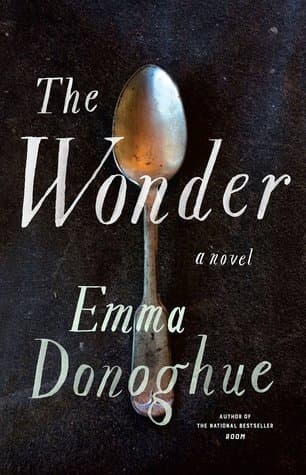
Emma Donoghue (2016)
Genre
Literary Fiction / Historical Fiction / Spirituality / Mystery
Reading Time
350 min
Key Themes
See below
Sign in to track this book
In a remote 1859 Irish village, an English nurse must determine if an eleven-year-old girl's months-long fast is a divine miracle, a cruel hoax, or a desperate act of faith, forcing her to confront the dark heart of belief and the lengths one will go to save a life.
In 1859, English nurse Elizabeth 'Lib' Wright travels from London to a remote village in the Irish Midlands. A local committee, made up of a doctor, a priest, and other prominent men, has hired her to observe eleven-year-old Anna O'Donnell. Anna is a local sensation, claiming to have survived without food for four months, sustained only by 'manna from heaven.' Lib, a pragmatic woman scarred by her past experiences in the Crimean War, is skeptical of miracles and approaches the case with a scientific, dispassionate resolve. She is tasked with a two-week watch, sharing the duty with a nun, Sister Michael, to determine if Anna is truly fasting or if there's a trick involved. The O'Donnell family, including Anna's parents Rosaleen and Malachy, and older brother Daniel, live in a small, impoverished cottage, which is already a pilgrimage site for curious onlookers.
Lib begins her observation, meticulously documenting Anna's every movement and interaction. She finds Anna to be a quiet, pious child who genuinely believes in her divine sustenance. Lib's initial suspicion is that Anna is secretly being fed by her family, particularly her mother, Rosaleen. She implements strict rules: no one is to be alone with Anna, and the cottage is searched for hidden food. Despite these measures, Anna continues to show no signs of hunger or physical deterioration, baffling Lib. The local community, steeped in religious fervor, views Anna as a saint, and Lib's scientific approach is met with suspicion and resistance, especially from Father Thaddeus and Sister Michael, who are more inclined to believe in the miraculous.
William Byrne, a journalist from the 'Dublin Examiner,' arrives in the village to cover the 'wonder.' He is initially cynical but becomes increasingly intrigued by Anna's resilience and the fervor around her. Byrne attempts to interview Lib, who remains tight-lipped and professional, unwilling to compromise her investigation. His presence, however, intensifies the public's focus on Anna, making the O'Donnell cottage an even greater spectacle. The committee, eager for a definitive answer, pressures Lib to either confirm the miracle or expose the fraud, highlighting the conflict between faith and science that fills the village.
As the days pass, Anna's condition, though seemingly stable, begins to subtly deteriorate. Lib notices a slight weakening, a loss of vitality. Through careful observation and a growing rapport with Anna, Lib eventually uncovers the horrifying truth: Anna is not being secretly fed by her family in the traditional sense. Instead, Anna's mother, Rosaleen, has been chewing food and then kissing Anna goodnight, passing the masticated food into her daughter's mouth. This 'kiss-feeding' is done under the guise of maternal affection, and Anna herself believes it to be part of God's sustenance, unaware of its true nature. The revelation is a profound shock to Lib, confirming her suspicions of deception but revealing a far more insidious and tragic form of abuse.
Upon discovering the 'kiss-feeding,' Lib immediately confronts Rosaleen and alerts the committee. However, the committee, particularly Father Thaddeus, is reluctant to publicly expose the family, fearing scandal and the shattering of the community's faith. They insist on maintaining the observation, hoping for a 'natural' explanation or a divine intervention. With the cessation of even the minimal sustenance from the kiss-feeding, Anna's health rapidly declines. She becomes increasingly frail, weak, and begins to show clear signs of starvation. Lib, witnessing Anna's slow death, becomes desperate. Her professional detachment erodes, replaced by a fierce protective instinct towards the innocent child.
Lib's own tragic past, particularly the death of her infant son, surfaces as Anna's life hangs in the balance. The memory of her child, whom she felt she failed to protect, fuels her determination to save Anna. She sees in Anna a chance for redemption, a way to atone for her past grief and perceived failures. This personal connection deepens her commitment, transforming her from a detached observer into an active participant. She begins to openly defy the committee's passive stance, arguing for immediate intervention, even if it means exposing the family and shattering the community's faith in the 'miracle.'
Realizing that the committee will not act in time, Lib forms a desperate plan. She confides in William Byrne, sharing the full truth of Anna's situation and the committee's inaction. Byrne, initially hesitant due to his journalistic ethics and the potential for public outrage, is ultimately moved by Lib's conviction and Anna's plight. Together, they concoct a scheme to rescue Anna. The plan involves faking Anna's death to free her from her family and the suffocating scrutiny of the village, allowing her to start a new life under a different identity.
Lib, with William's help, sets the O'Donnell cottage on fire, creating a diversion. Before the fire consumes the house, she takes Anna out, carrying her to a pre-arranged meeting point. The fire is reported, and the village believes Anna has perished in the flames, a tragic end to their 'miracle.' Lib, however, has secretly substituted a small, weighted doll for Anna's body, ensuring that the 'remains' found in the fire are unidentifiable. This dramatic act allows Lib to disappear with Anna, effectively erasing her old identity and the circumstances of her suffering. The escape is fraught with danger and emotional intensity, marking a complete break from Lib's professional duties and societal expectations.
Lib and Anna, now calling themselves 'Niamh' and 'Lily' respectively, travel to Dublin. With William Byrne's assistance, they secure passage to Australia, seeking a completely fresh start. Lib, who had previously been a rigid and emotionally guarded woman, has transformed into a loving, protective mother figure for Anna. Anna, though traumatized, begins to recover physically and emotionally under Lib's care. The journey symbolizes their shared escape from the oppressive past and the restrictive societal norms of 19th-century Ireland. They envision a life free from judgment and the suffocating grip of misguided faith.
On the ship to Australia, Lib and Anna solidify their bond. Lib has fully embraced her role as Anna's guardian, and Anna, in turn, trusts Lib implicitly. The shared trauma and the act of defiance have forged an unbreakable connection between them. The narrative concludes with a sense of cautious optimism. While the past cannot be entirely erased, they have chosen to create a new future, free from the 'wonder' that nearly destroyed Anna. Lib, once a strict proponent of scientific fact, has learned the power of compassion and the lengths one must go to protect the innocent, finding a new purpose in her life as a mother to Anna.
The Protagonist
Lib transforms from a detached, grieving professional into a fiercely protective, compassionate maternal figure, finding redemption and a new purpose in saving Anna.
The Central Figure
Anna moves from being a passive victim of religious delusion and familial abuse to being rescued and given a chance at a new, healthier life under Lib's care.
The Supporting
Byrne evolves from a detached observer to an active participant, risking his career to help Lib save Anna, demonstrating a shift from professional ambition to moral conviction.
The Antagonist/Supporting
Her arc is one of sustained delusion and eventual loss, as her daughter is taken from her, though she remains largely unchanged in her religious conviction.
The Supporting
Malachy remains a static character, unable to break free from the religious fervor and societal pressure that traps his family.
The Supporting
Father Thaddeus remains steadfast in his faith, resisting scientific explanation and ultimately being outmaneuvered by Lib's radical intervention.
The Supporting
Sister Michael's initial belief in the miracle is challenged by Anna's declining health, causing her internal conflict, though she ultimately remains within the confines of her faith.
The Supporting
Dr. McBrearty remains largely indecisive, unable to overcome the community's influence, highlighting the limitations of passive scientific observation.
This is the central conflict of the novel, shown by Lib Wright's scientific skepticism clashing with the fervent religious belief of the Irish village and the O'Donnell family. The community desperately wants to believe in Anna's miracle, seeing it as a sign of divine intervention and a source of hope in their impoverished lives. Lib, a nurse trained in modern medicine, insists on empirical evidence and rational explanation. The 'kiss-feeding' twist shows how faith can be manipulated or misinterpreted, leading to tragic consequences when it overrides reason and human welfare. The committee's reluctance to expose the truth, fearing the shattering of faith, further highlights this tension, especially when Lib confronts Father Thaddeus about Anna's deteriorating health.
“What is the truth, Lib? Is it what we see, or what we are told to believe?”
The novel explores various forms of manipulation and deception, from the subtle, unintentional 'kiss-feeding' by Rosaleen O'Donnell to the community's collective self-deception in embracing the 'miracle.' Anna herself is manipulated, believing her starvation is divine sustenance. The committee also engages in a form of deception by prolonging the observation and attempting to suppress the truth to protect the community's faith. Lib's final act of faking Anna's death is also a deception, but one born out of compassion and a desperate attempt to save a life, highlighting the moral complexities of such acts. This theme is particularly clear when Lib finally understands the 'kiss-feeding' mechanism, revealing the insidious nature of the deception.
“A miracle is only a deception if you know it to be so.”
The theme of motherhood is explored through multiple lenses. Lib Wright's past grief over her deceased infant son influences her growing attachment to Anna and her fierce determination to save her, transforming her into a surrogate mother. Rosaleen O'Donnell, though misguided, believes her 'kiss-feeding' is an act of maternal sacrifice and piety, however tragically flawed. The novel questions the nature of maternal love, duty, and the sacrifices parents make for their children, whether born of genuine care or distorted belief. Lib's ultimate sacrifice of her professional life and identity to save Anna exemplifies this theme, culminating in their shared journey to a new life.
“She had lost one child. She would not lose another.”
The novel shows how stories—whether religious narratives, local legends, or journalistic accounts—shape reality and influence perception. Anna's 'fasting' becomes a powerful story, a 'wonder' that captivates and defines the village. William Byrne, the journalist, is tasked with crafting this story for a wider audience. Lib's struggle is to dismantle the prevailing narrative with scientific fact. Ultimately, Lib and Anna must create a new story for themselves, assuming new identities and fabricating a past to escape the suffocating power of the old narrative. The choice of 'Niamh' and 'Lily' as new names for Lib and Anna signifies their conscious construction of a new, empowering story.
“People will believe what they want to believe, Nurse. It's the nature of man.”
Lib Wright's journey is one of personal redemption. Haunted by the death of her own child, she finds a new purpose and a chance to atone for her past by saving Anna. Her initial detached professionalism gives way to deep compassion and a willingness to defy societal norms, sacrificing her career and identity for the child. Anna also undergoes a transformation, from a passive victim to a survivor given a second chance at life. Their shared escape and new identities symbolize a rebirth, a radical transformation from their former selves and circumstances, offering a hopeful, if challenging, vision of new beginnings.
“She was not Lib Wright anymore. She was Niamh, and this child was Lily, and they were beginning again.”
The act of observation itself becomes a flawed and manipulated process.
The core premise of the novel is Lib's observation of Anna. However, this observation is inherently unreliable due to the hidden 'kiss-feeding' and the constant presence of a community invested in a particular outcome. The device highlights the limitations of purely external observation when dealing with human deception and complex emotional/spiritual factors. It forces Lib to move beyond mere watching to empathetic engagement and deduction, ultimately revealing that the 'objective' scientific method can be insufficient in certain human contexts.
The isolated cottage and village amplify the psychological tension.
The story is primarily set within the small, claustrophobic O'Donnell cottage and the surrounding, equally insular Irish village. This confined setting intensifies the psychological drama, creating a pressure cooker environment where Lib's rationalism clashes directly with the community's fervent faith. The lack of escape or external influence amplifies the stakes for Anna and forces the characters into direct confrontation, mirroring the internal confinement felt by Anna and Lib's own emotional walls.
Anna's 'fasting' is the central mystery driving the plot, but its true nature is less important than its effects.
Anna's 'wonder' – her alleged miraculous fasting – serves as the primary hook and central mystery that draws Lib, William, and the committee into the story. While the eventual revelation of the 'kiss-feeding' is crucial, the true nature of the 'wonder' itself is less significant than the profound effects it has on all the characters and the conflict it generates between faith and reason. It acts as a catalyst for Lib's personal transformation and the moral dilemmas faced by the community.
The changing of names signifies new identities and liberation.
The act of Lib and Anna adopting new names – Niamh and Lily – at the end of the novel is a powerful symbolic device. 'Lib' (Elizabeth) suggests a formal, perhaps constrained identity, while 'Niamh' (meaning 'bright' or 'radiant' in Irish mythology) signifies a new, hopeful, and culturally integrated identity. Similarly, 'Anna' (meaning 'grace') is tied to her past suffering, while 'Lily' (a symbol of purity and new beginnings) represents her liberation and fresh start. This device underscores the theme of transformation and the creation of a new future.
The mysterious death of Anna's brother hints at underlying family secrets and abuse.
Early in the novel, it is mentioned that Anna's older brother, Daniel, died under mysterious circumstances, vaguely attributed to an illness or accident. This detail serves as subtle foreshadowing, creating an undercurrent of unease and hinting at deeper, unaddressed family secrets and potential trauma within the O'Donnell household. It adds to the sense that Anna's 'fasting' is not a simple miracle but rather a symptom of a more complex and troubling family dynamic, which is eventually revealed to be related to sexual abuse and religious penance.
“The child’s body was a city under siege, and she, Lib, was the lone, exhausted defender.”
— Lib Wright's internal struggle to understand Anna's condition.
“Faith, she thought, was a kind of blindness, a willed ignorance.”
— Lib's cynical view of the villagers' religious beliefs.
“Sometimes the hardest truths were the ones that dressed themselves up in the most comforting lies.”
— Lib reflecting on the self-deception surrounding Anna's fast.
“A miracle, she knew, was simply a story that people wanted to believe.”
— Lib's rationalist perspective on the 'miracle' of Anna's survival.
“The world was full of wonders, but most of them were terrible.”
— Lib's grim observation about the harsh realities of life and suffering.
“She had always thought of hunger as an animal thing, a brute force. But this was different. This was a slow, deliberate erosion.”
— Lib observing Anna's prolonged starvation.
“To save a life, sometimes you had to break every rule.”
— Lib contemplating drastic measures to rescue Anna.
“The child was a mirror, reflecting back all their own fears and desires.”
— Lib realizing how the villagers project their hopes onto Anna.
“She was a witness, and a witness had a responsibility.”
— Lib feeling the burden of her role in observing Anna.
“God, she decided, was a terrible artist, endlessly repeating the same few dismal themes.”
— Lib's cynical thoughts on the repetitive nature of human suffering and belief.
“The silence in the room was not empty; it was thick with unspoken words, with prayers and accusations.”
— The tense atmosphere in Anna's room as the family and nurse watch.
“What was the good of a God who demanded such a price?”
— Lib questioning the nature of divine will in light of Anna's suffering.
“It was not a lie if you believed it with all your heart.”
— A character's justification for their deeply held, yet unfounded, beliefs.
“The human body was a marvel, but also a prison.”
— Lib's thoughts on the physical limitations and endurance of the human form.
Ready to see how well you understood this book? Take our interactive quiz with 10 questions.

Biography coming soon.







