“I was born. I grew up. I fell in love. I got married. I had children. I had a life. I had a husband. I had a house. I had a home. I had nothing.”
— Paula Spencer's reflective summary of her life, highlighting the eventual emptiness.

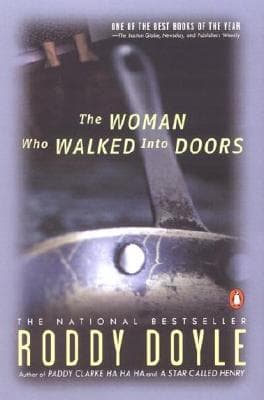
Roddy Doyle (1996)
Genre
Literary Fiction
Reading Time
240 min
Key Themes
See below
Sign in to track this book
Paula Spencer, a Dublin woman shaped by a hard life and an abusive marriage, navigates her past with raw wit, searching for her lost self among bottles and old ghosts.
The story begins with Paula Spencer, a 39-year-old Dublin woman, being arrested for shoplifting vodka. In the police station, she thinks about her life, especially her drinking and the shame she feels. The incident makes her face her reality: a working-class mother of four, living in a council estate, whose life has been taken over by the results of an abusive marriage. She struggles with the immediate effects of her arrest, including community judgment and the impact on her children, especially Leanne, who is old enough to understand. This event pushes Paula to start telling her life story, beginning with her childhood.
Paula describes her childhood, showing a fairly happy upbringing in a busy, working-class Dublin neighborhood. She remembers her loving parents, especially her mother, who was strong. Her early years were full of typical childhood experiences: school, friends, and the simple joys of a close community. There is a sense of innocence and safety in these memories, which contrasts sharply with her current situation. She recalls the social rules of her youth, what was expected of young women, and her own identity forming against her family and local culture. This time had no major trauma, suggesting a different future that was drastically changed.
Paula's story moves to her teenage years, a time of growing independence and self-awareness. She remembers her first crushes and relationships, the excitement of discovery, and the social routines of young people in Dublin. She describes moments of youthful rebellion, sneaking out with friends, and the thrill of pushing limits. It is then that she develops a more confident personality, a certain 'boldness' as she calls it, which would later be worn down. These memories show her early strength and confidence, qualities that her relationship with Charlo would later challenge and suppress. She also mentions her first experiences with alcohol and socializing, which were harmless and fun at first.
The turning point comes when Paula meets Charlo Spencer. She clearly remembers the first attraction, seeing him as charming, handsome, and exciting—very different from the steady boys she had known. Charlo represents a thrilling, dangerous element that draws her in. She is attracted to his confidence and how he makes her feel special, overlooking or not fully understanding the darker parts of his personality that would later appear. Their courtship is intense and passionate, full of exciting moments that make her feel alive and wanted. This time is marked by infatuation, where Charlo's charm hides any warning signs, setting the stage for their troubled future.
Paula and Charlo marry, and she quickly becomes pregnant with their first child. The early years of their marriage mix home life with Charlo's subtle controlling ways slowly appearing. She describes the joy of motherhood, having her children, and trying to build a family. However, Charlo's jealousy and possessiveness grow. He starts to keep her from her friends and family, quietly chipping away at her confidence and telling her what to do. The first passion begins to fade, replaced by tension and fear. Paula tries to see these behaviors as normal, often excusing them as signs of his love, but the seeds of her future hardship are clearly planted.
The story darkens as Charlo's abuse grows, moving from emotional manipulation to clear physical violence. Paula details the brutal reality of his beatings, the daily fear she lived with, and the constant cycle of violence followed by Charlo's brief regret and promises to change. She describes her increasing isolation, the shame she felt, and her inability to tell others, even her own family. The abuse wears down her self-esteem and makes her feel completely powerless. She tells of specific incidents, the pain, and her desperate attempts to keep her children from seeing the worst of it. Her world shrinks to her home, ruled by Charlo's unpredictable temper.
Paula shows the stifling nature of her life under Charlo's complete control. She lives in constant fear, guessing his moods and trying not to provoke him. Her days are a cycle of housework, caring for her children, and enduring Charlo's verbal and physical attacks. She develops ways to cope, including deep secrecy and an inner story that often blames herself for his actions. Her self-worth drops, and she loses touch with the lively, bold young woman she once was. The outside world becomes a place of judgment, and she feels trapped, unable to see a way out. Her memories of this time are broken, reflecting the trauma and her wish to hide the pain.
Despite the heavy control, Paula tells of brief moments of resistance and deep despair. She describes times when she tries to stand up to Charlo, only to face more violence. There are moments when she thinks about leaving, imagining a life free from him, but fear for her children, money worries, and the social shame of being a single mother stop her. She goes through periods of deep sadness and hopelessness, finding comfort only in the short moments of peace when Charlo is not there. These parts highlight her inner struggle, the conflict between wanting freedom and the paralyzing hold of her situation.
The story builds to a peak as Charlo's abuse becomes unbearable. Paula's strength is pushed to its limit, and she feels completely broken. However, Charlo's control suddenly ends when he dies in a car accident. This event is not pure relief for Paula; instead, it brings a complex mix of feelings. While the immediate physical threat is gone, the psychological scars remain deep. She deals with society's expectations of grief, her children's confusion, and her own complicated feelings of freedom mixed with lingering fear and a strange sense of loss for the man she once loved. His death marks a new, uncertain chapter in her life.
With Charlo gone, Paula is left to manage life as a single mother of four, facing money problems and the hard task of raising her children alone. The abuse may have ended, but its effects still haunt her. She struggles with daily life, trying to provide for her family and rebuild a sense of normal. It is during this time that her drinking, which had helped her cope during her marriage, grows into a serious problem. Alcohol becomes her main escape from the lasting trauma, the stress of her duties, and the deep loneliness she feels. She feels a new kind of powerlessness, this time against her own addiction.
As the story continues, Paula telling her life story becomes a key part of her healing. The narrative itself is her way of finding her voice and processing the trauma she went through. She thinks about who she was before Charlo, who she became during their marriage, and who she is trying to be now. She starts to understand the patterns of abuse, the social reasons that kept her silent, and the strength she still has. Telling her truth, even if only to herself, is a strong step toward regaining her dignity and identity, moving past the victimhood that defined so much of her adult life. She admits her flaws, especially her drinking, but also her natural strength.
The story brings Paula back to the present, still dealing with her arrest and her ongoing fight with alcohol. She does not offer a perfect ending but a realistic picture of a woman in recovery. She admits the depth of her struggles, the mistakes she has made, and the challenges still ahead. However, there is a fragile but clear sense of hope. By telling her story, she has taken the first step toward healing and self-acceptance. She is no longer the woman who quietly endured, but a woman finding her voice, determined to fight for her dignity and a better future for herself and her children. The story ends with the understanding that her journey continues, but she now has self-awareness and a renewed sense of purpose.
The Protagonist
Paula transforms from a vibrant teenager into a silenced victim of abuse, then slowly reclaims her voice and dignity by confronting her past and present struggles, moving towards self-acceptance and recovery.
The Antagonist
Charlo remains a static character, representing the consistent force of abuse and control, whose impact continues even after his death.
The Supporting
Leanne grows from a child silently enduring her father's abuse to a young woman who understands her mother's struggles and subtly encourages her towards recovery.
The Supporting
Her character remains static, serving as a nostalgic anchor to Paula's past and a symbol of unconditional love.
The Supporting
John Paul's arc is less individual, more representative of the collective experience of the children, hoping for a stable future.
The Supporting
Nicola's character remains largely static, symbolizing the ongoing needs and hopes of Paula's children.
The Supporting
Jack's arc is implied rather than explicit, representing the hope for a future free from the past's burdens.
The Mentioned
The officer is a static, functional character, serving as a catalyst for Paula's introspection.
Domestic abuse, the most central theme, is explored through Paula's difficult memories of her marriage to Charlo. Doyle carefully details the physical violence, emotional manipulation, and psychological control that slowly destroy Paula's self-worth and isolate her. The novel shows how abuse is not just physical harm but also the quiet destruction of a person's spirit. Even after Charlo's death, the trauma remains, showing up in Paula's alcoholism, her self-blame, and her difficulty rebuilding her life. The story highlights the long-term, hidden scars of abuse and how hard it is to escape, both physically and mentally.
“He broke my nose once. Just for looking at him. Just for looking at him the wrong way. That's what he said. The wrong way. He broke my nose. I saw stars. I tasted blood. He kept hitting me. Until I went down. That's all I remember. Going down.”
Paula's journey is a struggle to regain her dignity and rebuild her identity after years of being defined by her abuser. Her 'boldness' as a young woman is systematically crushed by Charlo, leaving her feeling powerless and unseen. Telling her story, even if only to herself, becomes a strong way to assert her existence and worth. Her fight against alcoholism is also part of this struggle, as she aims to shed the shame and regain control over her life. The novel suggests that true dignity comes from facing one's past and recognizing one's strength, rather than from outside approval.
“I used to be someone. Before him. I used to be Paula Spencer. I had a laugh. I had friends. I had a life. He took it all. Piece by piece. Until there was nothing left. Just me. And him. And the fear.”
Alcoholism is shown as both a way for Paula to cope with her trauma and a new trap. During her marriage, it offers temporary escape from fear and pain. After Charlo's death, it grows, becoming a replacement for her abuser's control, yet still leaving her feeling powerless and ashamed. The novel shows the destructive cycle of addiction, where initial relief leads to more problems, affecting her health, her relationships with her children, and her ability to move forward. Her arrest for shoplifting alcohol clearly shows how addiction has become a strong force in her life, mirroring Charlo's past control.
“It was the only way I could get through it. The only way I could forget. Just for a while. Just to make the fear go away. But it never really goes away. It just waits.”
Motherhood is a constant, driving force for Paula, bringing both great love and deep guilt. Her children—Leanne, Nicola, John Paul, and Jack—are her reason for enduring Charlo's abuse and, later, her motivation for seeking a better life. She constantly tries to shield them from the worst of Charlo's violence, even as she fails to fully protect herself. The novel explores the complex feelings of a mother who loves her children deeply but feels she has failed them because of her situation and her own struggles. Her wish to break the cycle of violence and provide a stable future for her children is a central part of her strength.
“They were my life. My reason. I had to keep going. For them. Even when I didn't want to. Even when I wished I wasn't there. I had to keep going. For my children.”
The entire novel is structured as Paula's inner thoughts, a stream of consciousness where she tells her past. This act of remembering and telling her story works as a powerful healing process. By voicing her experiences, she can process trauma, understand her life's patterns, and take back control of her story. The broken, non-linear nature of her memories reflects the chaotic and traumatic events, but the act of putting them together helps her make sense of her past and present. Through this storytelling, she begins to heal and find a path toward self-acceptance.
“I'm telling my story. And it's mine. All mine. Every single bit of it. The good and the bad. The ugly and the beautiful. It's mine. And no one can take it away from me.”
The entire novel is told through Paula's unedited, internal monologue, reflecting her thoughts and memories.
This device immerses the reader directly into Paula's mind, offering an unfiltered, raw, and deeply personal account of her experiences. The non-linear, associative flow of her thoughts mimics the way memory works, particularly when processing trauma. It allows for immediate access to her emotions, vulnerabilities, and the complex interplay of past and present. This narrative style builds empathy and authenticity, making Paula's voice feel incredibly real and immediate, while also highlighting her isolation as she 'speaks' only to herself.
Paula's story jumps between her present struggles and vivid recollections of her past, from childhood to marriage.
The novel's structure is largely non-linear, with Paula's present-day reflections (triggered by her arrest) interwoven with extensive flashbacks to her childhood, teenage years, courtship with Charlo, and the years of abuse. This device effectively demonstrates how past trauma continues to influence the present. It creates a sense of psychological realism, as memories often resurface in disjointed ways. By gradually revealing the horrors of her past, the device builds tension and allows the reader to understand the progression of her life from innocence to despair, and her slow journey towards self-awareness.
Paula's narrative functions as an extended, unburdening confession, primarily to herself.
While told in the first person, Paula's recounting of her life isn't directed at a specific listener but rather functions as an internal confession. This device highlights her isolation and the profound secrecy she maintained during her abusive marriage. The act of 'speaking' her truth, even silently, is a form of catharsis and a step towards healing. It allows her to articulate the unspeakable, to process her guilt, shame, and anger, and to reclaim ownership of her experiences. The confessional tone underscores her vulnerability and her desperate need to make sense of her past.
The 'door' in the title symbolizes boundaries, entrapment, and the possibility of escape or entry into new phases.
The central metaphor of 'the woman who walked into doors' initially refers to Paula's physical injuries from Charlo's abuse, often explained away as accidental bumps. However, the 'door' also symbolizes the boundaries of her domestic prison, the psychological entrapment she experiences, and the difficulty of opening new pathways. Walking 'into doors' can also represent her internalizing the blame or her inability to escape. Conversely, it can symbolize the act of stepping through a threshold into a new phase of her life, or the act of opening up and confronting her past, moving towards freedom and self-discovery.
“I was born. I grew up. I fell in love. I got married. I had children. I had a life. I had a husband. I had a house. I had a home. I had nothing.”
— Paula Spencer's reflective summary of her life, highlighting the eventual emptiness.
“He didn't hit me. I walked into the door. I walked into it a lot.”
— Paula's internal monologue, using the titular euphemism for her husband's abuse.
“I loved him. I really did. I just didn't like him anymore. I didn't like him for a long, long time.”
— Paula reflecting on her decaying feelings for Charlo, her abusive husband.
“The kids. They were the only reason I stayed. And the only reason I wanted to leave.”
— Paula's conflicted feelings about her children's role in her decision-making regarding her marriage.
“I was a good mother. I was. I brought them up. I fed them. I clothed them. I loved them. I just couldn't protect them from everything.”
— Paula defending her mothering, acknowledging her limitations in a difficult environment.
“It was always the same. The drink. The row. The silence. The bruises. The apologies. The promises. The drink again.”
— Paula describing the cyclical nature of the abuse and her husband's alcoholism.
“You don't just leave. It's not like that. It's not a door you just walk out of. It's a wall. And he built it.”
— Paula explaining the difficulty of leaving an abusive relationship.
“I wanted to be happy. I wanted to be loved. I wanted to be safe. I got none of them.”
— Paula's lament about her unfulfilled desires in life and marriage.
“He broke things. He broke my heart. He broke my spirit. He broke my nose. He broke my arm. He broke everything.”
— Paula listing the various ways Charlo inflicted damage, both physical and emotional.
“I was Paula Spencer. I was a wife. I was a mother. I was a woman. I was a survivor. I was me.”
— Paula's assertion of her identity and resilience despite her circumstances.
“It’s not just the hitting. It’s the looking. The way he looks at you, like you’re nothing. Like you’re dirt.”
— Paula highlighting the psychological toll of abuse, beyond just physical violence.
“I used to sing. I used to dance. I used to laugh. I used to be somebody.”
— Paula reminiscing about her youth and the vibrant person she once was before her marriage.
“You can forget the bad stuff. You can try. But it always comes back, doesn't it? Like a bad smell.”
— Paula on the persistent nature of traumatic memories and their impact.
“I wasn't a victim. I was a woman who walked into doors. A lot of doors. And I walked out of them too, eventually.”
— Paula's defiant statement, reclaiming agency and acknowledging her journey of escape.
Ready to see how well you understood this book? Take our interactive quiz with 10 questions.

Roddy Doyle is an Irish novelist, dramatist and screenwriter. He is the author of eleven novels for adults, eight books for children, seven plays and screenplays, and dozens of short stories. Several of his books have been made into films, beginning with The Commitments in 1991. Doyle's work is set primarily in Ireland, especially working-class Dublin, and is notable for its heavy use of dialogue written in slang and Irish English dialect. Doyle was awarded the Booker Prize in 1993 for his novel Paddy Clarke Ha Ha Ha.







