BookBrief
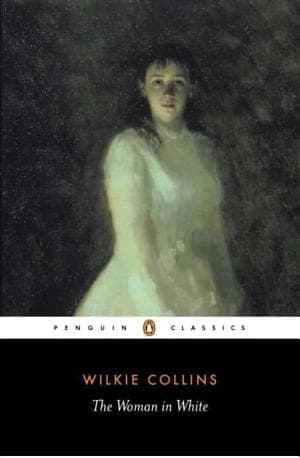
The Woman in White cover
Archivist's Choice

The Woman in White

Wilkie Collins (1991)

Genre

Historical Fiction / Mystery

Reading Time

12-15 hours

Key Themes

See below

Track Your Reading

Sign in to track this book

An art teacher falls for his student and uncovers a plot involving stolen identity, an asylum, and a spectral woman, all connected by a dark secret.

Synopsis

Walter Hartright, an art teacher, meets a mysterious woman in white on Hampstead Heath, starting a chain of events that links their lives. He travels to Limmeridge House to teach drawing to Laura Fairlie and her half-sister Marian Halcombe, falling in love with Laura. Laura, however, is engaged to Sir Percival Glyde, a charming but dangerous man. After their marriage, Sir Percival and his accomplice, Count Fosco, steal Laura's money and identity. Walter, driven by his love for Laura and a desire for justice, returns to find the truth. He discovers Laura in an asylum, wrongly imprisoned, and learns of her connection to the woman in white. He must outsmart Fosco and Glyde, facing danger and lies, to restore Laura's identity, expose the villains, and bring justice and happiness to the woman he loves.
Reading time
12-15 hours
Difficulty
Medium
Pacing
Slow
Mood
Suspenseful, Intriguing, Victorian, Melancholy
✓ Read this if...
You enjoy classic Victorian mysteries with intricate plots, strong character development, and a slow-burn sense of dread.
✗ Skip this if...
You prefer fast-paced thrillers or find lengthy descriptions and epistolary narratives tedious.

Plot Summary

A Chance Encounter on Hampstead Heath

Walter Hartright, a young drawing teacher, walks home across Hampstead Heath one night and meets a distressed woman in white. She asks for directions to London and seems upset. She tells Walter she fears a powerful baronet and warns him to be careful. She also mentions a deep secret. After helping her find a cab, Walter learns from two men chasing her that she has escaped from an asylum. This meeting stays with Walter, making him curious about her identity and her link to the baronet.

Arrival at Limmeridge House

Walter Hartright travels to Limmeridge House in Cumberland to teach drawing to Miss Laura Fairlie and Miss Marian Halcombe. When he meets Laura, Walter is struck by her strong resemblance to the mysterious woman in white he met. He quickly falls in love with Laura, even though she is engaged to Sir Percival Glyde. Marian, Laura's smart half-sister, notices Walter's feelings but tells him to keep them professional. Walter learns more about Laura's upcoming marriage and her family's history, strengthening his connection to this new world.

The Betrothal and the Warning

Before Laura's wedding to Sir Percival Glyde, Marian Halcombe gets an anonymous letter warning Laura about the marriage, hinting at Sir Percival's true nature and past. Marian confronts Sir Percival, who calls the letter a mean trick. Despite Marian's strong doubts and Walter's hidden heartbreak, Laura, bound by a promise to her dead father, goes ahead with the marriage. Walter, unable to watch the wedding, leaves Limmeridge House, his heart heavy with unrequited love and a bad feeling about Laura's future with Sir Percival. His leaving is a major change, leaving Laura mostly unprotected.

Life at Blackwater Park

Laura and Marian move to Sir Percival Glyde's estate, Blackwater Park. Their life there is not happy. Sir Percival is bad-tempered, bad with money, and increasingly cruel to Laura. Soon, Sir Percival's close friend, Count Fosco, joins them—a charming but dangerous Italian nobleman with a sharp mind and a liking for unusual pets. Marian, seeing Fosco's manipulative ways and Sir Percival's growing malice, feels a strong sense of worry. She starts a detailed diary, writing down the strange events and the increasing tension in the house, sensing a plan forming around Laura.

The Discovery of Sir Percival's Secret

Marian Halcombe, worried about Laura, grows more suspicious of Sir Percival Glyde. She overhears talks and sees his secret behavior, leading her to look into his past. Through hard work, Marian finds a shocking secret: Sir Percival is not the rightful heir to Blackwater Park. He was born outside of marriage, and his claim to the title and estate is false. This discovery makes Laura, who knows a detail that could expose him, a dangerous problem for Sir Percival. Marian realizes Laura is in great danger and tries to warn her, but she is stopped.

The Asylum Plot

Driven by the need to get Laura's money and prevent his illegitimacy from being known, Sir Percival Glyde, with Count Fosco's help, carries out a terrible plan. They drug Laura, making her seem mentally unstable. At the same time, Anne Catherick, the woman in white who looks very much like Laura and has a history of mental illness, is brought to Blackwater Park. Anne, already weak, dies soon after arriving. Fosco and Glyde then switch their identities: Laura is put in an asylum under Anne's name, while Anne Catherick is buried as Laura Fairlie. The world believes Laura Fairlie is dead, and Sir Percival gets her large fortune.

Walter's Return and the Truth

Walter Hartright, back in England, visits the graveyard where 'Laura Fairlie' is supposedly buried. To his surprise, he meets Laura herself, alive but broken, having escaped from the asylum. She is confused and believes she is Anne Catherick. Walter, certain of her true identity, takes her and Marian, who has recovered from a serious fever, into his care. He understands the horrible truth of the plot by Sir Percival and Count Fosco. Vowing to restore Laura's identity and expose the villains, Walter begins a careful and dangerous investigation, collecting evidence to prove Laura is alive and Sir Percival is a fraud.

The Fire at the Vestry

Walter Hartright's investigation leads him to the church vestry in Old Welmingham, where Sir Percival Glyde's birth certificate is kept. Walter thinks this document holds the key to proving Sir Percival's illegitimacy. Sir Percival, realizing Walter is close to finding his secret, tries to destroy the records by setting the building on fire. In his desperate act, Sir Percival gets trapped in the fire and dies. His death, though violent, removes one of the main enemies and gives Walter a new way to finally prove Laura's identity, as the original birth certificate is now lost forever.

Confrontation with Count Fosco

With Sir Percival dead, Walter Hartright focuses on Count Fosco, the one who planned Laura's identity theft. Walter tracks Fosco to London and confronts him. Fosco, surprisingly, does not fight. Instead, he reveals the full details of the conspiracy, explaining his reasons and the clever ways they used to trick everyone. He also confesses his own dark past as a member of a secret Italian society, which he betrayed. Fosco, seeing Walter's determination and sense of justice, and fearing the results of his own betrayal, offers Walter a way to prove Laura's identity in exchange for safe passage out of England.

Restoration of Identity and Justice

Following Count Fosco's information, Walter Hartright gathers clear proof of Laura Fairlie's identity. He presents the evidence, showing that the woman buried as Laura was Anne Catherick, and that the woman living under Anne's name is the real Laura Fairlie. The legal system, after some doubt, accepts the strong evidence. Laura's identity and fortune are returned. Walter and Laura, free from the past and their enemies, marry and live a peaceful life with Marian. Justice is served, and their family line continues with the birth of their child.

Principal Figures

Walter Hartright

The Protagonist

From a romantic idealist, Walter transforms into a shrewd and relentless investigator, ultimately becoming a hero who restores justice and finds love.

Laura Fairlie

The Protagonist

Laura endures immense suffering and identity loss but is ultimately restored to her rightful place and finds happiness.

Marian Halcombe

The Supporting

Marian endures hardship and illness but remains a steadfast and courageous protector, a beacon of strength.

Count Fosco

The Antagonist

Fosco orchestrates the central conspiracy, is nearly successful, but ultimately meets a violent end due to his past betrayals.

Sir Percival Glyde

The Antagonist

Sir Percival's desperation and villainy lead to his own fiery demise as he tries to destroy evidence.

Anne Catherick

The Supporting

Anne's life is tragically cut short, but her existence and resemblance to Laura are crucial to the plot's unfolding.

Frederick Fairlie

The Supporting

Fairlie remains largely unchanged, a caricature of upper-class indifference, serving as a foil to the active protagonists.

Themes & Insights

Identity and Impersonation

The novel looks at how identity can be changed and stolen, especially for women in Victorian society. Laura Fairlie's whole life is erased and replaced with Anne Catherick's, showing how easily personal identity can be lost when powerful, dishonest people are involved. The plot depends on the physical likeness between Laura and Anne, but also on the legal and social rules that allow such a trick. This theme is central when Laura is put in the asylum under Anne's name, losing her name, money, and mental health, forcing Walter to try to restore who she really is.

What is the secret of the resemblance between the two women?

Walter Hartright's narrative

Justice and Social Injustice

The search for justice against great odds is a main theme. Walter Hartright's strong investigation against Sir Percival Glyde and Count Fosco shows how hard it is for ordinary people to challenge powerful, corrupt figures in a seemingly orderly society. The novel shows the weaknesses in the legal system and how easily women, especially those with property, can be used. Walter's final victory is a win for moral right over social and legal wrong, showing that persistence can overcome systemic corruption, even if it means working outside normal legal channels at first.

I am a man, and I can be revenged.

Walter Hartright

The Role of Women in Victorian Society

The novel strongly criticizes the limited power and vulnerability of women in 19th-century England. Laura Fairlie, as an heiress, is seen as property to be controlled and used, first by her engagement and then by her husband. Her identity is easily erased because her legal standing is tied to men. Marian Halcombe, despite her intelligence and strength, is also limited by social expectations and her gender, which stops her from directly acting. The asylum system is also shown as a tool to silence and control women who do not fit expectations or are seen as inconvenient. The women's struggles highlight how uncertain their position was.

A woman's place is to suffer and to be silent.

Count Fosco (mockingly)

Appearance Versus Reality

Collins skillfully uses the contrast between how things appear and what they truly are. Sir Percival Glyde seems like a respectable baronet, but he is a dishonest, cruel man. Count Fosco's charming manner hides a brilliant, dangerous mind. The physical resemblance between Laura and Anne is the biggest trick, leading to the devastating identity swap. The whole mystery depends on removing layers of lies and illusions to show the unpleasant truth beneath the polished surface of Victorian society. Walter's journey is one of constantly questioning what he sees.

The truth is rarely pure and never simple.

Oscar Wilde (though not directly from the novel, it encapsulates the theme)

Plot Devices & Literary Techniques

First-Person Narrators (Epistolary Format)

Multiple characters recount events from their unique perspectives.

The novel is presented as a collection of testimonies from various characters, primarily Walter Hartright, Marian Halcombe (through her diary), and occasionally others like Mr. Gilmore. This allows for a multifaceted exploration of events, building suspense and revealing character biases. The shifting perspectives create a sense of realism and immediacy, as the reader pieces together the truth from different, often conflicting, accounts, mirroring a legal investigation. It also highlights the subjective nature of truth and the limited understanding of individual characters at any given time.

The Double (Doppelgänger)

The striking physical resemblance between Laura Fairlie and Anne Catherick.

The uncanny likeness between Laura Fairlie and Anne Catherick is the central plot device that enables the entire conspiracy. Without this resemblance, the identity swap would be impossible. It serves not only as a crucial narrative mechanism but also as a symbolic representation of the fragility of identity. The existence of the 'double' creates immediate mystery and foreboding, foreshadowing the tragic events to come and constantly reminding the reader of the potential for confusion and deception. It is the linchpin of the villains' plan.

The Unreliable Narrator (Subtle)

Characters' biases and limited knowledge shape their accounts.

While not overtly unreliable in a deceptive way, each narrator's account is filtered through their personal biases, emotions, and limited knowledge. For example, Walter's romantic feelings for Laura influence his perception, and Marian's strong personality colors her judgments. This device forces the reader to critically evaluate each testimony, piece together the larger picture, and understand that no single character possesses the complete truth. It enhances the mystery and creates a more complex, nuanced narrative experience, making the reader an active participant in solving the puzzle.

Hidden Secrets and Letters

Crucial information is often concealed or revealed through secret documents.

The plot is propelled by hidden secrets, particularly those related to Sir Percival Glyde's past and his illegitimate birth. Letters, such as the anonymous warning to Laura or the letters from Mrs. Catherick, serve as critical conduits for revealing vital information that moves the plot forward or exposes truths. The pursuit of these hidden documents, like Sir Percival's birth certificate, becomes a driving force for Walter's investigation. These devices heighten suspense and emphasize the vulnerability of individuals to information that can be suppressed or manipulated.

Critical analysis

Notable Quotes

I was struck by the absence of all in her dress and manner which can be called coarse or common. She was dressed in plain white, and there was a purity and delicacy about her which seemed to emanate from herself and to penetrate to her dress.

Walter Hartright's first impression of Anne Catherick, the Woman in White.

The secret of all she had suffered was in the first two words of her name. She was a woman, and she was in white.

Walter Hartright reflecting on the vulnerability and symbolic attire of Anne Catherick.

No man ever yet knew the whole of any woman's heart.

Count Fosco, offering a cynical observation on human nature and gender.

The greatest men, the cleverest men, the men of the most delicate susceptibility and the profoundest genius, have to walk for themselves, and by themselves, in the valley of the shadow of death.

Walter Hartright reflecting on individual responsibility and isolation in times of crisis.

Circumstances make a man, as they make a woman.

Marian Halcombe, asserting the influence of external factors on character.

It is the great misfortune of my life that I have not been able to make myself understood.

Anne Catherick, expressing her frustration at being misjudged and unheard.

The one great secret of our happiness, if we are to be happy at all, is to live in the present.

Count Fosco, offering a philosophical, albeit self-serving, view on life.

To be able to wait is the great thing. And to know when to begin, and when to end.

Walter Hartright, contemplating the strategic patience required to solve the mystery.

I am a living, breathing, thinking, feeling, woman. I am Marian Halcombe.

Marian Halcombe, in a moment of self-assertion and defiance.

The faintest trace of a smile flickered for a moment on his lips as he looked at me. It was a smile which I understood, and which I did not like.

Walter Hartright's unsettling perception of Count Fosco's subtle expressions.

There are some women who are destined to be unfortunate; and I am one of them.

Laura Fairlie, expressing a sense of fatalism about her circumstances.

God's justice is a slow justice, and a sure justice.

Marian Halcombe, holding onto hope for ultimate retribution.

The best way to be safe is to be afraid.

Count Fosco, ironically suggesting that fear can be a protective mechanism.

It is no use to regret. What is done, is done.

Walter Hartright, acknowledging the irreversibility of past events.

Quiz

Test Your Knowledge

Ready to see how well you understood this book? Take our interactive quiz with 10 questions.

10
Questions
~5
Minutes
?
Best Score

Key Questions (FAQ)

The central mystery revolves around the uncanny resemblance between Laura Fairlie and Anne Catherick, the titular 'Woman in White,' and how this connection is exploited by Sir Percival Glyde and Count Fosco to steal Laura's identity and fortune. Walter Hartright's journey to uncover the truth links these two women's fates and exposes a sinister conspiracy.

About the author

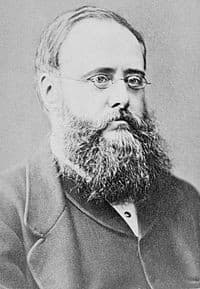
Wilkie Collins

William Wilkie Collins was an English novelist and playwright known especially for The Woman in White (1859), a mystery novel and early "sensation novel", and for The Moonstone (1868), which established many of the ground rules of the modern detective novel and is also perhaps the earliest clear example of the police procedural genre.