“I had been told that the house was to be locked up and left to decay. But I knew that it would not be left to decay. It was already decaying. And it was decaying with a purpose.”
— Arthur reflects on Eel Marsh House and its ominous nature.

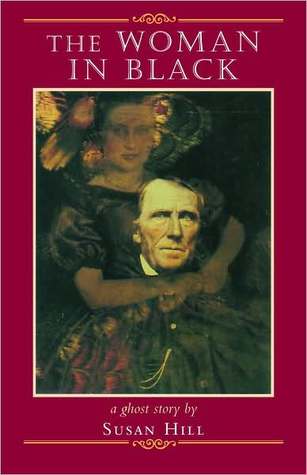
Susan Hill (1984)
Genre
Historical Fiction / Mystery
Reading Time
90 min
Key Themes
See below
Sign in to track this book
A young solicitor, sent to a remote English manor to settle a widow's affairs, uncovers a chilling story of grief and vengeance from a malevolent ghost known as the Woman in Black.
The story begins on Christmas Eve. Arthur Kipps, now a middle-aged man, is home with his second wife, Esme, and his step-children. The family shares ghost stories, but Arthur is clearly upset and leaves the room. Esme follows him, worried. He explains that the lighthearted tales have brought back deeply hidden memories of a terrifying experience from his youth, one he has never spoken about. To finally free himself from the burden, he decides to write down the entire account, believing that putting it on paper will remove the lingering fear and trauma that has haunted him for decades. This sets the stage for his first-person narration.
Arthur Kipps, a junior solicitor for Mr. Bentley in London, is sent to Crythin Gifford, a remote market town in north-east England. His task is to attend the funeral of Mrs. Alice Drablow, an elderly client who lived at Eel Marsh House, and to sort through her papers and affairs. Mr. Bentley stresses the importance of the task, suggesting it is a test of Arthur's professional abilities. Arthur is a bit worried about leaving London for such an isolated place but sees it as a chance to prove himself and advance his career.
When Arthur arrives in Crythin Gifford, he immediately notices the town's quiet, almost deserted atmosphere. He attends Mrs. Drablow's funeral, which has few attendees. During the service, he sees a woman dressed entirely in black, with a pale, thin face and sunken eyes, standing at the back of the church. Her appearance is very unsettling. When he tries to ask about her, the locals become evasive and clearly uncomfortable, refusing to acknowledge her presence or giving vague, dismissive answers. This deepens Arthur's unease and curiosity.
Mr. Keckwick, a local pony and trap driver, drives Arthur across the Nine Lives Causeway to Eel Marsh House. The causeway is dangerous, often covered by the tide, and the journey is shrouded in a thick, creeping sea-mist, adding to the desolate and eerie atmosphere. As they cross, Keckwick warns Arthur about the house's isolation and its reputation. Arthur is struck by the oppressive silence and the vast, empty marshlands around the house, feeling a deep sense of loneliness and dread even before reaching his destination.
Arthur begins sorting Mrs. Drablow's papers, finding them disorganized and seemingly unimportant. As night falls, Eel Marsh House's isolation becomes clear. He hears strange, unexplainable sounds: a rocking chair creaking in a room above, which he later finds is the locked nursery, and the clear sound of a pony and trap on the causeway, even though he knows no one else is approaching. These events, combined with the oppressive silence and the house's cold, damp atmosphere, fill him with a growing sense of dread and the belief that he is not alone.
Driven by curiosity and a growing sense of unease, Arthur explores the house and finds a locked nursery, filled with dusty toys and a rocking chair that still seems to move on its own. He finds a child's drawings and belongings, hinting at a past tragedy. Later, while working, he again sees the Woman in Black, this time much closer, outside the window, staring directly at him with intense malice and despair. Her presence is chilling and undeniable, confirming his fears that something truly sinister haunts the house.
Arthur returns to the inn in Crythin Gifford, deeply disturbed. He meets Mr. Jerome, Mrs. Drablow's solicitor, and later, the kind Mr. Daily, who lives nearby. Gradually, through hushed talks and veiled warnings, Arthur learns the tragic history of Eel Marsh House. He finds out that the Woman in Black is the ghost of Jennet Humfrye, Mrs. Drablow's sister, who had an illegitimate child, Nathaniel. Jennet was forced to give up Nathaniel, who Mrs. Drablow adopted. Jennet then watched him drown in a pony and trap accident on the causeway, an event that drove her to madness and suicide.
Mr. Daily explains the local belief: wherever the Woman in Black is seen, a child will die soon after. This news fills Arthur with a deep sense of dread, connecting the ghost sightings to a horrifying pattern of tragedy. He also learns that Mrs. Drablow, out of guilt and a wish to protect her sister's secret, had tried to suppress the story and ignore the ghost, a task that has now fallen to Arthur. Understanding the curse increases Arthur's fear, making him realize the danger is more than just a scare.
Despite the warnings, Arthur feels he must return to Eel Marsh House to finish his work. He brings Mr. Daily's dog, Spider, for company. That night, the haunting gets worse. He hears a child's scream, followed by the terrifying sound of the pony and trap on the causeway, and then a loud crash. He rushes out into the fog, thinking someone is in danger, only to find nothing. The ghostly events become overwhelming, and he sees the Woman in Black again, her face twisted in pain and rage. Overcome by terror, Arthur and Spider flee the house, barely making it back to Crythin Gifford.
After his ordeal, Arthur returns to London, deeply traumatized but determined to move past the experience. He tries to live a normal life, focusing on his career and social events. He falls in love with and marries Stella, a beautiful woman, and they soon have a son. For a time, Arthur believes he has escaped the Woman in Black's influence, finding happiness and peace in his new family life. He purposefully avoids discussing his past, burying the terrifying memories, hoping they will never return.
Arthur and Stella take their young son, Joseph, for an outing in a pony and trap. As they enjoy their day, Arthur glances across the park and, to his horror, sees the Woman in Black standing among the trees, her face fixed on them with the same malicious despair. He cries out a warning, but it is too late. The pony, spooked by something unseen (presumably the ghost), bolts, throwing Stella and Joseph from the trap. Joseph dies instantly, and Stella suffers severe injuries, dying a year later from complications and emotional distress. Arthur's worst fears come true, as the curse he learned about in Crythin Gifford finally claims his own family, leaving him completely devastated and alone.
The Protagonist
Arthur transforms from a rational, ambitious young man into a deeply traumatized and heartbroken individual, forever scarred by the events he endured.
The Antagonist
Her character arc is static in death, perpetually trapped in her grief and vengeance, but her story is gradually revealed to Arthur.
The Supporting
Mr. Daily remains a constant, supportive figure, offering a sense of stability amidst Arthur's turmoil.
The Supporting
Stella's arc is tragically cut short, symbolizing the pervasive reach of the Woman in Black's curse.
The Supporting
Joseph's brief life serves as the ultimate tragic proof of the Woman in Black's curse.
The Supporting
Mr. Bentley remains largely unchanged, serving as a catalyst for Arthur's journey.
The Supporting
Mr. Jerome's character remains consistent, embodying the fear the ghost instills in the community.
The Supporting
Keckwick's role is primarily functional, setting the scene for Arthur's arrival at Eel Marsh House.
The central theme is the destructive power of unresolved grief and the vengeful nature it can take. Jennet Humfrye, the Woman in Black, is consumed by her inconsolable sorrow over the loss of her illegitimate son, Nathaniel, who drowned on the causeway. Her grief turns into a malevolent force, haunting Eel Marsh House and, more terrifyingly, taking revenge by causing the deaths of other children. This theme shows clearly in the chilling sounds of the pony and trap and the child's scream that Arthur hears, echoing the original tragedy, and ends with the devastating loss of Arthur's own son, Joseph, proving that some grief is so deep it goes beyond death and seeks to share its suffering.
“''They asked for my child. I bore him. He was mine. I was his mother. I loved him. But they took him from me. He was mine.'”
Arthur Kipps starts as a very rational, modern man, dismissing superstitions and eager to apply logic to his work. His first encounters with the unexplained at Eel Marsh House challenge his views, and as the haunting worsens, his rationality breaks down. The silence, the sounds of the rocking chair, the ghost sightings, and the overwhelming sense of malice force him to give up his skepticism. This theme shows how deeply held beliefs can be shattered by experiences that defy all logic, leaving the person vulnerable and psychologically scarred, as seen in Arthur's lasting trauma.
“''I had thought that I was in some way proof against this evil, but I was not. I was as vulnerable as anyone else.'”
The novel skillfully uses the physical isolation of Eel Marsh House and Crythin Gifford to increase the psychological horror. The house, cut off from the mainland by a tidal causeway and surrounded by vast, desolate marshlands, becomes a character itself, embodying loneliness and dread. This isolation prevents easy escape and increases Arthur's vulnerability, making him an easy target for the ghost. The silence, broken only by unexplainable sounds, preys on his nerves, blurring the line between reality and hallucination. The theme suggests that extreme isolation can remove one's defenses, leaving them exposed to both outside and inside terrors, leading to a deep sense of helplessness.
“''I had never been a man for solitude, but for the first time in my life, I truly felt alone, and it was a terrible feeling.'”
The story strongly shows how past events, especially those involving trauma and injustice, can continue to affect the present. The tragedy of Jennet Humfrye and Nathaniel, though decades old, actively shapes the lives of those who come into contact with Eel Marsh House. The Woman in Black is a physical sign of this lasting past, unable to rest until her revenge is satisfied. Arthur Kipps's own life is permanently changed by his encounter, proving that some histories are not just remembered but actively haunt and destroy the future, leaving a permanent scar on individuals and communities.
“''We are all of us bound to the past, by ties we can never loosen.'”
The story is told by an older Arthur Kipps looking back on his traumatic past.
The novel is framed as a retrospective narrative, with an older, wiser, and deeply scarred Arthur Kipps recounting his terrifying experiences from his youth. This device immediately establishes a sense of foreboding and tragedy, as the reader knows from the outset that something profoundly damaging has happened to the narrator. It allows for dramatic irony, as the younger Arthur's initial skepticism contrasts with the older Arthur's knowledge of the terrible truth. The older Arthur's reflective tone adds depth to the psychological impact of the events and explains his decision to finally write down his story as a form of catharsis.
A remote house cut off by a tidal causeway, amplifying fear and vulnerability.
Eel Marsh House, accessible only by the Nine Lives Causeway that is frequently submerged by the tide, serves as a crucial plot device. This extreme isolation is not merely a backdrop but an active element that intensifies the horror. It creates a sense of entrapment, making Arthur feel vulnerable and alone against the supernatural forces. The causeway itself becomes a symbol of separation from the rational world and a physical barrier that prevents escape, particularly when the mist rolls in, effectively cutting him off from any help or comfort, thereby heightening the psychological tension and dread.
Extensive use of sensory details to create a pervasive sense of dread and unease.
Susan Hill employs rich and detailed atmospheric descriptions to build suspense and dread rather than relying on jump scares. The constant presence of the sea mist, the pervasive silence of the marsh, the chill in the air, the creaking sounds, and the visual details of the decaying house all contribute to a palpable sense of unease. This device works to disorient the reader and Arthur, blurring the lines between what is real and imagined, making the supernatural elements feel more insidious and pervasive. It creates a suffocating environment that slowly erodes Arthur's sanity and sense of security.
Sounds and suggestions of presence that precede visual manifestations of the ghost.
Before Arthur sees the Woman in Black, he experiences aural manifestations of the haunting: the creaking of a rocking chair in the locked nursery, the distinct sound of a pony and trap on the causeway when no one is there, and a child's scream. This device allows for a slow, psychological build-up of terror, as the unseen and unexplained sounds prey on Arthur's imagination, forcing him to question his sanity. The aural haunting is arguably more terrifying than the visual, as it suggests a presence that is everywhere and nowhere, making escape impossible and amplifying the sense of dread before the full horror is revealed.
“I had been told that the house was to be locked up and left to decay. But I knew that it would not be left to decay. It was already decaying. And it was decaying with a purpose.”
— Arthur reflects on Eel Marsh House and its ominous nature.
“The Woman in Black. She was there. She was real. And she was waiting.”
— Arthur's terrifying realization about the spectral figure.
“I had been foolish, I had been naive, to think that I could ever outwit the forces of darkness, or even understand them.”
— Arthur's bitter reflection on his attempts to comprehend the haunting.
“Whatever was there, it was not benign. It was not a friend. It was not something that meant well.”
— Arthur's growing certainty about the malevolent presence.
“The air grew colder, and I felt a faint, sickly sweet odour, an odour of decay and of something else, something indefinably ancient and evil.”
— Arthur describes the oppressive atmosphere surrounding the house.
“They asked for my story. I have told it. Enough.”
— The concluding lines of Arthur's narrative, emphasizing his trauma.
“I saw no one. I heard nothing. But I knew. I knew she was there.”
— Arthur's chilling perception of the Woman in Black's presence.
“No one had warned me. No one could have warned me.”
— Arthur's isolation in facing the unknown terror.
“It was not a dream. It was not my imagination. It was real. And it had happened.”
— Arthur grappling with the undeniable reality of his experiences.
“For the first time, I felt a shiver of true, absolute dread. Not fear, but dread.”
— Arthur distinguishes between fear and the deeper, more profound sense of dread.
“The silence was absolute, a heavy, suffocating blanket that pressed in on me from all sides.”
— Arthur describes the oppressive silence at Eel Marsh House.
“I had been wrong. Terribly wrong. And I would pay for it.”
— Arthur's realization of the consequences of his actions or presence.
“It was as if the house itself breathed, a slow, cold exhalation of its own misery and secrets.”
— Arthur's personification of the haunted house.
“I had come to terms with it, or so I thought. But the truth was, it had never come to terms with me.”
— Arthur's enduring struggle with the haunting's aftermath.
Ready to see how well you understood this book? Take our interactive quiz with 10 questions.

Biography coming soon.







