“If the wolves come out of the walls, it's all over.”
— Lucy's mother warns about the wolves living within their house's walls.

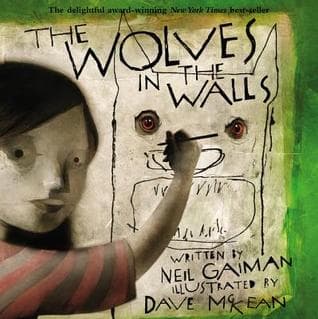
Neil Gaiman (2003)
Genre
Fantasy / Children's / Young Adult
Reading Time
15 min
Key Themes
See below
Sign in to track this book
A young girl's whimsical conviction that wolves secretly inhabit her home's walls turns into a chaotic, house-flipping reality show when the furry fiends finally decide to move out and take over.
Lucy, a young girl in an old, creaky house, begins to hear strange noises from inside the walls. She describes them as sneaking, creeping, and crumpling. She tries to tell her family – her mother, father, and brother – about these sounds. However, her family members are busy with their own activities. Her mother plays the tuba, her father the accordion, and her brother a computer game. They all assure Lucy there are no wolves in the walls, and that if they ever came out, it would be 'all over.'
Despite Lucy's warnings, her family remains unconvinced and somewhat annoyed by her 'imagination.' Her mother, focused on her tuba practice, suggests it's mice. Her father, also absorbed in his accordion, says the sounds are just the house settling. Her brother, focused on his screen, barely looks up, calling her silly. They all repeat the common saying: 'If the wolves come out of the walls, it's all over.' Lucy feels alone in her certainty that something dangerous is in their home.
One night, the noises grow much louder. The walls begin to crack and rumble, and a terrifying 'CRASH' announces what's coming. The wolves burst from the walls, filling the house with their snarling, growling presence. They are not the scary, monstrous wolves Lucy might have imagined, but rather sophisticated, well-dressed wolves who immediately take over the house. Lucy's family, finally seeing the truth, is terrified. They rush to escape, leaving everything behind as the wolves claim their home.
Driven from their home, Lucy and her family must stay in the garden shed. It is small, cold, and uncomfortable, very different from their cozy house. They huddle together, miserable and confused by their sudden situation. From their temporary home, they see the wolves enjoying their old lives, playing the family's instruments, eating their food, and making themselves at home. Lucy, however, remains determined, watching the wolves carefully.
While her family despairs in the shed, Lucy begins to plan. She notices that the wolves, despite their initial menacing look, seem to enjoy the house in a rather domestic way. They play the family's instruments loudly and often, making a lot of noise themselves. Lucy realizes that the very thing that drove them out – noise – might be how they get their house back. She shares her idea with her family, suggesting they use their own instruments to make even more noise than the wolves.
Armed with their instruments – Mother with her tuba, Father with his accordion, and Brother with his computer game (which he can finally play again) – the family begins their counter-attack. They quietly re-enter the house and start to play their instruments with great energy, creating a deafening sound. The mother blasts her tuba, the father bellows on his accordion, and the brother's computer game adds its electronic noise. The combined sound is overwhelming, meant to disrupt the wolves' comfortable new lives.
The wolves, who had been enjoying their new home, are surprised by the sudden, loud noise. They drop their teacups, spill their tea, and look around confused and alarmed. The loud sound from Lucy's family is too much for them. They begin to retreat, scurrying back into the same walls they came from, looking distressed. The family continues their musical attack until the last wolf has disappeared back into the house's shadows.
With the wolves gone, the family slowly stops playing their instruments. They look around their house, which is now a mess. There are paw prints everywhere, furniture is overturned, and the wolves have left many marks. Despite the disorder, the family is happy to be back in their own home. They begin the hard work of cleaning up, relieved that the wolves are gone, even if it means a lot of effort to restore their home. Lucy, in particular, feels proven right.
As the family settles back into their house and begins cleaning and repairs, Lucy again hears familiar, unsettling noises. This time, however, they are not the sneaking, creeping, crumpling sounds of wolves. They are faint, squeaking sounds, like pigs. Lucy looks up, a new worried expression on her face, realizing that while the wolves may be gone, the walls of their old house might still hold other, equally unexpected occupants. The cycle of strange noises seems set to continue.
The final scene shows Lucy, once more, the only one to notice the new sounds. Her family, having just dealt with the wolves, is likely too tired or dismissive to pay attention to her new observation. The squeaking noises confirm Lucy's suspicion: there are now pigs in the walls. The book ends with this open, slightly humorous, and subtly ominous note, suggesting the house is full of surprises and that Lucy's unique sight will always be needed to find the hidden truths within their home. The threat, or at least the oddity, is constant.
The Protagonist
Lucy evolves from a dismissed child to the unlikely hero who saves her family's home, validating her intuition.
The Supporting
She moves from disbelief and dismissal to fear, then to active participation in reclaiming their home.
The Supporting
He transitions from skepticism to fear, and then to active, albeit noisy, participation in the plan to oust the wolves.
The Supporting
He moves from complete indifference to fear and then to an unexpected, noisy contribution to the family's plan.
The Antagonist
They emerge as a hidden threat, take over the house, and are then driven back by the family's unexpected counter-attack.
The Mentioned
They appear only at the very end, signaling a new, impending disruption.
This theme explores the difference between what one person sees and what others will believe. Lucy's 'imagination' about wolves in the walls is first dismissed as a childish fantasy by her family. However, her imagination proves more accurate than her family's easy denial. The story suggests that sometimes, what seems fanciful can be true, and that ignoring others' views can have serious results, as seen when the wolves actually appear.
“''There are no wolves in the walls,' said her mother. 'And even if there were, it's all over when the wolves come out of the walls.'”
Lucy's struggle to be heard by her family is central to the story. Her warnings are always ignored and made light of by her parents and brother, who are too busy with their own activities. This shows the dangers of ignoring people and the importance of listening to and valuing others, especially children. Only when the family faces the wolves do they acknowledge Lucy's earlier truths, showing the harm of not paying attention.
“'Lucy was very good at noticing things. And she had noticed that there were wolves in the walls.'”
The story looks at home as a secure place and a part of identity, which the wolves suddenly steal. The family's time in the garden shed and their musical counter-attack show their fight to reclaim not just their house, but also their sense of normal life and belonging. The messy state of the house after the wolves leave means that while home can be reclaimed, it may not be exactly as it was, reflecting resilience and change.
“'This is our house,' said Lucy. 'And we want it back.'”
Gaiman combines the ordinary parts of family life (tuba practice, computer games, accordions) with the fantasy of wolves living in the walls. The wolves themselves are not monsters, but rather well-dressed and domestic, making the invasion both strange and scary. This theme suggests that the magical or unusual can be just below the surface of everyday life, challenging ideas of what is 'normal' and inviting readers to find wonder and strangeness in the familiar.
“'The wolves in the walls were playing the mother's tuba. They were playing the father's accordion. They were playing the brother's computer game.'”
Noise has a double role in the story. First, the 'sneaking, creeping, crumpling' noises from the walls warn of the wolves' coming threat. Later, the family's loud musical instruments become a weapon, effectively driving the wolves out. This theme shows how something often seen as annoying (loud music) can be used for a strong purpose, and how the very thing that caused distress can be turned against an enemy.
“'And so the family went back into the house, playing their instruments louder than they had ever played them before.'”
Early hints and warnings about future events.
The constant 'sneaking, creeping, crumpling' noises Lucy hears from the walls, coupled with the family's repeated adage, 'If the wolves come out of the walls, it's all over,' serve as clear foreshadowing. These elements create a sense of impending dread and build suspense, preparing the reader for the inevitable emergence of the wolves. Lucy's consistent observations, though dismissed, are the most reliable indicators of the coming chaos.
The audience knows more than the characters.
Dramatic irony is present as the reader quickly believes Lucy's claims about the wolves, even as her family dismisses her. The family's insistence that 'there are no wolves in the walls' and their casual repetition of the 'it's all over' adage, while the reader knows Lucy is right, creates tension and a sense of impending doom. This device highlights the family's obliviousness and makes their eventual terror more impactful.
The walls represent hidden fears and the unknown.
The walls of the house symbolize the boundaries between safety and danger, the known and the unknown, and the conscious and subconscious. What lies 'within' the walls represents hidden fears, suppressed anxieties, or unexpected disruptions that can breach the comfort of everyday life. The family's initial denial about the wolves in the walls reflects a broader human tendency to ignore or rationalize away unsettling truths lurking just beneath the surface of their perceived reality.
A plot element that drives the story but is not fully explained.
While not a traditional MacGuffin, the 'wolves in the walls' function similarly in driving the plot. Their origin, why they are there, or their ultimate goals beyond occupying the house are never fully explained. The focus is on their presence and the family's reaction to them, rather than their backstory. This unexplained element allows the story to maintain its fantastical, dreamlike quality and focuses on the emotional and reactive journey of the characters.
The story ends with a new problem, echoing the beginning.
The story employs a form of circular narrative by ending with Lucy hearing new noises – this time, pigs – from within the walls, mirroring her initial discovery of the wolves. This open ending suggests that the cycle of strange occurrences in the house is ongoing and that Lucy's unique perception will always be needed. It provides a sense of perpetual wonder and slight unease, implying that true resolution might be elusive.
“If the wolves come out of the walls, it's all over.”
— Lucy's mother warns about the wolves living within their house's walls.
“The wolves in the walls are making jam.”
— Lucy hears strange noises and believes the wolves are making jam.
“They're not wolves, darling. They're just mice.”
— Lucy's mother tries to reassure her, dismissing the idea of wolves.
“The wolves in the walls are playing the piano.”
— More strange noises lead Lucy to further conclusions about the wolves' activities.
“She looked in the mirror and saw her own reflection, and behind it, a wolf.”
— A chilling moment where Lucy sees a wolf in her reflection.
“And then, one day, they came out.”
— The pivotal moment when the wolves finally emerge from the walls.
“They were big and grey and furry, with sharp teeth and yellow eyes.”
— Description of the wolves after they come out of the walls.
“We've got to leave! The wolves are here!”
— The family's panicked reaction to the wolves' appearance.
“They took our house. They took our jam. They took our piano.”
— The family laments what the wolves have stolen from them.
“I want my pig puppet back!”
— Lucy's specific complaint about a beloved item the wolves took.
“We'll just have to live in the walls ourselves.”
— The family's desperate solution to their displacement by the wolves.
“The wolves in the walls are making a terrible mess.”
— The family, now living in the walls, hears the wolves in their old house.
“And then they heard a little voice, a child's voice, saying, 'The humans in the walls are making a terrible mess.'”
— The wolves' perspective on the family living in the walls.
“Maybe... maybe we should go back.”
— Lucy suggests reclaiming their house from the wolves.
“Because if you don't fight for what's yours, you'll never get it back.”
— The implied lesson learned by the family, leading to their decision to confront the wolves.
Ready to see how well you understood this book? Take our interactive quiz with 10 questions.

Neil Richard MacKinnon Gaiman is an English author of short fiction, novels, comic books, graphic novels, audio theatre, and a screenwriter. His works include the comic book series The Sandman and the novels Good Omens, Stardust, Anansi Boys, American Gods, Coraline, and The Graveyard Book. He has won numerous awards, including the Hugo, Nebula, and Bram Stoker awards, as well as the Newbery and Carnegie medals. He is the first author to win both the Newbery and the Carnegie medals for the same work, The Graveyard Book (2008). In 2013, The Ocean at the End of the Lane was voted Book of the Year in the British National Book Awards. It was later adapted into a critically acclaimed stage play at the Royal National Theatre in London.







