“It doesn't matter who you are or what you look like, so long as somebody loves you.”
— The narrator's grandmother comforting him about his appearance after the witches' transformation.

Roald Dahl (2020)
Genre
Fantasy / Children's / Young Adult
Reading Time
180 min
Key Themes
See below
Sign in to track this book
A young boy and his grandmother must stop a coven of child-hating witches, led by the Grand High Witch, before they turn all children in England into mice.
The story starts with an unnamed seven-year-old British boy living happily with his parents. His parents die in a car accident, and he goes to live with his Norwegian grandmother. His grandmother, a strong and loving woman, quickly becomes his only guardian. To cheer him up, she tells him stories about witches, not as fairy tale figures, but as real, dangerous beings. She explains their true nature: they are always women, wear gloves to hide their clawed hands, have bald heads covered by wigs, have large nostrils, and have purple eyes with pupils that change color. Most importantly, she says their only goal is to kill children, often by turning them into animals or objects. She also shares personal stories, like her childhood friend who a witch turned into a stone statue.
After some time in Norway, the boy and his grandmother return to England because she has pneumonia and needs a warmer climate. They decide to stay at the Hotel Magnificent in Bournemouth for a summer holiday. The grandmother, still weak, warns the boy to be extra careful, as England has more witches than Norway. Without them knowing, their hotel choice is an unlucky coincidence. The hotel hosts the Annual General Meeting of the Royal Society for the Prevention of Cruelty to Children, which the grandmother immediately suspects is a cover for a witch gathering. The boy, curious, hides in the ballroom to watch their meeting, not knowing the danger ahead.
Hidden behind a screen in the ballroom, the boy watches hundreds of women enter. One by one, they take off their shoes, showing square, toeless feet, and then their wigs, revealing their bald, festering scalps. The boy is horrified to see their true, ugly forms. The Grand High Witch, a scary figure even more hideous and powerful than the others, leads the meeting. She criticizes them for their failures and reveals her plan: to turn all the children of England into mice using a new formula hidden in a chocolate shop's sweets. The boy makes a noise by accident and the Grand High Witch sees him. She uses her power, and he barely escapes, running back to his grandmother's room.
Back in his room, the boy tries to explain the events to his grandmother, who believes him right away. They discuss the Grand High Witch's plan and the 'Formula 86 Delayed Action Mouse-Maker.' Suddenly, a boy named Bruno Jenkins, whom the narrator had met earlier, comes into their room. Bruno says a lady (the Grand High Witch in disguise) offered him a chocolate bar. As he eats it, Bruno shrinks and turns into a mouse right before the narrator's eyes. The Grand High Witch, expecting Bruno to return to his parents, is surprised to find the narrator there. She force-feeds the narrator a piece of chocolate with Formula 86, and he also turns into a mouse. His grandmother is upset but quickly adjusts to his new form.
Now a mouse, the boy (who can still speak and think like a human) talks with his grandmother. She is calm and resourceful, accepting his transformation and even making him a tiny bed. The boy, still having his human intelligence, overhears the witches' conversation through the vents. He learns the Grand High Witch plans to give out the mouse-making formula through sweets given to children in schools and orphanages across England. He realizes they must act fast to stop her. His grandmother, set on avenging her grandson and saving other children, agrees to help him, even though the odds are against them.
The boy, now a mouse, comes up with a risky plan: he will sneak into the Grand High Witch's room to steal a bottle of Formula 86. His grandmother helps him by distracting a maid, letting him scurry into the Grand High Witch's room unseen. Inside, he finds her sleeping and, with much effort and courage, climbs onto her dressing table. He uses scissors to cut the stopper off the bottle and, with great struggle, pushes the heavy bottle of 'Formula 86 Delayed Action Mouse-Maker' out of the window. It lands safely on the ground below, where his grandmother waits to get it. This is a key step in their counter-plan.
With the formula, the grandmother creates a clever plan. She sends the boy, as a mouse, into the hotel kitchen with the bottle of Formula 86. The boy, using his quickness, pours the entire bottle into a large pot of pea soup being made for the witches' dinner banquet. The witches, unaware, eat the soup. One by one, during their celebration dinner, they begin to turn into mice. Chaos starts as the hotel staff, not knowing the true nature of the 'vermin,' chase and kill the hundreds of mice, getting rid of the entire coven, including the Grand High Witch herself.
After their success, the boy, still a mouse, and his grandmother return to her home. Though he is permanently a mouse, he is not unhappy, as he can still talk with his grandmother, who loves him. They decide their mission is not over. Using the Grand High Witch's address book and a map, they plan to travel the world, country by country, to find and kill witches. The grandmother, knowing she does not have much longer to live, explains that mice have shorter lifespans than humans. The boy accepts this, finding comfort in their shared goal and the knowledge that they will be together until the end, freeing the world of its greatest evil.
The Protagonist
Transforms from an ordinary boy into a courageous mouse-hero, accepting his new identity and finding a new purpose in life.
The Supporting
From a protective storyteller to an active participant in a dangerous mission, she leads the fight against evil with unwavering resolve.
The Antagonist
Introduced as an all-powerful villain, she meets her demise due to her own elaborate plot being turned against her.
The Supporting
Serves as a demonstration of the witches' power, transforming from a human boy into a mouse.
The Supporting
Remain largely static, serving to highlight the incomprehensibility of magic to ordinary adults.
The Supporting
Remains a comic figure of authority, never understanding the true nature of the events unfolding in his hotel.
The Mentioned
Serve as a collective force of evil, ultimately transformed into mice and exterminated.
This theme shows a clear battle between innocent children and the evil witches. The story shows that evil, in the form of witches, is real, widespread, and needs to be fought. The boy and his grandmother are good, using their intelligence and courage to fight the witches' destructive power. Even after the boy turns into a mouse, their will to fight evil stays strong, showing that good can win in unexpected ways.
“'A real witch is not like a make-believe witch. A real witch lives in the real world. She has to. She has to be able to catch real children.'”
This theme is central to understanding witches. They look like ordinary, respected women, but their true forms are ugly and their plans are deadly. The story often reminds the reader not to trust how things look, as evil can hide behind a beautiful or harmless appearance. The boy's ability to see through their disguises helps him survive and makes their plan work, showing how important it is to see things clearly. The difference between their human 'masks' and their ugly reality is a key part of the horror.
“'She might be a lovely lady with a sweet smile and a kind voice. But do not be fooled! It's all a trick!'”
Despite losing much (the boy's parents) and going through scary changes (the boy into a mouse, Bruno into a mouse), both the boy and his grandmother show great courage and strength. The boy, even as a mouse, bravely gets into the Grand High Witch's room and the kitchen. The grandmother, though old and sick, never gives up, adjusting to her grandson's new form and making clever plans. Their determination to fight back against great evil, even when changed and weak, is a strong message of hope and strength.
“'It doesn't matter who you are or what you look like, so long as somebody loves you.'”
The deep, strong love between the boy and his grandmother is the emotional center of the story. This bond gives comfort, strength, and reason for both characters. The grandmother's love helps her accept her grandson's change without question and dedicate her life to their shared mission. The boy, in turn, is driven by his love for her and the wish to protect other children. Their family connection helps them overcome fear and work well together against a powerful enemy.
“'My darling boy,' she said, 'I don't care who you are or what you are. I shall always love you.'”
The grandmother's stories about witches prepare the boy and the reader for future events.
The grandmother's initial stories about witches, including her own past encounters and the tale of her friend turned into a statue, serve as clear foreshadowing. These anecdotes educate the boy (and the reader) about the witches' appearance, methods, and malevolent nature, making the later revelations and transformations more impactful and believable within the story's context. They build suspense and establish the rules of the magical world before the main conflict begins.
The audience knows the true nature of the 'ladies' while other characters remain ignorant.
Dramatic irony is heavily used, particularly during the witches' meeting at the hotel. The boy (and thus the reader) knows that the 'Royal Society for the Prevention of Cruelty to Children' is a front for a coven of witches, while the hotel staff and other guests remain blissfully unaware. This creates tension and suspense, as the audience anticipates the danger the ignorant characters are in, especially when the witches begin their transformations and discussions of their evil plan.
The primary magical device used by witches to harm children.
The witches' main method of attack is transformation, specifically turning children into animals like mice. The 'Formula 86 Delayed Action Mouse-Maker' is the key magical tool in the Grand High Witch's plan. This device serves not only as a horrifying threat but also as the central mechanism for the plot's resolution when the formula is turned against the witches themselves. It highlights the vulnerability of children and the witches' ultimate goal of erasure.
Enhances relatability and focuses on the universal threat of witches.
The protagonist's lack of a name allows readers to more easily identify with him, making the terrifying threat of witches feel more universal and immediate. It emphasizes that this could happen to 'any child.' His identity is defined not by a name, but by his experiences, his bond with his grandmother, and his transformation, making him a symbol of childhood vulnerability and resilience against hidden evils.
“It doesn't matter who you are or what you look like, so long as somebody loves you.”
— The narrator's grandmother comforting him about his appearance after the witches' transformation.
“A witch is always a woman. I do not wish to speak badly about women. Most women are lovely. But the fact remains that all witches are women. There is no such thing as a male witch.”
— The grandmother explaining the nature of witches to the boy.
“It is a curious thing, but when you are dreading something, and would give anything to slow down time, it has a disobliging habit of speeding up.”
— The boy's thoughts as he anticipates encountering the witches.
“A real witch gets the same pleasure from squelching a child as you get from eating a plateful of strawberries and thick cream.”
— The grandmother describing the sinister joy witches take in harming children.
“I myself have a perfect nose, but it is the only perfect thing about me.”
— The boy reflecting on his appearance before his transformation.
“Never grow up. Always down.”
— The Grand High Witch's motto for her plan to turn all children into mice.
“You may be a mouse, but you are a very brave mouse.”
— The grandmother praising the boy after he becomes a mouse and helps defeat the witches.
“It is not easy for a mouse to be brave, but it is possible.”
— The narrator reflecting on his courage as a mouse.
“A witch is always a woman. And she always wears gloves.”
— Part of the grandmother's detailed description of how to identify a witch.
“I will not have you talking like that about my grandson! He is a very brave boy!”
— The grandmother defending the boy when others speak poorly of him after his transformation.
“The most important thing we've learned, so far as children are concerned, is never, never, never let them near you.”
— The Grand High Witch instructing other witches on how to avoid detection by children.
“You can't go around pulling the hair of every lady you meet, even if she is wearing gloves. Just you try it and see what happens.”
— The grandmother advising the boy on how to cautiously test if someone is a witch.
“We are going to have a little fun with this mouse-boy.”
— The Grand High Witch taunting the boy after he is transformed into a mouse.
“It is a great advantage to be a very small creature. You can go anywhere.”
— The boy realizing the benefits of being a mouse after his transformation.
Ready to see how well you understood this book? Take our interactive quiz with 10 questions.
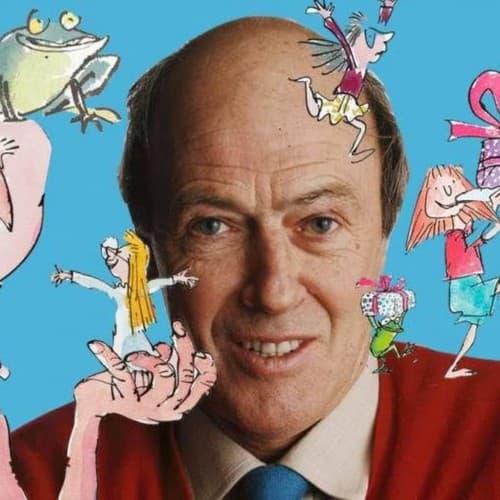
Roald Dahl was a British popular author of children's literature and short stories, a poet, and wartime fighter ace. His books have sold more than 300 million copies worldwide. Dahl has been called "one of the greatest storytellers for children of the 20th century".







