“The woods are not safe for girls with too much curiosity.”
— A warning given to Nadya by her mother about the dangers of the forest.

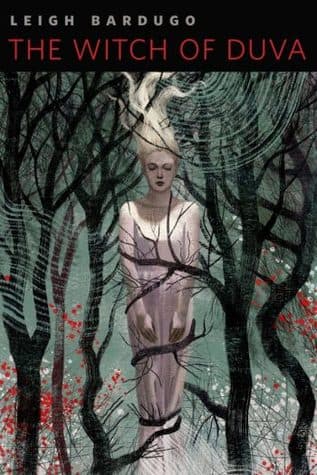
Leigh Bardugo (2012)
Genre
Fantasy / Young Adult
Reading Time
30 min
Key Themes
See below
Sign in to track this book
In a village haunted by the legend of man-eating woods, a young woman uncovers a chilling truth: the real monster might be closer than any shadowed tree.
Nadya lives in the isolated village of Duva, nestled beside a dark and ancient forest. Her mother, a practical and stern woman, constantly reminds Nadya of the local legends concerning the 'Witch of Duva' who preys on young girls venturing into the woods. These stories are a constant source of fear and caution for the villagers, especially after several girls have gone missing over the years. Nadya, though dutiful, feels a growing unease and curiosity about these disappearances, sensing that the simple folk tales might not fully explain the grim reality of their village's plight. The pervasive fear shapes daily life in Duva, making the woods a forbidden and terrifying place.
The tension in Duva escalates when another young girl, Anya, vanishes without a trace. Her disappearance is unsettling as she was known for her cautious nature and rarely strayed from the village path. This event fuels the villagers' terror and reinforces their belief in the malevolent Witch of Duva. Nadya's mother, distraught, reinforces her strict warnings, fearing for Nadya's safety. The men of the village organize futile search parties, but the deep, dark woods yield no clues. The lack of answers breeds a sense of helplessness and dread among the community, leaving them to wonder who will be next to fall victim to the unseen predator.
Defying her mother's warnings, Nadya ventures to the edge of the woods to gather berries, a task that becomes increasingly dangerous with each new disappearance. While there, she encounters a strikingly beautiful woman with skin like cream and hair like spun moonlight. The woman is dressed in fine clothes, unlike anyone Nadya has ever seen in Duva, and seems out of place in the wild forest. The stranger offers Nadya a sweet, ripe berry, which Nadya instinctively refuses, remembering her mother's cautionary tales about accepting gifts from strangers. This encounter leaves Nadya deeply unsettled, a mix of fascination and fear stirring within her, as the woman's presence feels both enchanting and ominous.
To Nadya's shock, the beautiful stranger from the woods appears in Duva village. She introduces herself as a traveler and quickly captivates the men with her charm and exotic beauty, particularly Nadya's father. She brings with her an air of sophistication and an unsettling aura. While the men are enamored, the women of Duva, including Nadya's mother, regard her with suspicion and unease, sensing a hidden danger beneath her alluring facade. Nadya watches her father's growing fascination with the woman, a subtle shift in his demeanor that makes her increasingly uncomfortable, as the stranger's presence disrupts the quiet monotony of their village life.
Nadya observes the growing rift between her parents. Her mother, usually stoic, becomes visibly distressed and consumed by jealousy as her husband's attention fixes on the beautiful stranger. The stranger's presence in their small home creates a tense and suffocating atmosphere, turning their once stable family dynamic upside down. Nadya's mother's once firm warnings about the woods now seem tinged with a different kind of fear, the fear of losing her husband and her family's stability. Nadya feels caught in the middle, witnessing her mother's quiet suffering and her father's oblivious infatuation, and begins to question the nature of the evil in Duva.
The stranger brings a basket of vibrant, unusually sweet-smelling berries, unlike any Nadya has ever seen, and offers them to her father. He readily accepts, captivated by her. Nadya watches, a knot of dread tightening in her stomach, as he consumes them with relish. The berries seem to have an intoxicating effect on him, making him even more enchanted with the stranger. Nadya's mother looks on with a mixture of fear and despair. The berries, though seemingly innocuous, carry an underlying sense of menace, hinting at a deeper, more insidious plot unfolding within their home, unnoticed by the men of Duva.
Nadya's mind races, connecting the dots between the stranger, the strange berries, and the disappearances. The berries remind her of the ones she refused in the woods, and a chilling realization begins to dawn on her. She recalls the stories of the Witch of Duva luring girls with treats and realizes that the tales might be a distorted truth. The stranger's sudden appearance, her enchanting demeanor, and the effect of the berries on her father all point to a sinister connection to the missing girls. Nadya feels a growing certainty that the real danger is not a mythical witch in the woods, but something far more human and cunning, now residing within their own village.
Driven by a desperate need to protect her family and the remaining girls of Duva, Nadya confronts the beautiful stranger. She accuses her of being the true culprit behind the disappearances, not a witch, but a woman who uses her beauty and cunning to lure her victims. As Nadya speaks, a subtle shift occurs in the stranger's demeanor, her alluring facade cracks, revealing a cold, predatory glint in her eyes. The confrontation is tense, charged with unspoken magic and human malice, as Nadya bravely challenges the sinister force that has brought so much fear and sorrow to her village, unmasking the true nature of the 'Witch of Duva'.
Under Nadya's accusations, the stranger sheds her human guise, revealing her true, monstrous form. She confesses to being the one consuming the girls, not a witch, but a creature of the forest that feeds on the life force of young women, using her beauty as a lure. She explains that the berries she offered were a way to weaken and enchant her victims, making them easier prey. The revelation is horrific, confirming Nadya's worst fears and exposing the raw, brutal truth behind the village's legends. The 'Witch of Duva' was not a hag, but a beautiful, deadly predator, far more terrifying in her deceptive allure.
As the creature attacks Nadya, her mother, witnessing the true horror, intervenes. In a desperate act of maternal love and self-sacrifice, she throws herself between Nadya and the creature, allowing Nadya a chance to escape. The creature, temporarily distracted by this unexpected resistance, turns its attention to Nadya's mother. Nadya is forced to watch in terror as her mother makes the ultimate sacrifice, her love for her daughter overriding her own fear. This act of bravery and despair solidifies Nadya's resolve and steels her for the fight that must come, a fight to avenge her mother and protect her village from this ancient evil.
Empowered by her mother's sacrifice and fueled by grief and rage, Nadya finds unexpected strength. She remembers her mother's advice and uses the creature's own deception against it. The details of the final confrontation are grim, but Nadya, no longer a frightened girl, manages to exploit a weakness in the creature's predatory nature. She uses an object imbued with her mother's love or a piece of wisdom passed down to her, ultimately defeating the creature and breaking its hold over Duva. The forest, once a place of terror, is now cleansed of its immediate threat, though the scars of its reign remain on the village and Nadya's heart.
In the aftermath, Duva slowly begins to heal from the decades of terror. The villagers are left to grapple with the shocking truth behind the 'Witch of Duva' legend. Nadya, forever changed by her ordeal and her mother's sacrifice, emerges as a quiet hero. The stories of the woods will still be told, but now they will include the tale of the brave girl who faced the true monster and saved her village. Nadya carries the burden of her knowledge and the memory of her mother, understanding that true evil can wear many faces, even beautiful ones. She becomes a silent guardian, ensuring the real lesson of Duva is never forgotten.
The Protagonist
Nadya transforms from a fearful, obedient girl into a courageous, truth-seeking hero who confronts and defeats the monster plaguing her village.
The Supporting
She begins as a figure of caution and fear, evolving into a symbol of ultimate maternal sacrifice and bravery.
The Antagonist
Her arc is one of unmasking; she begins as an enigmatic beauty and is revealed as the true, horrifying monster of the woods.
The Supporting
He experiences a temporary enchantment, highlighting the antagonist's power, before presumably recovering after her defeat.
The Mentioned
Her disappearance is a plot point, not a character arc.
The Supporting
They move from a state of superstitious fear and helplessness to a period of healing and a new understanding of their village's history.
This theme is central, as the 'Witch of Duva' is not the stereotypical hag of legend, but a beautiful, alluring creature who uses her charm to ensnare victims. The story challenges the traditional portrayal of evil, showing that it can hide behind a captivating facade. The stranger's ability to enchant Nadya's father with her beauty and the sweet berries (Chapter 6) illustrates how easily people can be deceived by what appears pleasant or harmless. This theme emphasizes that true danger often comes in unexpected, attractive forms, making it harder to recognize and resist.
“The woods ate girls. Or so the story went. But sometimes, the danger came knocking at your door.”
The unwavering love and protectiveness of Nadya's mother for her daughter is a powerful force in the story. Despite her initial sternness, her actions are driven by a deep desire to keep Nadya safe. This theme culminates in her ultimate sacrifice (Chapter 10), where she bravely puts herself between Nadya and the creature. Her act of selflessness not only saves Nadya but also empowers her to confront and defeat the monster, highlighting the strength and transformative power of a mother's love.
“A mother's love was a fierce, protective thing, stronger than any spell.”
The story explores the tension between accepted folklore and reality. The villagers of Duva cling to the legend of the 'Witch of Duva' as an explanation for the missing girls, but Nadya ultimately discovers that the truth is more complex. The creature is real, but its methods and appearance defy the traditional tales. Nadya's journey involves peeling back layers of superstition to uncover the actual nature of the threat (Chapter 7, 9), demonstrating that sometimes, the stories we tell ourselves obscure the real dangers right in front of us.
“They had told stories of a witch, an old hag, but the truth was far more beautiful, and far more terrible.”
Nadya's ability to observe her surroundings and question accepted narratives is crucial to her success. While others are swayed by the stranger's beauty or blinded by fear, Nadya notices inconsistencies, the unusual berries, the stranger's unsettling presence, and her father's enchantment. Her skepticism of the simple 'witch' legend allows her to connect the seemingly disparate events and ultimately uncover the creature's true identity (Chapter 7). This theme champions critical thinking and trusting one's instincts over blind adherence to old beliefs.
“The stories were old, but the fear was fresh, and Nadya wondered if they had been telling the wrong story all along.”
The story is presented as a traditional cautionary folk tale.
The entire narrative is framed as a dark folk tale, beginning with the classic 'there was a time...' structure. This device immediately immerses the reader in a world of ancient legends and superstitions. It also sets up the expectation of a clear-cut good vs. evil narrative, which is then subverted by the deceptive nature of the antagonist. The folk tale frame enhances the sense of timelessness and universal themes, while also allowing the author to play with reader expectations regarding the identity and nature of the 'witch'.
Magical berries used by the creature to weaken and control its victims.
The enchanted berries serve as a crucial plot device, symbolizing temptation and the insidious nature of the creature's power. By offering these sweet, intoxicating berries, the creature is able to lower the guard of its victims, making them more susceptible to its influence and ultimately easier to consume. Nadya's refusal of the berries (Chapter 3) and her father's acceptance (Chapter 6) highlight the varying levels of awareness and vulnerability among the characters, directly impacting their fates and driving the plot forward.
A series of disappearances that create escalating tension and mystery.
The recurring disappearances of young girls, culminating in Anya's vanishing (Chapter 2), serve as the primary source of conflict and suspense. This device establishes the grave danger facing Duva and motivates Nadya to seek the truth. Each disappearance heightens the villagers' fear and reinforces the legend of the Witch, while also providing a tangible measure of the antagonist's threat. It's a classic mystery trope that keeps the reader engaged in uncovering the culprit.
The villain's alluring appearance subverts expectations of evil.
Instead of a hideous witch, the antagonist is depicted as strikingly beautiful and charming. This device is a powerful subversion of the traditional 'hag' archetype, playing on the theme of deceptive evil. Her beauty allows her to move freely within the village and ensnare victims like Nadya's father, making her a more insidious and dangerous threat than a conventionally monstrous villain. It forces Nadya, and the reader, to look beyond superficial appearances to discern true malevolence.
“The woods are not safe for girls with too much curiosity.”
— A warning given to Nadya by her mother about the dangers of the forest.
“There are some things that even love can’t heal.”
— Nadya reflects on the deep-seated sorrow and pain within her family.
“The forest had always been hungry, but lately, it had grown bolder.”
— Describing the increasing threat of the creatures within the woods.
“Sometimes, the only way to save someone is to let them go.”
— A harsh truth Nadya contemplates regarding her sister's fate.
“Grief was a beast with many teeth.”
— Nadya's internal struggle with the sorrow of her losses.
“Magic was a tricky thing. It could mend, but it could also break.”
— A thought on the duality and power of magic.
“She had always known the cost of living in a fairy tale.”
— Nadya understands the dark reality behind enchanting stories.
“Fear was a constant companion in the village, a shadow that clung to every house.”
— Describing the pervasive atmosphere of dread in Duva.
“A secret shared was a burden halved, but sometimes, it was a danger doubled.”
— Nadya considers the implications of revealing her knowledge.
“The truth was rarely simple, and never kind.”
— Nadya grapples with the harsh realities she uncovers.
“Sometimes the greatest monsters hide in plain sight.”
— A realization about the true antagonist of the story.
“Hope was a fragile thing, easily crushed, but stubborn too.”
— Nadya's internal struggle to maintain optimism amidst despair.
“The heart remembers what the mind tries to forget.”
— Nadya's struggle with painful memories.
“There was a kind of strength in knowing when to give up, and when to fight.”
— Nadya's growing understanding of her own capabilities and limitations.
Ready to see how well you understood this book? Take our interactive quiz with 10 questions.

Biography coming soon.







