“The game was always there, lurking, a whisper in the back of my mind, even when I tried to forget it.”
— Reflecting on the enduring pull of the 'Wishing Game'.

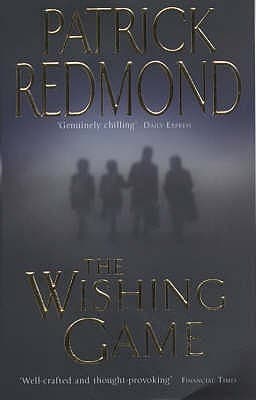
Patrick Redmond (1999)
Genre
Thriller / Mystery / Young Adult
Reading Time
800 min
Key Themes
See below
Sign in to track this book
Decades after a sinister 'wishing game' among privileged boys at a rigid 1950s boarding school led to a horrific event, a journalist unearths the dark secrets buried by an institution determined to protect its own.
In the winter term of 1954, eleven-year-old Jonathan Palmer arrives at Kirkston Abbey, a rigid and intimidating boarding school in rural England. Jonathan is a timid boy, immediately overwhelmed by the school's austere atmosphere, cold dormitories, and stern masters like Father Andrew. He struggles to adapt, feeling lonely and vulnerable among the older boys. His early experiences include isolation and fear, especially of the school's prefects and the constant threat of corporal punishment. Jonathan longs for friendship and a sense of belonging in this harsh new environment.
Jonathan's fortunes seem to change when Richard Rokeby, an older, handsome, and charismatic boy, notices him. Rokeby is admired and feared among his peers, possessing a magnetic personality and an unsettling intensity. To Jonathan's surprise and initial delight, Rokeby takes him under his wing, offering protection from bullies and a sense of inclusion. This friendship initially provides Jonathan with much-needed relief and a feeling of safety, but he quickly senses an underlying possessiveness and an unnerving quality to Rokeby's attention.
Rokeby introduces Jonathan and their small circle of friends — including the impressionable Stephen and the more cynical Peter — to a 'Wishing Game.' This game, initially presented as harmless fun, involves each boy making a wish, often targeting someone they dislike or who has wronged them. Rokeby acts as the orchestrator, encouraging the boys to say their deepest, sometimes darkest, desires. Jonathan is initially hesitant, sensing the game's unsettling nature, but is drawn in by Rokeby's forceful personality and the desire to maintain his friendship. The wishes start innocently but gradually become more harmful.
Disturbingly, the wishes made in the game begin to happen. A boy wished ill upon falls sick, a strict master suffers an accident, and a bully is expelled. These coincidences, while initially dismissed as chance, become increasingly frequent and specific, terrifying Jonathan. Rokeby, however, seems unfazed, even pleased, by these developments, seeing them as proof of the game's power. Jonathan feels a growing dread and guilt, realizing the game is far from innocent, but he is too intimidated by Rokeby to openly challenge him or leave the group, fearing Rokeby's unpredictable wrath.
As the 'Wishing Game' progresses, Rokeby's control over Jonathan and the other boys intensifies. He uses fear, guilt, and the allure of his protection to maintain his dominance. Jonathan finds himself increasingly isolated, his life revolving around Rokeby's whims. Rokeby subtly pressures the boys into making more extreme wishes, and anyone who questions the game or tries to distance themselves faces Rokeby's chilling disapproval, which often results in them becoming the target of subsequent 'wishes.' Jonathan is trapped, observing Rokeby's escalating psychological manipulation and the dark shift in his personality.
The 'Wishing Game' reaches a terrifying climax when Rokeby orchestrates a wish against Father Andrew, a severe and disliked master known for his harsh punishments. Rokeby pushes the boys, including a terrified Jonathan, to wish for something truly terrible to happen to the priest. Jonathan is horrified, sensing the irreversible path they are on, but is powerless to stop the group, driven by Rokeby. The atmosphere among the boys becomes charged with fear, excitement, and morbid anticipation, all under Rokeby's chilling direction. This wish marks a point of no return for the group.
Shortly after the wish is made, Father Andrew is found dead, a shocking event that sends horror through Kirkston Abbey. The official cause of death is an accident, but Jonathan and the other boys involved in the game know the truth – their wish, orchestrated by Rokeby, has come to pass. This event shatters any remaining innocence, confirming the 'Wishing Game's' terrifying reality and Rokeby's manipulative power. Jonathan is consumed by guilt and terror, realizing the depth of Rokeby's depravity and his own role in the tragedy. The school authorities, in their panic, attempt to cover up any unsettling details.
After Father Andrew's death, the school authorities, led by the Headmaster, quickly work to contain the scandal. They conduct a superficial investigation, focusing on maintaining the school's reputation and quashing any rumors. The boys involved in the 'Wishing Game' are questioned but, under the implicit threat of severe consequences and Rokeby's silent intimidation, they remain silent about the game's true nature. The incident is officially declared an accident, and life at Kirkston Abbey attempts to return to normal, but the trauma of the event leaves a lasting scar on Jonathan and the others, forever binding them to Rokeby and the dark secret.
Jonathan eventually leaves Kirkston Abbey, carrying the heavy burden of guilt and trauma from the 'Wishing Game.' The experience shaped him, instilling a deep-seated fear and a sense of complicity that haunts his adult life. He tries to move on, to forget the horrors of that winter term, but the memories of Rokeby and Father Andrew's death are indelible. He lives with constant anxiety and a need to distance himself from his past, never fully escaping the psychological grip of what transpired at the school. The events at Kirkston Abbey are a defining, yet unspoken, part of his identity.
Forty years later, in the 1990s, a journalist begins to investigate Father Andrew's mysterious death at Kirkston Abbey. Driven by an anonymous tip or a lingering unease surrounding the official narrative, the journalist starts digging into the past, interviewing former students and staff, and unearthing old records. This investigation frames the narrative, slowly revealing the layers of secrecy and denial that have shrouded the incident for decades. The journalist's persistent questioning threatens to expose the truth, forcing the surviving participants of the 'Wishing Game' to confront their buried memories and complicity.
The journalist's relentless pursuit of the truth brings Jonathan back into contact with the surviving members of the 'Wishing Game' group, including Rokeby. This forced reunion is tense, as the men revisit the traumatic events of their youth. Jonathan, still deeply affected, struggles with his memories and the renewed presence of Rokeby, who remains unsettling and manipulative, though subtly changed by time. The confrontation forces Jonathan to decide whether to continue living in silence or to finally reveal the truth, even if it means exposing his own role in the tragedy.
As the journalist's investigation concludes, the full truth behind Father Andrew's death and Rokeby's manipulation is revealed. It becomes clear that while the 'Wishing Game' may have seemed to have supernatural power, Rokeby was the true architect of the tragedies, using his intelligence, charisma, and psychological prowess to make the 'wishes' happen. The journalist uncovers the specific methods Rokeby used, exposing his calculated cruelty and the profound impact he had on the vulnerable boys. The revelation forces all involved to confront the dark legacy of Kirkston Abbey and the lasting consequences of their silence.
The Protagonist
Jonathan transforms from a naive, fearful boy into a guilt-ridden adult haunted by his past, eventually finding the courage to confront the truth.
The Antagonist
Rokeby remains consistently manipulative and powerful, his character revealing the depth of his psychological cunning rather than undergoing significant change.
The Supporting
Father Andrew's role is primarily to serve as a catalyst for the plot's central tragedy, his character remaining static.
The Supporting
The journalist's arc is one of discovery, as they progressively uncover the truth behind the historical event.
The Supporting
Stephen's arc is largely one of complicity and silent suffering, showing the lasting impact of the events on a less dominant personality.
The Supporting
Peter's arc demonstrates the erosion of individual resistance under intense psychological pressure, leading to unwilling complicity.
The Supporting
The Headmaster's character remains static, representing institutional authority and its flaws.
This theme is central to the novel, explored primarily through Richard Rokeby's character. Rokeby's ability to manipulate Jonathan and the other boys into participating in the 'Wishing Game' shows how charisma, intelligence, and a lack of empathy can be used to exert terrifying control. He exploits their fears, desires for acceptance, and the harsh environment of Kirkston Abbey to bend them to his will. The escalating nature of the wishes and the boys' inability to resist illustrate the insidious power of psychological dominance, turning seemingly innocent games into tools of destruction, as seen when Father Andrew becomes a target.
““He had a way of looking at you, a quiet intensity, that made you feel you were the only person in the world, and also, somehow, completely transparent.””
The novel portrays the brutal loss of innocence experienced by Jonathan and his friends at Kirkston Abbey. The 'Wishing Game' transforms them from ordinary schoolboys into participants in a horrific act, stripping away their childhood innocence. The harsh disciplinary environment of the school itself contributes to this, but Rokeby's game accelerates it, forcing them to confront the darker aspects of human nature, both in themselves and others. The lasting psychological scars that haunt Jonathan into adulthood, forcing him to live with guilt and fear, directly stem from this traumatic period, showing how childhood experiences can irrevocably shape an individual.
““We were just boys, playing a game. But the game played us, too, and it twisted something inside us that could never be straightened.””
A significant theme is the heavy burden of guilt and complicity carried by Jonathan and the other boys who participated in the 'Wishing Game'. Despite being manipulated, they wished harm upon others, culminating in Father Andrew's death. Jonathan's internal struggle with his inaction and fear, and his inability to stop Rokeby, leads to decades of suppressed trauma. The novel explores how silence, even under duress, can contribute to injustice and how the memory of past wrongs can haunt individuals, dictating their adult lives until they are forced to confront the truth, as seen when the journalist's investigation begins.
““The silence, that was the worst part. The silence that followed the wish, and the silence that followed his death, and the silence that we all kept for forty years.””
The novel critiques institutional failure through the actions of Kirkston Abbey's authorities. Faced with a scandal as grave as a master's death, the Headmaster and other officials prioritize the school's reputation over a thorough investigation or the well-being of the traumatized students. They actively suppress the truth, creating an official narrative of an accident and silencing any dissenting voices. This cover-up allows Rokeby's manipulation to go unpunished and leaves the boys to grapple with their trauma alone. The journalist's investigation forty years later exposes this institutional complicity and the long-term consequences of burying uncomfortable truths.
““The school, like an old, proud beast, simply closed its eyes to what it did not wish to see.””
A seemingly innocent game that becomes a vehicle for psychological manipulation and real-world harm.
The 'Wishing Game' is the central plot device, serving as the catalyst for the novel's horrifying events. Initially presented as a harmless pastime, it quickly transforms into a tool for Rokeby's manipulation. Its ambiguous nature—whether the wishes genuinely come true or are orchestrated by Rokeby—creates suspense and psychological tension. The game highlights the power of suggestion, groupthink, and the dark desires within individuals, driving the boys' complicity and the escalating tragedy. It is both a literal game and a metaphor for the destructive potential of unchecked power and influence.
The story is told with a present-day investigation framing the past events.
The use of a framing narrative, where a journalist's investigation in the 1990s unearths events from 1954, is a key plot device. This structure allows for a gradual revelation of the past, building suspense as the journalist (and the reader) slowly uncover the truth. It also highlights the enduring impact of trauma and the long shadow of secrets, showing how the past continues to affect the present-day lives of the characters, particularly Jonathan. The journalist's objective perspective contrasts with Jonathan's subjective, guilt-ridden memories, providing a fuller picture of the events.
Rokeby's primary method of control, blurring the lines between persuasion and coercion.
Psychological manipulation is the core engine of the plot, primarily wielded by Richard Rokeby. He uses his charisma, intelligence, and understanding of human weaknesses to control Jonathan and the other boys. This device makes the horror less about supernatural events and more about the darkness inherent in human nature. Rokeby's ability to plant ideas, exploit fears, and create an atmosphere of dependency and intimidation is central to the 'Wishing Game's' effectiveness and the boys' complicity. It underscores the novel's thriller aspect, focusing on the insidious nature of mind games and power dynamics.
An isolated, hierarchical environment that fosters vulnerability and unchecked power.
The Kirkston Abbey School for Boys setting is more than just a backdrop; it's a crucial plot device. Its isolated location, strict hierarchy, and emphasis on discipline create an environment where vulnerable boys like Jonathan can be easily exploited. The lack of effective adult supervision, coupled with the inherent power dynamics among students, allows Rokeby's 'Wishing Game' to flourish unchecked. The school's austere and often cruel atmosphere amplifies the boys' fears and desires for protection, making them more susceptible to Rokeby's influence and contributing to the cover-up after the tragedy.
“The game was always there, lurking, a whisper in the back of my mind, even when I tried to forget it.”
— Reflecting on the enduring pull of the 'Wishing Game'.
“Be careful what you wish for. It might just come true, and then you'll have to live with it.”
— A warning about the consequences of the wishes made.
“The past isn't just something you leave behind; sometimes it reaches out and drags you back in.”
— Dealing with unresolved issues and past events resurfacing.
“Trust is a fragile thing, easily broken, and almost impossible to repair once shattered.”
— Reflecting on betrayal and damaged relationships.
“Sometimes the monsters aren't under your bed; they're the people you thought you knew best.”
— A realization about the true nature of someone close.
“Every secret has a weight, and the longer you carry it, the heavier it becomes.”
— Struggling with the burden of hidden truths.
“Fear has a way of making you do things you never thought you were capable of.”
— Under pressure, making difficult and unexpected choices.
“The line between a game and reality can blur, especially when the stakes are life and death.”
— Contemplating the dangerous progression of the 'Wishing Game'.
“Hope is a dangerous thing, but sometimes it's all you have left.”
— Clinging to a sliver of hope in a desperate situation.
“Some truths are better left buried, but they rarely stay that way.”
— Acknowledging the inevitability of hidden truths coming to light.
“The silence was louder than any scream, filled with all the things left unsaid.”
— Experiencing an uncomfortable or tense silence.
“You can run from your past, but you can't hide from yourself.”
— Confronting internal struggles and self-identity.
“Revenge is a dish best served cold, but it often leaves a bitter taste in your own mouth.”
— Considering the unsatisfying nature of seeking vengeance.
“The greatest trick the devil ever pulled was convincing the world he didn't exist, and the greatest trick of the game was making us believe it was just a game.”
— A profound realization about the true manipulative nature of the game.
Ready to see how well you understood this book? Take our interactive quiz with 10 questions.







