“Being dead doesn't stop you from doing things. It just makes it a bit harder to get served in shops.”
— Meggie explaining the afterlife to a newly deceased Mella.

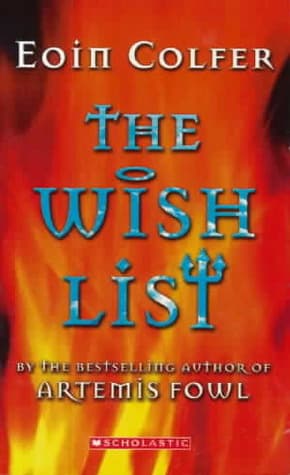
Eoin Colfer (2000)
Genre
Fantasy / Children's / Young Adult
Reading Time
250 min
Key Themes
See below
Sign in to track this book
After a botched robbery lands her in limbo, a mischievous teenage orphan must complete an elderly man's wish list to escape eternal damnation, all while a demon and an angel vie for her soul.
Meg Finn, a troubled, recently orphaned teenager living on the streets, is coerced by her dim-witted but dangerous friend, Belch Boyle, into robbing the home of an elderly man, Lowrie McCall. Belch, obsessed with explosives, plans to use a small bomb to blow open a safe he believes Lowrie possesses. During the botched robbery, Lowrie, a kind and frail man, confronts them. Belch panics and accidentally triggers a much larger explosion than intended, destroying the house and killing himself, Meg, and Lowrie instantly. This sudden, violent end sends Meg into an unexpected afterlife predicament.
After the explosion, Meg's spirit finds herself in a sterile, bureaucratic waiting room in the afterlife. This place, called Limbo, is run by the Soul Allocation Department. She meets a cynical angel, Saint Peter, who explains her unique situation: her soul, having died at the exact same moment as Lowrie's, has become intertwined with his. Because Lowrie was exceptionally good and Meg was exceptionally bad, her soul is effectively 'stuck' to his, preventing her from being immediately sent to hell. She learns that her final destination depends on a celestial challenge.
Saint Peter tells Meg that due to the soul entanglement, she has a unique chance for redemption. She must return to Earth as a spirit and fulfill Lowrie McCall's ten deepest wishes. If she successfully completes the 'wish list' within a set timeframe, her soul will be released from Belch's demonic influence and allowed into heaven. If she fails, both her soul and Lowrie's will go to hell. This challenge sets the stage for Meg's spiritual journey and her reluctant partnership with Lowrie's spirit.
Meanwhile, Belch Boyle's spirit, unburdened by any good deeds, is immediately sent to hell. There, he is recruited by the demon Beelzebub, who sees Belch's ineptitude and malice as a perfect tool for his own schemes. Beelzebub tasks Belch with returning to Earth as a newly minted, low-level demon to hinder Meg's progress on Lowrie's wish list. Belch, now with minor demonic abilities and a more menacing appearance, enjoys the chance to torment Meg and ensure her damnation, unknowingly becoming a pawn in a larger celestial game.
Meg and Lowrie return to Earth as invisible spirits, able to interact with the physical world only through subtle influences. Their first wish involves Lowrie's desire to help his former neighbor, an elderly woman named Mrs. Fogarty, who he believes is lonely. Meg, initially cynical, finds herself surprisingly moved by Lowrie's compassion. At the same time, Belch, now with a demonic appearance and the ability to cause minor chaos, begins to interfere. He creates small but frustrating obstacles for Meg, often by tempting humans to act on their worst impulses.
As they work through the wish list, Lowrie shares stories from his life, revealing his quiet acts of kindness and his deep love for his late wife, Mary. Meg, who has never experienced unconditional love or a stable family, starts to see the world through Lowrie's eyes. She helps him fulfill wishes like encouraging his estranged son, Michael, to reconnect with an old friend, and subtly guiding a young couple to find love. Each fulfilled wish chips away at Meg's tough exterior, replacing her cynicism with a growing sense of empathy and purpose.
Belch's demonic powers grow slightly, and his interference becomes more direct and dangerous. He tries to sow discord and misfortune, attempting to prevent Meg from completing wishes. For instance, he tries to make a young boy steal from a charity box, knowing it would upset Lowrie. Meg, despite her growing frustration with Belch, learns to use her own ingenuity and Lowrie's guidance to counteract his schemes. Their ghostly cat-and-mouse game across Dublin creates both humorous and tense moments, showing the struggle between good and evil for Meg's soul.
One of Lowrie's most poignant wishes is to forgive his estranged son, Michael, for a past grievance. This wish forces Meg to confront her own unresolved anger and pain regarding her mother's death and her stepfather's cruelty. Through Lowrie's example, Meg begins to understand the power of forgiveness, not just for others, but for oneself. This particular wish is heavily contested by Belch, who tries to amplify Michael's resentment. It becomes an important moment in Meg's emotional development.
The final wish on Lowrie's list is for Meg herself: to find peace and happiness. This wish is a selfless act from Lowrie. At the same time, Belch, desperate to claim Meg's soul, orchestrates a major event, attempting to trap her permanently in despair. Meg, now transformed by her experiences, must make a truly selfless decision. She puts Lowrie's spiritual well-being above her own, even if it means sacrificing her own chance at redemption. This climax tests the true extent of her character development.
In a selfless act, Meg sacrifices her own chance at heaven to ensure Lowrie's soul finds peace. This choice paradoxically secures her own redemption. Her soul is finally separated from Belch's demonic taint. Lowrie ascends to heaven, and Meg, having completed the wish list in spirit, is also granted entry, though not without a final, humorous interaction with Saint Peter. Belch is dragged back to hell, having failed his mission. Meg's journey ends with her finding a deep sense of belonging and peace in the afterlife, having truly earned her second chance.
The Protagonist
Meg transforms from a self-serving delinquent into a compassionate, selfless individual who earns her redemption through helping others.
The Supporting
Lowrie's arc is less about personal change and more about his posthumous influence, guiding Meg towards her redemption and finding his own ultimate peace.
The Antagonist
Belch's arc is one of consistent evil, failing in his demonic mission and returning to hell, reinforcing his nature as an irredeemable character.
The Supporting
Saint Peter remains largely unchanged, serving as a consistent, albeit jaded, representative of the divine bureaucracy.
The Antagonist
Beelzebub's arc is one of consistent villainy, ultimately failing to achieve his goal but remaining a powerful force of evil.
The Mentioned
Mrs. Fogarty's role is static, serving as a catalyst for Meg's early development in understanding Lowrie's kindness.
The Supporting
Michael moves from estrangement and quiet resentment to a state of reconciliation and peace regarding his father's memory.
The Mentioned
Mary is a static, remembered character, serving as a symbol of love and goodness that shaped Lowrie.
The main theme is Meg's chance to atone for her past mistakes and earn her way into heaven. Her journey of fulfilling Lowrie's wish list is a literal second chance at an afterlife. This theme is clear in Saint Peter's explanation of her unique predicament and the challenge he sets. Meg's initial reluctance and eventual embrace of the task show that even troubled souls can find a path to redemption through selfless acts, as seen when she sacrifices her own initial chance for Lowrie's.
““You see, Meg, your soul and Lowrie's are... entangled. And because Lowrie was so good, and you were... well, you, it's created a rather unique situation. A loophole, if you will, for a second chance.””
Meg's transformation comes from her growing empathy for Lowrie and the people he wished to help. Initially cold and self-centered, she slowly learns to see the world through Lowrie's kind eyes, understanding the value of connection and small acts of kindness. This is clear when she helps Mrs. Fogarty or helps Michael reconcile with his father's memory. Her journey shows how understanding and caring for others can heal one's own emotional wounds and lead to personal growth.
““It's funny, thought Meg, how much you could learn about a person from their wishes. And how much you could learn about yourself, by helping to grant them.””
The novel shows a clear, often humorous, struggle between good (heaven, represented by Saint Peter and Lowrie) and evil (hell, represented by Beelzebub and Belch). This conflict is not just external, but also internal for Meg, as she battles her own cynical impulses and the demonic temptations from Belch. The story suggests that good is found in selfless acts, forgiveness, and love, while evil is seen in selfishness, malice, and manipulation. Ultimately, good triumphs through Meg's final, selfless choice.
““There are two paths, Meg Finn. One of light, one of shadow. And you, my dear, are standing right on the dividing line.””
Many of Lowrie's wishes involve reconnecting with loved ones or forming new connections, such as his desire for Mrs. Fogarty to have company or for his son Michael to find peace. Meg, having been orphaned and estranged from her stepfather, initially struggles with the idea of healthy relationships. Through Lowrie's example, she learns the deep importance of family, friendship, and community, realizing that true happiness comes from these bonds. This theme highlights that love and connection are essential for a fulfilling life, both on Earth and in the afterlife.
““All Lowrie ever wanted was for people to be happy. For them to be connected. And that, Meg realized, was a pretty good thing to wish for.””
A literal list of ten wishes that Meg must fulfill to earn redemption.
The wish list serves as the central driver of the plot. It provides a clear objective and a structured progression for Meg's journey. Each wish acts as a mini-challenge, forcing Meg to interact with the human world and confront her own prejudices and limitations. The list is not merely a task; it's a vehicle for her emotional and spiritual growth, as each fulfilled wish chips away at her cynicism and builds her empathy. It also allows the narrative to explore various aspects of human kindness and connection through Lowrie's desires.
Meg's and Lowrie's souls are intertwined, creating a unique afterlife predicament.
This device is the magical catalyst for the entire story. The entanglement of Meg's 'bad' soul with Lowrie's 'good' soul creates the 'loophole' that allows Meg a chance at redemption. It physically binds her to Lowrie, ensuring she cannot escape the mission and forcing her to work alongside him. This entanglement also raises the stakes, as Lowrie's pure soul is also at risk of damnation if Meg fails, adding a layer of moral responsibility to Meg's actions that she initially lacks.
A humorous, bureaucratic depiction of the waiting room for souls.
The portrayal of Limbo as a sterile, paperwork-filled department run by jaded angels like Saint Peter introduces a unique, often comedic, tone to the afterlife. It demystifies the spiritual realm, making it relatable and accessible. This setting provides the rules and stakes of Meg's challenge and contrasts sharply with the chaotic, more traditional depiction of hell. It allows for exposition about the spiritual mechanics of the world while injecting a dose of Colfer's characteristic irreverent humor into a potentially heavy subject.
Belch Boyle, as a low-level demon, actively tries to sabotage Meg's mission.
Belch's transformation into a demon and his subsequent attempts to thwart Meg introduce an active, personalized antagonist to the plot. His interference provides external conflict and raises the stakes for each wish. His bumbling, yet malicious, efforts create both comedic moments and genuine tension, highlighting the constant struggle between good and evil. This device ensures that Meg's journey is not merely an internal one, but a race against time and an opposing force, making her redemption harder-won and more impactful.
“Being dead doesn't stop you from doing things. It just makes it a bit harder to get served in shops.”
— Meggie explaining the afterlife to a newly deceased Mella.
“The problem with being good is that you get to see how bad everyone else is.”
— Mella reflecting on her past life and the actions of others.
“Every single action, no matter how small, has a consequence. And every single consequence, no matter how small, has a ripple.”
— Saint Peter explaining the intricacies of the afterlife and judgment.
“You can't buy happiness. But you can buy chocolate, and that's kind of the same thing.”
— A lighthearted thought from Mella during a moment of stress.
“Sometimes, the only way to find out what you really want is to lose everything else.”
— Mella contemplating her desires after her death.
“It's not about being perfect, it's about trying to be better.”
— Meggie offering advice to Mella on improving her soul's standing.
“Fear is a powerful motivator. But so is hope.”
— Mella weighing her options and motivations in the afterlife.
“You can't change the past, but you can definitely mess up the future.”
— A humorous warning about Mella's actions and their potential impact.
“Even villains have their own twisted sense of right and wrong.”
— Mella observing the motivations of the demonic characters.
“The greatest trick the devil ever pulled was convincing the world he didn't exist. The second greatest was convincing everyone that good deeds were boring.”
— Saint Peter discussing the challenges of encouraging virtue.
“A good deed, even a small one, shines brighter in the darkness than a thousand evil acts.”
— Meggie encouraging Mella to perform acts of kindness.
“It's hard to be a bad person when you're surrounded by so much good.”
— Mella's internal struggle as she experiences positive influences.
“Sometimes, the most important journey you can take is the one inside yourself.”
— Mella reflecting on her personal growth and self-examination.
“Heaven isn't a place, it's a state of mind. And sometimes, a state of very good plumbing.”
— Meggie's quirky description of the afterlife's comforts.
Ready to see how well you understood this book? Take our interactive quiz with 10 questions.

Biography coming soon.







