“There are some things that even the most powerful men cannot take from you: your dreams, your memories, and your love.”
— A young woman reflecting on her inner strength amidst external threats.

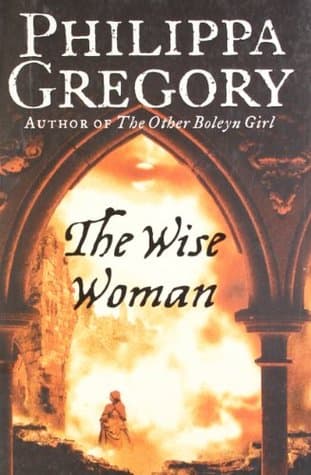
Philippa Gregory (1992)
Genre
Fantasy / Historical Fiction / Romance
Reading Time
12-15 hours (based on 640 pages)
Key Themes
See below
Sign in to track this book
An outcast with forbidden magic, Alys navigates Henry VIII's court, risking death for an obsessive love that unleashes a horrifying power.
Alys, a young woman on the desolate English moor, is an outcast because her foster mother, Morach, is the local 'wise woman' or healer, often suspected of witchcraft. Morach teaches Alys about herbs, healing, and old traditions, creating a deep connection to nature and a sense of otherness in Alys. To escape poverty, suspicion, and isolation, Alys seeks refuge in a nearby nunnery. She believes this will offer peace, security, and an accepted life away from her foster mother's dangerous reputation and the wildness of the moor.
Alys finds brief peace and routine within the nunnery walls, embracing a quiet life of prayer. Her peace shatters when King Henry VIII's 'wreckers' arrive to enforce the Dissolution of the Monasteries. The nunnery is violently dismantled, its inhabitants dispersed, and its sacred objects destroyed. Alys is cast out, her sanctuary gone, returning to the harsh, unpredictable world she tried to escape. This event marks a turning point, forcing her to confront her future without the church's protection.
After the nunnery's dissolution, Alys's rare ability to read and write secures her a position at the nearby castle of Lord Hugo, father of the young Hugo. She works as a scribe, gaining insight into the noble household and access to a world far from the moor or nunnery. This new environment is both intimidating and fascinating, placing her near the lord's family, including his son, Hugo, who will soon ignite a powerful and dangerous obsession within her.
As Alys works as a scribe at the castle, she becomes increasingly captivated by Hugo, the lord's handsome and charismatic son. Though Hugo is married to the kind Catherine, Alys finds herself drawn to him with an intensity that quickly becomes an all-consuming, obsessive love. She observes him, dreams of him, and every interaction, no matter how small, fuels her desperate longing. This forbidden desire begins to control her thoughts and actions, setting the stage for a perilous emotional journey that will challenge her moral boundaries and bring her into conflict with established norms.
Alys's love for Hugo is tormented by Catherine, Hugo's wife. Catherine is kind and well-regarded, making Alys's jealousy more potent. Alys watches the couple, consumed by envy and growing desperation. Conventional paths to happiness are closed to her, and her desire for Hugo becomes an unbearable burden. This emotional turmoil pushes her to consider extreme measures, recalling the 'old ways' and the potent, often dangerous, knowledge taught to her by Morach, her wise woman foster mother.
Unable to bear the pain of unrequited love and fueled by her obsessive desire for Hugo, Alys decides to use the darker, more potent knowledge Morach taught her. She begins to experiment with spells, charms, and rituals, not just for healing, but to influence Hugo's affections and disrupt his marriage to Catherine. These are powers Morach warned her about, powers that walk a fine line between natural magic and what society calls witchcraft. Alys is willing to risk everything, including her soul, to achieve her heart's desire, unaware of the terrifying consequences.
The magic Alys conjures seems to work. Hugo begins to show interest in Alys, and the dynamics among Alys, Hugo, and Catherine become tense and emotionally charged. Hugo and Catherine's stable marriage starts to fracture under Alys's interventions and Hugo's growing confusion. This passionate triangle explodes into desire, guilt, and betrayal, pushing all three characters into uncharted emotional and sexual territory. The lines between love, obsession, and manipulation blur dangerously.
Alys soon discovers that the magic she unleashed is far more powerful and unpredictable than she imagined. It takes on a terrifying life of its own, spiraling out of her control. The consequences are not only unforeseen but horrifying, affecting not just Hugo and Catherine, but the entire castle and possibly the wider community. What began as a desperate attempt to win love turns into a destructive force, blurring the lines between intention and outcome, leaving Alys grappling with the monstrous reality of her actions.
As disastrous events unfold, fueled by inexplicable occurrences and the unraveling of the noble family, suspicion quickly falls on Alys. Her association with Morach, her unusual knowledge, and the strange circumstances around Hugo and Catherine make her an easy target for accusations of witchcraft. In an era where heresy means burning at the stake and witchcraft means hanging, Alys finds herself in mortal danger. She must confront the terrifying reality of her situation, walking a perilous path between her fading faith and the raw, untamed female power she has invoked.
Facing dire consequences, Alys enters a deep internal struggle. She must reconcile her early spiritual inclinations from the nunnery with the potent, often dark, female power she has embraced and unleashed. The conflict between her understanding of God's will and the primal forces she has invoked becomes central to her fight for survival. This internal battle defines her journey, as she seeks to understand her abilities, the morality of her actions, and her place in a world that fears such power.
In her desperation and fear, Alys eventually turns to Morach, her foster mother, for guidance. Morach, the wise woman of the moor, represents ancient, pagan traditions that predate the Christian church. Through Morach, Alys gains a deeper, though dangerous, understanding of the natural world, its hidden powers, and the responsibility of wielding them. Morach's counsel is not always comforting, but it is essential for Alys to navigate the treacherous path she has created and understand the true source and consequences of her actions.
The story ends in a dramatic reckoning where Alys must confront the full, devastating impact of her magic and her choices. The consequences extend beyond her immediate desires, affecting Hugo, Catherine, and potentially the entire community. Alys is forced to take responsibility for the chaos she has unleashed, navigating a society that views her power with fear. The climax involves a confrontation with authority, a struggle for survival, and a profound realization about love, power, and sacrifice.
The Protagonist
Alys transforms from a naive, seeking girl into a woman who understands the immense, often destructive, power of her desires and abilities, ultimately accepting her unique path.
The Supporting
Morach remains a steadfast, guiding force, embodying the ancient knowledge and cautioning Alys about the perils of unchecked power.
The Supporting
Hugo is drawn into a moral and emotional quagmire, forced to confront his own desires and the consequences of Alys's influence, leading to the unraveling of his life.
The Supporting
Catherine endures heartbreak and betrayal, forced to confront the devastating impact of forces beyond her control.
The Supporting
Lord Hugo's primary role is to uphold order, and he is eventually forced to react to the chaos within his household, leading to judgment and action against Alys.
The Supporting
Sister Agnes's role is primarily static, representing the lost sanctuary and a simpler, more devout life.
The Mentioned
Their role is to initiate a major plot point by destroying the nunnery, thus propelling Alys's journey.
The central theme is Alys's intense, all-consuming, and forbidden love for Hugo, a married man. This desire quickly becomes an obsession, driving her to extreme measures, including dangerous magic. The novel explores the destructive nature of unchecked passion, how it can blind people to consequences, and lead to betrayal and suffering. Alys's internal struggle with her feelings and society's condemnation of her desires, especially for a married man, highlights the perilous tightrope she walks. Her use of magic to win Hugo, casting spells to influence him and disrupt his marriage to Catherine, stems directly from this theme.
“Her heart beat a savage drum against her ribs, a rhythm of hunger and longing that defied all reason and all vows.”
The novel explores female power, particularly as it appears through Alys's connection to the ancient, natural magic taught by Morach. This power is both a source of strength and extreme danger in a patriarchal, Christian society that calls such abilities 'witchcraft.' Alys's journey is about understanding and using this power, and the terrifying consequences when it spirals out of control. The fear of being branded a witch, with its brutal penalties, underscores the precarious position of women who dared to possess knowledge or influence outside conventional norms. This is clear in Alys's use of charms and herbs, and the accusations she later faces.
“The magic had a life of its own, a dark, hungry thing she had unleashed and could no longer command.”
The story is set against the backdrop of significant historical upheaval in England, specifically the Dissolution of the Monasteries, which symbolizes the clash between the established Catholic Church (and later, the emerging Anglican Church) and the older, pagan traditions embodied by Morach and the moor. Alys is caught between these two worlds: her brief sanctuary in the nunnery represents the 'new faith' and societal acceptance, while Morach's teachings represent the 'old ways' and a connection to nature. This conflict is not just external but internal to Alys, as she grapples with her spiritual beliefs versus the primal, magical forces she invokes. The destruction of the nunnery itself is a physical representation of this conflict.
“The stones of the nunnery fell, but the roots of the old religion ran deeper than any church foundation.”
Alys's life is defined by her status as an outsider. Raised by Morach, she is a pariah on the moor, and her attempts to find belonging, first in the nunnery and then through her love for Hugo, are difficult. Her literacy and unique knowledge further set her apart. The theme explores the human desire for acceptance and the lengths to which an individual will go to achieve it, even if it means resorting to dangerous or unconventional means. Her initial flight to the nunnery is a clear attempt to escape her 'outsider' label and find a place where she belongs.
“She was of the moor and the old ways, a creature apart, no matter how she tried to fit into their world.”
Hints and warnings about future dangers and consequences.
Foreshadowing is frequently employed, particularly through Morach's warnings to Alys about the dangers of wielding magic for selfish desires. These subtle hints about the unpredictable and destructive nature of the 'old ways' build tension and prepare the reader for the catastrophic events that unfold when Alys disregards this counsel. For example, Morach's reluctance to teach Alys certain spells, or her somber pronouncements about the balance of nature, allude to the chaos Alys will eventually unleash, making the eventual unraveling of events feel inevitable.
The audience's awareness of Alys's magic, while other characters remain ignorant.
Dramatic irony is a key device, as the reader is privy to Alys's use of magic to influence Hugo and disrupt his marriage to Catherine, while the other characters, particularly Hugo and Catherine, remain largely unaware of the supernatural forces at play. This creates a sense of dread and suspense, as the reader watches the characters unwittingly fall victim to Alys's machinations and the magic's uncontrollable effects. This contrast between what Alys knows and what others perceive heightens the tragic elements of the story, especially as the consequences escalate.
The moor represents wildness, ancient power, and Alys's true nature.
The moor serves as a powerful symbol throughout the novel. It represents the untamed, ancient, and often dangerous forces of nature and the 'old ways' that Morach embodies. It is a place of primal power, healing herbs, and hidden knowledge, contrasting sharply with the ordered, Christian world of the nunnery and the castle. For Alys, the moor symbolizes her true, wild nature and her connection to magic, and her constant longing for or return to it signifies her struggle to reconcile her identity with societal expectations. It's where her power originates and where she feels most authentic.
A historical event that acts as a catalyst for Alys's journey.
This real-world historical event serves as a pivotal plot device. It forcibly removes Alys from her sanctuary in the nunnery, stripping her of her chosen path and forcing her into the secular world. This act of destruction is not merely a backdrop but a direct catalyst that propels Alys into the castle, where she encounters Hugo and begins her descent into obsession and magic. It underscores the theme of the clash between old and new orders, and how grand historical movements can profoundly alter individual destinies, forcing characters to adapt or perish.
“There are some things that even the most powerful men cannot take from you: your dreams, your memories, and your love.”
— A young woman reflecting on her inner strength amidst external threats.
“The past is never truly gone; it is a river that flows through us, shaping our present and our future.”
— A wise woman imparting knowledge about the enduring impact of history.
“Fear is a cage, but courage is the key. You must choose which one you will hold.”
— A mentor advising a protagonist on overcoming their anxieties.
“Love is not a gentle flower; it is a wild, untamed thing that will tear you apart and make you whole again.”
— A character describing the tumultuous and transformative nature of love.
“To be a woman in this world is to be a warrior, whether you wield a sword or simply your wit.”
— A reflection on the struggles and strengths inherent in womanhood.
“The greatest magic is not in spells or potions, but in the power of the human heart to hope and to heal.”
— A wise woman explaining the true source of enduring power.
“Sometimes the greatest betrayals come not from our enemies, but from those we hold closest.”
— A character grappling with the pain of a personal betrayal.
“The land remembers what the people forget. Listen to its whispers, and you will find the truth.”
— A mystical insight into the connection between nature and history.
“There is no freedom without sacrifice, and no peace without a fight.”
— A character contemplating the cost of liberty and justice.
“A woman's power is not in her beauty, but in her mind and her spirit.”
— An assertion of intrinsic value beyond superficial appearance.
“The future is not written in the stars, but in the choices we make today.”
— An emphasis on free will and personal responsibility for one's destiny.
“Even in the darkest night, there is always a flicker of light, if you only have the courage to look for it.”
— A message of hope during a period of despair.
“To truly know someone, you must walk in their shadows as well as their light.”
— A profound statement on understanding the full complexity of a person.
“Sometimes the most dangerous weapon is not a sword, but a secret.”
— A character realizing the power and peril of hidden truths.
Ready to see how well you understood this book? Take our interactive quiz with 10 questions.

Biography coming soon.







