“The past is a foreign country; they do things differently there.”
— A general reflection on the nature of history and historical research.

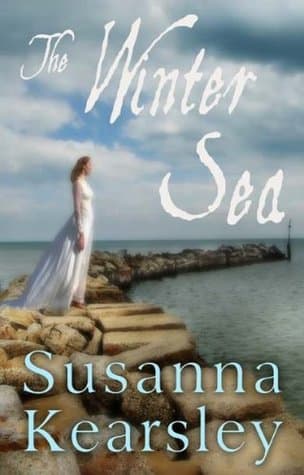
Susanna Kearsley (2009)
Genre
Fantasy / Historical Fiction / Romance
Reading Time
12-15 hours
Key Themes
See below
Sign in to track this book
A novelist researching a Jacobite invasion uncovers a centuries-old betrayal through ancestral memory, threatening her sanity as the past intrudes on her present.
Carrie McClelland, a historical novelist, arrives in Cruden Bay, Scotland, to research her next book. She rents a cottage near Slains Castle, the former home of the Earls of Erroll. Her new novel will focus on the failed 1708 Jacobite invasion, an attempt to put James Francis Edward Stuart on the throne. Carrie names her main character Sophia Paterson, an ancestor she feels a strong connection to. As she starts writing, the story unfolds with unusual clarity, almost as if she is remembering events rather than making them up, especially regarding Sophia and the local Jacobite families.
In 1708, Sophia Paterson lives in Slains, working as a companion to Lady Erroll at Slains Castle. Sophia is a young woman of unknown parents, with a silver locket and a knack for languages. She quickly notices the strong Jacobite feelings of the local gentry, including the Hay family and the Laird of Slains. Sophia gets drawn into their secret world, acting as a scribe and messenger because she can read and write and is discreet. She watches the preparations for the French fleet, carrying James Stuart, and begins a close, though complicated, bond with John Moray, a key Jacobite agent.
As Carrie writes, the events she describes, especially details of Sophia's life, become very accurate to historical records she later checks. She describes specific talks, feelings, and minor historical figures with unusual precision. Her work gets the attention of Dr. Graham, a local historian and archeologist digging at a nearby Jacobite camp. Graham is interested in how specific Carrie's 'fictional' details are, especially those that match new evidence. He suggests Carrie might be experiencing ancestral memory, an idea she first dismisses but finds harder to ignore as the story continues.
Sophia's role in the Jacobite network grows. She learns important information about James Stuart's planned landing. John Moray, a charming and dedicated Jacobite, trusts Sophia with coded messages and sensitive papers. Their relationship deepens amid the danger, moving from professional respect to a strong personal connection. Sophia's loyalty is tested as she navigates the tricky political situation, always aware of spies and government agents nearby. She learns about the planned meeting points and the hopes riding on the invasion's success.
The French fleet, carrying James Stuart, arrives off the coast of Scotland. However, bad weather, naval fights with the British fleet, and a key misunderstanding cause the landing at Slains to be called off. The fleet sails north and then retreats, leaving the Scottish Jacobites defeated and open to attack. The failure leads to a harsh crackdown by the British government, with many Jacobite supporters, including Lady Erroll and members of the Hay family, arrested. Sophia and John Moray must go into hiding, their lives in danger as government forces hunt them.
After the invasion fails, Sophia and John Moray must flee. They travel across Scotland, seeking safety and trying to avoid capture. During their flight, their strong connection becomes a deep and passionate love. They share intimate moments, strengthening their bond despite the danger and uncertainty. John reveals more about his past and his dedication to the Stuart cause, while Sophia deals with her feelings and the growing understanding of the sacrifices their loyalty demands. Their journey has many close calls and near-discoveries.
Sophia learns a terrible truth: John Moray is not who he says he is. He is Lieutenant John Graham, a government spy who has joined the Jacobite ranks. The man she loves, the man she trusted with her life, has been playing a long game. This news crushes Sophia, making her feel despair and betrayal. She realizes that her knowledge of Jacobite plans and her closeness to John made her a tool in his spying. This betrayal is the 'ultimate betrayal' that Carrie feels in her writing, causing her great emotional pain.
With the truth, Sophia confronts John Moray/Graham. The confrontation is emotional and painful. John, though a spy, truly fell in love with Sophia, creating an impossible problem for him. To protect the Jacobites and possibly save John from more deceit, Sophia makes a drastic choice. She stages a scene, making it seem like she has killed John, using a planned trick to ensure his escape from the authorities who would execute him for his double-crossing. This act is a great sacrifice, leaving her heartbroken but believing it was the only way to protect him and the remaining Jacobite network.
Carrie's writing ends with Sophia's betrayal and sacrifice. The emotional power of these scenes overwhelms Carrie, causing an emotional breakdown, mirroring Sophia's grief. The lines between her own identity and Sophia's blur, and she understands the full impact of the ancestral memory. Dr. Graham, who has been present, helps her process these feelings. Through more research and continued digging of historical records, Carrie and Graham piece together the true story, confirming Sophia's existence and the accuracy of Carrie's 'fictional' story. Carrie also learns Sophia's parents, revealing a surprising link to the Hay family.
Carrie finds out that Sophia, after her dramatic act, lived a quiet life, eventually marrying and having children, keeping her secret. The silver locket she carried was a hint to her true identity as the illegitimate daughter of the Earl of Erroll. Carrie also learns that John Moray/Graham, after his 'death,' did escape and continued his life, always affected by his love for Sophia and his choices. With the full story revealed, Carrie finds closure. The experience has given her an extraordinary novel and opened her heart to a new relationship with Dr. Graham, who has supported her, reflecting the historical connection and shared purpose between Sophia and John.
The Protagonist
Carrie transforms from a detached writer into someone deeply immersed in her ancestral past, ultimately finding personal and romantic fulfillment through her extraordinary experience.
The Protagonist (past timeline)
Sophia evolves from a quiet companion to a courageous woman who experiences profound love and makes a devastating sacrifice for the Jacobite cause and the man she loves.
The Love interest/Antagonist (past timeline)
John is a man caught between duty and love, whose initial deception is complicated by genuine affection, leading to a life forever marked by the choices he made.
The Supporting/Love interest (present timeline)
Dr. Graham evolves from an academic colleague to Carrie's romantic partner, helping her navigate and understand her extraordinary connection to the past.
The Supporting (past timeline)
Lady Erroll remains steadfast in her Jacobite loyalty, facing imprisonment for her beliefs.
The Mentioned/Catalyst (past timeline)
James Stuart's arc is external to the main characters, as his failure to reclaim the throne directly impacts their lives.
The Supporting (past timeline)
The Hay family endures the consequences of their Jacobite loyalty.
The novel explores how personal identity is shaped by ancestral memory. Carrie McClelland's writing of Sophia Paterson's story with accuracy suggests a deep, genetic link to the past. This theme questions the limits of self and memory, implying that echoes of ancestors' lives can live within us. Carrie's initial doubt turns into an understanding that her own identity is linked to Sophia's, leading her to discover her own family line and a deeper sense of self through this inherited memory.
“Perhaps all writers are magpies, I thought, taking bright scraps of other people's memories and making them our own.”
At the core of Sophia's story is a romance combined with a betrayal. Sophia's love for John Moray makes his revelation as a government spy especially painful. This theme explores the challenges of human relationships, where love can grow even amid deceit and political schemes. The betrayal is not simple evil, but a tragic result of conflicting loyalties and duties, affecting both Sophia and John deeply. Carrie's strong experience of this betrayal shows its lasting emotional impact across centuries.
“He was a spy, a liar, a man who had betrayed everything I held dear. And I loved him.”
The Jacobite cause itself is built on loyalty to the exiled Stuart king, and the characters in the 1708 timeline show this. Sophia's loyalty to Lady Erroll and the cause, and her sacrifice to protect John Moray and the Jacobite network, are central. John Moray's conflicting loyalties—to his government handlers and his love for Sophia—drive much of the story's tension. The theme explores the moral problems and personal costs of strong allegiance, whether to a cause or a person, often requiring great personal sacrifice.
“Loyalty, I had learned, was a double-edged sword, capable of both protecting and destroying.”
The novel shows how history is not just facts but a force that still affects the present. Carrie's ability to 'remember' historical events in detail shows history's deep and personal impact. The story shows that even small historical events, like the failed 1708 invasion, can have big and lasting results, shaping individual lives and future generations. Archeological finds combined with Carrie's story further show the real and verifiable nature of the past.
“Sometimes, history wasn't just in the books. Sometimes, it was in the blood.”
Alternating chapters between Carrie's present-day writing and Sophia's 1708 experiences.
The novel employs a dual timeline structure, alternating between Carrie McClelland's contemporary narrative as she writes her book and Sophia Paterson's experiences in 1708. This device allows for a gradual unfolding of both stories, creating suspense as Carrie's 'fictional' details increasingly align with historical fact. It also allows the reader to experience the ancestral memory alongside Carrie, blurring the lines between past and present and enhancing the emotional impact of Sophia's story as Carrie viscerally feels her ancestor's joys and sorrows.
Carrie's ability to recall and write her ancestor's life as if it were her own memory.
The central speculative element and plot device is Carrie McClelland's experience of ancestral memory. This is not simply research or imagination; Carrie 'remembers' specific conversations, emotions, and sensory details from Sophia's life. This device serves to drive the plot, as the accuracy of Carrie's writing attracts the attention of historians, and to deepen the emotional connection, allowing Carrie (and the reader) to fully inhabit Sophia's world. It's the mechanism by which the past becomes intensely personal and immediate for the protagonist.
A recurring symbolic object that holds clues to Sophia's true identity.
Sophia's silver locket is a significant symbolic object that appears throughout the 1708 narrative. It is a tangible link to her unknown past and her true parentage. The locket serves as a recurring mystery and a key plot point, holding the clues that eventually reveal Sophia's connection to the powerful Hay family. For Carrie, discovering the locket and its significance in her research further validates the reality of her ancestral memories, bridging the gap between her fictional narrative and historical fact.
The physical setting that anchors both timelines and symbolizes enduring history.
The ruins of Slains Castle serve as a powerful physical anchor for both timelines. In 1708, it is the vibrant home of Lady Erroll and a hub for Jacobite activity. In the present, its ruins are a constant reminder of the past's enduring presence, visible from Carrie's cottage. The castle symbolizes the passage of time, the rise and fall of power, and the secrets buried within history. Its evocative atmosphere helps ground Carrie's writing and provides a tangible link to the events she is recounting, reinforcing the theme of history's lasting impact.
“The past is a foreign country; they do things differently there.”
— A general reflection on the nature of history and historical research.
“There are some things you can't outrun, no matter how fast you go.”
— Carrie's internal thoughts about her past and the secrets she carries.
“Sometimes the greatest love stories are the ones that are never fully told.”
— Reflecting on the mystery and untold aspects of Sophia and Graham's relationship.
“It was as if the house itself held memories, whispering them to anyone who would listen.”
— Carrie's initial impressions of Slains Castle and its historical atmosphere.
“Every generation thinks it invented love, but the heart knows no new tricks.”
— Graham reflecting on the timeless nature of human emotions and relationships.
“The sea, she thought, was a great keeper of secrets, swallowing them whole.”
— Carrie observing the wild Scottish coast and its connection to the past.
“There's a fine line between inspiration and obsession, and sometimes it's hard to tell which side you're on.”
— Carrie's growing immersion in Sophia's story and her historical research.
“Some stories aren't meant to be neat and tidy. Some are wild and untamed, like the land they come from.”
— Carrie's realization about the complexities of the historical narrative she is uncovering.
“The past isn't dead. It's not even past.”
— A recurring theme that the events of history still resonate in the present.
“You can't change the past, but you can understand it, and understanding can sometimes set you free.”
— Carrie grappling with the historical events and their impact on her own life.
“Sometimes the strongest bonds are forged in the most unexpected fires.”
— Reflecting on the relationships formed amidst danger and upheaval in Sophia's time.
“Truth, like the tide, has a way of coming in, no matter how much you try to hold it back.”
— The slow unveiling of secrets and hidden truths throughout the narrative.
“Every person leaves a trace, a whisper in the wind, a shadow on the stone.”
— Carrie contemplating the enduring legacy of historical figures and their presence.
“Love doesn't always choose the easy path. Sometimes it thrives on obstacles, on the very things that try to tear it apart.”
— Reflecting on the challenges and resilience of love across different timelines.
Ready to see how well you understood this book? Take our interactive quiz with 10 questions.







