“Some secrets are like that. They don't want to stay buried. They find ways to come back to the surface.”
— Sara wonders about the persistence of old secrets in Sleepy Hollow.

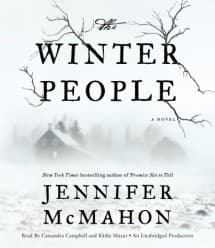
Jennifer McMahon (2014)
Genre
Thriller / Mystery / Romance
Reading Time
11 min
Key Themes
See below
Sign in to track this book
In a town with chilling disappearances and old legends, a teenager finds a century-old diary that may explain her mother's vanishing, making her face a past that seems to repeat itself.
Nineteen-year-old Ruthie lives a quiet life in West Hall, Vermont, with her mother, Alice, and younger sister, Fawn. Their off-grid life changes when Ruthie wakes one morning to find Alice gone, leaving only a note about a walk. Ruthie searches for clues and finds a hidden space under the floorboards in Alice's room. Inside, she finds an old diary belonging to Sara Harrison Shea, who lived in their farmhouse in 1908 and was found dead in the field behind the house months after her daughter's death. This discovery starts Ruthie's search to understand her mother's disappearance and their home's history.
The diary entries take Ruthie back to 1908, where Sara Harrison Shea writes about her life in West Hall. The first entries show a happy home with her husband, Martin, and their young daughter, Gertie. But the story changes when Gertie dies suddenly from a fever. Sara is very sad, consumed by sorrow. Her entries become darker, hinting at local stories and beliefs about 'the winter people' and bringing back the dead. Sara's desperation grows, and she starts looking for forbidden knowledge and practices, wanting to see her daughter again.
As Ruthie deals with Sara's sad story, she keeps looking for Alice. She tries to keep things normal for Fawn, but the isolation and uncertainty are hard. A new family, the Davidsons—Owen, his wife Jenny, and their son, Caleb—rent the cabin next door, which has been empty for years. Ruthie finds Owen Davidson unsettling; he seems too interested in their property and Alice's disappearance. His questions feel nosy, and Ruthie thinks he might know more than he says, adding to her worry. The house's history and the diary entries make her more suspicious.
Sara's diary shows her growing focus on the stories of the 'winter people' – shadowy figures in the woods who can bring back the dead. Because of her grief for Gertie, Sara finds a local woman named Mrs. Stanton, who is said to have old knowledge. Mrs. Stanton, a mysterious woman, guides Sara through a dark ritual using specific herbs, a piece of Gertie's hair, and a sacrifice. Sara, desperate, agrees, believing she can bring her daughter back. The ritual has a strange, unsettling feeling, marking a point of no return for Sara as she uses forbidden magic.
After the ritual, Gertie reappears, seeming alive. Sara is happy, but it doesn't last. Gertie is not quite herself; she is cold, quiet, and has an unsettling stillness. Her skin is pale, her eyes are empty, and she speaks in a strange, flat voice, often repeating things. Sara soon realizes that what she brought back is not truly her daughter but something else, something scary. The returned Gertie starts acting strangely, including being violent and having a strong hunger for warmth and life, scaring Sara and her husband, Martin. The child they once loved has become a source of fear.
Ruthie's search for Alice leads her to ask Owen Davidson more directly. She finds out that Owen's family has a long connection to West Hall and its dark stories. He says that his own mother went missing years ago, and he thinks it's connected to the same forces that affected Sara Harrison Shea. Ruthie also finds old photos and papers in Alice's things that suggest Alice had a deeper, more personal connection to the house's history than Ruthie knew. This makes Ruthie wonder if Alice had been looking into the 'winter people' and Sara's story for more than just interest, perhaps expecting her own disappearance.
The horror of the returned Gertie gets worse, threatening Sara and Martin's lives. Martin, unable to deal with the strange child, tries to stop Gertie's unnatural existence. But Gertie's powers are too strong. To protect her husband and end the nightmare, Sara makes a sacrifice. She takes Gertie to the field behind their house, where Gertie first died, and performs a final, sad ritual, seemingly sacrificing herself to end the 'winter people's' hold and ensure Gertie's unnatural life cannot continue. This ends with Sara's body being found in the field, months after Gertie's death.
Owen tells Ruthie the full truth: his mother, Katherine, went missing years ago after becoming a 'sleeper' – someone brought back by the 'winter people' but not fully alive, needing to feed on others' life force. He explains that his mother, like Gertie, was a victim of the same dark magic. Owen believes Alice's disappearance is linked to a 'sleeper' returning and that Alice was trying to stop it. He warns Ruthie that the 'winter people' want to keep existing by finding new people, and that Fawn, being young, might be a target, making Ruthie more scared and urgent.
Alice eventually returns, but she is different. Her skin is cold, her eyes are empty, and her movements are stiff, like Sara's description of Gertie. Ruthie and Owen realize that Alice has become a 'sleeper.' Alice says, in her calm voice, that she had been trying to protect them from the 'winter people,' but she gave in. She explains that the 'winter people' are now looking for Fawn, wanting to use her. This makes Ruthie face the fact that her mother is no longer truly her mother, and her sister is in danger from the same forces that ruined Sara Harrison Shea's family.
Ruthie, with what she learned from Sara's diary and Owen's warnings, gets ready to face the 'sleeper' Alice and the 'winter people' to save Fawn. The climax happens in the woods behind their farmhouse, a place with the dark history of the 'winter people.' Ruthie knows she must end the connection to the 'winter people' forever, even if it means losing Alice. She uses what she learned from the diary, especially about herbs and a final sacrifice, to try and break the cycle. The fight is tense and emotional, as Ruthie fights the spirits and her mother's chilling presence, wanting to protect Fawn and stop history from repeating in her family.
The Protagonist
Ruthie transforms from a sheltered young woman into a courageous protector, embracing the truth of the supernatural to save her family.
The Supporting/Antagonist
Alice's arc goes from a protective mother with a secret past to a tragic victim of the 'winter people', becoming a 'sleeper' herself.
The Supporting
Fawn remains a symbol of innocence and vulnerability, serving as the catalyst for Ruthie's heroic actions.
The Protagonist (Past Timeline)
Sara descends from a grieving mother into a tragic figure who makes a devastating pact, ultimately sacrificing herself to end the horror she unleashed.
The Supporting
Owen moves from a mysterious new neighbor to a trusted confidante and ally for Ruthie, helping her navigate the supernatural threats.
The Supporting/Antagonist
Gertie's arc is tragic; she dies as an innocent child only to be resurrected as a terrifying, unnatural entity, a victim and instrument of the 'winter people'.
The Supporting
Martin's arc is one of escalating despair and powerlessness as he witnesses his family's destruction by supernatural forces.
The Mentioned/Supporting
Mrs. Stanton remains a static, enigmatic figure who facilitates the dark magic but does not undergo personal development.
The Mentioned
Katherine's arc is historical; she becomes a 'sleeper' and vanishes, serving as a cautionary tale.
Grief's power is a main theme, especially in Sara's story. Her sorrow over Gertie's death makes her take extreme and dangerous actions, showing how desperation can make people go against natural laws and use forbidden things. Ruthie also feels great grief and fear for her missing mother, which drives her search. The novel looks at the bad results of unchecked grief and the human desire to undo loss, showing how it can lead to terrible things.
“Grief is a house where the walls are made of mirrors, and every reflection is your own broken heart.”
The novel is full of supernatural elements, using local Vermont stories about 'the winter people' and bringing back the dead. This theme looks at the thin line between the natural and supernatural worlds, where old stories are real. The 'winter people' are a strong, bad force connected to the land, affecting generations. The book looks at these beings, how they bring people back, and the bad outcomes for those who deal with them, making the supernatural a real and constant threat.
“They say the winter people can bring back the dead, but they don't bring back what you lost. They bring back something else.”
Family bonds are a strong force for both Sara and Ruthie. Sara's love for Gertie leads to her sad actions, while Ruthie's dedication to her sister, Fawn, makes her face the 'winter people.' The theme looks at how far mothers and sisters will go to protect loved ones, even at great cost. It also shows the pain of seeing family members changed or lost to dark forces, making characters make hard choices for the family's good.
“A mother's love is a dangerous thing, a force that can move mountains or shatter worlds.”
The novel shows how history repeats itself, especially with the 'winter people' and their effect on West Hall. Sara's diary is a scary guide for what happens in Ruthie's present, showing how grief, desperate rituals, and sad outcomes happen again over generations. The constant threat of history repeating, with Fawn possibly being the next victim, creates urgency and fear. Ruthie's goal is to break this cycle and stop her family from having the same fate as Sara's.
“The past isn't dead. It's not even past. It's right here, breathing down your neck.”
Interweaving two stories from different eras to reveal a connected mystery.
The novel employs a dual timeline narrative, alternating between Ruthie's present-day search for her mother in 2011 and Sara Harrison Shea's diary entries from 1908. This device allows for a gradual revelation of the historical context and the supernatural threat that directly impacts Ruthie's story. The parallels between Sara's grief-driven actions and Alice's disappearance create suspense and foreshadowing, building tension as Ruthie uncovers how the past is actively informing her present. It effectively links the two narratives into a cohesive, escalating mystery.
Sara's diary acts as the primary source of historical information and a catalyst for Ruthie's investigation.
Sara Harrison Shea's hidden diary functions as both a MacGuffin and a crucial exposition device. It is the object that Ruthie discovers, directly propelling her into the historical mystery and providing her with the necessary background on the 'winter people' and the consequences of their magic. The diary entries are not just passive historical records but active clues, guiding Ruthie's understanding of her mother's disappearance and the true nature of the threat to Fawn, detailing rituals, warnings, and the horrifying realities of resurrection.
A malevolent, ancient entity that grants resurrection with horrifying consequences.
The 'winter people' serve as the central supernatural entity and antagonist of the story. They are not explicitly defined as individuals but rather as a pervasive, ancient force or collective tied to the land of West Hall, capable of resurrecting the dead. However, those brought back ('sleepers') are not truly alive but cold, emotionless, and parasitic, needing to feed on the life force of others. This device creates a terrifying and relentless antagonist that is both tangible in its effects and elusive in its true form, driving the fear and horror throughout the narrative.
The physical setting acts as a recurring site of supernatural activity and tragedy.
The farmhouse itself is a significant plot device, acting as a recurring locus of evil and tragedy across both timelines. It is the site where Sara's family experienced their horror and where Ruthie's family faces a similar threat. The house is not just a backdrop but seems to hold the lingering energy of past events, making it a confined and oppressive setting. Its isolation and history enhance the sense of dread, suggesting that the house itself is connected to the 'winter people' and destined to draw in those susceptible to their influence, becoming a character in its own right.
“Some secrets are like that. They don't want to stay buried. They find ways to come back to the surface.”
— Sara wonders about the persistence of old secrets in Sleepy Hollow.
“The past is never really gone. It's just waiting for you to find it again.”
— Ruthie reflects on the lingering presence of history in her town.
“Sometimes the people you think you know best are the ones keeping the biggest secrets.”
— Ruthie begins to question the people around her after her mother's disappearance.
“There are things in the woods that don't want to be found. And things that do.”
— The mysterious nature of the woods surrounding Sleepy Hollow is hinted at.
“Fear is a funny thing. It can make you do things you never thought you were capable of.”
— A character reflects on the powerful influence of fear.
“The dead don't always stay dead, not in this town. Some of them just go to sleep for a while.”
— Local folklore about the 'winter people' is introduced.
“Love is a powerful thing, stronger than death, stronger than time. It can bring people back.”
— A character ponders the enduring power of love in the face of loss.
“Sometimes the only way to move forward is to look back, to understand what happened before you.”
— Ruthie realizes the importance of uncovering past events to understand her present.
“The truth is rarely simple. It's usually tangled up with desires and fears, with things people want to believe.”
— A character grapples with the complexity of uncovering the real story.
“Grief has a way of twisting things, making you see what isn't there, or ignore what is.”
— A character reflects on how grief can distort reality.
“Small towns have long memories. They remember everything, even the things people try to forget.”
— The lingering impact of history and gossip in Sleepy Hollow.
“There's a fine line between a miracle and a curse. Sometimes, they're the same thing.”
— A character considers the ambiguous nature of supernatural occurrences.
“The greatest stories are the ones that never really end, just change who's telling them.”
— Ruthie contemplates the ongoing narrative of the town's history.
“Some things are meant to stay hidden. And some things are meant to be found, no matter how much they scare you.”
— Ruthie faces the daunting task of uncovering a dangerous truth.
Ready to see how well you understood this book? Take our interactive quiz with 10 questions.







