“This is the way the world ends, not with a bang but a whimper.”
— Ethan Hawley's internal reflection on the decline of his family's fortunes and the moral decay around him.

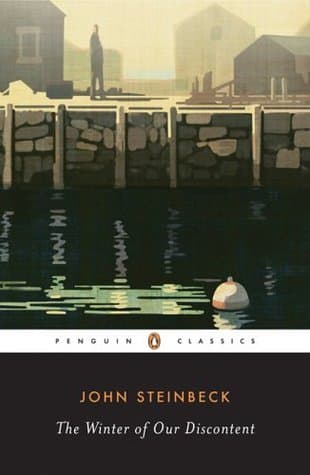
John Steinbeck (1961)
Genre
Literary Fiction
Reading Time
7-8 hours
Key Themes
See below
Sign in to track this book
In 1960s Long Island, a fallen aristocrat trapped in a grocery clerk's life grapples with the corrosive allure of ambition and the slippery slope of moral compromise, desperate to reclaim his family's lost prestige.
Ethan Allen Hawley, a descendant of revered New England whaling captains and heroes, now works as a grocery clerk in New Baytown, Long Island. The store, once the main business of his family's vast holdings, is now owned by an Italian immigrant, Alfio Marullo. Ethan, despite his reduced circumstances, maintains an old-fashioned dignity and a strong moral compass. He is well-liked in town for his honesty and pleasant demeanor, though some find his traditional ways odd. His wife, Mary, and his two teenage children, Allen and Ellen, are increasingly unhappy with their financial struggles and want the material comforts they once had. This opening establishes Ethan's internal conflict between his inherited integrity and the pressures of modern American consumerism.
Various characters begin to subtly pressure Ethan or present him with opportunities that test his integrity. His friend and bank teller, Joey Morphy, alludes to insider trading and easy money through manipulating stock prices, hinting at a world of financial opportunism. Margie Young-Hunt, an alluring and unhappily married woman, makes advances towards Ethan, suggesting infidelity and moral compromise. Even Mr. Baker, a respected lawyer, accidentally plants ideas about acquiring land. These interactions, along with his family's growing dissatisfaction, begin to chip away at Ethan's moral resolve, making him question the value of his honesty in a world that seems to reward ruthlessness.
Ethan helps Alfio Marullo, his boss, with the complex process of becoming an American citizen. During one of their meetings, Marullo, frustrated with bureaucratic delays, casually mentions that he does not legally own the grocery store building, only the business within it; the title is still technically held by the Hawley family, though everyone assumes it's Marullo's. This seemingly innocent detail stays in Ethan's mind. He begins to form a plan, a morally questionable scheme, to reclaim the store property. This marks a turning point, as Ethan actively begins to consider abandoning his honest standards for personal gain.
Joey Morphy, the bank teller, approaches Ethan with a 'sure thing' stock tip. Morphy, who has a reputation for being involved in shady dealings, hints at using inside information to make a quick fortune. Ethan, initially hesitant, is swayed by the promise of easy money and the increasing pressure from his family's financial problems. He takes Morphy's advice, investing a small sum, and watches it grow. This success, though illicit, further encourages Ethan's shift away from his traditional moral code, showing him that dishonesty can, indeed, yield tangible rewards, at least in the short term. He begins to justify his actions, convincing himself that a small transgression is acceptable for the greater good of his family.
Ethan confronts his childhood friend, Danny Taylor, a once-promising intellectual now an alcoholic. Danny owns a valuable piece of land that Ethan wants, not just for its monetary value but also for its symbolic connection to their shared past. Ethan, pretending to help Danny, offers him money to get sober, knowing Danny will likely spend it on alcohol. He plans to then offer Danny a larger sum for his land, effectively exploiting Danny's weakness. This interaction is particularly painful for Ethan, as it forces him to directly manipulate a friend, showing the increasing depths of his moral compromise.
As Ethan predicted, Danny Taylor dies from his alcoholism. To Ethan's shock and dismay, Danny, in his will, leaves his valuable piece of land to Ethan. This unexpected inheritance, though fulfilling Ethan's material desires, is a heavy burden. Ethan feels immense guilt, feeling directly responsible for Danny's death, as his scheme to acquire the land had, in a way, hastened Danny's decline. This event reminds him of the devastating consequences of his moral compromises, even when the outcomes are not precisely what he intended. The land, once a symbol of opportunity, now becomes a monument to his betrayal.
A local bank is robbed, and Joey Morphy, the bank teller who gave Ethan the stock tip, is implicated. This event further exposes the corrupt side of New Baytown. Seizing the moment amidst the town's distraction, Ethan sets his plan in motion to reclaim his family's store. He reveals to Marullo that the deed to the property is still in the Hawley name, a fact Marullo was unaware of due to his trust in the previous owner. Ethan, using legal loopholes and Marullo's lack of understanding, effectively repossesses the store. Marullo is devastated, feeling betrayed by the man he considered a friend and trusted employee.
Despite Ethan's newfound financial success, his family's moral compass seems equally adrift. His son, Allen, wins an essay contest with a plagiarized speech, revealing a similar willingness to compromise integrity for gain. His daughter, Ellen, also shows a preoccupation with superficiality. Ethan, now a man of means, finds himself under increasing public scrutiny. The town, having seen his sudden rise, begins to whisper about his methods. He is no longer seen as the honest, if struggling, clerk, but as a shrewd, perhaps ruthless, businessman. His internal conflict intensifies as he sees his own moral decay reflected in his children and the changing perception of himself within the community.
Ethan's antique pocket watch, a cherished family heirloom and a symbol of his connection to his honorable past and his personal integrity, breaks. This event acts as a powerful metaphor for his shattered moral code. He has achieved material success, but at the cost of his soul. The watch's silence reflects the silence of his conscience, or perhaps the overwhelming sound of his guilt. He has become the type of man he once disliked, driven by greed and a willingness to exploit others. This moment brings him to a profound realization of the depth of his moral compromise and the irreversible changes within him.
Overwhelmed by guilt, self-loathing, and the realization of his moral corruption, Ethan prepares to commit suicide. He finds a razor blade and retreats to a secluded spot. However, as he is about to act, he discovers a small, smooth, polished stone in his pocket, a talisman his daughter, Ellen, had given him earlier, believing it brought good luck. This simple, innocent gesture from his child pulls him back from the brink. The stone represents a glimmer of hope, a connection to purity, and a reason to reconsider his drastic action. It suggests that perhaps not all is lost, and there might still be a path to redemption, or at least a reason to continue living.
Ethan, clutching the small stone, decides against suicide. He realizes that despite his profound moral failings, there is still a part of him that wants goodness, represented by his daughter's innocent gift. The novel ends with Ethan choosing to live, though his future remains uncertain. He has not magically redeemed himself, nor has he undone the damage he has caused. The ending is ambiguous, suggesting that his discontent may linger, but the small stone offers a fragile hope that he might yet find a way to reconcile with his conscience and perhaps rebuild a life based on genuine integrity, even in a world that seems to devalue it.
The Protagonist
Ethan transforms from a man of unwavering integrity into one who actively engages in morally dubious acts, only to be overwhelmed by guilt and ultimately choose life, albeit with a shattered sense of self.
The Supporting
Mary remains largely static, consistently desiring wealth and status, inadvertently pushing Ethan towards his moral decline.
The Supporting
Allen's arc highlights the generational transmission of moral ambiguity, as he embraces a pragmatic approach to success.
The Supporting
Ellen remains largely innocent, serving as a beacon of hope and an emotional anchor for Ethan.
The Supporting
Marullo is initially a successful, trusting businessman who becomes a victim of betrayal, losing his livelihood.
The Supporting
Danny's arc is tragic, as he falls further into alcoholism and dies, becoming a casualty of Ethan's ambition.
The Supporting
Morphy remains consistently amoral, serving as a catalyst for Ethan's financial corruption and eventually facing consequences for his actions.
The Supporting
Margie consistently offers Ethan an escape through infidelity, remaining a static temptation figure.
Steinbeck critiques the post-war American Dream, showing how the pursuit of material wealth can corrupt traditional values and integrity. Ethan Hawley, initially an honorable man, succumbs to the pressure to provide for his family and regain social standing, leading him to engage in unethical and ultimately destructive acts. The novel suggests that the emphasis on consumerism and financial success has eroded society's moral fabric, turning even good men into opportunists. This is evident in Ethan's schemes to acquire the store and Danny's land, and in Allen's plagiarism, all driven by a desire for easy success.
“What does it profit a man if he gain the whole world and lose his own soul?”
The novel deeply explores the psychological cost of moral compromise. Ethan's journey is a descent into guilt as he justifies increasingly unethical actions. His initial rationalizations give way to profound self-loathing and despair, culminating in a suicide attempt. The death of Danny Taylor, in particular, weighs heavily on Ethan, illustrating the devastating consequences of his manipulative actions. Steinbeck details Ethan's internal struggle, showing how even small transgressions can lead to a complete erosion of conscience and a profound sense of personal failure.
“A man is a man, and he must stand up. But what if he stands up with his feet in the mud?”
The novel contrasts the traditional values of honesty, integrity, and community, represented by Ethan's ancestral past and initial character, with the emerging values of materialism, expediency, and self-interest in 1960s America. Ethan's struggle shows a broader societal shift where honor is seen as quaint and financial success paramount. The town of New Baytown itself reflects this change, with new money and cynical pragmatism replacing old-world charm. The breaking of Ethan's antique watch symbolizes the shattering of these old values and the difficulty of maintaining them in a rapidly changing world.
“Honor is a luxury for the rich, and a burden for the poor.”
Ethan's moral decline is largely fueled by the unspoken (and sometimes spoken) pressures from his family to improve their financial standing. His wife, Mary, and children, Allen and Ellen, want material comforts and social status that Ethan, as a grocery clerk, cannot provide. This familial desire for upward mobility pushes Ethan to abandon his principles. The novel highlights how love and loyalty can paradoxically lead to moral compromise when coupled with societal expectations of success, showing the complex and often destructive dynamics within the family unit.
“A man's family is his life, and his shame.”
Despite the pervasive sense of despair and moral decay, the novel offers a fragile glimmer of hope at its conclusion. Ethan's decision not to commit suicide, prompted by his daughter's talisman, suggests the enduring power of innocence, love, and the possibility of redemption. This theme implies that even after profound moral failings, there can be a path back from the brink, a chance to acknowledge one's mistakes and choose a more ethical future, however difficult. The ending is not one of easy absolution but of the potential for a renewed struggle for integrity.
“A man must choose, and choosing, he must live.”
A small, polished stone given by Ellen to Ethan, symbolizing innocence and hope.
The talisman is a small, smooth, polished stone that Ethan's daughter, Ellen, gives him, believing it brings good luck. It appears at the novel's climax, when Ethan is on the verge of suicide. Its discovery in his pocket pulls him back from the brink, symbolizing the enduring power of innocence, love, and the possibility of redemption. It serves as a physical representation of the pure, untainted aspects of his life that he has almost forgotten, acting as a lifeline and a reason to choose life over despair, offering a fragile hope for his future.
A family heirloom representing Ethan's connection to his honorable past and integrity.
Ethan's antique pocket watch is a cherished family heirloom, passed down through generations. It symbolizes his connection to his distinguished ancestors, the traditional values of honor, and his personal integrity. When the watch breaks, it serves as a powerful metaphor for the shattering of Ethan's moral code and his complete descent into compromise. Its silence reflects the silence of his conscience, or perhaps the overwhelming noise of his guilt, marking a point of no return in his moral journey and highlighting the irreversible damage to his sense of self.
Ethan's extensive self-reflection and philosophical musings, revealing his inner turmoil.
The novel heavily relies on Ethan Allen Hawley's extensive internal monologues and philosophical ruminations. This device allows Steinbeck to delve deeply into Ethan's psychological state, revealing his justifications, guilt, and moral struggles. It provides direct access to his thoughts, contrasting his outward demeanor with his inner turmoil. The internal monologue is crucial for understanding Ethan's complex character development, his intellectual capacity, and the profound conflict between his inherited values and the temptations of modern society, making his moral compromises all the more poignant.
The contrast between Ethan's outward appearance/reputation and his inner moral decay.
Dramatic irony is prevalent throughout the novel, particularly in the contrast between Ethan's public reputation as an honest, slightly old-fashioned man and his increasingly corrupt internal world and actions. The townspeople continue to perceive him as 'good old Ethan,' even as he orchestrates schemes to acquire wealth. This irony heightens the tragedy of his moral fall, as the reader is privy to his inner struggles and betrayals while others remain unaware. It underscores the theme of the deceptive nature of appearances and the hidden costs of ambition.
“This is the way the world ends, not with a bang but a whimper.”
— Ethan Hawley's internal reflection on the decline of his family's fortunes and the moral decay around him.
“A man in the house is worth two in the street.”
— Mary Hawley's pragmatic view on the importance of her husband's presence and stability, even as he struggles.
“How many kinds of love are there? Love for a woman, love for a child, love for a country, love for money, love for power, love for a thing, love for a quality.”
— Ethan ponders the various forms of love and desire that motivate human actions, including his own.
“When a man has money, he thinks of things he wants. When he has no money, he thinks of things he needs.”
— Ethan's observation on the shift in priorities that accompanies financial hardship.
“The great thing is not to be afraid of the dark, but to be afraid of the light. For the light shows you what you are.”
— Ethan's internal struggle with self-knowledge and the uncomfortable truths revealed by his actions.
“It is a strange thing to be an honest man in a world that doesn't care for honesty.”
— Ethan reflects on the challenges and futility of maintaining integrity in a corrupt society.
“Maybe the greatest wisdom is to know that you don't know.”
— Ethan's contemplation on the limits of human understanding and the irony of knowledge.
“Everyone wants to be good, but not everyone wants to be good for something.”
— Ethan's cynical view on superficial goodness versus meaningful, impactful actions.
“There are some things you can't get back, no matter how much you want them.”
— Ethan's realization about lost innocence and irreversible choices, particularly in relation to his children.
“Money is not everything, but it is a good deal of what everything is.”
— Ethan's pragmatic assessment of the pervasive influence of money in modern society.
“A man can get used to anything if he has to.”
— Ethan's grim acceptance of his changing circumstances and the human capacity for adaptation, even to hardship.
“The world is full of people who are trying to get something for nothing.”
— Ethan's observation on the prevalence of greed and opportunism around him.
“It takes courage to be a fool.”
— Ethan reflects on the bold, sometimes reckless, decisions people make, whether out of desperation or ambition.
“The past is never dead. It's not even past.”
— Ethan's recurring thought on how historical events and personal memories continue to influence the present.
Ready to see how well you understood this book? Take our interactive quiz with 10 questions.
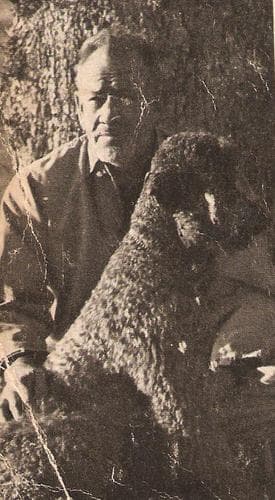
John Ernst Steinbeck was an American writer. He won the 1962 Nobel Prize in Literature "for his realistic and imaginative writings, combining as they do sympathetic humor and keen social perception". He has been called "a giant of American letters."







