“The gods made me a king, but I made myself a legend.”
— Arthur's reflection on his destiny and achievements.

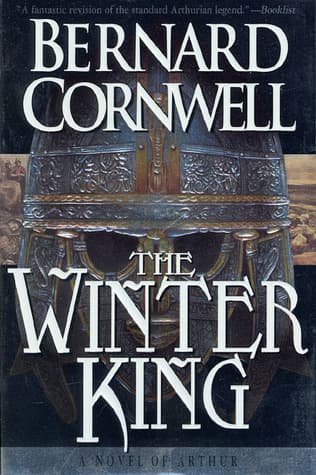
Bernard Cornwell (1995)
Genre
Fantasy / Historical Fiction
Reading Time
10-12 hours
Key Themes
See below
Sign in to track this book
In Dark Ages Britain, the warlord Arthur, burdened by a doomed love and a broken kingdom, fights Saxons and internal treachery, all while dealing with Merlin's magic.
The story is told by Derfel Cadarn, an old monk, who remembers his youth serving Arthur. He starts by recalling Uther Pendragon, High King of Britain, dying, and the subsequent birth of his heir, Mordred, a sickly, illegitimate child. Before his death, Uther forces his son, Arthur, to swear an oath to be Mordred's guardian until he comes of age, despite Arthur wanting to give up his claim to the throne and live as a warrior. Arthur, exiled to Armorica by Uther years earlier for perceived disloyalty and his love for Guinevere, is called back to Britain by Merlin and the druids to fulfill his oath and stop the kingdom from fracturing further among rival British kings and Saxon invaders. His return is met with both hope and resentment.
Arthur returns to a Britain full of petty kings and constant war. He sets up his base in Dumnonia, the kingdom of his half-sister Morgan and the druid Merlin. King Geraint of Dumnonia, Mordred's maternal grandfather, is a weak ruler. Arthur, acting as Mordred's guardian, must form alliances to protect Dumnonia and the infant king. This involves negotiations and confrontations with other British rulers, especially Cuneglas of Powys and Gorfyddyd of Siluria, who want Dumnonia's lands. Arthur's strategic skill and fighting ability are clear as he begins to bring order and defense against the increasing Saxon attacks, despite constant political backstabbing.
Gorfyddyd of Siluria, a powerful king, first aligns with Arthur but secretly plots against him, seeking to weaken Dumnonia's influence and gain more power. Gorfyddyd's treachery leads to open conflict, forcing Arthur to show his military might. Derfel, a young warrior under Arthur, fights in these early battles, seeing Arthur's tactical genius. Arthur decisively defeats Gorfyddyd's forces, cementing his reputation as a warlord and forcing submission from other British kings who had considered similar betrayals. This victory, though costly, temporarily unites much of southern Britain under Arthur's leadership, at least in their shared fear of his power.
After his military successes, Arthur arranges a marriage alliance to strengthen Dumnonia. He is betrothed to Ceinwyn, King Cuneglas of Powys's daughter. However, Guinevere, a beautiful princess from Henis Wyren whom Arthur had loved during his exile, arrives and complicates matters. Their mutual attraction immediately rekindles their passionate affair, despite Arthur's upcoming marriage. Guinevere is sharp, ambitious, and manipulative, quickly gaining influence in Arthur's circle. Her presence creates tension and jealousy, especially with Ceinwyn and Morgan, who see her as a threat to Arthur's stability and Dumnonia's future. Derfel observes the powerful, yet destructive, pull between Arthur and Guinevere.
Despite the political advantages of marrying Ceinwyn, Arthur ultimately gives in to his love for Guinevere and breaks his betrothal to Ceinwyn. This decision causes outrage and significantly damages his relationship with Cuneglas, a crucial ally. The betrayal isolates Arthur politically, as other kings see his actions as dishonorable. Merlin and Morgan are furious, recognizing Guinevere's destabilizing influence and Arthur's impulsiveness. Derfel sees the personal cost of Arthur's choice, as Ceinwyn is left humiliated. The broken alliance weakens Britain's fragile unity and gives internal enemies and external threats, especially the Saxons, a chance to exploit the division.
With internal divisions festering, Saxon pressure on Britain's eastern and southern borders grows. Arthur, despite the political fallout from his marriage, remains the main defender against these invaders. He leads his warriors, including Derfel, in numerous skirmishes and battles, showing his military leadership. These engagements are brutal and costly, highlighting the constant threat the Saxons pose to British lands and culture. Arthur's campaigns are often desperate holding actions, preventing conquest but unable to completely remove the threat. His focus is split between defending the borders and managing the politics of the British kingdoms, a constant drain on his resources.
As Mordred grows from infant to young boy, the regency council appointed to govern Dumnonia in his name begins to assert its power. Bishop Sansum, a devout Christian, and King Gorfyddyd, despite his earlier defeat, are prominent figures on this council, and both resent Arthur. They see Arthur's power as a threat to Mordred's claim and their own influence. Guinevere, sensing an opportunity, often worsens these tensions, subtly manipulating situations to enhance her own standing and Arthur's. The council often undermines Arthur's authority, hindering his efforts to unite Britain and defend against the Saxons, creating constant internal conflict for Arthur to manage alongside external threats.
Merlin, the powerful druid, believes that Britain's salvation lies not just in Arthur's sword, but in restoring the old gods and ancient magic. He embarks on a quest to retrieve the thirteen Treasures of Britain, particularly the Cauldron of Clyddno Eiddyn, a mythical artifact. He is often accompanied by Nimue, a mysterious priestess, who acts as his apprentice and sometimes his adversary. Merlin's quest takes him to forgotten places and involves confronting human and supernatural dangers. His belief is that only by harnessing this ancient power can Britain truly withstand the Saxons and the rising tide of Christianity, which he views as a threat to the old ways.
The Saxons, led by their warlords, launch a major offensive, besieging the fortress of Lindinis. Arthur, short on resources and facing wavering loyalty from some British allies, leads the defense with his courage and tactical brilliance. Derfel, now a seasoned warrior, fights alongside Arthur, witnessing the horrors of prolonged siege warfare. The siege tests Arthur's forces' endurance. Arthur's ability to inspire his men and make difficult decisions under pressure is crucial in holding back the Saxon tide, even if only temporarily. The defense of Lindinis becomes a symbol of Arthur's commitment to protecting Britain.
Guinevere, increasingly ambitious, continues to influence Arthur, often to the detriment of his political standing. She secretly encourages division among the British kings and within Arthur's own court, believing that a weakened Britain would make Arthur more reliant on her and elevate her own status. Her actions cause deep rifts, particularly with Morgan, who sees through Guinevere's machinations and warns Arthur, often without success. Guinevere's manipulations contribute to Dumnonia's instability, diverting Arthur's attention from more pressing external threats. Derfel, loyal to Arthur, observes Guinevere's destructive impact with unease.
In a surprising turn, Mordred, still a child, fathers a son with Ceinwyn, the woman Arthur had jilted. This unexpected birth adds complexity to the succession crisis. The child, Meurig, is seen by some as a more legitimate heir than Mordred, given Mordred's sickly nature. This event further entrenches the animosity between Arthur and Cuneglas, who now has a direct familial claim to Dumnonia's future. It also provides a new focus for factions vying for power, further destabilizing the kingdom and weakening Arthur's authority as Mordred's guardian, as the regency council now has another pawn to manipulate.
Lancelot, a charismatic and seemingly loyal warrior, is one of Arthur's trusted commanders. However, his ambition and self-interest lead to his betrayal. He conspires with Bishop Sansum and other disaffected nobles, aiming to undermine Arthur's authority and seize power. Lancelot's betrayal is a crushing blow to Arthur, personally and militarily. His actions lead to significant losses for Arthur's forces and further fragment the fragile unity Arthur has tried to forge among the British kingdoms. This betrayal highlights the constant internal threats Arthur faces, even from those he considers friends, and underscores the pervasive treachery within the British court.
Arthur leads his forces in the Battle of Lugg Vale against a combined force of Saxons and treacherous British lords, including Lancelot. It is a brutal engagement, where Arthur's strategic genius and personal bravery are on full display. Derfel fights alongside Arthur, witnessing the horrors and triumphs of the battle. Arthur secures a decisive victory, temporarily pushing back the Saxon threat and reasserting his dominance over the rebellious British factions. However, the victory comes at a devastating personal cost, as many of Arthur's loyal warriors are lost. The battle, while a military success, leaves Arthur emotionally scarred and highlights the endless cycle of warfare and loss.
Despite the victory at Lugg Vale, internal struggles and betrayals continue. Mordred, now older, begins to show signs of cruelty and weakness. Bishop Sansum and Guinevere continue their manipulative games, seeking to control the young king and undermine Arthur. Arthur finds himself increasingly isolated, his efforts to unite Britain constantly thwarted by the ambition of those around him. The book ends with Arthur still fighting, but with a growing weariness and the realization that the peace he wants is an elusive dream. The narrative suggests that future conflict is likely, even with the Saxon threat temporarily contained.
The Narrator/Supporting
Derfel transforms from a pagan warrior seeking glory to a Christian monk reflecting on the meaning of his life and the legacy of Arthur.
The Protagonist
Arthur struggles to unite a fractured Britain, battling external enemies and internal betrayals, ultimately becoming a weary but resolute leader.
The Antagonist/Supporting
Guinevere consistently uses her beauty and intellect to gain power and influence, often at the expense of Arthur's political stability.
The Supporting
Merlin remains steadfast in his devotion to the old gods and his quest to restore their power in Britain, despite the changing times.
The Supporting
Morgan consistently works to protect the interests of Dumnonia and the old gods, often acting as a voice of reason and caution for Arthur.
The Supporting
Mordred remains a vulnerable pawn, his sickly nature and legitimacy constantly debated, shaping his early life as a figurehead.
The Supporting
Nimue remains driven by her past trauma and her dedication to the old gods, often pursuing vengeance and ancient power.
The Supporting/Antagonist
Lancelot's ambition and treachery lead him to betray Arthur, becoming a significant antagonist.
The Supporting
Ceinwyn transforms from a jilted bride into a figure whose child significantly impacts the Dumnonian succession.
The Antagonist
Bishop Sansum consistently works to increase Christian influence and his own power, often at Arthur's expense.
The novel is set during a time in British history when Christianity is growing, but old pagan gods and traditions still hold power. Merlin and Morgan represent the old ways, trying to preserve ancient magic and beliefs, while figures like Bishop Sansum champion the new Christian faith. Arthur, while Christian, often respects pagan customs, creating tension between the two belief systems. This conflict appears in political power struggles and ideological clashes. Merlin's quest for the Thirteen Treasures is a direct effort to restore pagan power against Christian growth.
“''The gods are dying, Derfel, but their power lingers. It will be a long, slow death.''”
Arthur is burdened by his oath to Uther to protect Mordred, a duty he often resents but never avoids. His leadership is defined by his military skill, honor, and relentless pursuit of a unified Britain. However, the treachery and self-interest of other British kings and even those in his own court constantly undermine him. The theme explores the personal cost of leadership, the sacrifices required, and the often-thankless task of bringing order to chaos. Arthur's struggles show that true leadership needs not just strength, but also integrity and the ability to inspire loyalty, even in the face of constant betrayal.
“''I am a warlord, Derfel, not a king. I fight for Britain, not for a crown.''”
Arthur's passionate love for Guinevere is a central force, yet it also proves to be his greatest weakness. His decision to break his betrothal to Ceinwyn for Guinevere has severe political repercussions, alienating allies and causing discord. The novel is full of betrayals, from Lancelot's ambition to Gorfyddyd's treachery, showing how fragile alliances are. Characters constantly make personal sacrifices, both for love and for duty, often with tragic results. Derfel's unwavering loyalty to Arthur, despite hardship, contrasts sharply with the widespread deceit, highlighting the enduring power of true devotion amid betrayal.
“''Love is a wound, Derfel, and it festers.''”
Britain in The Winter King is a land near collapse, constantly threatened by internal strife and outside invasion. Arthur's main goal is to unite the British kingdoms against the Saxons, but this unity is always fragile. Petty jealousies, power struggles, and ancient feuds constantly undermine his efforts. The regency council for Mordred is a hotbed of intrigue, and even Arthur's closest allies can be treacherous. This theme emphasizes the difficulty of forming a unified nation from fractured loyalties and the constant struggle to maintain order in a chaotic world, suggesting that true peace is an elusive ideal.
“''Britain is a serpent's nest, Derfel. Each one devours the other.''”
The story is told by an older Derfel, looking back on his youth.
The entire narrative is framed as the memoirs of Derfel Cadarn, an aged monk, written many years after the events described. This allows for a reflective, often melancholic tone, and provides the narrator with a broader understanding of the consequences of actions that he witnessed as a young warrior. It also introduces an element of subjective interpretation and potential bias, as Derfel's memories are filtered through his present-day beliefs and experiences. This device creates dramatic irony, as the reader (and Derfel) knows the ultimate fate of characters and events, adding a layer of tragedy to the unfolding story.
Arthur's binding promise to protect Mordred.
Uther's dying demand that Arthur swear an oath to be Mordred's guardian is the central catalyst for Arthur's return to Britain and his subsequent actions. This oath binds Arthur to a duty he initially resents, forcing him into the political and military maelstrom of Britain. It is a powerful plot device that drives Arthur's motivation and creates constant conflict, as he must uphold his promise even when Mordred's regency council and later Mordred himself act against his interests. The oath represents the weight of duty and destiny, shaping Arthur's entire narrative arc.
Ancient magical artifacts sought by Merlin.
Merlin's quest for the Thirteen Treasures, particularly the Cauldron of Clyddno Eiddyn, serves as a parallel storyline to Arthur's military and political struggles. These mythical artifacts represent the ancient magic and pagan power that Merlin believes are essential for Britain's survival against the Saxons and the encroaching Christianity. The quest introduces elements of fantasy and mystery, highlighting the magical undercurrents of the world. It provides Merlin with a clear objective and allows for the exploration of the spiritual and mystical dimensions of the conflict, often intersecting with Arthur's more pragmatic concerns.
Constant betrayals and alliances among British kings.
The political landscape of Britain is a complex web of shifting alliances, betrayals, and power struggles among the various British kings. This device creates constant tension and obstacles for Arthur, who must navigate these treacherous waters while also fighting the Saxons. The constant backstabbing, exemplified by figures like Gorfyddyd and Lancelot, ensures that Arthur's efforts to unite Britain are perpetually undermined. It highlights the internal divisions that are as dangerous, if not more so, than the external threats, making Arthur's task seem almost insurmountable and adding a layer of historical realism to the fantasy elements.
“The gods made me a king, but I made myself a legend.”
— Arthur's reflection on his destiny and achievements.
“Love is a dangerous thing, Merlin. It makes men weak, and women foolish.”
— Merlin's cynical view on love, often expressed to Arthur.
“A man's word is his bond, and a king's word is the law.”
— Arthur emphasizing the importance of promises and integrity.
“There are no easy choices, only harder ones.”
— Merlin discussing the difficult decisions that come with power.
“War is a beast, and it devours all that is good.”
— Derfel's observation on the destructive nature of conflict.
“Fear is a powerful weapon, if you know how to wield it.”
— Merlin advising Arthur on psychological warfare.
“The past is a stubborn ghost, and it haunts us all.”
— Derfel reflecting on the lingering effects of past events and choices.
“Loyalty is a fragile thing, easily broken by ambition.”
— Merlin warning Arthur about the fickle nature of alliances.
“A king must be a shepherd to his people, and a wolf to his enemies.”
— Arthur's philosophy on leadership, balancing protection and aggression.
“The gods do not care for our plans, only for our struggles.”
— Merlin's fatalistic view on divine intervention and human effort.
“Hope is a dangerous thing for a man who has nothing left to lose.”
— Derfel's internal thoughts on the deceptive nature of hope in dire situations.
“Power does not corrupt, it merely reveals what is already there.”
— Merlin's observation on the true nature of individuals when given authority.
“Every man has his breaking point, even the strongest of us.”
— Derfel's somber reflection on the limits of human endurance.
“The greatest battles are not fought with swords, but in the minds of men.”
— Merlin emphasizing the importance of strategy and psychological warfare.
“To be a king is to be alone.”
— Arthur's lament about the isolation that comes with leadership.
Ready to see how well you understood this book? Take our interactive quiz with 10 questions.
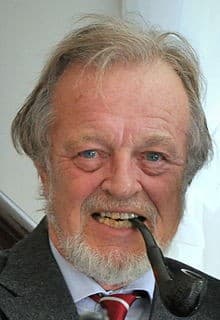
Bernard Cornwell is a prolific British author celebrated for his masterful historical fiction. He is best known for his Sharpe series, chronicling the Napoleonic Wars, and his Warlord Chronicles, which reimagines Arthurian legend. Cornwell's work is lauded for its meticulous research, gritty realism, and compelling narratives.







