“She had an income, but it was a small one, and she had an independence, but it was a lonely one.”
— Describing Milly Theale's initial situation in London.

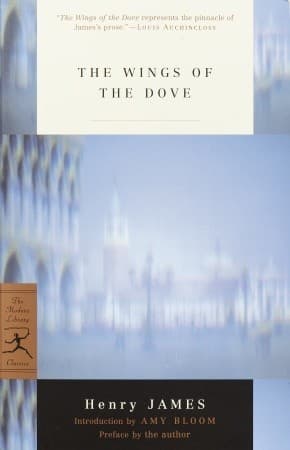
Henry James (2016)
Genre
Historical Fiction / Romance
Reading Time
15-20 hours (approx. 741 pages at 50 pages/hour)
Key Themes
See below
Sign in to track this book
A London couple schemes to inherit a dying American heiress's fortune, but their plan unravels when love and guilt complicate their treachery.
The novel begins with Kate Croy in her poor father's house, thinking about her future. She has turned down the wealthy Lord Mark, upsetting her family, because she secretly loves Merton Densher, a struggling journalist. Her Aunt Maud, a powerful and rich socialite, offers Kate a home and a chance to rise in society. But Kate understands she must marry someone wealthy. Kate feels torn. She wants money and social standing, but she does not want to give up Merton. She takes Aunt Maud's offer, hoping to find a way to get what she wants, even though she knows her aunt dislikes Merton.
Milly Theale, a beautiful and very rich young American heiress, arrives in London with her companion, Mrs. Stringham. Milly is an orphan and has a hidden illness. Aunt Maud, always planning social moves, immediately sees Milly's worth and potential. She takes Milly under her wing, introducing her to London society. Kate Croy is also drawn to Milly, sensing Milly's deep innocence and weakness. Milly, in turn, is charmed by Kate's sophistication and beauty. They start a friendship, though their social positions are very different.
Kate Croy and Merton Densher, deeply in love but short on money, see Milly Theale's wealth and fragile health as a possible answer to their problems. Kate, with cold practicality, suggests a plan: Merton should court Milly, win her affection, and marry her. When Milly inevitably dies from her illness, Merton would inherit her fortune. He would then share it with Kate, allowing them to finally marry and live comfortably. Merton is at first disgusted by the idea, finding it morally wrong. But his love for Kate and his desire to be with her eventually convince him to reluctantly agree to the plan, starting a dangerous path of deception.
The social group, including Milly Theale, Kate Croy, Merton Densher, and Mrs. Stringham, moves to Venice. The city makes the romantic and tragic mood stronger. Milly, growing weaker, finds comfort in Venice's beauty and develops a deep affection for Merton. Merton, despite his deceitful intentions, finds himself genuinely drawn to her goodness and vulnerability. Kate, pretending to be Milly's friend, subtly pushes Merton closer to the heiress. Lord Mark, who also pursues Milly, watches the unfolding drama with suspicion, sensing the hidden currents of deceit and manipulation among the group.
Milly Theale, alone and facing death, feels a deep connection with Merton Densher. She confides in him, seeking comfort and companionship. She believes Merton truly cares for her and starts to fall deeply in love with him, mistaking his planned attentions for real affection. Merton, increasingly troubled by his role in the deception, struggles with his conscience. He sees Milly's innocence and her great capacity for love, which makes his betrayal more painful. Despite his growing moral discomfort, he continues with the plan, bound by his promise to Kate and his own desires.
Lord Mark, watching Milly and Merton's growing relationship in Venice, becomes suspicious. He had a past romantic interest in Kate Croy and knows about her relationship with Merton. Driven by jealousy and a wish to protect Milly, Lord Mark confronts Milly. He tells her the truth about Kate and Merton's existing engagement and their past relationship. This news shatters Milly's trust and hope. It confirms her deepest fears about the insincerity of those around her. The news devastates her, making her physical and emotional health decline faster.
Milly Theale is devastated by Lord Mark's revelation. She withdraws, and her illness quickly worsens. The emotional blow hurts her more than her physical problems. Despite her deep pain, Milly's inherent goodness and generosity win out. Before she dies, she makes a will. She leaves a large part of her immense fortune to Merton Densher. She knows his financial struggles stop him from marrying Kate Croy. This act of deep, selfless love is Milly's final, moving gesture. It shows her pure heart even when betrayed, and it silently challenges Kate and Merton's consciences.
Milly Theale dies in Venice from her illness. Her death deeply affects everyone who knew her, especially Merton Densher and Kate Croy. Merton inherits a large part of Milly's fortune, as she intended. However, the money comes with a terrible moral weight. The success of their plan feels empty and stained by Milly's tragic sacrifice. The inheritance, meant to bring Kate and Merton together, instead creates a division between them. It forces them to face the real cost of their deception and the profound goodness they exploited.
After Milly's death, Merton Densher returns to London, burdened by the inheritance. He confronts Kate Croy, offering her the money. But he sets a clear, unspoken condition: they must marry without touching Milly's money. Merton understands that accepting the money as part of their marriage would mean fully approving their original, corrupt plan. It would also dishonor Milly's memory. He believes that only by rejecting the tainted fortune can they hope to save any integrity in their relationship. This proposal forces Kate to choose between the money she so badly wanted and the man she loves, who is now greatly changed by their shared experience.
Kate Croy cannot accept Merton's terms. She feels torn. She cannot fully give up the wealth Milly left, but she also cannot deny the moral weight Merton places on it. Their shared guilt and Milly's sacrifice create a barrier they cannot cross. Their love, once passionate and conspiratorial, is now overshadowed by their wrongdoing. The novel ends with Kate and Merton realizing their plan, meant to unite them, has instead driven a wedge between them. They are both isolated and haunted by Milly's innocent, forgiving spirit.
The Protagonist/Antagonist
Kate's arc sees her initial ambition and love lead to a morally compromising plan, ultimately resulting in the loss of both her desired wealth and her beloved Merton.
The Protagonist
Merton transforms from a morally conflicted co-conspirator to a man burdened by guilt and seeking moral redemption, ultimately rejecting the tainted fortune.
The Supporting/Central Figure
Milly's arc is one of tragic innocence, from hopeful vulnerability to devastating betrayal, culminating in a final act of selfless generosity before her death.
The Supporting
Aunt Maud's character remains largely static, serving as a catalyst for Kate's ambitions and a representation of societal pressures.
The Supporting
Lord Mark serves as a disruptive force, exposing the truth and accelerating Milly's decline, without undergoing significant personal change.
The Supporting
Mrs. Stringham remains a consistently loyal and concerned figure, witnessing the unfolding tragedy without significant personal transformation.
The Mentioned
Mr. Croy's role is primarily to establish Kate's background and motivations; he does not have a personal arc.
The Supporting
Mrs. Condrip's character remains largely static, serving as a foil to Kate's ambitions.
The novel shows how wanting wealth can corrupt people and relationships. Kate Croy's desire for money leads her to plan a morally wrong scheme against Milly Theale. Merton Densher, though hesitant, gives in to the appeal of money as a way to be with Kate. Milly's large fortune, instead of bringing her happiness, makes her a target. It ultimately contributes to her sad end. The inheritance, meant to bring Kate and Merton together, instead symbolizes their moral compromise and eventually separates them. This shows that tainted money can destroy what it was meant to secure.
“''We shall never be again as we were!''”
This theme is seen in Milly Theale, the innocent 'dove,' and the more worldly characters like Kate Croy and Merton Densher. Milly represents American innocence—trusting, generous, and unspoiled by European cynicism. Her purity makes her vulnerable to Kate and Merton's schemes. They represent the 'experience' of a more complex, often morally unclear world. Milly's innocence is sacrificed, but her spirit, the 'wings of the dove,' deeply affects Merton, leading him to a moral awakening. The novel suggests that while innocence can be used, it also has a power to redeem.
“''She was a dove, and they had eaten her up.''”
Love in the novel appears in different, often conflicting, forms. The strong love between Kate and Merton drives their plot, but this love is eventually poisoned by their betrayal of Milly. Milly's love for Merton is pure and selfless, even extending to a generous gift after she learns of his deception. The novel explores the terrible results when love is mixed with deceit and self-interest. Betraying Milly's trust not only destroys her but also permanently harms Kate and Merton's relationship. This shows that true love cannot grow on a foundation of lies.
“''We're beyond that, you and I, by a long way. We're together, and we're not together; we're good and we're bad; we're happy and we're miserable. We're all of it.''”
Sacrifice is a main theme, especially seen in Milly Theale. Milly's final act of leaving her fortune to Merton, even after finding out about his deceit, is a deep sacrifice of her own pain. It shows her lasting love and generosity. This act is meant to secure Kate and Merton's happiness, but it costs Milly her life and emotional well-being. The novel questions the value and effect of such a sacrifice. It suggests that while it can redeem the giver, it can also create a heavy moral burden for those who receive it, leading to their own suffering.
“''She had taken it as it was, and it was hers. It was her life.''”
Henry James often wrote about the conflict between American and European cultures. *The Wings of the Dove* does this too. Milly Theale represents the American ideal—innocent, wealthy, and somewhat naive, with a pure morality. The European characters, especially Kate Croy and Aunt Maud, show a more complex, sophisticated, and often cynical way of thinking. They are driven by social rules, ambition, and a practical view of love and marriage. Milly's experience with European society leads to her downfall, showing how vulnerable American innocence is when it meets European experience and its social and moral complexities.
“''Her type was high, but her range was short.''”
Milly's purity and vulnerability drive the central conflict.
Milly Theale serves as the archetypal innocent victim, whose purity and fatal illness make her both a sympathetic character and a target for exploitation. Her immense wealth, combined with her fragile health and trusting nature, sets the stage for Kate and Merton's morally dubious plan. Milly's symbolic association with a 'dove' emphasizes her vulnerability and the tragedy of her demise. Her role is crucial in highlighting the moral corruption of the other characters and ultimately serving as a catalyst for Merton's moral awakening and the downfall of Kate and Merton's relationship.
Milly's mysterious, unnamed illness creates tension and foreshadows tragedy.
Milly Theale's illness is never explicitly named, lending it an air of mystery and symbolic weight. This ambiguity allows the illness to represent not just a physical ailment but also a metaphor for her intrinsic vulnerability and the fragility of life. It serves as a constant, looming threat that drives the urgency of Kate and Merton's plan and foreshadows Milly's inevitable death. The unspoken nature of the illness heightens the psychological tension and emphasizes the sense of a predetermined tragic fate for Milly, making her a more poignant figure.
The romantic and melancholic atmosphere of Venice amplifies the story's emotional intensity.
Venice is not merely a backdrop but an active plot device that intensifies the novel's themes. Its beauty, mystery, and melancholic atmosphere mirror Milly's own fragile state and impending doom. The city's labyrinthine quality reflects the moral complexities and deceptions unfolding among the characters. The romantic allure of Venice initially draws the characters together, but its isolation also amplifies the sense of entrapment and the tragic inevitability of the conspiracy. It becomes a place where beauty and sorrow, love and betrayal, are inextricably intertwined, culminating in Milly's death.
Milly's fortune becomes a test of character for Kate and Merton.
Milly's inheritance, intended by her as an act of generosity to unite Kate and Merton, ironically becomes the ultimate moral test for them. It is the prize they sought through deception, but its acquisition is tainted by Milly's death and their guilt. Merton's refusal to touch the money without specific conditions and Kate's inability to accept those terms demonstrate how the fortune transforms from a desired object into a symbol of their moral compromise. The inheritance ultimately acts as a wedge, destroying the very relationship it was meant to secure, proving too heavy a burden for their love to bear.
“She had an income, but it was a small one, and she had an independence, but it was a lonely one.”
— Describing Milly Theale's initial situation in London.
“She was a person to whom things had been done, and she was a person to whom things would be done.”
— A reflection on Milly Theale's passive role in her own fate.
“The great thing was to be right; the great thing was to be true.”
— Kate Croy's internal struggle with her deception.
“We shall never be again as we were!”
— Spoken by Merton Densher to Kate Croy after Milly's death.
“She was dead, and she was beautiful.”
— Merton Densher's reflection on Milly Theale after her passing.
“It was as if she had been too beautiful to live.”
— Another thought regarding Milly's premature death.
“He knew that he loved her, but he knew also that he was not in love with her.”
— Merton Densher's complex feelings for Milly Theale.
“I can take nothing from you. I can give you nothing.”
— Kate Croy's final words to Merton Densher, rejecting his proposal.
“She had money, and she had charm, and she had youth, and she had beauty, and she had health; and she had, above all, the sense of these things.”
— An early description of Milly Theale's apparent advantages.
“He had wanted to marry her, and he had not married her.”
— Merton Densher's internal monologue about his past with Kate Croy.
“The only way to be really rich was to have money and not to spend it.”
— Lord Mark's cynical view on wealth.
“The whole truth, for them, was what they would make of it.”
— Reflecting on Kate and Densher's manipulation of Milly's situation.
“Her value was that she was Milly, and that Milly was rich.”
— A blunt assessment of Milly's worth in the eyes of others.
“He looked at her, and he saw that she was magnificent, but that she was lost.”
— Merton Densher observing Milly in Venice.
“It was as if she had taken the great plunge, and felt the great chill, and then, with a strange smile, had simply floated away.”
— A metaphorical description of Milly's acceptance of her fate.
Ready to see how well you understood this book? Take our interactive quiz with 10 questions.
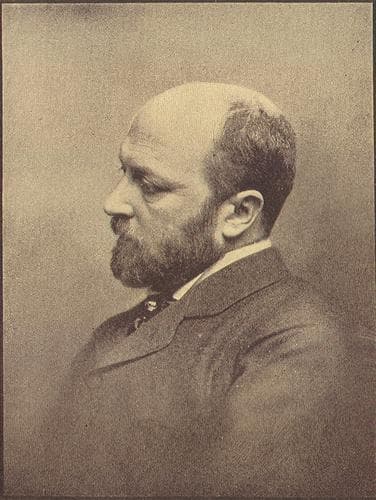
Henry James was an American-British author. He is regarded as a key transitional figure between literary realism and literary modernism, and is considered by many to be among the greatest novelists in the English language. He was the son of Henry James Sr. and the brother of philosopher and psychologist William James and diarist Alice James.







