“The beginning of the end of war lies in remembrance.”
— Narrator reflecting on the cyclical nature of conflict and history.

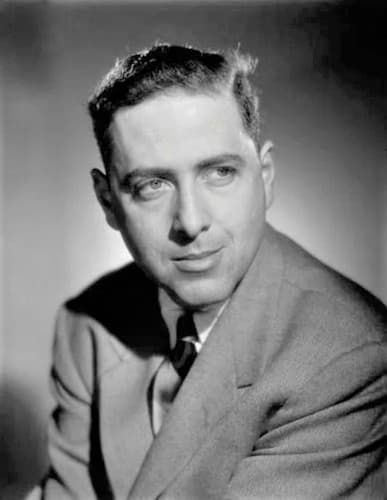
Herman Wouk (1971)
Genre
Historical Fiction
Reading Time
20-25 hours
Key Themes
See below
Sign in to track this book
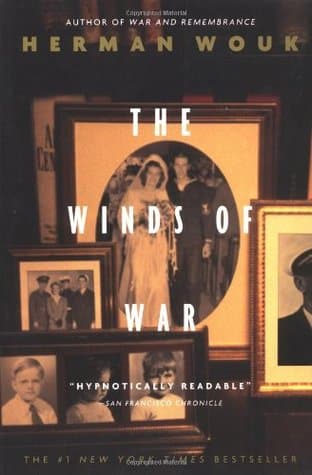
Herman Wouk's "The Winds of War" tells the story of World War II through the experiences of the Henry family, showing the war's drama, romance, and tragedy with historical detail.
In March 1939, Captain Victor 'Pug' Henry, a U.S. Navy officer, is reassigned from sea command to be a naval attaché in Berlin. President Roosevelt arranged this posting, putting Pug in a place to see Nazi Germany's aggressive actions. He travels through Europe, meeting political and military figures, including Hitler, and learns about the coming conflict. In Europe, Pug also meets Pamela Tudsbury, a British journalist, and they develop a relationship. His wife, Rhoda, stays in Washington D.C., and their marriage already shows stress. Pug's oldest son, Byron, an intellectual, moves to Italy to study. His younger son, Warren, pursues a naval aviation career.
Byron Henry, uninterested in American materialism, goes to Italy to study under Professor Aaron Jastrow, a Jewish-American historian. There, Byron meets and falls in love with Natalie Jastrow, Aaron's intelligent niece. Natalie, also Jewish, works as her uncle's assistant. Their romance grows in Italy, but their different personalities and Byron's impulsiveness cause early problems. Natalie is unsure at first because Byron lacks direction and because of the threat to Jews in Europe. Despite her doubts, they marry in Italy, which complicates their lives as the war gets closer and the danger to Jewish people grows across the continent.
Warren Henry, Pug's younger son, is a more traditional and ambitious young man. He follows his father into the U.S. Navy. He becomes a naval aviator, training and eventually serving with the Pacific Fleet. Warren's career advances, and he is dedicated to his service. He marries Janice Lacey, a kind woman. His assignments place him in the center of American defense against potential Japanese aggression. This shows the growing tensions in the Pacific. Warren's experiences contrast with Byron's European problems, showing the two fronts of the coming global conflict and the Henry family's involvement.
Pug Henry's diplomatic role takes him to European capitals like Moscow, London, and Rome. He sees the Nazi-Soviet Non-Aggression Pact, the invasion of Poland, and Britain and France's declarations of war. Pug's reports to President Roosevelt give important information about the German war machine and the changing political situation. He is present for events like the Battle of Britain. He gets a deep, if grim, understanding of the war's brutality and size. During these travels, his relationship with Pamela Tudsbury grows, adding a personal part to his observations. His marriage to Rhoda continues to get worse because of distance and his focus on global events.
As the war gets worse, Natalie and Aaron Jastrow, who are Jewish, are in a dangerous situation in Europe. They are in Italy at first, but as Mussolini joins Hitler, the situation for Jews becomes bad. They try to leave Europe, but paperwork and closing borders make escape hard. Byron, despite his recklessness, tries hard to get them passage out. Their situation shows the terrible realities faced by millions of Jews caught by the Nazis. It shows the personal cost of the war and the efficiency of the genocidal policies starting to happen across the continent. Their struggle is a central part of the story, representing the wider Jewish experience.
While Pug is busy abroad, his wife Rhoda, feeling ignored and alone, starts an affair with Palmer Kirby, an influential industrialist in Washington D.C. This shows the stress the war puts on families and the emotional distance that has grown between Pug and Rhoda. Their already fragile marriage nears a breaking point. The affair symbolizes the home front of the war, where personal lives are disrupted and traditional structures are challenged. Pug mostly does not know the full extent of the affair, though he feels the growing gap in their relationship. This adds to his personal burden during the global disaster.
The story leads to the attack on Pearl Harbor on December 7, 1941. Warren Henry, with the Pacific Fleet, sees the Japanese assault firsthand. He participates in the defense efforts. The attack is a brutal awakening for the United States, officially bringing the nation into World War II. Pug, who had been warning of the conflict, is reassigned to sea duty. He finally gets the command he wanted, but under the worst conditions. The attack changes the lives of all the Henry family members. It moves them from observers of the war to active participants, with immediate consequences for their futures.
After Pearl Harbor, Byron and Natalie, with Aaron Jastrow, are in Vichy France. They try to get passage to America. Their efforts are complicated by Natalie's pregnancy and the strict anti-Jewish laws put in place by the French government. Despite Byron's frantic attempts to arrange their escape, authorities catch them. Aaron Jastrow's fame offers some protection at first, but it is short-lived. They are interned in a camp. This shows the systematic persecution and the efficiency of the Nazi regime and its collaborators in gathering Jewish populations across Europe. Their imprisonment is a stark depiction of the Holocaust's reach.
Following Pearl Harbor, Captain Pug Henry commands the heavy cruiser USS Northampton. He participates in naval engagements in the Pacific, including the Battle of Midway, a turning point against Japan. Pug shows his leadership and strategic skill, navigating the dangers of naval warfare. His experiences at sea are hard and dangerous. These battles are depicted in detail, showing the technological advancements and human cost of modern warfare. Pug's command solidifies his reputation as a skilled naval officer, but the war takes a heavy toll on him.
As the war continues into 1942, the Henry family is spread out and facing big personal challenges. Pug is at sea in the Pacific; Warren is flying missions; Byron tries to free Natalie and Aaron from internment; and Rhoda continues her affair, thinking about divorce. Pamela Tudsbury is still important in Pug's life, offering companionship. The story emphasizes the uncertainty and fear in daily life for those in the war, both on the front lines and at home. The fate of Natalie and Aaron, trapped in Europe, remains a central concern, leaving the family, and the reader, wondering about their survival during the growing Holocaust.
The Protagonist
Pug transitions from a diplomatic observer to a respected combat commander, grappling with the personal sacrifices demanded by his unwavering commitment to duty.
The Supporting
Rhoda's character arc involves a descent into marital infidelity and a growing desire for personal happiness, leading her to contemplate divorce from Pug.
The Supporting
Byron matures from a directionless intellectual into a determined man, fiercely protective of his family, as he confronts the horrors of war and persecution.
The Supporting
Natalie's arc shows her transition from a cultured academic to a desperate survivor, facing the terrifying realities of the Holocaust while pregnant and trying to protect her uncle.
The Supporting
Aaron's arc depicts his gradual and terrifying realization of the systematic threat to Jews, as he transitions from a respected academic to a vulnerable internee.
The Supporting
Warren's arc is one of a dedicated military man, proving his courage and skill as a naval aviator in the Pacific theater, fully embracing his duty.
The Supporting
Pamela's arc sees her evolve from an independent journalist to a close confidante and potential romantic partner for Pug, navigating the emotional complexities of a wartime relationship.
The Supporting
Palmer's arc is relatively static, serving as a catalyst for Rhoda's personal decisions and highlighting the fracturing of traditional family structures during wartime.
The Mentioned
Roosevelt's character arc is not explicitly detailed but he is shown guiding the US through pre-war neutrality to its eventual entry into and leadership during World War II.
The Supporting
Janice's arc primarily involves her role as a supportive military wife, enduring the anxieties and separations of wartime.
The novel shows the slow, steady movement towards World War II. It highlights the war's inevitability despite diplomatic efforts. Pug Henry's early observations in Europe, his warnings to President Roosevelt, and Germany's actions all show the forces pushing the world to conflict. The destruction is seen in battles like Pearl Harbor and Midway, and in the personal suffering of characters like Natalie and Aaron Jastrow, who become victims of the Holocaust. This theme shows the human cost and the big societal changes global conflict brings.
“What had begun in 1914 as 'the war to end war' had ended by making the whole world a battlefield for the next one.”
This theme looks at the tension between a person's duty, especially military duty, and their desires for happiness, love, and family. Pug Henry shows this struggle, often putting his naval career and service to country before his failing marriage to Rhoda, which leads to his affair with Pamela. Byron's early aimlessness and later dedication to Natalie also show this. The war's demands force characters to make hard choices, sacrificing personal happiness for what they see as a greater good. Or, they pursue personal happiness despite societal expectations or wartime pressures, as with Rhoda's affair.
“A man's life was not his own, but his country's, especially in wartime.”
A central and terrible theme is the persecution and genocide of European Jews. Through Natalie and Aaron Jastrow, the novel shows the growing anti-Semitism, the closing borders, and the efficiency of the Nazi regime in gathering Jewish populations. Their attempts to escape, their internment in Vichy France, and their growing understanding of their fate give a personal and devastating picture of the Holocaust's reach. This theme reminds readers of the human cost of hatred and intolerance, making the war's moral stakes clear.
“This was the new world, where Jews were becoming a commodity, to be shipped and sorted and destroyed.”
The Henry family shows the war's impact on society. It shows how global events break and change personal relationships. Pug and Rhoda's marriage breaks down under distance and neglect, leading to infidelity. Their sons, Byron and Warren, take different paths, showing generational differences and varied responses to duty. The struggle to keep the family connected and safe, especially Byron's efforts to protect Natalie and Aaron, shows the pressure on family bonds during a time of global upheaval. The war makes each member face their own values and priorities.
“The war was tearing families apart, not just by distance, but by the very fabric of their lives.”
The novel explores leadership and power through historical figures like President Roosevelt, Hitler, and Churchill, and military leaders like Pug Henry. It looks at the decisions made by those in power, their foresight (or lack of it), and their big responsibility. Roosevelt's use of Pug as an observer, Hitler's ambition, and the tactical decisions in naval battles all show different parts of leadership. The theme also examines how power corrupts or empowers, and how individual leaders can shape the destiny of nations and millions of lives.
“The leader of a nation must be a prophet, a gambler, and a butcher, all in one.”
Provides a panoramic view of the war through various characters' experiences.
The novel employs an omniscient narrator who shifts perspectives among the main characters, primarily the Henry family, and occasionally historical figures. This allows for a comprehensive understanding of the war's global scope, from diplomatic maneuvering in Berlin to naval battles in the Pacific, and the personal struggles on the home front. By moving between Pug's strategic insights, Byron and Natalie's harrowing experiences in Europe, and Rhoda's domestic drama, the narrative achieves a panoramic yet intimate portrayal of World War II. This device highlights the interconnectedness of individual lives with grand historical events.
Integrates 'World Holocaust' by 'Herzog' to provide historical context and foreshadowing.
Wouk cleverly intersperses the main narrative with excerpts from a fictional book titled 'World Holocaust' by 'Victor Henry' (under the pseudonym 'Armin von Roon'). These 'historical documents' provide strategic and philosophical commentary on the war's events, often offering a meta-narrative perspective that foreshadows developments or explains their broader significance. This device allows Wouk to present his own historical analysis and insights without breaking the flow of the fictional plot, adding depth and a layer of scholarly authority to the narrative. It also subtly reinforces Pug's role as a keen observer and future historian.
Tracks distinct and geographically separate storylines of the Henry family members.
The novel utilizes parallel plotlines to follow the disparate experiences of the Henry family members across different theaters of war. Pug's diplomatic missions in Europe, Byron and Natalie's struggle for survival in Italy and France, and Warren's naval career in the Pacific unfold simultaneously. This device effectively demonstrates the global reach of World War II and how it impacted individuals in vastly different ways. The constant shifting between these storylines creates narrative tension and emphasizes the pervasive nature of the conflict, while eventually converging to show the family's shared fate.
Readers often know more about impending dangers than the characters.
Dramatic irony is frequently used, particularly concerning the fate of Natalie and Aaron Jastrow. The reader, possessing knowledge of the Holocaust's full extent, understands the true danger they face much earlier and more acutely than the characters themselves, who initially cling to hopes of escape or protection. This creates a profound sense of dread and suspense, amplifying the tragedy of their situation. Similarly, Pug's early warnings about the war, often dismissed by others, resonate with dramatic irony for readers who know the full historical outcome, highlighting the blindness of those in power.
Represents America's entry into the war and Pug's command.
The heavy cruiser USS Northampton, which Pug Henry eventually commands, serves as a powerful symbol. Initially, Pug yearns for a sea command, representing his desire for active participation in the defense of his country. When he finally gets the Northampton after Pearl Harbor, it symbolizes America's full entry into the war and Pug's transition from observer to direct combatant. The ship itself, a formidable instrument of war, embodies the technological might and destructive power of modern naval warfare. Its fate and the battles it engages in reflect the broader struggle and sacrifices of the U.S. Navy in the Pacific.
“The beginning of the end of war lies in remembrance.”
— Narrator reflecting on the cyclical nature of conflict and history.
“A man who has no imagination has no wings.”
— Pug Henry contemplating the importance of vision and creativity in leadership.
“The only thing new in the world is the history you don't know.”
— A character discussing the lessons of the past with Pug Henry.
“War is the unfolding of miscalculations.”
— Analysis of the events leading up to World War II.
“In war, truth is the first casualty.”
— Commentary on propaganda and misinformation during wartime.
“The sea does not forgive mistakes.”
— Pug Henry reflecting on naval command and the perils of the ocean.
“Love in wartime is a luxury and a necessity.”
— Exploring the relationships of characters like Natalie Jastrow and Byron Henry.
“History is a relentless master. It has no present, only the past rushing into the future.”
— Philosophical observation on the flow of time and events.
“To try to understand is to begin to forgive.”
— A character discussing empathy and the complexities of human actions.
“The wind of war blows where it will, and no man can set its course.”
— Metaphorical reflection on the uncontrollable nature of global conflict.
“Courage is not the absence of fear, but the judgment that something else is more important.”
— Pug Henry or another character defining bravery in the face of danger.
“In the end, we are all prisoners of our time.”
— Reflection on how historical context shapes individual lives and choices.
“The difference between a hero and a fool is often just luck.”
— Commentary on the thin line between success and failure in war.
“Peace is not the absence of war, but the presence of justice.”
— A philosophical discussion about the true meaning of peace.
Ready to see how well you understood this book? Take our interactive quiz with 10 questions.
Biography coming soon.







