“Monsters are real. Ghosts are real too. They live inside us, and sometimes, they win.”
— Tim's mother tells him this to explain the darkness in people.

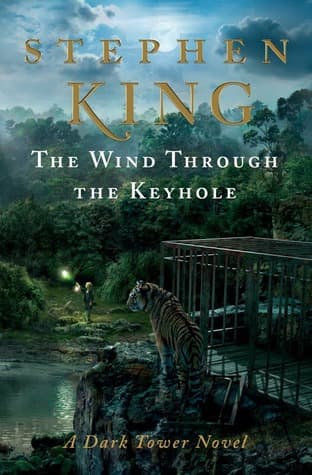
Stephen King (1925)
Genre
Fantasy / Science Fiction
Reading Time
6-8 hours
Key Themes
See below
Sign in to track this book
During a fierce storm in Mid-World, Roland Deschain, the last gunslinger, tells a story about his youth and a boy's encounter with a shape-shifting monster, connecting it to an old legend of bravery.
After crossing the River Whye, Roland Deschain and his ka-tet—Jake Chambers, Susannah Dean, Eddie Dean, and Oy—get caught in a 'starkblast,' a severe and sudden storm. They find shelter in an old, empty building. To pass the time and calm everyone, especially Jake, Roland decides to tell a story. He explains that his mother, Gabrielle Deschain, used to read 'Magic Tales of the Eld' to him. This setup lets Roland share memories from shortly after his mother's death. The storm outside reflects the group's emotional unease, making storytelling a comforting and unifying act.
Roland starts his first story, set a year after his mother's death, a time of deep sadness and guilt for him. His father, Steven Deschain, sends him to Debaria, a remote place, to look into reports of a 'skin-man'—a shapeshifter—who has been killing people there. Roland, still a teenager, is burdened by his recent trial of manhood and his mother's death. This mission tests his resolve and new gunslinger skills, making him face both an outside threat and his own inner struggles and past actions. His youth is clear, but his gunslinger training also shows through.
When he arrives in Debaria, Roland finds a terrible scene. The skin-man's latest victims are the Streeter family, with only one survivor: a young boy named Bill Streeter. Bill is in deep shock and fear, having seen his parents and sister murdered. Roland, despite his own youth and calm manner, recognizes the boy's trauma and feels responsible. He protects Bill, knowing the boy's story is key to finding the skin-man. Roland's care for Bill shows a softer, more understanding side of the young gunslinger, different from his usual tough exterior.
Roland investigates Debaria, a small, isolated village filled with fear. The villagers are wary of outsiders and suspect each other, fearing the skin-man could be anyone among them. Roland sees their desperate efforts to protect themselves, including makeshift defenses and general mistrust. He realizes solving the skin-man mystery will mean not only tracking the creature but also understanding the community's complex social dynamics and fears. The setting is bleak, showing the harshness of Mid-World's borderlands and its inhabitants' vulnerability.
As night falls, Bill Streeter is understandably scared and cannot sleep. To soothe and distract him, Roland starts telling him a story from the 'Magic Tales of the Eld,' the same stories his mother, Gabrielle, read to him. This story is 'The Wind Through the Keyhole,' about a brave boy named Tim Stoutheart. Roland's choice to share this story shows his humanity and his understanding of how stories can bring comfort and courage against fear. It also offers a look into Roland's childhood and the gentle relationship he once had with his mother.
The story of Tim Stoutheart begins. Tim lives in the village of Tree with his blind mother, his father, and his siblings. A monstrous Taxman, a dragon-like creature, demands a huge yearly tax of gold from the village. When the Taxman's Eye, a magic orb, appears, signaling overdue taxes, Tim's father is chosen to deliver the payment. However, Tim, though young, volunteers to go instead, driven by a strong sense of duty and love for his family. This brave act starts him on a dangerous journey, similar to Roland's own early courage and responsibility.
On his journey, Tim Stoutheart meets different magical beings and faces challenges. He first meets the Covenant Man, a mysterious old man who warns him of dangers and gives cryptic advice. Later, Tim meets the River-Woman, a strong nature spirit who helps him by giving him a magic key that can open any door. These meetings test Tim's resolve and wisdom, making him rely on his good nature and courage. The journey has both physical and moral obstacles, highlighting perseverance and the importance of kindness in a difficult world.
Tim finally reaches the Taxman's desolate, windy fortress. He uses the magic key from the River-Woman to enter the seemingly unbreachable fortress. Inside, he goes through a maze of twisting halls and locked doors, eventually facing the terrifying Taxman. The Taxman, a grotesque and ancient creature, tries to scare Tim. However, Tim's courage and the key help him uncover the truth about the Taxman's power and weakness. This confrontation is the peak of Tim's story, where his bravery and cleverness are tested against a seemingly unbeatable enemy.
Through his courage and the magic of the key, Tim learns that the Taxman is not an all-powerful, immortal monster, but an old, lonely, and ultimately weak being sustained by the villagers' fear and offerings. Tim uses his wits, not violence, to defeat the Taxman, breaking the cycle of fear that has plagued his village for generations. He returns to Tree as a hero, having not only collected the overdue taxes but also freed his community from the Taxman's rule. This outcome reinforces the idea that true strength is found in courage, intelligence, and compassion, not just physical might.
After Roland finishes Tim Stoutheart's story, Bill Streeter is calm enough to give key details that help Roland figure out the skin-man's identity. Roland deduces that the skin-man is an impostor posing as a seemingly harmless villager, the former Mayor, who was believed to be dead. This discovery is unsettling, showing how easily evil can hide in plain sight. Roland confronts the skin-man, leading to a tense and dangerous standoff. The skin-man's true form is revealed to be a grotesque, reptilian creature, confirming the supernatural nature of the threat. Roland prepares for a final fight, his gunslinger instincts fully engaged.
Roland fights the skin-man in a brutal and difficult battle. The creature is strong and clever, but Roland's training and quick thinking help him defeat the shapeshifter. He ultimately kills the skin-man, ending its terror in Debaria. The villagers, initially scared and mistrustful, are relieved and thankful. Roland makes sure the creature's body is properly removed to prevent any further threat. This victory, while important, carries the sadness of lost lives and trauma. Roland then arranges for Bill Streeter's future, ensuring the boy's safety.
With the skin-man defeated and Bill Streeter safe, Roland leaves Debaria, the experience having changed him. Back in the present, as the storm outside the shelter begins to lessen, Roland finishes his storytelling. His ka-tet—Jake, Susannah, Eddie, and Oy—have listened closely, gaining new understanding of their leader's complex past and what shaped him. Sharing these stories has not only entertained but also strengthened the bonds within the ka-tet, confirming how stories can connect, heal, and enlighten even in the darkest times. They get ready to continue their journey toward the Dark Tower.
The Protagonist
Roland's arc in this book reveals his softer, more human side through his storytelling and his youthful vulnerability, deepening the reader's understanding of the man he becomes.
The Supporting
Jake's arc is less about personal development in this book and more about deepening his bond with Roland and understanding his mentor's history.
The Supporting
Susannah's arc in this book involves her continued growth in understanding Roland's past and the nuances of Mid-World history.
The Supporting
Eddie's arc in this book reinforces his role as a loyal and integral member of the ka-tet, further solidifying his transformation.
The Supporting
Oy's arc in this book is consistent with his role as a steadfast and beloved companion, reinforcing his place in the ka-tet.
The Supporting
Bill's arc is one of trauma and recovery, guided by Roland's protection and the power of storytelling.
The Protagonist (within Roland's story)
Tim's arc is a classic hero's journey, transforming from a simple village boy into a savior through his courage and resourcefulness.
The Antagonist (within Roland's story)
The skin-man's arc is primarily that of a destructive force that is ultimately identified and vanquished by Roland.
The Antagonist (within Tim's story)
The Taxman's arc is one of being a perceived monster whose true, vulnerable nature is exposed and ultimately neutralized.
The novel is framed by Roland telling stories, highlighting how much narratives affect people and communities. Roland uses the 'Magic Tales of the Eld' to comfort a traumatized boy, Bill Streeter, and to strengthen the bonds within his own ka-tet during a storm. Stories offer comfort, teach wisdom, and help process trauma and understand the past. They connect generations and offer a kind of lasting presence, as seen in how Roland remembers his mother's tales and shares them. Sharing stories creates a feeling of shared humanity and strength against Mid-World's harsh realities.
““A person’s never too old for stories,” Roland says to Bill. “Man and boy, girl and woman, never too old. We live for them.””
Both Roland's early gunslinger mission and Tim Stoutheart's quest show the bravery of young heroes facing great odds. Young Roland, still mourning his mother, bravely confronts a shapeshifting murderer, showing his developing gunslinger skills and steady resolve. Tim Stoutheart, a boy, volunteers to face the terrifying Taxman to protect his family and village, relying on his cleverness and kindness. These stories show that bravery is not just for adults and often appears as a strong sense of responsibility and moral strength, even when fear is present. Their resilience in danger and loss is key to their growth.
““You can do it, boy, if you’re brave enough. And if you’re not brave enough, you can still do it.””
Roland's story takes place a year after his mother's death, a time he describes as one of deep grief and guilt. This trauma greatly influences his actions and emotional state during his mission in Debaria. His choice to tell the 'Magic Tales of the Eld' directly links to his mother, serving as a way to remember her and process his lasting sorrow. Sharing these stories, especially the one his mother read to him, is a step toward healing, not just for Bill Streeter, but for Roland himself. It reveals that even the tough gunslinger carries deep emotional wounds that affect his path.
““The year after my mother died was not a good one for me. I was full of guilt and sorrow, and the world seemed a very dark place.””
The novel explores different forms of evil through its villains. The skin-man represents a real, predatory evil that secretly attacks and terrorizes a community, feeding on fear and suspicion. It shows how easily evil can hide in plain sight and cause disagreement. In contrast, the Taxman first appears as a monstrous, all-powerful being, but is eventually revealed to be a lonely, ancient creature sustained by the fear it causes. This contrast suggests that while some evils are naturally destructive, others continue because of the very fear they create, implying that courage and understanding can lessen their power. Both creatures exploit the weak.
““The greatest prison people live in is the fear of what other people think.””
The main story highlights the strong bond, or 'ka-tet,' between Roland and his friends. Despite their difficult journey to the Dark Tower, they find comfort and strength in each other. Roland's choice to tell stories, especially to comfort Jake, shows his compassion and his role as a protector and guide. This compassion also appears in young Roland's treatment of Bill Streeter, where he goes beyond his gunslinger duties to offer emotional support. These interactions emphasize the importance of human connection and understanding in a world often defined by violence, showing that even a hardened gunslinger has a heart.
““Ka is a wheel, Jake. And sometimes it turns up the good, and sometimes the bad, and sometimes the strange.””
A framing story where characters tell other stories, creating layers of narrative.
This is the primary structural device of the novel. The main narrative of Roland and his ka-tet sheltering from the 'starkblast' frames two other stories told by Roland: first, his personal account of hunting the skin-man, and second, the 'Magic Tale of the Eld' about Tim Stoutheart. This layering allows for exploration of different genres (fantasy, horror, fairy tale) and time periods (present, Roland's youth, ancient legends) while all contributing to Roland's character development and the overarching themes of the Dark Tower saga. It highlights the power of storytelling itself.
A sudden, ferocious storm that forces the protagonists to seek shelter and pause their journey.
The 'starkblast' serves as a crucial plot device, creating the necessary conditions for Roland to tell his stories. Its sudden, violent nature forces the ka-tet into a confined space, halting their journey and creating a captive audience. Metaphorically, the storm reflects the turbulent nature of Mid-World and the emotional turmoil of the characters, particularly Roland's past. It provides a temporal and spatial pause, allowing for reflection and the sharing of deeply personal narratives, which would otherwise be impossible during their relentless quest.
A collection of ancient fairy tales from Mid-World, used by Roland to comfort and teach.
The 'Magic Tales of the Eld' function as a cultural touchstone within Mid-World, akin to our own fairy tales. Roland uses one such tale, 'The Wind Through the Keyhole,' to comfort Bill Streeter and, by extension, his own ka-tet. This device connects the present narrative to ancient traditions and moral lessons. It reveals Roland's softer, more nostalgic side, linking him to his mother and showing the enduring power of these stories to impart courage and wisdom across generations. The tales serve as a narrative bridge between the harsh reality of Mid-World and its mythical past.
A shapeshifting creature that embodies fear and suspicion within a community.
The skin-man is a classic horror device, representing an insidious, hidden threat. Its ability to mimic humans creates paranoia and distrust among the villagers of Debaria, highlighting how fear can turn people against each other. The skin-man's existence forces young Roland to confront not just a physical monster, but also the psychological impact of such a creature on a community. It serves as a tangible manifestation of evil that Roland, as a nascent gunslinger, must learn to identify and defeat, testing his investigative and combat skills.
“Monsters are real. Ghosts are real too. They live inside us, and sometimes, they win.”
— Tim's mother tells him this to explain the darkness in people.
“The world had teeth and it could bite you with them anytime it wanted to.”
— Tim reflects on the harsh realities of life in the wilderness.
“Sometimes the best thing you can do for someone is to let them be sad.”
— Maureen, Tim's mother, offers this wisdom about grief.
“There are no easy answers, only hard choices.”
— Roland delivers this line, a recurring theme in his sagas.
“Fear can make a man do terrible things, but it can also make him strong.”
— Tim observes the impact of fear on himself and others.
“The past is a stubborn thing. It can follow you like a shadow, no matter how fast you run.”
— Roland contemplates the inescapable nature of his own history.
“A good story, well told, can make you forget your troubles for a while.”
— Tim finds solace in stories told by his mother.
“Sometimes the greatest monsters are the ones you can't see.”
— Tim learns that internal struggles can be more dangerous than external threats.
“The wind whispers secrets if you just listen close enough.”
— The concept of the 'keyhole' and the stories it brings.
“Every man has a beast inside him, and the trick is to keep it chained.”
— A warning about the darker impulses within human nature.
“Hope is a good thing, maybe the best of things, and no good thing ever dies.”
— A classic King quote, applied to the perseverance of characters.
“The world turns, and a new day comes, whether you're ready for it or not.”
— Roland reflects on the ceaseless passage of time and events.
“There's a difference between being alone and being lonely.”
— Tim learns to distinguish between solitude and emotional isolation.
“Sometimes the greatest magic is simply believing.”
— A theme explored through the power of stories and faith.
Ready to see how well you understood this book? Take our interactive quiz with 10 questions.

Stephen Edwin King is an American author of horror, supernatural fiction, suspense, crime, science-fiction, and fantasy novels. Described as the "King of Horror", his books have sold more than 350 million copies as of 2006, and many have been adapted into films, television series, miniseries, and comic books. King has published over 65 novels/novellas, including seven under the pen name Richard Bachman, and five non-fiction books. He has also written approximately 200 short stories, most of which have been published in book collections.







