“They were not orphans, but they were, in fact, worse than orphans, for they had parents.”
— Introducing the Willoughby children and their unfortunate situation with their neglectful parents.

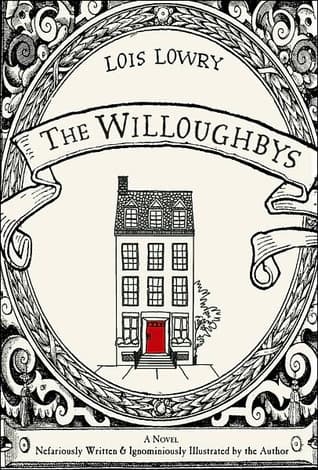
Lois Lowry (2008)
Genre
Fantasy / Children's / Young Adult
Reading Time
90 min
Key Themes
See below
Sign in to track this book
Four old-fashioned children, neglected by their awful parents, go on a darkly comedic adventure to become orphans, while their equally awful parents plot to be rid of them.
The Willoughby family includes the neglectful and self-absorbed Mr. and Mrs. Willoughby, and their four old-fashioned children: Timothy, the oldest and most responsible; the identical twins, Barnaby A and Barnaby B, who share one sweater; and the youngest, Jane, a sensitive and musical girl. The parents dislike their children, finding them noisy and bothersome. The children, equally unhappy with their parents, want to be independent. The parents decide to go on a 'dangerous journey' to Switzerland, hoping the children will die from neglect or hunger while they are gone. They pack their bags, leaving a small amount of money for the children and a note telling them not to make contact. The children are secretly happy to be rid of their awful parents.
After their parents leave, the Willoughby children immediately enjoy their new freedom, though they quickly see they lack proper care. Timothy, always practical, finds a pamphlet for 'How to Be an Orphan' and decides they should become orphans. They plan to mail themselves, by express delivery, to an orphanage, believing this will secure their future. They pack their few belongings, including their shared sweater and Jane's ukulele. After a funny struggle, they get into a large shipping crate. They address it to 'The Orphanage, Somewhere, USA,' and send themselves into the postal system, wanting their new, parent-free life.
While the Willoughby children are on their way to the orphanage, a new character arrives at their now-empty house: a baby, left on the doorstep in a picnic basket. This baby, later named Ruth, is found by the Willoughbys' former nanny, a kind woman named Nanny. Nanny, who had been fired by the parents before they left, returns to the house because she is worried about the children. She finds the baby, with a note from its desperate mother, and takes her in. Nanny, with her natural motherly feelings, immediately likes Ruth and starts to care for her, not knowing that the Willoughby children have already mailed themselves away and that the house is otherwise empty.
The shipping crate with the Willoughby children, because of a mistake in the postal system, does not go to an orphanage. Instead, it arrives at the house of Commander Melanoff, a private and very rich candy maker. Commander Melanoff, a lonely man who has lost his own family, is at first confused by the large crate. When he opens it, he is surprised to find four old-fashioned children inside. Despite the strange situation, Melanoff, seeing they need care, takes them in. The children, though not in an orphanage, are happy with the luxury and endless candy in their new, unexpected home.
Back at the Willoughby house, Nanny continues to care for baby Ruth, but struggles with money and the mystery of the Willoughby children's disappearance. She places an ad in the newspaper, looking for a family for Ruth and quietly mentioning the empty Willoughby house. Commander Melanoff, having seen Nanny's ad and now with four more children to care for, realizes he needs help. He contacts Nanny, inviting her to his house to talk about her becoming a nanny for his new, larger household, including the four Willoughby children and baby Ruth. Nanny, needing a solution, accepts the invitation.
Meanwhile, Mr. and Mrs. Willoughby, on their 'dangerous journey' to Switzerland, are having a truly bad time. They face many problems, from getting sick to being robbed. Their carefully planned, though fake, dangerous trip quickly becomes a series of actual dangers. They get weaker, poorer, and more desperate, a strong difference from the comfortable, though neglected, lives they left behind. Their early joy at being rid of their children is replaced by growing regret and the hard facts of their own poorly planned idea.
Nanny arrives at Commander Melanoff's fancy house and is very happy to find the Willoughby children safe, though surprised by their unusual trip. She brings baby Ruth, and the children immediately like their new baby sister. Commander Melanoff, a kind but lonely man, finds great joy in having a busy house. He suggests that Nanny stay permanently as the children's guardian and his companion. Together, they form an unusual, but loving, family unit. The Willoughby children, baby Ruth, Nanny, and Commander Melanoff all find a sense of belonging and happiness they had never known before.
As the Willoughby children do well in their new home, their parents' 'dangerous journey' ends tragically. Mr. and Mrs. Willoughby, weak from illness and hunger, climb a difficult mountain in the Swiss Alps, thinking they will find a shortcut to town. However, they are caught in an avalanche and die. Their bodies are never found. Their fate is told to the children much later through a telegram, confirming they are true orphans. The children, having already found a loving family, receive the news with calm acceptance rather than sadness, making their new, happier lives solid.
With the parents officially gone, the new, unusual Willoughby family thrives. Commander Melanoff legally adopts the Willoughby children and Ruth, giving them a safe and loving home. Nanny becomes a beloved mother figure, bringing warmth and order to their lives. The children continue their old-fashioned hobbies, reading classic books, playing their instruments, and going on small adventures, now with the support of their new guardians. They live a life with love, laughter, and sometimes candy, truly finding their happy ending, a strong difference from their sad beginnings.
The Protagonist
Timothy transforms from a child burdened by parental neglect to a secure and happy individual within a loving, unconventional family.
The Protagonists
The twins evolve from neglected children to cherished members of a loving family, their shared identity finding a place within a larger unit.
The Protagonist
Jane transitions from a neglected, wistful child to a happy, musically expressive girl surrounded by love and support.
The Antagonist
Mr. Willoughby's arc is one of self-inflicted demise, as his selfish plans lead to his own miserable end.
The Antagonist
Mrs. Willoughby's arc is one of self-inflicted demise, as her selfish plans lead to her own miserable end.
The Supporting
Nanny transforms from a dismissed employee to the cherished matriarch of a loving, blended family.
The Supporting
Commander Melanoff evolves from a lonely recluse to a joyful, generous patriarch of a large, loving family.
The Supporting
Ruth's arc is one of being found and cherished, symbolizing the love and stability the new family offers.
The book shows a clear difference between biological parents and chosen family. The Willoughby parents are examples of extreme neglect and selfishness, showing that blood relation does not mean love or care. In contrast, Nanny and Commander Melanoff, who are not related to the children, show deep love, responsibility, and what family truly means. The children's journey to 'orphanhood' is a search for a working, loving family, which they find in an unexpected group of people. This theme challenges old ideas of family, suggesting that love and care define it, not genes.
“For the truth was, the Willoughby parents were as selfish and as horrid as parents could possibly be, and the Willoughby children were just as unloved as children could possibly be.”
The Willoughby children, though old-fashioned, show strong independence. Faced with neglect, they take action, planning their own escape by mailing themselves to an orphanage. This theme explores children's strength and their ability to handle hard situations. Their active approach, from Timothy's leadership to Jane's quiet strength, shows that children are not just passive recipients of their circumstances but active in shaping their futures, especially when adults fail them. Their wish for orphanhood is a wish for self-control and a better life.
“They had, after all, made their own decision, and they would stand by it. They would be orphans.”
Love and compassion are shown as forces that change things. Nanny's natural kindness and her immediate care for baby Ruth, despite her own uncertain situation, set a moral standard. Commander Melanoff, a lonely person, finds his life better and his heart opened by the children's arrival. These characters choose to give love and care, creating a new, successful family unit. This theme highlights that real affection and understanding can heal past hurts and build strong, meaningful connections, standing against the Willoughbys' cold lack of feeling.
“He had never felt so happy. He had never felt so much like a father.”
The book is a clever parody of classic children's stories, especially those with orphans or absent parents (e.g., 'A Series of Unfortunate Events,' 'Mary Poppins'). It uses exaggerated characters, absurd plot points (like mailing oneself), and a sarcastic narrative tone to make fun of these common story elements. The 'How to Be an Orphan' pamphlet is a direct satirical joke. This theme allows the author to explore difficult subjects like neglect with humor, making the story both fun and thought-provoking, while also honoring the literary tradition it spoofs.
“The children, being old-fashioned, were fond of old-fashioned things. They liked to read books that had been read by their grandparents.”
A device used by the parents to rid themselves of their children.
The 'Perilous Journey' is a fabricated scheme concocted by Mr. and Mrs. Willoughby to abandon their children. They pretend to embark on a dangerous adventure to Switzerland, hoping the children will perish from neglect. This device immediately establishes the parents' cruelty and sets the plot in motion, freeing the children to pursue their own 'orphan' plan. It serves as a darkly humorous catalyst, highlighting the absurdity of the parents' neglect and ironically leading to their actual demise.
The children's ingenious, albeit absurd, method of achieving orphanhood.
The children's decision to mail themselves in a crate to an orphanage is a key plot device. It showcases their resourcefulness, their old-fashioned determination, and the book's satirical tone. This act directly leads to their mistaken delivery to Commander Melanoff's house, a pivotal turning point in the story. It is a fantastical element that underscores their desperate desire for a better life and creates the necessary circumstances for the formation of their new family.
A narrative twist that redirects the children's fate.
The children's letter, intended for an orphanage, is never properly delivered, and the crate is mistakenly sent to Commander Melanoff's home. This classic narrative device of a 'misplaced delivery' or 'unsent message' is crucial to the plot. It prevents the children from ending up in a traditional orphanage and instead places them in a unique and ultimately beneficial situation, allowing for the creation of their unconventional family with Melanoff and Nanny. It signifies destiny intervening in their plans for a happier outcome.
A symbolic setting representing abundance and unexpected kindness.
Commander Melanoff's mansion, filled with candy and opulent comforts, serves as a symbolic setting. It represents the stark contrast to the Willoughbys' neglectful and emotionally barren home. For the children, it's a place of material abundance, but more importantly, it becomes a haven of emotional warmth and security. The mansion, initially a symbol of Melanoff's loneliness, transforms into a vibrant home bustling with life and love, signifying the sweet new life the children find.
A visual and character device symbolizing the twins' bond and old-fashioned nature.
The fact that Barnaby A and Barnaby B share a single, striped sweater is a recurring visual and character device. It emphasizes their identical nature and their strong, inseparable bond. It also contributes to their 'old-fashioned' persona, suggesting a quaintness and a slight lack of resources under their parents' care. This quirky detail adds to the book's whimsical tone and reinforces the idea of their unique individuality within their shared identity.
“They were not orphans, but they were, in fact, worse than orphans, for they had parents.”
— Introducing the Willoughby children and their unfortunate situation with their neglectful parents.
“They were, in fact, quite determined to be rid of them.”
— Referring to the Willoughby children's mutual desire to get rid of their parents.
“It was a dark and stormy night. No, it wasn't. It was a bright and sunny morning.”
— The narrator's playful subversion of traditional storytelling tropes at the beginning of the book.
“One must always be prepared for the unexpected, especially when one is trying to get rid of one's parents.”
— A general observation on the unpredictable nature of the children's scheme.
“He was a foundling, which meant he had been found.”
— Explaining the origin of Barnaby A., the baby left on the Willoughby's doorstep.
“The parents, meanwhile, were having the time of their lives.”
— Describing the Willoughby parents' carefree attitude while their children were left alone.
“What a delightful notion, to be rid of them!”
— The Willoughby parents' reaction to the children's letter suggesting they go on a long trip.
“They were, in short, a very old-fashioned family.”
— A description of the Willoughby family's anachronistic qualities and their lack of modern comforts.
“But of course, one never knows what one will find when one looks closely at things.”
— A general statement about discovery and observation, relevant to uncovering the parents' scheme.
“He felt a sudden surge of something that might have been affection, or indigestion.”
— Tim Willoughby's conflicted feelings towards his siblings, highlighting the book's humor.
“For it is a truth universally acknowledged that a single man in possession of a good fortune must be in want of a foundling.”
— A humorous twist on the famous opening line of 'Pride and Prejudice', applied to Commander Melanoff.
“The world, you see, is full of surprises.”
— A recurring theme emphasizing the unexpected turns of events in the story.
“It was a perfect plan, really, except for the part about it not working.”
— Commenting on the children's elaborate, but ultimately flawed, scheme.
“And so, as often happens in stories, everything turned out for the best.”
— The narrator's concluding remark on the happy resolution of the children's predicament.
Ready to see how well you understood this book? Take our interactive quiz with 10 questions.

Biography coming soon.







