“A novelist's talent is to make things seem inevitable.”
— Joan's reflection on the nature of writing and literary skill.

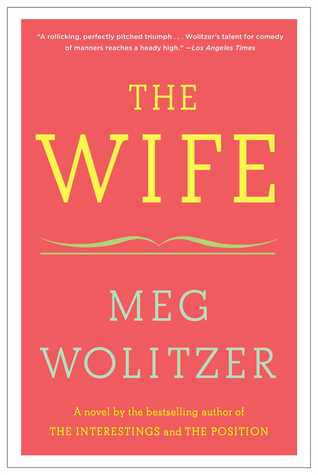
Sign in to track this book
A wife about to leave her famous novelist husband during his award ceremony flight confronts four decades of suppressed literary ambition and the secret behind their celebrated marriage.
The novel begins with Joan Castleman deciding to leave her husband, Joseph Castleman, while they are on a plane to Helsinki. Joseph, a famous American novelist, will receive the 'Finsberg Prize,' a literary award. Joan thinks about their forty-year marriage, a union she sees as a carefully built illusion, like the stillness of the plane hiding its fast movement. Her thoughts show a deep resentment and a feeling of her own suppressed identity. She watches Joseph, unaware in his self-absorption, and strengthens her resolve to end their life together, even as they approach what should be a celebratory peak in his career.
The story goes back to Joan's time at Smith College in the 1950s. She is an aspiring writer, bright and ambitious, but also somewhat naive. Joseph Castleman, then her English professor, is a magnetic and unconventional figure, known for his affairs and bohemian lifestyle. He leads a writing workshop where he encourages his female students to be bold, yet subtly undermines their ambition by suggesting they will marry and lose their creative drive. Joan is drawn to his charm and intelligence, despite sensing his manipulative nature and his reputation for seducing students, including her roommate, Carol.
Joseph divorces his first wife, Enid, a quiet and traditional woman, after openly pursuing Joan. He gives Joan much attention, praises her writing, and presents himself as a troubled genius who needs her intellectual and emotional support. Joan, flattered and captivated, falls deeply in love with him, despite the scandal and her family and friends' disapproval. This period starts their intense and complicated relationship, setting the stage for Joan's gradual absorption into Joseph's world and career. She sees herself as his muse and intellectual equal, ignoring the warning signs of his self-centeredness.
After Joseph's divorce, he and Joan move to Greenwich Village. Joan continues to write, but her efforts are increasingly overshadowed by Joseph's growing career and his need for her constant attention and validation. She finds herself editing his manuscripts, offering feedback, and managing their household, while her own creative work is put aside. The literary scene of the Village, which first seemed to promise creative freedom, becomes a backdrop for Joan's slow retreat from her personal writing ambitions, as she finds more satisfaction in supporting Joseph's work.
A moment occurs when Joseph, facing writer's block and the pressure to write his next novel, struggles intensely. Joan, already his uncredited editor and sounding board, steps in more directly. They eventually make an unspoken, then explicit, agreement: Joan will write his books, and he will publish them under his name. This decision comes from Joseph's desperation, Joan's talent, and the societal expectations that would have made it hard for a woman to achieve the same literary success and recognition on her own. This secret becomes the foundation of their marriage and Joseph's career.
As Joseph's career grows with Joan's ghostwritten novels, they start a family, having three children: David, Susannah, and Glenn. Joan balances the demands of motherhood and domestic life with the secret pressure of writing Joseph's acclaimed books. She finds a strange satisfaction in her hidden role, feeling the power and creativity, even if unacknowledged. The children grow up mostly unaware of their mother's true contribution to their father's fame, seeing her as a supportive wife and mother, while Joseph enjoys the spotlight, embodying the celebrated author persona.
Nathaniel Bone, a young, ambitious journalist and aspiring biographer, approaches Joseph, wanting to write an authorized biography. Joseph, always eager for public admiration, agrees. Nathaniel's presence in their lives creates tension for Joan. She sees him as a threat to their guarded secret, as his questions and observations bring her hidden literary contributions uncomfortably close to the surface. Nathaniel's admiration for Joseph is clear, but his keen eye also catches glimpses of the complex dynamics within the Castleman marriage, especially Joan's quiet yet strong presence.
The family arrives in Helsinki for the Finsberg Prize ceremony. The atmosphere is full of excitement and anticipation for Joseph's achievement. Joan, however, feels increasingly alienated and resentful. She watches Joseph's exaggerated performance of the 'great author,' and the fawning attention he receives only increases her feelings of invisibility and the injustice of her unacknowledged talent. The approaching ceremony, meant to be a pinnacle of shared success, instead worsens the cracks in their marriage, pushing Joan closer to her decision to finally confront the truth.
During the Finsberg Prize ceremony, Joseph gives an uninspired and self-congratulatory acceptance speech, which further angers Joan. After the ceremony, back in their hotel room, Joan finally confronts Joseph, saying she intends to leave him. She also tells Nathaniel Bone, the biographer, that she, not Joseph, wrote all his acclaimed novels. This confession shatters the facade of Joseph's career and their marriage, leaving Nathaniel stunned and Joseph devastated by the exposure of his deception.
Following Joan's confession and declaration, Joseph suffers a fatal heart attack. The immediate aftermath is chaotic and emotional. The family, especially their children, struggle to process their father's sudden death and the revelation about his literary legacy. Joan, though at first firm, is left to navigate the complex emotions of grief, liberation, and the weight of her now exposed secret. Nathaniel Bone, knowing the truth, faces a moral dilemma about how to proceed with his biography, understanding that the entire literary world has been fooled.
In the final pages, it is revealed that Nathaniel Bone's biography of Joseph Castleman was never published with the truth about Joan's authorship. Nathaniel, perhaps out of respect for the family or fear of destroying Joseph's legacy posthumously, chose to leave out the most scandalous revelation. Joan, now a widow, lives a quieter life, finally free from the burden of her secret and Joseph's overwhelming presence. She finds peace and a different kind of agency, having finally asserted her own identity, even if the public truth of her literary genius remains largely unacknowledged.
The Protagonist
Joan transforms from a compliant, self-sacrificing wife to a woman who reclaims her voice and agency, culminating in her decision to expose the truth and liberate herself.
The Antagonist/Supporting
Joseph remains largely static in his self-absorption, experiencing a brief moment of shock and devastation at Joan's revelation before his sudden death.
The Supporting
Nathaniel's initial hero-worship of Joseph is shattered by Joan's revelation, forcing him to confront the complexities of truth and reputation.
The Supporting
David grapples with his father's legacy and the shocking truth of his parents' partnership, leading to a deeper, albeit painful, understanding of his mother.
The Supporting
Susannah's perception of her parents' marriage is irrevocably altered by the posthumous revelations, forcing her to re-evaluate her family's history.
The Mentioned
Carol's story, though brief, serves as a cautionary tale and a point of comparison for Joan's own trajectory.
The Mentioned
Enid's story is one of silent suffering and eventual abandonment, a precursor to the sacrifices Joan would make.
The novel explores female intellectual and creative talent being suppressed or absorbed by patriarchal structures. Joan Castleman, a brilliant writer, sacrifices her own career to secretly write her husband Joseph's acclaimed novels. Her talent goes into his fame, giving her the power of creation but no recognition. This is clear in her long internal monologue on the plane, where she laments the 'invisible work' women do, and in the flashback to Smith College, where male professors like Joseph subtly undermine female students' ambitions. The theme highlights how women's contributions often go uncredited, and the psychological cost of this.
“What do women want? We want to be listened to. We want to be taken seriously. We want to be acknowledged for what we do.”
Wolitzer examines the complex and often deceptive nature of marriage, especially when power is imbalanced. The Castleman marriage is a partnership built on a lie, yet it also has genuine intellectual connection and codependency. Joan and Joseph are linked, with Joan finding satisfaction in her secret creative role, and Joseph relying on her for his success. The novel questions what makes a 'successful' or 'loving' marriage when one partner's identity is sacrificed for the other's, as seen in Joan's decision to leave Joseph, recognizing the illusion of their shared life.
“Just like our marriage. It had the illusion of stillness and tranquility, but it was hurtling forward, rapidly.”
The book critiques the superficiality of fame and questions what makes true authenticity in the literary world. Joseph Castleman is a celebrated author, but his career is built on a deception. His public image is a performance, while Joan, the real artist, remains hidden. This theme is highlighted through Nathaniel Bone's naive pursuit of Joseph's 'genius' for his biography, and the shattering of that illusion when Joan tells the truth. The novel suggests that the stories we create about ourselves and others, especially in public life, can be far from reality, and that society often values the performance of genius over true talent.
“He was a performance artist, Joseph. He performed 'the writer,' and he did it very well.”
The novel comments on the influence of patriarchy and rigid gender roles in mid-20th century society and the literary world. Joan's decision to ghostwrite Joseph's books is not just personal; it is a product of a time when ambitious women faced barriers to professional recognition, especially in creative fields. Joseph embodies this patriarchy, through his exploitation of female students and his acceptance of Joan's hidden labor. The story implies that Joan's talent, if openly expressed, would likely not have achieved the same acclaim as Joseph's, simply because of her gender. This is evident in the casual dismissal of female writers at Smith College, and the ease with which Joseph takes credit for Joan's work.
“A woman's place was to inspire, to support, to nurture. Not to create her own damn novels.”
Joan Castleman's subjective and often resentful perspective shapes the entire narrative.
The story is told entirely from Joan Castleman's first-person perspective, providing intimate access to her thoughts, feelings, and long-held resentments. While she is the only window into the events, her narrative is deeply colored by her personal grievances and the psychological toll of her secret. This makes her a subtly unreliable narrator, not in terms of factual events, but in her interpretations and the emotional weight she assigns to them. The reader is invited to question the nuances of her motivations and the extent of Joseph's complicity versus her own choices, creating a complex portrait of victimhood and agency. Her interiority allows for a deep dive into the psychological impact of her sacrifices.
The story constantly shifts between the present and the past, revealing the origins of the central deception.
The novel employs a non-linear narrative, frequently flashing back from the present-day flight to Helsinki to pivotal moments in Joan and Joseph's past, starting from their meeting at Smith College in the 1950s. This structure gradually reveals the evolution of their relationship, the genesis of Joseph's career, and the circumstances that led to Joan's decision to ghostwrite his novels. By interweaving past and present, the author builds suspense around the central secret and allows the reader to understand the deep historical roots of Joan's present-day discontent and her eventual breaking point. Each flashback adds another layer to the complex tapestry of their shared history.
The contrast between appearance and reality, particularly regarding Joseph's literary genius.
Irony is a pervasive device, most notably in the stark contrast between Joseph Castleman's public image as a literary genius and the private reality that his wife, Joan, is the true author of his celebrated works. This fundamental irony underpins the entire narrative, creating a sense of dramatic tension and injustice. Further irony lies in the fact that Joseph is receiving a prestigious award for books he didn't write, while Joan, the actual talent, remains invisible. The 'stillness and tranquility' of their marriage, as described by Joan on the plane, is also deeply ironic, masking decades of turmoil and deceit. This device highlights the societal blindness to unacknowledged female talent.
The airplane journey symbolizes the Castlemans' marriage and Joan's emotional state.
The opening scene on the airplane to Helsinki serves as a powerful symbol for Joan and Joseph's marriage. The plane, hurtling forward at thirty-five thousand feet while giving 'the illusion of stillness and tranquility,' perfectly mirrors Joan's perception of their relationship. It suggests a journey that is outwardly stable and successful but inwardly fraught with hidden momentum and underlying tension. The confined space of the plane also symbolizes Joan's trapped feeling within the marriage and her decision to finally break free, a pivotal moment of internal liberation during an outward trajectory towards Joseph's public triumph. The destination, a celebratory award, ironically marks the beginning of the end.
“A novelist's talent is to make things seem inevitable.”
— Joan's reflection on the nature of writing and literary skill.
“Marriage is a long conversation, which is why it's so important to marry someone who is a good conversationalist.”
— Joan's internal thoughts on the longevity and essence of marriage.
“Every writer is a failed actor, and every actor is a failed writer. That's the way it goes.”
— A cynical observation about the interconnectedness of artistic ambition and perceived failure.
“The secret to a long marriage is to ignore the bad things and remember the good things.”
— Joan's pragmatic advice or realization about sustaining a long-term relationship.
“I was a muse, and then I was a ghost. And now I am a woman who has finally found her own voice.”
— Joan's powerful reflection on her journey from being her husband's inspiration to an independent artist.
“The greatest trick the devil ever pulled was convincing the world he didn't exist. The greatest trick a writer ever pulled was convincing the world they were a man.”
— Joan's biting commentary on gender bias in the literary world.
“It's not that I didn't love him. It's that I loved him too much to let him destroy me.”
— Joan reflecting on her complex feelings for her husband, Joe, and her need for self-preservation.
“A writer’s greatest skill is not in writing, but in observing.”
— Joan's thoughts on the fundamental nature of a writer's craft.
“Sometimes the best way to keep a secret is to tell everyone, but tell it in such a way that no one believes you.”
— A cynical insight into the manipulation of truth and perception.
“I was the wife. The silent partner. The one who made it all possible, but never took the credit.”
— Joan's poignant description of her role in her husband's career and her own suppressed ambitions.
“To be a writer, you need a room of your own. And a husband who isn't always in it.”
— A modern twist on Virginia Woolf's famous quote, highlighting the domestic challenges for female writers.
“He didn't steal my words. He just borrowed them, indefinitely.”
— Joan's nuanced take on her husband's appropriation of her literary work.
“The story of a great man is never just his own. It's also the story of the women who made him.”
— Joan's feminist perspective on historical narratives and the unacknowledged contributions of women.
“You can't be a great writer if you're not a little bit of a monster.”
— A dark observation about the personality traits sometimes associated with literary genius.
Ready to see how well you understood this book? Take our interactive quiz with 10 questions.

Biography coming soon.







