“The past is a predator that stalks us all.”
— Vanessa reflects on how past events continue to influence the present.

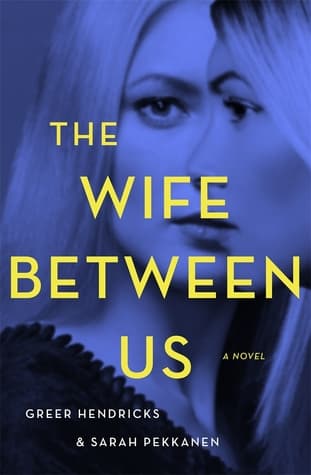
Greer Hendricks (2017)
Genre
Thriller / Mystery
Reading Time
360 min
Key Themes
See below
Sign in to track this book
A jealous ex-wife's obsession with her replacement spirals into a twisted game where nothing is as it seems, revealing the dangerous truths hidden beneath a seemingly perfect marriage.
Vanessa Thompson, an ex-wife, narrates her observations of her former husband, Richard, and his new, younger fiancée, Nellie. Vanessa works as a kindergarten teacher, a job she took after her divorce from Richard. She constantly spies on Nellie, following her, learning her routines, and even infiltrating her life by befriending Nellie's aunt. Vanessa wants to stop the upcoming wedding, believing Nellie is making a terrible mistake. Through Vanessa's fragmented memories and present-day stalking, it becomes clear that her past with Richard was troubled, marked by his controlling behavior and her own struggles with anxiety and alcohol. She recounts the lavish lifestyle they once shared and the unraveling of their marriage, hinting at a darker side to Richard.
The story shifts to Nellie, a young woman who is engaged to Richard. She is a kindergarten teacher, like Vanessa. Nellie is initially enchanted by Richard's charm and wealth, but subtle warning signs begin to appear. She discovers a hidden compartment in Richard's study containing old photos and documents related to Vanessa, including a picture of Vanessa looking disheveled and unhappy. Richard dismisses these concerns, gaslighting Nellie and painting Vanessa as unstable and vindictive. Nellie's friends also express reservations about Richard's controlling tendencies and his rapid engagement to her. Despite these warnings, Nellie tries to convince herself that Richard is the perfect man, preparing for their wedding while battling her increasing anxieties and suspicions about his true character and his past marriage.
The story delivers its first major twist: the 'ex-wife' Vanessa and the 'fiancée' Nellie are the same person. The story is told from two different timelines, initially appearing to be two distinct women. The 'Nellie' chapters detail the protagonist's experiences leading up to her first marriage to Richard, while the 'Vanessa' chapters describe her life after their divorce and her subsequent obsession with Richard's new fiancée (who is actually herself in the past). This revelation recontextualizes all previous interactions, showing how Richard systematically manipulated and gaslighted his wife, gradually eroding her identity and self-worth. Her initial name was Vanessa, but Richard convinced her to change it to Nellie, claiming it was a fresh start. This twist shows Richard's control and the psychological abuse he inflicted.
As the timelines converge, the full scope of Richard's insidious control over Vanessa/Nellie becomes clear. He isolated her from friends and family, monitored her phone calls, controlled her finances, and systematically undermined her confidence. He manufactured scenarios to make her doubt her own sanity, convincing her she had a drinking problem when she didn't. He forced her to quit her job, isolating her further. His charm was a façade for a manipulative and abusive personality. Vanessa's 'obsession' with Nellie was actually her reliving and dissecting her own past, trying to understand how she fell victim to Richard and how she could have escaped. The detailed accounts of their marriage reveal a pattern of emotional and psychological torment that slowly stripped Vanessa of her identity.
Vanessa details the painful and drawn-out divorce from Richard, which left her emotionally scarred and financially vulnerable. Richard, a master manipulator, made the process as difficult as possible, using his wealth and influence to his advantage. After the divorce, Vanessa struggled to rebuild her life, taking a job as a kindergarten teacher and living in a modest apartment, a contrast to her previous lavish lifestyle. Her healing process is complicated by her continuing trauma and her inability to fully escape Richard's psychological grip. She then discovers that Richard is engaged again, to a woman who appears to be a younger, more energetic version of herself – the 'Nellie' from the earlier chapters. This discovery reignites her obsession and her determination to intervene.
The story delivers a second, even more shocking twist: Vanessa has not been passively observing Richard's new fiancée. Instead, she has been actively orchestrating events, training a young woman named Emma to become Richard's next wife. Emma is the 'Nellie' that the reader was initially led to believe was Richard's new fiancée. Vanessa coaches Emma on how to behave, what to say, and how to appeal to Richard, using her knowledge of his preferences and psychological vulnerabilities. This reveals Vanessa's long-game revenge plot, showing her transformation from a victim into a cunning strategist. Her goal is not just to stop the wedding, but to ensure Richard marries someone who will ultimately destroy him from within.
Vanessa's elaborate revenge plot is fully revealed. She met Emma, a struggling young woman, and saw in her a perfect instrument for her plan. Vanessa 'creates' Emma in her own image, teaching her how to captivate Richard while planting seeds of doubt and fear. The goal is to make Richard fall in love with Emma, marry her, and then have Emma expose his true nature and destroy his reputation and career. Vanessa wants Richard to experience the same psychological torment and public humiliation he inflicted upon her. She coaches Emma on how to find the hidden compartment with Vanessa's old photos, how to subtly challenge Richard, and how to eventually escape from him with evidence of his abuse. This is about justice and protecting future victims.
Emma, the new 'Nellie,' executes Vanessa's plan. She allows Richard to believe he is in control, playing the role of the innocent, smitten fiancée. However, she secretly gathers evidence of his controlling behavior and financial misdealings. She deliberately finds the hidden compartment containing Vanessa's old photos, as Vanessa instructed, prompting Richard's familiar gaslighting tactics. Emma also begins to subtly push back against Richard, challenging his authority and making him uneasy. She experiences the same patterns of isolation and manipulation that Vanessa endured, but unlike Vanessa, Emma is prepared. She maintains contact with Vanessa, who continues to guide her through life with Richard, ensuring she doesn't succumb to his charms or threats.
The wedding between Richard and Emma takes place, a bittersweet victory for Vanessa. Emma, now Richard's wife, continues to follow Vanessa's instructions, gathering damning evidence. She records Richard's abusive outbursts and uncovers his financial fraud, particularly his involvement in a scheme that defrauded elderly clients. With Vanessa's help, Emma prepares to expose Richard publicly. The plan culminates in Emma revealing the truth to Richard's business partners and the authorities, presenting proof of his crimes and psychological abuse. The goal is not just to leave him, but to ensure he faces legal consequences and public disgrace, dismantling his life and reputation. Richard's world begins to crumble, a direct result of Vanessa's planning and Emma's bravery.
In the aftermath, Richard is arrested and faces charges for his financial crimes. His reputation is destroyed, and he loses everything. Emma, having completed her mission, is free from Richard's grasp and begins to build a new life for herself, empowered by her role in exposing him. Vanessa, watching from a distance, finally finds closure and justice. She has not only avenged herself but has also prevented Richard from harming another woman. The novel concludes with Vanessa reflecting on her journey from victim to orchestrator, showing her resilience and intelligence. She finds peace, knowing that Richard has received his just desserts and that she has reclaimed her agency and identity, no longer defined by her past with him. She feels empowerment and liberation.
The Protagonist
From a psychologically abused and broken victim, Vanessa transforms into a determined and brilliant orchestrator of Richard's downfall.
The Protagonist (past self of Vanessa)
From a hopeful fiancée, Nellie gradually succumbs to Richard's manipulation, losing her identity and becoming a victim of psychological abuse.
The Antagonist
His arc is one of consistent abuse and manipulation, culminating in his public downfall and disgrace.
The Supporting
From a vulnerable young woman, Emma transforms into a courageous and pivotal agent of justice.
The Supporting
She remains a consistent figure of warmth and concern, unknowingly playing a part in Vanessa's larger plan.
The Supporting
He remains a steady, supportive presence, representing a contrast to Richard's manipulative nature.
The Mentioned
Her story highlights the isolation Richard imposes on his wives.
The novel explores how identity can be shaped, manipulated, and reclaimed. Vanessa's journey from 'Nellie' to the 'ex-wife' and then to the orchestrator of revenge shows the erosion of her original self under Richard's abuse and her struggle to redefine who she is. Richard's insistence on calling his first wife 'Nellie' rather than Vanessa is an attack on her identity. The entire revenge plot is an act of self-reclamation, as Vanessa plans to regain control and agency that Richard stripped from her.
“He didn't want me to be me. He wanted me to be Nellie.”
Richard's character shows the insidious nature of psychological abuse and gaslighting. He constantly undermines his wife's perception of reality, making her doubt her sanity, her memory, and her worth. Examples include convincing Vanessa she has a drinking problem, isolating her from friends, and controlling her finances. The narrative structure itself, with its initial deception, mirrors the confusion and doubt that victims of gaslighting experience, making the reader feel what Vanessa felt.
“He was so good at making me believe I was crazy, that my memory was faulty, that everything was my fault.”
At its core, the book is a revenge thriller. Vanessa's elaborate plot against Richard is driven by a desire for justice, not just personal vengeance. She aims to expose Richard's true nature and ensure he faces consequences for his abusive actions, preventing him from harming other women. The planning and execution of her scheme show a calculated pursuit of justice rather than impulsive anger, showing how a victim can strategically reclaim power.
“I wasn't just doing this for me. I was doing it for every woman he would try to destroy.”
The novel exposes the gap between outward appearances and inner realities. Richard presents himself as a charming, successful, and devoted husband, but beneath the surface is a cruel and manipulative abuser. His lavish lifestyle and seemingly perfect marriage are a façade designed to deceive others and entrap his victims. This theme is reinforced by the initial portrayal of 'Nellie' as the ideal, beautiful new fiancée, only for the truth of her situation to be revealed as troubled.
“He was a master of appearances, of making everyone believe in the perfect life he curated.”
The novel's most striking thematic element is its manipulation of narrative perspective. By initially presenting two distinct women (the ex-wife and the fiancée), the authors force the reader to make assumptions and then dramatically subvert them. This structural choice shows how easily one's understanding of reality can be skewed and how perspective is in discerning the truth. It mirrors the way Richard controls the narrative within his relationships, making his victims doubt their own stories.
“You will make many assumptions. Assume nothing.”
The reader's initial understanding of the story is deliberately misled by the narrator's fragmented and dual perspective.
The primary plot device is the unreliable narrator, or more accurately, the manipulation of narrative perspective. The story is told from two seemingly distinct first-person perspectives: 'Vanessa' (the ex-wife) and 'Nellie' (the fiancée). The authors deliberately lead the reader to believe these are two separate women, only to reveal that they are the same person at different points in time. This forces the reader to re-evaluate every preceding event and character interaction, mirroring the psychological disorientation experienced by the protagonist under Richard's gaslighting.
The story unfolds across two intertwined but initially disguised timelines.
The novel employs a dual timeline structure, alternating between chapters labeled 'The Wife' (Vanessa's post-divorce life) and 'The Wife Between Us' (Nellie's pre-marriage life). This structure is crucial for the major plot twists. It creates suspense and allows for the gradual revelation of information, slowly building towards the understanding that 'The Wife Between Us' is actually a past version of 'The Wife.' This non-linear approach deepens the mystery and the impact of the revelations.
Elements designed to mislead the reader about the true nature of the characters and plot.
The entire premise of the book, as suggested by its title and initial chapters, acts as a massive red herring. The reader is led to believe they are witnessing a classic love triangle between a jealous ex-wife, a charming husband, and a younger, beautiful fiancée. Details like Vanessa's 'stalking' and 'Nellie's' growing unease are presented in a way that supports this initial assumption, only for the subsequent twists to reveal a completely different, more intricate plot of revenge and identity manipulation.
The changing of the protagonist's name from Vanessa to Nellie symbolizes the loss and reclamation of identity.
The alteration of the protagonist's name from Vanessa to Nellie by Richard is a potent symbol of his control and her loss of identity. He chose 'Nellie' as a 'fresh start,' but it was actually a means to erase her past self and make her subservient to his narrative. Her eventual return to her original name, Vanessa, signifies her reclaiming her true self and agency, making the name change a central symbolic act in her journey of self-discovery and empowerment.
“The past is a predator that stalks us all.”
— Vanessa reflects on how past events continue to influence the present.
“Sometimes the most dangerous secrets are the ones we keep from ourselves.”
— A character grapples with self-deception and hidden truths.
“Love isn't always enough to save you. Sometimes it's the very thing that drowns you.”
— A poignant observation on the destructive potential of love.
“We all wear masks, but some of us are better at hiding them than others.”
— Highlighting the theme of appearances versus reality and hidden identities.
“Revenge is a dish best served cold, but sometimes it's also the only thing that keeps you warm.”
— A character's motivation for seeking retribution.
“The truth is rarely simple, and often, it's not what we want to hear.”
— A reflection on the complexity and discomfort of uncovering truth.
“Every marriage has its secrets. Some are just darker than others.”
— A general statement on the hidden aspects of marital relationships.
“You can never truly know another person, no matter how close you think you are.”
— A recurring theme about the unknowability of others, even in intimate relationships.
“The line between love and obsession is thinner than most people realize.”
— Exploring the darker side of intense emotional attachments.
“We build our lives on foundations of lies, and then wonder why they crumble.”
— A critical observation about the consequences of dishonesty.
“Sometimes the only way to move forward is to burn everything down and start anew.”
— A radical perspective on overcoming past trauma or difficult situations.
“The most dangerous game is played not with cards, but with hearts.”
— A metaphorical statement about emotional manipulation and risk in relationships.
“What you see isn't always what you get. Especially when it comes to people.”
— Emphasizing the deceptive nature of appearances and human behavior.
“The past isn't just behind us; it's woven into every fiber of who we are.”
— A deeper reflection on the pervasive influence of past experiences on identity.
Ready to see how well you understood this book? Take our interactive quiz with 10 questions.







