“It is a curious thing, the death of a parent. We are never so old that we are not children again.”
— Narrator's reflection on the orphans' grief.

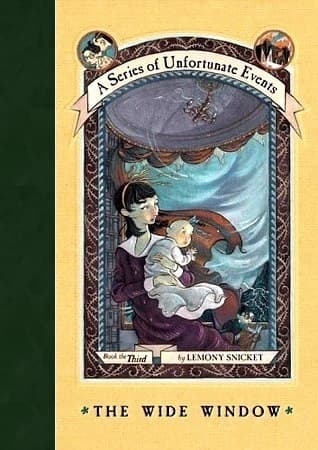
Lemony Snicket (2000)
Genre
Fantasy / Children's / Mystery / Young Adult
Reading Time
120 min
Key Themes
See below
Sign in to track this book
Three resourceful orphans face hungry leeches, a treacherous hurricane, and a villain's disguise while trying to uncover the truth behind their guardian's suspicious 'accident' in a house teetering over a perilous lake.
After the events at the Lucky Smells Lumbermill, Mr. Poe takes the Baudelaire orphans – Violet, Klaus, and Sunny – to their new guardian, Aunt Josephine Anwhistle. She lives in a house on a cliff overlooking Lake Lachrymose. Aunt Josephine is nervous and obsessed with grammar. She has many phobias, including realtors, doorknobs, and the lake itself, especially its carnivorous Lachrymose Leeches. Her house has fragile furniture and a large, dirty 'wide window' with a lake view. Despite her quirks, she seems to like the children. Violet, Klaus, and Sunny hope for a peaceful stay, but they are immediately wary of her extreme shyness and constant fear.
The Baudelaire children quickly learn how much Aunt Josephine's phobias control her life. She will not use the stove, fearing it will explode, so they eat cold cucumber soup. She will not touch doorknobs, fearing they will shatter, and always insists on correct grammar. While grocery shopping in Curdled Cave, they meet Captain Sham, a one-legged sailor. Klaus immediately suspects Captain Sham is Count Olaf in disguise, despite Mr. Poe saying Olaf has two legs. Violet and Sunny also recognize Olaf's unibrow and the eye tattoo on his ankle, which he tries to hide.
One morning, the children find Aunt Josephine gone and her wide window shattered. A note, in Aunt Josephine's handwriting, says she jumped out the window into Lake Lachrymose, unable to live with her fear of Captain Sham. The note also says Captain Sham will be the Baudelaire's new guardian. Klaus immediately sees a grammar error in the note, the misuse of 'unlikely' instead of 'unlikely.' This seems very suspicious, as Aunt Josephine was careful about grammar. He believes the note is fake and her 'death' is part of Count Olaf's plan.
Mr. Poe arrives, oblivious as usual. He accepts the suicide note as real and dismisses the children's claims that Captain Sham is Count Olaf and the note is fake. He cares more about legal rules than the children's safety. Despite Violet, Klaus, and Sunny's strong protests, Mr. Poe prepares to hand them over to Captain Sham. While legal steps are underway, Hurricane Herman begins to hit Lake Lachrymose and Curdled Cave. The storm grows stronger, making the already dangerous lake even more perilous and adding to the orphans' desperate situation.
Convinced Aunt Josephine's note has a hidden message, Klaus looks at it closely. He realizes the specific grammar errors, like the misspelling of 'curdled' and the wrong use of 'unlikely,' are not mistakes but clues. By focusing on these deliberate errors and the unusual wording, Klaus finds that the note is an acrostic. The first letters of certain words spell a message. He deciphers it to mean 'Curdled Cave,' 'Lachrymose Lake,' and 'Anwhistle Aquatics.' This makes him think Aunt Josephine is not dead but hiding in Curdled Cave, specifically in the Anwhistle Aquatics cave, a place she had mentioned as an emergency hiding spot.
With their discovery, Violet, Klaus, and Sunny know they must reach the cave. They escape Captain Sham and Mr. Poe during Hurricane Herman. They steal a small boat, even though they have no sailing experience, and begin a dangerous trip across the storm-tossed Lake Lachrymose. The hurricane rages, threatening to flip their boat. They barely avoid the hungry Lachrymose Leeches, which are drawn to food. Violet uses her inventing skills to make a sail, and Klaus navigates using the few visible landmarks. Sunny uses her sharp teeth to chew ropes and signal for help.
After a terrifying journey, the children find the entrance to Curdled Cave. Inside, they find Aunt Josephine, alive but scared, hiding in a small, damp spot. She admits that Count Olaf, as Captain Sham, forced her to write the suicide note. He threatened to throw her into the lake with the Lachrymose Leeches if she did not obey. Her fear of leeches, a long-held phobia, was used by Olaf. She explains the grammar errors were her attempt to tell Klaus the note was fake and reveal her location without Olaf knowing.
Their reunion ends quickly when Count Olaf, as Captain Sham, finds them in the cave. He reveals his identity and boasts about his plan. As the hurricane continues outside, the rising water in the cave brings the Lachrymose Leeches closer. Aunt Josephine, frozen by fear, drops a banana into the water, attracting many carnivorous creatures. In the panic, leeches bite her. The children try to help, but Olaf ignores her, focused on catching the orphans. They realize they must escape the cave and the leeches soon.
As they try to leave the cave, Aunt Josephine, weak from leech bites and overcome by fear, clings to the side of the boat. Count Olaf, still as Captain Sham, appears in his own boat. He cruelly pushes Aunt Josephine off the orphans' boat, sending her into the leech-filled waters of Lake Lachrymose, where she is eaten. The children watch in horror, unable to save her. With Aunt Josephine gone and no other adult to protect them, Olaf easily recaptures the upset Baudelaire orphans. His plan seems to have worked. He takes them back to shore, ready to claim their fortune.
Back on shore, Mr. Poe waits. Despite the children's frantic pleas and their detailed story of Count Olaf's trickery and Aunt Josephine's death, Mr. Poe, blinded by his own incompetence and rules, refuses to believe them. He dismisses their story as childish imagination, even when they point out Captain Sham's obvious disguise and the eye tattoo. Using Mr. Poe's gullibility and the confusion from the hurricane, Count Olaf, as Captain Sham, slips away unnoticed, again avoiding justice. The Baudelaire orphans are left alone, grieving Aunt Josephine and facing an uncertain future, with no guardian and Count Olaf still free.
The Protagonist
Violet consistently demonstrates her ingenuity under pressure, becoming more adept at using her inventing skills to navigate dangerous situations and protect her siblings, even when adults fail them.
The Protagonist
Klaus's intellectual prowess is repeatedly proven indispensable, solidifying his role as the family's researcher and clue-solver, especially when he deciphers Aunt Josephine's hidden message.
The Protagonist
Sunny's contributions become increasingly vital and sophisticated, demonstrating her growing communication skills and her surprisingly effective physical abilities in moments of crisis.
The Supporting
Initially a seemingly safe, if eccentric, haven, Aunt Josephine's character arc tragically culminates in her succumbing to her deepest fear and Count Olaf's manipulation, highlighting the dangers of crippling phobias.
The Antagonist
Count Olaf continues his pattern of disguises and manipulation, demonstrating his relentless pursuit of the Baudelaire fortune and his capacity for extreme cruelty, constantly outwitting the adults around him.
The Supporting
Mr. Poe remains consistently oblivious and ineffective, highlighting the recurring theme of adult incompetence and the children's isolation in their struggle against Count Olaf.
The Narrator
Snicket's role remains consistent as the somber, omniscient narrator, guiding the reader through the escalating misfortunes of the Baudelaire orphans while maintaining his unique, melancholic voice.
A main theme is how adults consistently fail to protect the Baudelaire orphans. Mr. Poe, with his bureaucratic mind and cough, repeatedly ignores the children's concerns and is easily fooled by Count Olaf's weak disguises. Aunt Josephine, though well-meaning, is paralyzed by her phobias, making her unable to truly protect the children. This is clear when Mr. Poe accepts Aunt Josephine's 'suicide' note as real, even when Klaus points out a clear grammar error that shows it is fake. The children must always rely on their own intelligence and resourcefulness because the adults in their lives are either unaware, scared, or actively harmful.
“It is a popular misconception that the elderly are always wise and that the young are always foolish. But in the case of the Baudelaire orphans and the various adults with whom they had stayed, the reverse seemed to be true.”
Fear is a strong force in 'The Wide Window,' especially shown through Aunt Josephine. Her life is completely controlled by many phobias, from doorknobs to realtors, and most importantly, Lachrymose Leeches. Count Olaf skillfully uses her deepest fear of the leeches, forcing her to write the fake suicide note and eventually causing her tragic death. This theme shows how fear can stop people from acting, making them easy to manipulate and preventing them from helping themselves or those they should protect. The children, despite their own fears, must overcome them to survive.
“Fear is a powerful emotion, and it is all too easy to let it rule your life.”
Language, grammar, and reading are important tools for survival and understanding in a deceptive world. Klaus's knowledge, gained from reading, helps him decode Aunt Josephine's hidden message in the 'suicide' note, revealing her location. Aunt Josephine's careful grammar, though obsessive, becomes the key to her desperate call for help. The specific grammar errors in the note serve as a secret code that only an educated and observant person like Klaus can solve. This theme shows how intellect and attention to detail, especially in language, can be the only defense against clever villains and incompetent adults.
“It is one of the great tragedies of life that one can read a book over and over again and still not be able to understand a single word of it.”
Despite constant bad luck and no adult support, the Baudelaire orphans always show great strength and cleverness. Violet uses her inventing skills to make a sail during Hurricane Herman. Klaus uses his knowledge to decode the hidden message in Aunt Josephine's note. Sunny, though a baby, helps with her sharp teeth and strong grip. They face a deadly hurricane, carnivorous leeches, and the relentless Count Olaf, yet they never stop trying to protect each other and escape danger. This theme highlights their courage and ingenuity against overwhelming odds.
“Even in the darkest of times, there is always hope, if you are clever enough to find it.”
Count Olaf's primary method of deception.
Count Olaf's disguise as Captain Sham is a central plot device. The children immediately recognize him, but Mr. Poe and other adults are completely fooled, highlighting adult incompetence. The disguise allows Olaf to infiltrate the orphans' lives repeatedly, creating a recurring source of conflict and demonstrating the adults' inability to protect the children. The tell-tale eye tattoo and unibrow serve as constant reminders of Olaf's true identity, making the adults' blindness even more frustrating for the reader and the children.
Aunt Josephine's subtle cry for help embedded in a forged document.
Aunt Josephine's 'suicide' note, with its deliberate grammatical errors, functions as a crucial hidden message. This device relies on Klaus's intelligence and Aunt Josephine's character (her obsession with grammar) to reveal the truth. It provides a moment of hope and allows the children to take action, showing that even under duress, victims can leave clues. It also emphasizes the power of literacy and observation as tools for survival against deception.
The audience and children know the truth, but the adults do not.
Dramatic irony is prevalent throughout the story, particularly concerning Count Olaf's disguises and the adults' gullibility. The reader and the Baudelaire children are always aware of Olaf's true identity and his malicious intentions, while Mr. Poe and other adults remain oblivious. This creates tension, frustration, and a sense of helplessness, as the intelligent children's warnings are constantly dismissed, reinforcing the theme of adult incompetence and the orphans' isolation.
Lemony Snicket's constant warnings to the reader about impending doom.
Lemony Snicket's narration frequently uses foreshadowing and direct warnings to the reader, setting a somber tone and preparing them for the tragic events to come. He explicitly mentions hurricanes, leeches, and despair, building suspense and reinforcing the series' melancholic atmosphere. This device creates a sense of dread and inevitability, highlighting the children's inescapable bad luck and reminding the reader that happiness is fleeting in their lives.
“It is a curious thing, the death of a parent. We are never so old that we are not children again.”
— Narrator's reflection on the orphans' grief.
“The world is a bad place, not because bad people exist, but because good people do nothing.”
— A general observation on human inaction in the face of evil.
“It is a sad but true fact that some people are so intent on doing bad things that they don’t even notice when they’re doing them.”
— Describing the obliviousness of some antagonists.
“If you are a person who is looking for a happy ending, you have come to the wrong place.”
— The narrator's classic warning to the reader.
“There are many things in the world that are not true, and this is one of them.”
— Refuting a common misconception or lie presented in the story.
“It is always sad when someone you love dies. But it is even sadder when they die without you knowing why.”
— The orphans' continuing quest for answers about their parents' death.
“Just because you don't understand something doesn't mean it's not true.”
— A reminder that ignorance doesn't negate reality.
“The Baudelaire orphans were not only clever, but also very good at pretending not to be clever, which is sometimes the cleverest thing of all.”
— Describing the children's strategic use of their intelligence.
“The only way to keep a secret is to tell no one.”
— A harsh lesson about the difficulty of maintaining confidentiality.
“A 'man of his word' is a man who keeps his promises, even if he has to break them.”
— A cynical twist on the meaning of integrity.
“It is a rare and special thing to find someone who will listen to you, even when you are saying something that is not true.”
— Reflecting on the nature of empathy and false pretenses.
“The Baudelaire orphans knew that it is one thing to be sad, and another thing to be helpless, and that it is best to avoid being both at the same time.”
— The children's determination to act despite their despair.
“It is one thing to be afraid, and another thing to be a coward.”
— Distinguishing between a natural emotion and a choice of inaction.
“The word 'disaster' is often used to describe events that are merely inconvenient.”
— Underscoring the severity of the orphans' actual misfortunes.
Ready to see how well you understood this book? Take our interactive quiz with 10 questions.
Biography coming soon.







