“The world was a tapestry woven with threads of light and shadow, and she was but a single, fraying strand.”
— Elara's internal reflection on her place in the grand scheme of the kingdom's conflicts.

Sign in to track this book
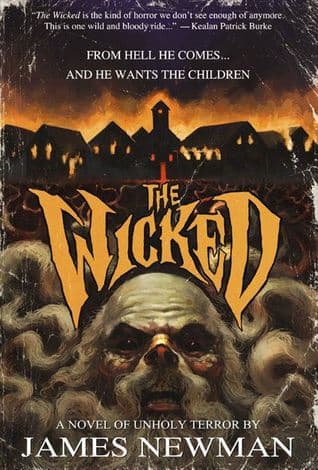
A family shattered by violence seeks solace in a new town, only to discover an ancient child-devouring demon has been awakened by a horrific orphanage fire, threatening to consume everything they have left.
The story begins with a fire at the Heller Home for Children in Morganville, North Carolina. The flames kill all the children and staff inside. This event is not just a tragedy; it awakens an ancient demonic entity named Moloch from its dormant state beneath Morganville. The suffering and death act as a summoning ritual. The fire leaves a deep scar on the community, but the true terror it unleashes is yet to manifest, slowly beginning to influence the unsuspecting residents.
David, Kate, and their seven-year-old daughter, Becca Little, move from New York City to Morganville, North Carolina. Their move is an attempt to escape the trauma of Kate's recent sexual assault, which has left their family fractured. David hopes the quiet, small-town atmosphere will help them heal and rebuild their lives. They do not know about the dark history and the growing evil that fills their new home. As they settle in, unease subtly enters their lives, hinting at the horrors to come.
Soon after their arrival, Becca Little starts acting strangely and experiences unsettling things. She talks to an imaginary friend named 'Mr. Whispers' and describes seeing shadowy figures. Initially, David and Kate dismiss these as a child's imagination or stress from their move and family trauma. However, the occurrences become more frequent and disturbing, going beyond simple childhood fantasies. Becca's innocent descriptions of her 'friends' and their 'games' take on a sinister tone, suggesting a malevolent presence is trying to communicate with or influence her.
Alarmed by Becca's increasingly disturbing behavior and his own growing unease, David investigates the town's history. He learns about the Heller Home for Children and the fire that destroyed it, killing everyone. His research leads him to local legends and whispers of a dark presence connected to the land. He discovers the Heller Home was built on a site with a history of unexplained deaths and disappearances, and that the fire may have been a ritual. The more he digs, the more he realizes Morganville holds a secret far older and more terrifying than he imagined.
As David investigates Morganville's past, Moloch's influence over the town grows. Other children in Morganville begin to show similar strange behaviors to Becca, talking to unseen entities, having nightmares, and displaying unsettling aggression or withdrawal. The demon, drawn to the innocence and vulnerability of children, slowly corrupts them, preparing them for a darker purpose. Adults are also subtly affected; a pervasive sense of dread, paranoia, and unexplained irritability spreads through the community, creating a fertile ground for Moloch's plans to fully manifest.
Kate, already fragile from her recent sexual assault, feels increasingly isolated and tormented by the unfolding events. The supernatural occurrences in their home, combined with Becca's changed behavior, worsen her PTSD and mental state. She struggles to cope, often withdrawing or lashing out. Moloch's influence preys on her vulnerabilities, magnifying her fears and anxieties, making her doubt her own sanity and David's explanations. Her emotional and psychological decline worries David, who fears losing her completely to the encroaching darkness.
Through local lore, old texts, and the entity's increasingly direct manifestations, David finally uncovers the identity of the evil plaguing Morganville: Moloch. He learns that Moloch is an ancient, pagan demon, a devourer of souls, particularly drawn to the purity and life force of children. The Heller Home fire was not just an awakening; it was a sacrifice that gave Moloch immense power. The demon seeks to consume the souls of Morganville's children, and the town itself, to fully manifest its power and spread its evil beyond the town's borders.
As Moloch's power peaks, its influence extends beyond the children, subtly manipulating Morganville's adults. A collective paranoia and hostility grip the town. Those who question the strange occurrences or try to fight back, like David, become targets of suspicion and aggression from their neighbors. The townspeople, unknowingly under the demon's sway, turn on each other, creating a terrifying atmosphere of distrust and fear. This manipulation isolates David and his family further, making their struggle against Moloch even more desperate and dangerous.
Moloch's ultimate plan unfolds as it begins a town-wide ritual. Morganville's children, including Becca, are drawn towards a central location, often the site of the former Heller Home, under the demon's hypnotic influence. Their eyes are vacant, their movements compelled, as they walk towards their impending doom. This mass gathering marks the culmination of Moloch's preparations, as it seeks to perform a massive sacrifice to fully manifest and unleash its ancient evil upon the world. David realizes he has limited time to stop the demon before all the children are lost.
David, desperate to save Becca and the other children, races to the ruins of the Heller Home, the center of Moloch's power. He finds the children gathered, almost catatonic, as Moloch's monstrous form begins to materialize, feeding on their life force. David, armed with knowledge of the demon's weaknesses and fueled by paternal love, confronts the entity directly. He must find a way to break its hold over the children and banish it back to the hell from which it came, risking his own life in a desperate battle against an ancient, formidable evil.
In a climactic struggle, David manages to disrupt Moloch's ritual, often requiring a significant sacrifice or act of selflessness. The demon is weakened or banished, but at a heavy cost. The children are freed from its direct influence, but the trauma of their experience and the lingering shadow of Moloch's presence leave deep psychological scars on them and the town. The Little family, though surviving, is forever changed. While Morganville is saved from immediate destruction, the memory of 'The Wicked' and the horrors it unleashed will forever haunt its residents, reminding them of the evil that once lurked beneath their peaceful façade.
The Protagonist
David transforms from a man seeking a quiet life into a reluctant hero, confronting an ancient demon to save his family and the town.
The Supporting
Kate grapples with her past trauma, which is amplified by the supernatural, forcing her to find inner strength to support her family.
The Supporting
Becca transforms from an innocent child into a pawn in a demonic game, eventually needing to be saved from spiritual corruption.
The Antagonist
Moloch rises from dormancy, gathers power, and attempts to fully manifest, only to be confronted and ultimately defeated or banished.
The Supporting
Sheriff Brody moves from skepticism to reluctant belief, eventually aiding David in the fight against Moloch.
The Supporting
Dr. Vance shares her specialized knowledge, guiding David's understanding of the supernatural threat.
The Mentioned
Their collective death marks the initial stage of Moloch's return.
The Mentioned
Mr. Whispers' influence grows, revealing itself as a precursor to Moloch's full manifestation.
This theme explores how ancient, malevolent evil, like Moloch, not only kills but corrupts, preying on innocence and turning communities against themselves. The demon's influence starts subtly with Becca's 'imaginary friend' and spreads to other children, twisting their minds and turning their purity into a tool for its dark ends. It also affects the townspeople, who become paranoid and hostile, turning on David when he tries to expose the truth. This shows how evil can erode society and individual sanity, as seen in Kate's declining mental state.
“It wants the children. All of them. Not just their lives, but their very souls.”
The Little family's move to Morganville is an attempt to heal from Kate's sexual assault. This theme explores how past trauma can make individuals and families vulnerable, and how new horrors can worsen old wounds. Kate's PTSD is intensified by the supernatural events, making her struggle with reality and trust. David's protective instincts are amplified by his desire to shield his family from further harm. The story suggests that while external threats can be overcome, the scars of both personal and supernatural trauma often remain, influencing how characters cope and connect.
“They were moving from New York City to Morganville in hopes of repairing their own lives, which were recently shattered by an act of sexual violence.”
At its core, 'The Wicked' is a story about a parent's desperate love and willingness to sacrifice everything for their child. David's entire journey, from skeptical father to demon-hunter, is fueled by his fierce love for Becca. He risks his life, his sanity, and his relationship with Kate to protect his daughter from Moloch. This theme emphasizes the primal bond between parent and child, illustrating how it can be a powerful force against overwhelming evil, even demanding the ultimate sacrifice to ensure a child's safety and soul.
“He would tear the world apart for her, even if it meant facing the devil himself.”
The town of Morganville itself is a character, burdened by a dark history that predates the Heller Home fire. Moloch's presence is tied to the land, suggesting that evil can be deeply rooted in a place, waiting for the right conditions to awaken. David's investigation into local legends and the Heller Home's history reveals that the town has always harbored a sinister secret. This theme highlights how the past can haunt the present, and how certain locations can become focal points for malevolent forces, trapping their inhabitants in a cycle of fear and suffering.
“An ancient demon lurks beneath the town of Morganville, an unholy creature conjured into existence by the Heller Home tragedy.”
A child's purity and vulnerability make them a target and vessel for evil.
Becca Little, being a young, innocent child, serves as a primary conduit for Moloch. Her uncorrupted nature and open mind make her susceptible to the demon's influence, allowing it to communicate and manifest through her 'imaginary friend' persona. This device heightens the horror by threatening the most vulnerable character, making the stakes incredibly personal and terrifying for her parents, David and Kate. It also symbolizes the corruption of innocence, a common and effective horror trope.
Gradual escalation of supernatural events to build dread.
The story employs a slow burn approach to revealing the supernatural threat. Initially, Becca's strange behaviors are dismissed as childhood imagination or trauma-related issues. The manifestations of Moloch are subtle—whispers, shadows, unsettling dreams—before escalating to more overt and terrifying occurrences. This gradual escalation builds tension and dread, making David's realization of the truth more impactful and the eventual confrontation more terrifying, as the reader experiences the mounting horror alongside the characters.
A small, seemingly idyllic town hides a deep, ancient evil.
Morganville, North Carolina, functions as a classic isolated town setting. Its small-town charm initially offers a sense of refuge for the Little family, but this quickly turns into a trap. The isolation allows the ancient evil, Moloch, to thrive undetected for years and to exert its influence without immediate external intervention. The close-knit community, under the demon's sway, eventually turns on outsiders, further isolating the protagonists and increasing the sense of helplessness and claustrophobia.
Characters' perceptions are questioned, blurring lines between reality and delusion.
This device is primarily used through Kate's character and, to some extent, David's initial skepticism. Kate's existing trauma makes her an unreliable witness to the supernatural events, constantly questioning her own sanity and whether the horrors are real or a manifestation of her PTSD. David, too, initially struggles to believe Becca's stories. This creates internal conflict and doubt, making the unfolding horror more insidious and raising the stakes as characters must fight not only the external evil but also their own minds.
“The world was a tapestry woven with threads of light and shadow, and she was but a single, fraying strand.”
— Elara's internal reflection on her place in the grand scheme of the kingdom's conflicts.
“Power, true power, isn't about what you can destroy, but what you can protect.”
— A sage's advice to a young, ambitious knight considering a morally ambiguous path.
“Some scars never heal, not truly. They just fade into the background, a constant hum beneath the skin.”
— A veteran warrior musing on past battles and losses.
“The greatest lies are often whispered, not shouted, for they seek to corrupt from within.”
— A spy observing the subtle manipulations within the royal court.
“Hope is a dangerous thing in these dark times. It can either fuel your fire or burn you to ash.”
— A cynical character discussing the risks of optimism during a period of war.
“Magic isn't a gift; it's a burden. A responsibility that can crush the unprepared.”
— An experienced sorcerer warning an apprentice about the true nature of their abilities.
“Even the most righteous cause can become wicked in the wrong hands.”
— A general reflecting on how their noble mission has been twisted by others.
“Fear is a weapon, but courage is its shield.”
— A leader rallying their troops before a seemingly insurmountable battle.
“The past casts a long shadow, even over the brightest of futures.”
— A character grappling with the consequences of past decisions that still affect the present.
“Loyalty is not given, it is earned, often through blood and sacrifice.”
— A mercenary explaining the bonds formed between comrades in arms.
“The whispers of the ancient ones are not forgotten, merely waiting for an ear to listen.”
— An archaeologist discovering forgotten lore that hints at a greater, hidden power.
“A kingdom built on lies will eventually crumble, no matter how grand its facade.”
— A rebel leader predicting the downfall of a tyrannical, deceitful empire.
“Sometimes, the only way to find your true path is to get lost first.”
— A wanderer's philosophical take on their journey through uncharted territories.
Ready to see how well you understood this book? Take our interactive quiz with 10 questions.







