“We are all made of water, and the sea remembers.”
— A recurring theme about the island's connection to the ocean and its history.

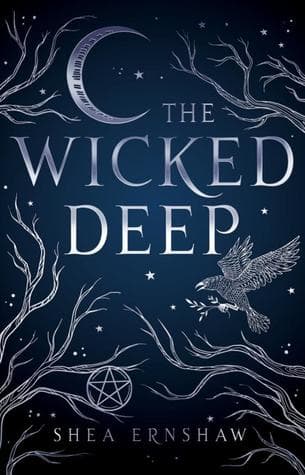
Shea Ernshaw (2018)
Genre
Fantasy / Mystery / Young Adult / Romance
Reading Time
310 min
Key Themes
See below
Sign in to track this book
In the cursed town of Sparrow, where drowned witch sisters return annually to steal bodies and lure boys to their deaths, a local girl must choose between saving a mysterious newcomer and succumbing to the town's wicked legacy.
Seventeen-year-old Penny Talbot lives in Sparrow, a small island town cursed by the spirits of three sisters — Marguerite, Aurora, and Hazel Swan — who were drowned for witchcraft two centuries ago. Every summer, for two weeks, their spirits return to possess three local girls, luring boys into the sea to drown them as revenge. Penny, who grew up with this tradition, works at her grandmother's lighthouse, a memorial for the drowned boys. The townspeople are wary, preparing for the annual 'drowning season,' marked by the ringing of the church bell. Penny thinks about her family's history in Sparrow and the fear that affects the community as the eve of the sisters' return approaches.
Just before the curse awakens, a mysterious boy named Bo Carter arrives in Sparrow, looking for information about his brother, Alex, who disappeared there a year prior. His arrival makes him an outsider and a target of suspicion among the townspeople, who are used to strangers avoiding Sparrow during the drowning season. Penny meets Bo and is drawn to his vulnerability and his ignorance of the town's dark secret. She feels a conflicting urge to warn him and to keep him distant, knowing that any boy in Sparrow during this time is in danger. Bo's presence disrupts the town's routine and challenges Penny's acceptance of their cursed fate.
As the drowning season begins, the spirits of the Swan sisters possess three local girls: Rose, Celeste, and May. Penny sees the eerie change in these girls, noting the subtle but chilling shifts in their behavior and eyes. The town waits for the inevitable. Soon, a local boy is found drowned, pulled from the harbor, confirming the sisters' return and bringing a fresh wave of terror through Sparrow. The town reacts with a mix of resignation and increased paranoia, turning against any perceived outsiders or those acting strangely. Penny feels the weight of the curse more strongly than ever, especially with Bo still in town.
Bo continues his search for his missing brother, Alex, questioning Penny and other townspeople. He finds Alex's hidden journal, filled with cryptic entries about the Swan sisters and local folklore, suggesting Alex was investigating the curse. Bo begins to suspect that the drownings are not just supernatural but involve human interference. Meanwhile, Penny struggles with her growing feelings for Bo and her own family's deep connection to the curse, which she has kept hidden. She knows that her grandmother has old knowledge about the sisters and the town's history, and that her family has a unique role in the curse, passed down through generations. This secret strains her interactions with Bo.
Penny's grandmother, Midge, reveals a key piece of forgotten history: there was a fourth Swan sister, a twin named Mercy, who was not drowned with her sisters. Mercy could absorb the powers of other witches and helped create the curse, binding her sisters' spirits to Sparrow. Midge explains that Mercy, consumed by grief and rage, arranged the annual return, ensuring the town would suffer for its injustice. This revelation changes Penny's understanding of the curse and the Swan sisters, showing them not just as victims but as powerful, vengeful entities. This new information suggests a deeper, more personal connection to the curse for the Talbot family.
Midge reveals the shocking truth: Penny is a direct descendant of Mercy Swan, the fourth sister, and has Mercy's unique ability to absorb and channel the power of other witches. Penny's ancestor, Elara, was Mercy. This means Penny is not just an observer of the curse but an integral part of it, the vessel through which Mercy's power, and thus the curse itself, is sustained. The curse demands a sacrifice from Mercy's bloodline to continue. Penny grapples with the implications of this legacy, realizing her family's role in continuing the drownings, and that she herself is a living link to the source of the town's suffering.
As the two weeks of the curse pass, the possessed girls — Rose, Celeste, and May — become bolder and more dangerous. They target Bo more directly, trying to lure him into the water. Bo, with Alex's journal and his own observations, grows more convinced that the curse has a physical component beyond just the supernatural. He confronts Penny, sharing his theories and his fear that the town is actively conspiring or enabling the drownings. Penny, burdened by her secret, struggles to protect him without revealing her true nature and her family's past. The tension in Sparrow increases, and the line between victim and perpetrator blurs.
Bo, through his own investigation and clues, discovers Penny's true identity as a descendant of Mercy Swan and realizes her connection to the curse. He confronts her, feeling betrayed by her secrecy and lies. Penny, in turn, must reveal the full extent of her family's involvement and the nature of Mercy's power. This revelation breaks the fragile trust that had begun to form between them. Bo feels endangered by Penny's very existence, and Penny is heartbroken by the potential loss of the only person who has truly seen her beyond the curse. The stakes for both of them become intensely personal.
Midge explains that the curse requires a ritual of renewal, a sacrifice from Mercy's bloodline, to continue. Every generation, a descendant of Mercy must choose to either accept the power and continue the curse, or refuse it, which would break the cycle but potentially unleash Mercy's full, uncontrolled wrath. This ritual is tied to the lighthouse, where Penny lives. Penny understands that her grandmother has been guiding her towards this choice, and that the fate of Sparrow, and perhaps even Bo, rests on her decision. She faces an impossible dilemma: embracing a dark legacy or risking an unknown, potentially catastrophic, outcome.
Penny faces the ultimate choice: embrace Mercy's power, absorb the Swan sisters' spirits, and become the new architect of the curse, saving Bo but condemning Sparrow to eternal suffering. Or, refuse, breaking the curse but potentially unleashing Mercy's raw, destructive power without a vessel. Driven by her love for Bo and a desire to end the violence, Penny chooses to absorb the Swan sisters' spirits into herself, ending their ability to possess others and drown boys. However, in doing so, she becomes the new vessel for Mercy's power, taking on the burden of the curse herself. This act isolates her, but saves Bo and frees Sparrow from the annual terror.
With Penny's sacrifice, the curse on Sparrow is lifted. The possessed girls return to normal, and the town is safe from the annual drownings. However, Penny is forever changed, now carrying the immense power and burden of Mercy Swan. She can no longer be with Bo without endangering him, as Mercy's power now resides within her. Bo, understanding her sacrifice, leaves Sparrow, knowing that their love cannot exist under these circumstances. Penny remains in Sparrow, embracing her new role as the silent guardian against Mercy's full power, ensuring the town's safety but living a solitary life. The ending is bittersweet, with freedom bought at a great personal cost.
The Protagonist
Penny transforms from a passive observer of the curse into its active, self-sacrificing guardian, embracing her inherited power to save her town and the boy she loves.
The Love Interest / Catalyst
Bo arrives as an outsider seeking answers and leaves with a greater understanding of the supernatural, having faced death and lost his love due to a curse he initially dismissed.
The Supporting
Midge fulfills her role as the keeper of ancient knowledge, guiding Penny to understand and ultimately embrace her destiny as the new vessel for Mercy's power.
The Antagonist (spirit)
Her spirit, along with her sisters', is ultimately absorbed by Penny, ending her two-century cycle of revenge.
The Antagonist (spirit)
Her spirit, along with her sisters', is ultimately absorbed by Penny, ending her two-century cycle of revenge.
The Antagonist (spirit)
Her spirit, along with her sisters', is ultimately absorbed by Penny, ending her two-century cycle of revenge.
The Antagonist (historical / conceptual)
Mercy's centuries-long curse is finally contained when her power and the spirits of her sisters are absorbed by her descendant, Penny, bringing an end to the annual drownings.
The Mentioned
Alex's unseen journey into the curse's mystery ultimately serves as the catalyst for his brother's arrival and the eventual breaking of the curse.
The novel explores how revenge is destructive and cyclical, especially through the Swan sisters' curse. Their initial desire for retribution against Sparrow for their unjust deaths leads to two centuries of annual drownings, continuing suffering instead of finding peace. Penny's decision to absorb the sisters' power, ending their revenge cycle, shows the personal cost required to break such a deeply entrenched pattern. The town itself is trapped by this cycle, unable to move forward or heal, showing how revenge harms not only its targets but also its perpetrators and those connected to them.
“Two hundred years of revenge, and still no peace.”
The theme of inherited guilt and legacy is central, as Penny discovers her direct lineage to Mercy Swan, the architect of the curse. She must confront her family's past and their role in continuing the town's suffering. This legacy is not just history but a living burden, as Penny inherits Mercy's powers and the responsibility for the curse's continuation or end. The townspeople also bear the legacy of their ancestors' actions, trapped by a curse born from past injustices. The story asks if one is bound by the sins of their ancestors or if they can forge a new path, as Penny ultimately tries to do.
“The curse was woven into the very fabric of our blood, a dark thread passed down through generations.”
The conflict between love and sacrifice drives the story, especially in Penny's relationship with Bo. Her growing love for him makes her consider breaking the curse, even if it means accepting a terrifying power and a solitary future. Her choice to absorb the Swan sisters' spirits is an act of self-sacrifice, ensuring Bo's safety and the town's freedom, but at the cost of her own happiness and their potential future together. This theme explores the idea that true love can demand the ultimate sacrifice, where personal desires are set aside for the greater good or the well-being of another.
“Sometimes, the greatest love means letting go, even when it tears you apart.”
Sparrow is a town built on secrets and deception. The full truth of the curse, especially the existence of Mercy Swan and Penny's lineage, is hidden from the townspeople and even from Penny herself for much of the story. Bo's arrival as an outsider, seeking the truth about his brother, helps these deceptions unravel. The town's collective denial and selective memory about its history help the curse continue. Penny's struggle to reveal her own secrets to Bo shows the personal cost of deception and the difficult path to truth, especially when that truth is terrifying.
“In Sparrow, the truth was often a whisper, easily drowned out by the roar of the sea and the weight of tradition.”
The central supernatural force driving the plot.
The curse of the Swan sisters is the primary plot device, establishing the central conflict and the town's unique, terrifying reality. It dictates the annual 'drowning season,' creating a ticking clock for the narrative and constant danger for characters like Bo. The curse's specific rules—three sisters possessing three girls, luring boys to their death—provide the framework for the supernatural events. Its mystery, particularly the hidden truth about Mercy Swan, drives Penny's personal journey and the overall unraveling of Sparrow's history.
A symbolic setting and a key location for the curse's ritual.
The lighthouse serves as Penny's home and a powerful symbol. It represents guidance and safety in a dangerous world, yet it also harbors the deepest secrets of the curse. Its elevated position offers a detached view of the town's suffering, mirroring Penny's initial role as an observer. Crucially, the lighthouse is revealed to be the site where the ritual to renew or break the curse must take place, making it a pivotal location for the climax and Penny's ultimate decision, linking her personal destiny to her home.
A crucial source of information and a catalyst for Bo's investigation.
Alex Carter's journal acts as a critical expositional device, providing Bo (and by extension, the reader) with initial clues and theories about the curse that go beyond local superstition. Its cryptic entries suggest a deeper, more complex truth, pushing Bo to investigate further and question the town's narrative. The journal's existence demonstrates that not everyone in Sparrow is oblivious or resigned, and it serves as a bridge between the supernatural and a more grounded, investigative approach to the mystery.
The physical manifestation of the curse's power and danger.
The possessed bodies of local girls (Rose, Celeste, May) serve as the direct agents of the curse, making the supernatural threat tangible and terrifying. Their transformation from familiar faces into eerie, seductive lures heightens the suspense and highlights the innocence lost to the curse. This device creates a moral dilemma for the townspeople, as they must fear their own daughters and neighbors. It also provides a visual representation of the sisters' power and the immediate threat to boys like Bo.
“We are all made of water, and the sea remembers.”
— A recurring theme about the island's connection to the ocean and its history.
“Some secrets are meant to stay buried, even if they're still beating.”
— Penelope's internal struggle with the island's dark past and her own role.
“The island was a living thing, breathing in the fog and exhaling its secrets.”
— Describing the mystical and sentient nature of the island of Penance.
“Love, I’d learned, was a dangerous thing on Penance. It was a current that could pull you under.”
— Penelope reflecting on the tragic romances tied to the island's curse.
“Every year, the sea claims its due.”
— Referring to the annual tradition of the summer boys disappearing.
“There are always two sides to a story, and often, neither one is entirely true.”
— Penelope questioning the historical narratives surrounding the witches.
“Grief, I’d learned, was a ghost that haunted the living.”
— Penelope's experience with loss and the lingering presence of those who are gone.
“The ocean doesn’t care about your plans or your hopes. It simply is.”
— Highlighting the indifferent and powerful force of the sea.
“Sometimes, the things we fear the most are the things we need to face.”
— Penelope's journey of confronting the island's curse and her own destiny.
“We don’t choose our magic, it chooses us.”
— A realization about the inherent nature of the witches' powers.
“The past wasn't buried; it was just sleeping.”
— Emphasizing how the island's history continues to influence the present.
“There’s a difference between wanting to be free and knowing how to be.”
— Penelope's struggle with escaping the island's curse and finding true liberation.
“The dead don’t lie, but they don’t always tell the whole truth either.”
— Penelope interpreting clues and revelations from the spirits of the past.
“Some curses aren't meant to be broken. They're meant to be understood.”
— A shift in perspective on how to deal with the ancient curse.
Ready to see how well you understood this book? Take our interactive quiz with 10 questions.

Biography coming soon.







