“The gods have no favourites. They merely use us.”
— Merlin reflecting on the fate of kings and men.

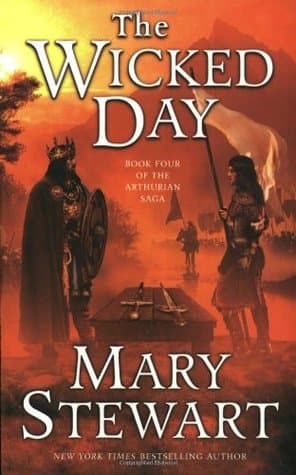
Mary Stewart (1983)
Genre
Fantasy / Historical Fiction
Reading Time
9-10 hours
Key Themes
See below
Sign in to track this book
As Arthur's golden age ends, Mordred's shadow grows, destroying Camelot from within and leading to an inevitable, tragic end.
Mordred grows up in the Orkney Islands, believing he is the son of King Lot and Queen Morgause. He is a sensitive and smart boy, often feeling like an outsider due to his mother's coldness and his brothers' wildness. His life is connected to the old ways of the north, with a strong link to nature and a sense of coming doom. One day, a stranger tells Mordred he is not Lot's son, but the result of an incestuous union between King Arthur and Morgause, a secret kept to prevent a prophecy of Arthur's fall. This news shatters Mordred's world, filling him with wonder, fear, and anger towards his true father. He is then sent to Camelot, supposedly as a page, but with the unspoken tension of his true parentage hanging over him.
At Camelot, Mordred is struck by the grandeur and often shallow feel of Arthur's court. He meets King Arthur, who does not know their true relationship, and Mordred struggles to see the legendary king as a man. He watches the relationships between Arthur, Queen Guinevere, and the knights, especially Lancelot, whose close bond with Guinevere is an open secret. Mordred feels lonely and isolated, despite being surrounded by people. He finds some comfort with Nimue, the Lady of the Lake, who offers him guidance. He begins to learn court customs, his sharp mind making him a quick learner, though he remains an outsider.
As Mordred gets older, he becomes a squire and then a knight, known for his quiet skill and strategic thinking. He struggles with the secret of his birth, always torn between wanting Arthur's acceptance and a simmering anger about his existence. Merlin, before leaving, gives Mordred vague warnings about his fate and choices. Mordred also sees the growing problems in Camelot: the rumors about Lancelot and Guinevere get louder, the Round Table's unity begins to break, and Arthur himself seems weighed down by his kingship. Mordred's inner conflict grows as he deals with his identity and the dark prophecy, feeling both drawn to and pushed away by his powerful father.
Mordred, now a respected knight, observes the political maneuvering and personal dramas in Camelot. He sees the increasing tension among court factions, especially the growing dislike for Lancelot. He sees how Arthur's ideals are slowly worn down by his knights' betrayals and failures. Mordred's own relationships are complex; he forms a careful friendship with Gawain but remains wary of others. He is especially sensitive to Guinevere's suffering and Arthur's unspoken pain. While he does not actively try to harm Arthur, his presence and the knowledge of his true identity subtly add to the unease. He feels a growing sense of certainty, as if the prophecy is slowly guiding events to their tragic end, despite his own wish for peace.
The truth of Mordred's birth is eventually revealed to King Arthur, though the exact details are vague. This news devastates Arthur, confirming his worst fears and the ancient prophecy that a son from his incestuous union would destroy him. The knowledge creates a huge barrier between father and son. Arthur, while acknowledging Mordred, cannot fully accept him, always seeing the shadow of his own sin and the coming doom. Mordred, in turn, feels the sting of Arthur's distant affection and the burden of his cursed heritage. This strained relationship causes deep pain for both, further isolating Mordred and deepening Arthur's sense of tragedy. The court, now aware of the scandal, sees Mordred with fear and suspicion, solidifying his role as an outcast.
The long-standing affair between Sir Lancelot and Queen Guinevere, once an open secret, is finally exposed. Agravaine, Mordred's brother, driven by anger and a desire to break down Arthur's court, arranges this public revelation. The exposure throws Camelot into chaos. Lancelot must flee, and Guinevere is condemned to death for treason. Arthur is heartbroken, torn between his love for his wife, his loyalty to his best knight, and the laws and honor he established. Mordred watches this disaster with mixed feelings: a sense of tragedy for Arthur, a recognition of the inevitable results, and perhaps a subtle satisfaction that the moral decay he saw is now clear. The event marks a clear turning point, signaling the beginning of the end for the Round Table.
After Lancelot rescues Guinevere and she retreats to a convent, Arthur is forced by honor and justice to pursue Lancelot. He besieges Joyous Gard, Lancelot's castle, drawing the kingdom into civil war. Mordred, caught in the growing conflict, is given various duties, often finding himself in a hard position. He sees the pointlessness and tragedy of Arthur fighting his most loyal friend. The siege is long and costly, draining Arthur's resources and further dividing his kingdom. The once-united Round Table is now broken, with knights forced to choose sides. Mordred observes the devastating impact of this internal fight, realizing that the very foundations of Arthur's rule are crumbling, sped up by the king's strict adherence to a code that no longer serves the greater good.
Despite many pleas, Arthur feels honor-bound to follow Lancelot to France, intending to bring him to justice for abducting Guinevere and killing several knights. Before leaving, Arthur, out of desperation and a lack of other suitable people, reluctantly names Mordred as regent of Britain. This decision is met with worry by the remaining loyal knights, who distrust Mordred due to his parentage and his perceived aloofness. Mordred accepts the responsibility with a heavy heart, understanding the huge burden and the uncertainty of his position. He is left to govern a kingdom already weakened by internal conflict and now facing the added stress of its king's absence, a situation ripe for more instability and betrayal.
While Arthur is in France, fighting Lancelot, rumors spread throughout Britain, fueled by opportunists and those who resent Arthur's rule. Mordred, initially struggling with the weight of regency, finds himself increasingly swayed by ambitious nobles and his own growing sense of entitlement and resentment. He becomes convinced, perhaps genuinely, that Arthur has abandoned Britain and that a new ruler is needed. With the support of various groups, Mordred makes the fateful decision to take the throne, declaring Arthur dead and himself the new king. This act is the result of his lifelong struggles with identity, his perceived rejection by Arthur, and the dark prophecy that has followed him since birth, setting the stage for the final confrontation.
News of Mordred taking the throne reaches Arthur in France, forcing him to stop his campaign against Lancelot and return to Britain to reclaim his kingdom. He lands on Britain's shores, where loyalists are ready to fight for their king. Mordred, now established as a usurper, gathers his own forces, ready to defend his claim. The two armies meet on the plains of Camlann, a desolate and misty battlefield. The battle is fierce and bloody, a tragic clash between father and son, and the final, devastating end of the age of Camelot. Both sides suffer huge losses, and Britain's best knights are destroyed in the civil war, fulfilling the ancient prophecies of doom.
Amid the carnage of the Battle of Camlann, Arthur sees Mordred on the battlefield. Driven by desperate fury and the weight of all the betrayals and tragedies that led to this moment, Arthur charges his son. Mordred, recognizing his father, stands to meet him. Their duel is the story's climax, a deeply personal and symbolic struggle between the old order and the new, between father and son, fate and choice. In a final, desperate lunge, Arthur fatally wounds Mordred, but not before Mordred deals a mortal blow to Arthur. Both fall, mortally wounded, bringing a tragic end to their intertwined lives and to the legendary reign of King Arthur.
After the duel, the few remaining loyal knights find King Arthur gravely wounded. Sir Bedivere, one of the last survivors, is told to return Excalibur to the Lady of the Lake. He struggles with this command, trying to hide the sword twice before finally obeying. Arthur is then carried away by mysterious women on a barge, bound for Avalon, the mythical island where he is said to rest and await his return. With Arthur's departure, the age of Camelot truly ends. The Round Table is broken, its ideals shattered, and Britain is left in ruin and despair. The story ends with a deep sense of loss and the lingering question of whether Arthur will ever return, leaving a melancholic and reflective mood.
The Protagonist/Antagonist
Mordred's arc is a tragic descent from an innocent, if burdened, boy into the instrument of Arthur's destruction, fulfilling a prophecy he never truly desired.
The Protagonist/Tragic Hero
Arthur's arc is one of noble aspiration and eventual tragic decline, as his kingdom crumbles under the weight of internal strife and the fulfillment of ancient prophecies.
The Supporting
Guinevere's arc moves from a beloved queen to a figure of scandal and eventual atonement, living with the consequences of her choices.
The Supporting
Lancelot's arc is one of a peerless knight whose personal failings lead to his downfall and the ruin of the kingdom he served.
The Antagonist/Mentioned
Morgause's arc is largely in the past, her actions serving as the catalyst for the central conflict, shaping Mordred's destiny from afar.
The Supporting
Nimue's arc is one of a watchful guardian, observing and subtly influencing events, ultimately receiving the symbols of a fading era.
The Supporting
Gawain's arc is one of a steadfast knight whose loyalty to Arthur and his family leads him into tragic conflict, ultimately dying in battle.
The Mentioned
Merlin's arc is largely completed before the main events, his legacy being the prophecies and warnings that shape the unfolding tragedy.
This theme explores how much characters, especially Mordred and Arthur, can change or avoid a predetermined fate. Mordred is born under a dark prophecy, and much of his life involves dealing with this knowledge. Despite wanting a different path, circumstances and his own choices often lead him to fulfill the prophecy. Arthur also knows about the doom over his reign, yet his commitment to honor and law, and his personal flaws, seem to inevitably lead to his downfall. The story suggests that while characters have choices, the weight of old prophecies and past actions can make certain outcomes feel unavoidable, as seen in the final, tragic duel at Camlann.
““For all a man’s striving, the tide of fate could not be turned.””
The story shows how hidden truths and unacknowledged guilt grow and eventually cause destruction. Arthur's incestuous sin with Morgause, and the hidden truth of Mordred's parentage, are the core secrets that break his kingdom. Mordred's entire life is shaped by this hidden truth, leading to his isolation and anger. Similarly, the long-secret affair between Lancelot and Guinevere, though known by many, becomes a public scandal that shatters the Round Table. The burden of these secrets and the guilt they create directly lead to the mistrust, division, and collapse of Camelot, showing that what is hidden often has the most destructive power, as seen when the affair's exposure leads to civil war.
““Secrets are like poison, Mordred. They fester and corrupt everything they touch.””
The novel tracks the decline of the noble ideals King Arthur tried to establish with the Round Table. What starts as a vision of justice, peace, and unity slowly breaks down due to internal conflict, human flaws, and the clash between old traditions and new moral rules. The knights, once symbols of virtue, give in to pride, jealousy, and forbidden desires, shown by Lancelot's affair and Agravaine's vengeful plans. Arthur himself, by strictly following a code of honor that demands he pursue Lancelot, unintentionally speeds up his own destruction. The Battle of Camlann is not just a physical fight but a symbolic end to an age of idealism, replaced by chaos and despair, showing how even the best intentions can be ruined by reality.
““The glory of Camelot was a fragile thing, built on dreams and held by the thread of men’s frail loyalties.””
Mordred's journey is shaped by his struggle with identity and his search for belonging. Born of a forbidden union and raised by false parents, he is an outsider from the start. His true identity as Arthur's son brings him power but also isolates him further, as he is viewed with suspicion and fear due to the prophecy. He longs for Arthur's fatherly love but receives only distant acknowledgment, fueling his anger and contributing to his tragic choices. This theme explores the psychological impact of being defined by one's birth and fate rather than one's own character, ultimately leading Mordred to take on a role he might not have otherwise chosen, as he never truly finds a place where he feels fully accepted and understood.
““He was the son of a king and a queen, yet he was also the child of a sin, a prophecy, and a curse. Where, then, was his true place?””
Preordained events that guide the characters' destinies.
The ancient prophecy of Arthur's downfall by a son born of incest is the overarching plot device. It is revealed early in the story and constantly looms over Arthur and Mordred. It creates dramatic irony, as characters often act in ways that inadvertently fulfill the prophecy, even when trying to avoid it. The prophecy shapes Mordred's identity and drives many of Arthur's decisions, making the tragic ending feel both inevitable and deeply personal. It also serves to heighten the sense of doom and the struggle between fate and free will.
The forbidden union that produces the catalyst for the kingdom's end.
Mordred's birth from the incestuous union of King Arthur and his half-sister Morgause is the foundational event of the plot. It is not merely a scandalous detail but the direct cause of the prophecy of Arthur's destruction. This plot device creates a deep sense of guilt for Arthur and a profound burden of identity for Mordred. It establishes the initial conflict and moral stain that permeates the entire narrative, contributing to Mordred's resentment and the court's eventual distrust of him, directly leading to the final confrontation.
The affair between Arthur's queen and his greatest knight.
The illicit love affair between Queen Guinevere and Sir Lancelot serves as a major catalyst for the internal collapse of the Round Table. It introduces a deep moral failing within Arthur's most trusted circle, undermining the very ideals of chivalry and loyalty he sought to uphold. Its eventual public exposure leads directly to civil war, dividing the kingdom and weakening Arthur's authority, paving the way for Mordred's usurpation. This device provides the emotional core of betrayal that shatters the unity of Camelot.
Arthur's departure from Britain, leaving Mordred in power.
Arthur's decision to leave Britain to pursue Lancelot in France, entrusting Mordred with the regency, is a critical plot device. It removes the central authority figure, creating a power vacuum and an opportunity for Mordred to seize the throne. This absence allows the simmering resentments and ambitions within the court to boil over, directly leading to Mordred's usurpation. It highlights Arthur's tragic flaw of adhering to a code of honor even when it endangers his kingdom, setting the stage for his final, fatal return.
“The gods have no favourites. They merely use us.”
— Merlin reflecting on the fate of kings and men.
“There is no joy in being a king, only a heavy responsibility.”
— Arthur contemplating the burdens of his crown.
“Love is a strange thing. It can make a man strong, or it can destroy him.”
— Mordred observing the relationships around him.
“The past is a chain, and we are all bound by it.”
— Merlin speaking about the inescapable nature of prophecy and history.
“A man's worth is not in his birth, but in his deeds.”
— Arthur's philosophy on leadership and merit.
“Even the strongest walls will crumble in time.”
— A reflection on the transience of power and empires.
“Fear is a cold companion, and it breeds betrayal.”
— Mordred's internal thoughts on the motivations of his allies.
“The truth is a sharp sword, and it cuts both ways.”
— Merlin warning about the consequences of revealing hidden truths.
“Hope is a fragile thing, easily broken, but essential to life.”
— A general observation on the human spirit amidst hardship.
“Some battles are fought not with swords, but with words.”
— Merlin advising Arthur on political maneuvering.
“The greatest victory is to know when to yield.”
— A lesson learned by a character facing insurmountable odds.
“Darkness breeds in the shadows of ambition.”
— A commentary on the corrupting nature of unchecked desire for power.
“The threads of destiny are woven by many hands, not just one.”
— Merlin's understanding that fate is a complex interplay of choices.
“To forget the past is to be condemned to repeat it.”
— A historical lesson emphasized throughout the narrative.
Ready to see how well you understood this book? Take our interactive quiz with 10 questions.
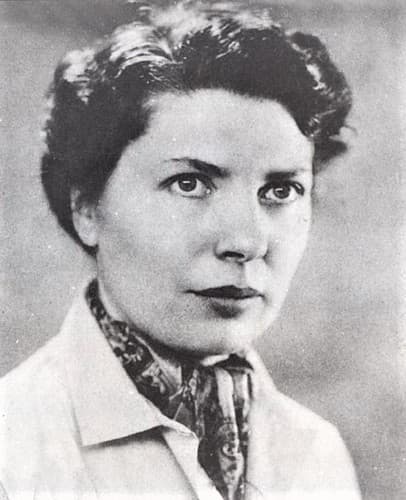
Biography coming soon.







