“I am not afraid of the future. I am the future.”
— Elizabeth of York asserting her destiny and power.

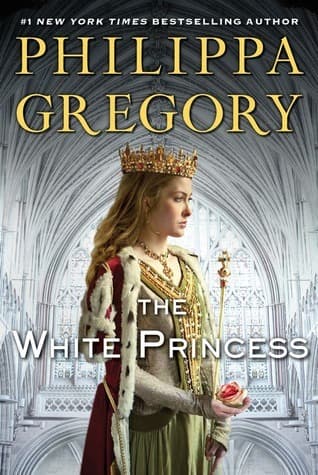
Philippa Gregory (2013)
Genre
Historical Fiction / Romance
Reading Time
9-10 hours
Key Themes
See below
Sign in to track this book
Elizabeth of York, caught between her marriage to the conquering Tudor king and the lost York prince who threatens his rule, navigates a dangerous court where love, loyalty, and the English crown are at stake.
After Richard III's defeat and death at Bosworth, Elizabeth of York, King Edward IV's eldest daughter, becomes a tool in Henry Tudor's effort to secure the English throne. Despite her grief and belief that she was promised to Richard, Elizabeth must accept Henry's marriage proposal. The marriage is a political necessity, intended to unite the warring houses of Lancaster and York. Elizabeth arrives at Henry's court, secretly pregnant with Richard's child. Her mother, Elizabeth Woodville, the former White Queen, subtly guides her, urging her to secure her position and protect the Yorkist line within the new Tudor dynasty, even if it means having Henry's children.
Elizabeth gives birth to a son, Arthur, securing the Tudor succession. Despite this political win, Elizabeth struggles with her new role as queen and her complex feelings for Henry. She often thinks of her two younger brothers, the Princes in the Tower, whose fates are unknown. Her mother, Dowager Queen Elizabeth Woodville, believes one or both may be alive, fueling Elizabeth's secret hope and fear. The court is full of whispers and plots, with many Yorkist loyalists still not accepting Henry Tudor as king. Elizabeth feels constant pressure to prove her loyalty to Henry while secretly wanting news of her lost family.
Elizabeth Woodville, a shrewd politician, continues to influence events from the background, subtly undermining Henry's rule and encouraging hopes for a Yorkist return. Her actions, including talking with European courts and her belief in her sons' survival, do not go unnoticed by Henry and his mother, Lady Margaret Beaufort. Eventually, fearing her power and potential for rebellion, Henry orders Elizabeth Woodville confined to Bermondsey Abbey, removing her direct influence over Queen Elizabeth. This deeply saddens and worries Elizabeth, making her feel more isolated in the Tudor court.
The first major challenge to Henry VII's reign comes from Lambert Simnel, a boy presented as Edward Plantagenet, Earl of Warwick, Elizabeth's cousin, who was thought to be imprisoned in the Tower. Simnel gains much support, especially from Margaret of Burgundy, Elizabeth's aunt and a strong Yorkist. Henry must show the real Edward Plantagenet to disprove Simnel's claim. The rebellion ends at the Battle of Stoke Field, where Henry's forces defeat the rebels. Simnel is captured and, because of his youth and clear manipulation, is given a job in the royal kitchens instead of being executed, a surprising act of mercy from Henry.
Despite the political maneuvering and constant threat of rebellion, a fragile affection grows between Elizabeth and Henry. They share the burden of ruling a volatile kingdom and raising their children, including their second son, Henry, and daughters Margaret and Mary. Elizabeth finds herself increasingly drawn to Henry's intelligence and dedication to England, even as she deals with her past loyalties. Their shared vulnerability against an uncertain future for the Tudor dynasty creates a bond, making their political marriage become more personal. Elizabeth begins to see Henry not just as her captor, but as her partner.
Years after Simnel, a more dangerous and convincing pretender appears: Perkin Warbeck, claiming to be Richard, Duke of York, Elizabeth's younger brother, one of the Princes in the Tower. Warbeck is handsome, smart, and knows much about the Yorkist court, convincing many, including Margaret of Burgundy and some English nobles, that he is real. Elizabeth is torn; part of her desperately wants to believe he is her brother, while another part, now loyal to Henry and their children, fears the chaos he could cause. His reappearance throws Elizabeth into emotional turmoil, forcing her to confront her deepest family loyalties against her duties as queen.
Perkin Warbeck's appearance causes deep internal conflict for Elizabeth. She is caught between her duty to her husband, King Henry, and their children, and a powerful longing for her lost brother, Richard. She remembers childhood moments, looking for truth in Warbeck's claims. Henry, always practical, sees Warbeck as a serious threat to his fragile dynasty, but Elizabeth's emotional distress is clear. She secretly sends a trusted servant to investigate Warbeck, hoping for proof to either accept him as her brother or reject him as an impostor. This time tests her identity and her marriage.
Perkin Warbeck, with support from various European powers, including Scotland, tries several invasions of England. Each attempt, however, is met with Henry VII's strategic and military strength. Warbeck's forces are defeated, and he is captured. During his imprisonment, Henry questions him, trying to find out his true identity and the extent of his support. Elizabeth, though relieved by Henry's victory, remains haunted by the 'what if' regarding Warbeck's true identity. Warbeck's capture, however, still leaves the question of the Princes in the Tower unanswered for many, including Elizabeth herself.
After attempting to escape from the Tower, Perkin Warbeck is executed. More tragically for Elizabeth, Henry decides to also execute Edward Plantagenet, the true Earl of Warwick, who had been imprisoned since childhood. Henry sees Edward as too dangerous a symbol for any future Yorkist rebellion, even though he was innocent of any plotting. This dual execution removes the last direct male heirs of the House of York, securing the Tudor claim to the throne. Elizabeth is devastated by her cousin's loss, seeing it as the final, brutal end to the white rose and the complete triumph of the red. She grieves not only for Edward but for her family's final demise.
Just as the Tudor dynasty seems secure, tragedy strikes. Prince Arthur, Elizabeth and Henry's eldest son and heir, marries Catherine of Aragon but dies shortly after, leaving the young couple childless. This loss deeply affects Elizabeth, both as a mother and as a queen. It not only breaks her heart but also destabilizes the Tudor succession, putting immense pressure on her to provide another male heir. Arthur's death reminds everyone of life's fragility and power, casting a shadow over the royal family and reigniting fears for the new dynasty's future.
Despite her grief and declining health, Elizabeth becomes pregnant again, determined to secure the Tudor line after Arthur's death. She gives birth to a daughter, Katherine, but falls ill shortly after, dying from puerperal fever on her 37th birthday. Her death is a profound loss for King Henry, who has come to deeply love and rely on her. Elizabeth, the White Princess, dies having united the warring houses and given birth to the Tudor dynasty. Her life was marked by loss, political maneuvering, and a constant struggle between her personal loyalties and her duties as queen. Her legacy is the stability she brought to England through her marriage and her children.
The Protagonist
Elizabeth transforms from a grieving, reluctant bride into a powerful queen and a loving wife, ultimately choosing the stability of her new family over the ghosts of her past.
The Protagonist/Antagonist
Henry evolves from a solitary, suspicious conqueror to a king who learns to trust and love his queen, though his paranoia about the throne never truly diminishes.
The Supporting
From a powerful queen mother, she is eventually sidelined and confined, her influence waning but her spirit of defiance never truly broken.
The Antagonist/Supporting
Margaret remains consistently dedicated to the Tudor cause, her ambition and piety shaping her role as a formidable power behind the throne.
The Mentioned
His arc is concluded before the book begins, but his lingering presence profoundly shapes Elizabeth's journey.
The Antagonist
He rises as a credible threat to the Tudor throne, only to be defeated and executed, ultimately solidifying the end of the Yorkist challenge.
The Supporting
His life is brief but significant, his death creating a crisis of succession and deep grief for his parents.
The Supporting
Her brief marriage and widowhood mark her as a significant figure in the Tudor succession, despite her limited direct interaction in this narrative.
This theme is key to Elizabeth's journey. She is constantly torn between her deep loyalty to her Yorkist family, especially Richard III's memory and her brothers' possible survival, and her duty as queen to Henry Tudor and their children. Her internal conflict about Perkin Warbeck shows this, as she desperately wants to believe he is her brother but knows it would destabilize her family and England. This theme explores the personal cost of political necessity and the hard choices people make when their heart conflicts with their obligations to crown and country.
““I am the White Princess, but my heart is still the white rose.””
The novel shows how brutal it was to gain and keep power in 15th-century England. Henry Tudor's constant paranoia, his executions of perceived threats like Edward Plantagenet, and Elizabeth Woodville's banishment all show how far people go to secure their position. Elizabeth of York herself must make compromises and sacrifices, suppressing her grief and past loyalties to ensure her own survival and that of her children within the new Tudor regime. The story emphasizes that the crown comes at a high personal and moral cost, requiring ruthless decisions and emotional suppression from those who hold it.
““There is no peace for a king, nor for his queen, while there is a single drop of royal blood that is not his own.””
Motherhood is a powerful force, driving many characters' actions. Elizabeth of York's main goal becomes protecting her children and securing their place in the Tudor line, even if it means sacrificing her own desires. Lady Margaret Beaufort's ambition is entirely for her son, Henry, and his dynasty. Elizabeth Woodville's plans are motivated by her desire to protect her daughters and the Yorkist legacy. The book highlights how women, even without direct political power, influence greatly through their roles as mothers, ensuring their family's name and power continue through their offspring.
““A woman's power is in her sons.””
The uncertainty surrounding the Princes in the Tower and Perkin Warbeck's identity is at the heart of this theme. The novel constantly questions what is 'true' and how much is shaped by political agendas and personal desires. For Elizabeth, the truth of her brothers' fates and Warbeck's identity is deeply personal, yet the court and the kingdom act on perceptions and strategic stories. This theme explores how history is written by the winners, and how individuals like Elizabeth must deal with the uncertainty of their past in the face of official 'truths.'
““Truth is a dangerous thing in a king’s court.””
The unresolved fate of Elizabeth's brothers drives much of the narrative's tension.
The enduring mystery of what happened to Edward V and Richard, Duke of York, after they were sent to the Tower of London, is a central plot device. It fuels Elizabeth of York's lingering hope for a Yorkist restoration, her emotional turmoil over Perkin Warbeck, and Henry VII's constant paranoia about pretenders. This unresolved question creates suspense and psychological depth, forcing characters to grapple with an ambiguous past that continually threatens to destabilize the present. It serves as a constant reminder of the fragility of the Tudor claim and the deep divisions within England.
Elizabeth and Henry's union as a tool for dynastic stability.
The marriage between Elizabeth of York and Henry Tudor is not one of love, but a calculated political alliance designed to unite the warring houses of Lancaster and York. This device establishes the initial conflict in their relationship and highlights the sacrifices made by royal individuals for the sake of national stability. It allows the narrative to explore how personal feelings can evolve within such a constrained arrangement, and how the demands of the state often override individual desires, shaping the characters' actions and emotional journeys.
Characters who challenge the legitimacy of Henry VII's rule.
The appearances of Lambert Simnel and Perkin Warbeck serve as crucial catalysts for conflict and character development. These pretenders embody the persistent threat to the fledgling Tudor dynasty and force Henry VII to continually prove his legitimacy through military and political means. For Elizabeth, they represent the painful resurfacing of her Yorkist past and trigger profound internal struggles about loyalty and truth. These figures are not merely historical footnotes but active agents in the plot, driving the primary tension and shaping the fates of the main characters.
“I am not afraid of the future. I am the future.”
— Elizabeth of York asserting her destiny and power.
“There are always choices. Even when it seems there are none.”
— Elizabeth reflecting on the limited options available to women of her era, but insisting on agency.
“A queen must be a mother, a wife, and a ruler. And sometimes, she must be a warrior.”
— Elizabeth contemplating her multifaceted role and responsibilities.
“Love is a dangerous thing in a world where power is everything.”
— Elizabeth recognizing the vulnerability that comes with genuine affection amidst political machinations.
“We are all prisoners of our blood, our birth, and our time.”
— Elizabeth acknowledging the constraints of her royal lineage and historical period.
“To be a queen, you must learn to wear your crown, even when it feels like a burden.”
— Elizabeth's internal struggle with the weight of her responsibilities.
“The past is a serpent that coils around the present, ready to strike.”
— Elizabeth's constant awareness of past events influencing current politics and threats.
“Sometimes, the greatest strength is to pretend to be weak.”
— Elizabeth employing strategic deception in a male-dominated court.
“A woman's power lies in her children, and in her ability to protect them.”
— Elizabeth's focus on her role as a mother and the importance of her offspring for the dynasty.
“Trust is a fragile thing, easily broken, hard to mend.”
— Elizabeth's experiences with betrayal and the difficulty of forming alliances.
“Silence can be a weapon, as sharp as any sword.”
— Elizabeth choosing her words carefully, or not speaking at all, to maintain control.
“History is written by the victors, but the truth lives in the hearts of those who remember.”
— Elizabeth's awareness of how narratives are shaped and her own family's history being rewritten.
“Even in the darkest times, there is always a flicker of hope, if you are brave enough to seek it.”
— Elizabeth's enduring optimism despite constant threats and personal losses.
“To be a princess is to be a prize, but to be a queen is to be a player.”
— Elizabeth's transition from a pawn in political games to a powerful figure in her own right.
“The greatest battles are not fought on the field, but in the heart.”
— Elizabeth's internal struggles with love, duty, and grief.
Ready to see how well you understood this book? Take our interactive quiz with 10 questions.

Biography coming soon.







