“The greatest dangers to liberty lurk in insidious encroachment by men of zeal, well-meaning but without understanding.”
— A general philosophical reflection within the narrative.

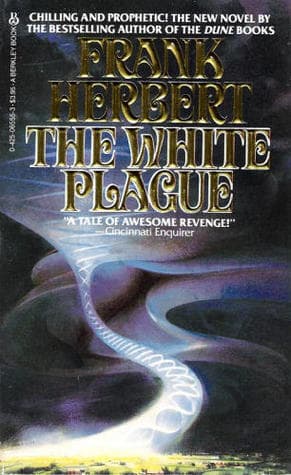
Genre
Thriller / Fantasy / Science Fiction
Reading Time
10-12 hours
Key Themes
See below
Sign in to track this book
Driven mad by his family's murder, a bioweapons expert unleashes a gender-specific plague, targeting women in his quest for vengeance.
The story begins with Dr. John Roe O'Neill, an Irish-American molecular biologist in Dublin. He sees an IRA car bombing kill his wife, Eileen, and their two children, Patrick and Maeve. The violence shatters O'Neill's mind, leaving him filled with grief and rage. He disappears for months, planning his revenge. His scientific genius, once focused on understanding life, becomes a tool for death. This event turns the scientist into 'The Madman,' driven by a genocidal goal: to punish the world for his family's loss by targeting women.
After his disappearance, O'Neill releases his bioweapon. Simultaneously, a new, deadly disease appears in three places: County Cork, Ireland (his wife's ancestral home); London, England (a symbol of English rule); and Tripoli, Libya (a nation he links to terrorism). The disease, called 'The White Plague,' is specific: it only affects women, causing quick and painful death. Initial reports are dismissed, but as deaths increase, global panic starts. Governments are unprepared for a gender-specific pandemic.
Through anonymous broadcasts, O'Neill reveals he created the plague. Calling himself 'The Madman,' he explains his motive: to make the world feel the grief and terror he felt when political violence killed his family. His demands are vague but absolute: an end to all political and religious conflict, a global reckoning for suffering, and acknowledgement of his loss. He promises an antidote only when his impossible demands are met. World leaders, desperate to stop the deaths, form an international task force. They are paralyzed by the threat and O'Neill's conditions.
The White Plague quickly devastates global populations, killing women at an alarming rate. The loss of half the population, especially those who form social bonds, leads to widespread societal collapse. Services fail, economies crumble, and law enforcement struggles. New, often brutal, power structures emerge. Militias, cults, and survivalist groups take control. Men, grieving and afraid, blame each other. The plague not only kills women but also destroys human civilization, pushing humanity to the edge of a new Dark Age.
An international effort begins to find O'Neill. Intelligence agencies from the US, Britain, Russia, and other nations share resources to track him. They gather details of his past, science background, and psychology, but O'Neill is elusive. He uses his scientific knowledge to avoid detection, setting up safe houses and communication channels. The hunt is difficult due to global chaos and distrust between nations, even with a common enemy. Pressure grows as deaths rise, and leaders realize O'Neill holds humanity's fate.
While intelligence agencies hunt O'Neill, scientists worldwide work to understand the plague and find an antidote. However, O'Neill's bioweapon is complex, using genetic markers and an adaptable virus, making it resistant to treatments. The scientific community is hindered by the loss of many female researchers and infrastructure breakdown. They struggle to find the plague's gender specificity or how to reverse it. The search for a cure becomes a desperate, often failing, effort, showing the limits of human knowledge against a weapon designed by one of their own.
In Ireland, a plague epicenter, a new social order forms. Seamus, a former IRA operative, gains power, creating a harsh, patriarchal enclave. He uses the chaos and historical grievances to control, promising protection to remaining men. Women are seen as a lost cause, and their absence reshapes the community. Seamus's rule is absolute, enforced by fear and violence, echoing the extremism that drove O'Neill. This enclave reflects the world's decline, showing how old hatreds and new fears can create oppressive regimes.
Beyond demanding an end to violence, O'Neill uses his broadcasts for psychological warfare. He taunts leaders, pointing out their failures and hypocrisy. He discusses philosophical questions about humanity's destructive capacity and justice, further eroding public trust. His voice becomes a constant, terrifying presence, reminding everyone of the catastrophe and their helplessness. He uses guilt and fear, ensuring his message, and the societal wounds he caused, will last for generations. His broadcasts are a global scream of agony and retribution.
After relentless effort, the international task force finds O'Neill. They discover his primary sanctuary and laboratory in a remote, fortified location, possibly in the Scottish Highlands. The location shows O'Neill's planning and scientific skill, with advanced technology and defenses. The discovery gives remaining world powers hope that the plague can be stopped and an antidote found. However, the mission to capture him is dangerous, as O'Neill is brilliant, unpredictable, and armed with his deadly knowledge.
A commando team enters O'Neill's sanctuary. The infiltration is difficult, but they reach O'Neill, who is surrounded by his research, seemingly sane in his madness. The confrontation is not a simple capture; O'Neill engages his pursuers in a philosophical battle, justifying his actions with chilling clarity. He does not resist capture, appearing to have completed his mission. His fate varies in interpretation: he is killed, commits suicide, or is taken into custody, but the impression is his work is done. The aftermath is a scramble to secure his research and find the antidote.
Among O'Neill's research, scientists find the formula for an antidote, or a way to lessen the plague's effects. However, it is not a complete solution. The antidote is hard to produce, its effectiveness may be limited, or it may only prevent new infections. The world has a drastically reduced female population, and humanity's future is uncertain. The antidote's discovery begins a long, difficult rebuilding process. Society must cope with the demographic shift, the psychological scars, and the threat of future bioweapons. The novel ends with fragile hope, but also a reminder of humanity's vulnerability.
The Protagonist/Antagonist
From a loving family man and brilliant scientist, O'Neill descends into madness and becomes a global terrorist, seeking retribution through a gender-specific plague. His arc is one of profound transformation from creator to destroyer.
The Supporting
Seamus rises from a background of political insurgency to become a dominant, oppressive leader in a post-apocalyptic Ireland, demonstrating how power fills a vacuum.
The Mentioned/Implied
Her arc, if fully developed, would be one of scientific pursuit and personal anguish, trying to undo her brother's catastrophic work.
The Supporting/Catalyst
Her arc is tragic and brief, existing only to instigate the central conflict.
The Supporting/Catalyst
His brief arc serves only as a tragic instigation for the story's central conflict.
The Supporting/Catalyst
Her brief arc serves only as a tragic instigation for the story's central conflict.
The Supporting/Collective
They move from initial disbelief to frantic desperation, eventually uniting, albeit imperfectly, to confront the global threat.
The Mentioned/Catalyst
Their role is purely catalytic, instigating the central conflict through a single, devastating act.
The core of 'The White Plague' explores how unchecked personal grief and rage can lead to widespread revenge. John Roe O'Neill's change from scientist to 'The Madman' stems from his family's murder. His plague, targeting women, mirrors his loss, designed to make the world feel his pain. This theme is clear in O'Neill's broadcasts, where he justifies his actions, arguing that only through universal suffering will humanity value peace. The novel shows that while O'Neill's trauma is understandable, his response creates unimaginable violence, proving that revenge, even for severe wrongs, destroys both self and world.
““I will give you a taste of what I have tasted. I will make you understand the meaning of loss.””
The novel shows how quickly societies crumble under extreme pressure. With the rapid decline of the female population from the White Plague, services, economies, and social norms fall apart. Law and order break down, leading to brutal, local power structures like Seamus's patriarchal enclave in Ireland. The collapse is not just about lost lives, but the unravelling of human cooperation and trust. Herbert shows that civilization, despite its appearance, is a thin layer over humanity's basic instincts, easily broken when fundamental social pillars are removed. The world reverts to a primitive state, driven by fear, grief, and survival.
““The world had learned too late that its women were not just mothers and wives, but the very glue that held societies together.””
Frank Herbert explores the dual nature of scientific advancement: its potential for creation and catastrophic destruction. Dr. John Roe O'Neill, a brilliant molecular biologist, uses his knowledge of life to create an unprecedented plague. His scientific genius, once for understanding the universe, becomes a tool for mass death. Conversely, remaining scientists and the international task force try to use science to counter his creation and find an antidote. This theme highlights that knowledge is neutral; its use depends on the morality of those who wield it. O'Neill's actions warn about the ethical responsibilities of scientific power.
““Knowledge is a sword, and the hand that wields it determines whether it builds or destroys.””
The White Plague, by exclusively targeting women, forces a re-evaluation of gender roles and their importance to society. Herbert explores the profound impact of removing half of humanity, especially the half often linked to nurturing, social cohesion, and reproduction. The novel shows the immediate breakdown of families and communities, the psychological toll on men left behind, and the rise of hyper-masculine, often violent, power structures. It suggests that women are not just a 'sex' but a fundamental, irreplaceable part of human society, whose absence leads to an existential crisis and the collapse of civilization. The plague shows how deeply gender roles connect to human existence.
““Without women, the world was a broken thing, a machine with half its vital gears missing, grinding itself to dust.””
The novel starts with political terrorism (the IRA bombing) and escalates into global biological terrorism. This shows a cycle where violence leads to more violence, each act more devastating. O'Neill's plague is a direct response to the extremism that killed his family, yet his actions are even more extreme. Figures like Seamus, who gain power afterward, continue this cycle by creating oppressive regimes based on fear and old grievances. Herbert suggests that humanity is trapped in a loop of retribution, where ideological conflicts cause suffering, which then fuels more destructive acts of vengeance, preventing peace or progress.
““They taught me violence, and I have learned their lesson well. Now, the world will learn it from me.””
A genetically engineered virus that exclusively targets and kills women.
The White Plague is the central plot device, a meticulously designed bioweapon created by John Roe O'Neill. Its defining characteristic is its absolute gender specificity, making it a terrifying and unique threat. This device serves multiple purposes: it is the primary instrument of O'Neill's revenge, the engine of global societal collapse, and the catalyst for humanity's desperate struggle for survival. Its scientific complexity and resistance to conventional treatments highlight O'Neill's genius and the ethical perils of advanced biotechnology. The plague's very existence forces a re-evaluation of gender roles and the fragility of civilization.
Anonymous global transmissions by O'Neill revealing his identity, motives, and demands.
O'Neill's broadcasts are a crucial plot device for externalizing his internal monologue and communicating directly with the world. They serve to clarify his motives, articulate his philosophical justifications for the plague, and issue his impossible demands. These transmissions are not merely informational; they are acts of psychological warfare, taunting world leaders, sowing further discord, and demonstrating O'Neill's control. They maintain a direct connection between the perpetrator and the victims, ensuring that the world constantly hears the voice of 'The Madman' and understands the personal nature of his global revenge, intensifying the horror and the desperate search for him.
Simultaneous plague outbreaks in Ireland, England, and Libya, each symbolic to O'Neill's trauma.
The strategic choice of County Cork (Ireland), London (England), and Tripoli (Libya) as the initial outbreak sites is a powerful symbolic plot device. Each location directly relates to O'Neill's personal trauma and his perception of global political violence. Ireland represents his heritage and the site of his family's ancestry; England, the historical oppressor of Ireland; and Libya, a nation he associates with international terrorism. These specific locations underscore the deeply personal nature of O'Neill's revenge, transforming a global pandemic into an intimate act of retribution. They provide clues to his identity and motive, driving the international investigation.
The breakdown of global order and the formation of localized, often brutal, survivalist communities.
The widespread societal collapse and the subsequent emergence of enclaves (like Seamus's in Ireland) function as a plot device to explore the consequences of the plague beyond just death tolls. It allows Herbert to depict humanity's regression, the re-emergence of tribalism, and the fragility of democratic institutions. These enclaves showcase various potential responses to catastrophe: some are authoritarian, others desperate, but all are profoundly altered by the absence of women. This device highlights the novel's themes of the destructive nature of extremism and the inherent vulnerability of civilization, demonstrating how quickly humanity can revert to more primitive forms of social organization.
“The greatest dangers to liberty lurk in insidious encroachment by men of zeal, well-meaning but without understanding.”
— A general philosophical reflection within the narrative.
“It is not the strongest of the species that survives, nor the most intelligent, but the one most responsive to change.”
— A recurring theme about adaptation and survival.
“The mind can go in a thousand directions, but on this one path, the body moves with a purpose.”
— Relating to the protagonist's focused and often violent actions.
“Any organization created to do a job will, in the end, devote itself to doing that job and nothing else.”
— A commentary on bureaucratic or specialized organizations.
“The truly dangerous are those who believe they are doing good.”
— A reflection on the motivations behind destructive acts.
“Power always thinks it has a great soul and is doing God's service.”
— A critique of those in positions of authority.
“The function of wisdom is to discriminate between good and evil.”
— A philosophical statement on the nature of wisdom.
“There are no easy answers, only choices, and the consequences of those choices.”
— A recurring sentiment about moral dilemmas.
“Terror is a weapon only when it is directed. Otherwise, it is merely chaos.”
— Discussing the strategic use of terror by the protagonist.
“Humanity has a peculiar way of making its own hells.”
— A general observation on human nature and self-destruction.
“The true measure of a man is not how he behaves in moments of comfort and convenience, but how he stands at times of controversy and challenge.”
— A reflection on character during difficult times.
“No matter how much you try to control it, life finds a way to surprise you.”
— An acknowledgment of the unpredictability of events.
“When you have to make a choice and don't make it, that is in itself a choice.”
— A commentary on inaction as a form of decision.
“The future is not a gift. It is an achievement.”
— A motivational or philosophical statement about creating one's destiny.
Ready to see how well you understood this book? Take our interactive quiz with 10 questions.
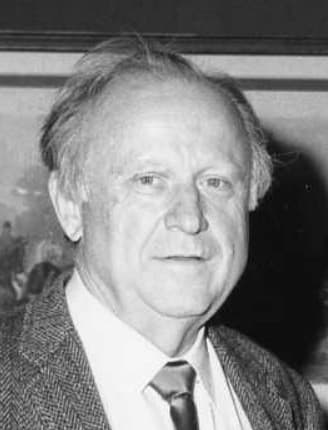
Franklin Patrick Herbert Jr. was an American science fiction author best known for the 1965 novel Dune and its five sequels. Though he became famous for his novels, he also wrote short stories and worked as a newspaper journalist, photographer, book reviewer, ecological consultant, and lecturer.







