“There are some things worth dying for. If one is not prepared to die for them, then one is not prepared to live for them.”
— Will Parker's realization about freedom and self-determination.

John Christopher (1967)
Genre
Fantasy / Children's / Science Fiction / Young Adult
Reading Time
195 min
Key Themes
See below
Sign in to track this book
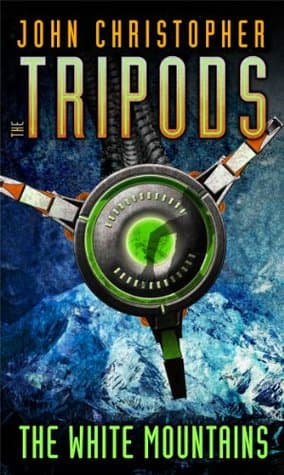
On a future Earth ruled by giant three-legged machines, a boy facing a ceremony that will steal his free will travels to the mythical White Mountains, the last place of human rebellion.
Will Parker, a thirteen-year-old boy in Wherton village, fears his upcoming Capping ceremony. In his society, the mysterious Tripods 'Cap' all adolescents when they reach adulthood. This process places a metal mesh in their skulls, making them calm and obedient to the Tripods. Will's older cousin, Henry, is already Capped and shows the typical peaceful behavior. As Will's Capping day nears, he feels a growing unease and rebellion against this set fate. This feeling gets stronger whenever he sees the Tripods themselves—huge, three-legged machines that sometimes walk across the land, uncaring and threatening.
While practicing with his slingshot in the woods, Will meets an old, uncapped man named Ozymandias, or 'Ozzie.' Unlike Capped adults, Ozzie is sharp, cynical, and knows forbidden things. Ozzie tells Will that Capping is not a natural part of growing up but a deliberate act of enslavement by the Tripods. He speaks of the White Mountains, where free men live, having escaped the Tripods' control. Ozzie encourages Will to run away before his Capping, giving the boy hope and rebellious ideas, and offers vague advice for the journey.
The night before his Capping, Will feels overwhelmed by the idea of losing his free will. Haunted by Ozzie's words, he makes the hard choice to run away. He leaves a note for his family, knowing he might never see them again, and slips out of the village in the dark. His first goal is the nearby village of Crossways, a place Ozzie had mentioned as a possible first step toward the White Mountains. The weight of his choice, the fear of the unknown, and the loneliness of his journey immediately set in, but the desire for freedom pushes him forward.
On his journey, Will meets another uncapped boy, a thin, spectacled person named Jean-Paul, whom Will calls 'Beanpole.' Beanpole is also running from his Capping. He is smart and wants freedom, despite being physically weak. They decide to travel together. Soon after, they have a shocking encounter: Will's cousin Henry, already Capped, passes them on the road. Henry, true to his Capped state, shows no recognition or emotion toward Will. This chilling scene confirms Will's decision to escape his own fate.
Will and Beanpole reach a large, ruined city, a very dangerous place where Tripods are often present. The city is a maze of broken buildings and empty streets, often patrolled by the Tripods. They see the Tripods' terrifying power firsthand when one machine easily crushes a building. The boys must use all their cleverness and stealth to avoid being seen, realizing the huge scale of the threat. They search for supplies and navigate the dangerous environment, their bond growing stronger through shared danger.
While crossing the city, Will and Beanpole meet a third uncapped boy, a sophisticated and somewhat proud French boy named Eloise. Eloise is also running from his Capping. He first dismisses Will and Beanpole's simple ways but proves resourceful and knows a lot about the world beyond their immediate experience. Despite initial disagreements, the three boys realize they need to work together to survive. Eloise's addition brings a new dynamic to the group, adding both intelligence and occasional arrogance as they continue their journey toward the distant White Mountains.
The boys find themselves in a more dangerous situation as they near the city's edge. They encounter a Tripod patrol—not just one machine, but several moving together. They are forced to hide in the ruins, barely escaping detection. The sheer size and mechanical precision of the Tripods create terror. The boys realize the constant threat they live under. This encounter highlights the ever-present danger and the pure luck needed to avoid the Tripods' watchful eyes, reinforcing the urgency of their quest for the White Mountains.
Leaving the city, Will, Beanpole, and Eloise travel through what Eloise identifies as the former country of France. They encounter different villages and local customs, observing how the Capped people live in various ways, all under the Tripods' silent rule. They learn to be careful of strangers and to rely on their wits for food and shelter. The journey is long and hard, marked by hunger, tiredness, and constant fear of discovery. Eloise's knowledge of the land and its past history proves very helpful, though his superior attitude often annoys Will and Beanpole.
The boys' journey takes a bad turn when servants of a local 'Lord' capture them. This Lord is a particularly cruel and unpredictable Capped man who rules his village harshly. The Lord forces them into servitude, making them work in his fields. He enjoys tormenting them, especially Eloise, who struggles to stay composed under such shame. This time in captivity shows the random cruelty that can exist even among Capped humans. It is a major setback, testing their resolve and pushing them to their limits.
Driven by desperation, Will, Beanpole, and Eloise plan their escape from the Lord. They carefully plan their moves, using what they know about the estate and the Lord's routine. In a tense scene, they manage to overpower their guards and flee into the night, barely avoiding recapture. This escape shows their growing resourcefulness and the strength of their combined efforts. It reinforces their determination to reach the White Mountains, no matter the obstacles.
After escaping, the boys are more determined than ever. They press on, enduring hunger, cold, and exhaustion. The landscape becomes more rugged as they approach the tall peaks of the White Mountains. The journey becomes a test of pure endurance and mental strength. They are constantly alert for Tripods or their Capped servants, knowing that one mistake could end their quest for freedom. The sight of the mountains, however far away, gives them strong hope, driving them onward.
After months of dangerous travel, the boys finally reach the foothills of the White Mountains. They find a hidden path and are eventually discovered by a patrol of free men. They are brought into a secret, underground community where other uncapped people have gathered. Here, they meet other young people who have also escaped Capping, as well as older people who remember the world before the Tripods. They are welcomed into the resistance. Their long and hard journey ends with the promise of a future free from the Tripods' control, but also the realization that the fight for true freedom is far from over.
The Protagonist
Will transforms from a fearful boy dreading his Capping into a determined and resourceful leader of the resistance, committed to fighting for freedom.
The Supporting
Beanpole overcomes his physical frailties to become a resilient and indispensable member of the group, proving intellect can be as powerful as physical strength.
The Supporting
Eloise learns humility and the value of camaraderie, shedding some of his arrogance while retaining his intellectual prowess and determination.
The Supporting
Ozzie serves as a static mentor figure, providing crucial information and motivation, but does not undergo significant personal change.
The Mentioned
Henry's arc is static, serving as a cautionary tale rather than a character with internal development.
The Antagonist
The Lord remains a static antagonist, serving as an obstacle for the protagonists to overcome.
The Antagonist
The Tripods' nature and objectives remain largely static and mysterious in this first book, serving as the primary external conflict.
The novel's main theme is the value of freedom and the right to individual thought and choice. The Capping ceremony, which removes free will, represents different forms of oppression. Will's decision to run, despite the dangers and leaving his family, shows that a life without freedom is not truly living. The journey to the White Mountains is a search for this basic right, showing the boys' strong will to protect their minds and identities against a cruel, alien force. Capped adults, like Henry, are stark examples of the alternative, highlighting the tragic loss of self.
“Better to die free than live as a slave.”
The journey Will, Beanpole, and Eloise take is a classic coming-of-age story. Each boy, on the edge of adulthood, must face huge challenges that test their courage, resourcefulness, and understanding of the world. Will changes from a scared village boy into a leader, learning to trust his instincts and make hard choices. Beanpole finds his own strength and the power of his mind, while Eloise loses some of his arrogance, learning the value of friendship and modesty. Their shared experiences create a strong bond and shape their identities, preparing them for the bigger fight ahead in the resistance.
“He knew that he had chosen his own path now, and there was no turning back.”
The novel explores different ways and reasons for resisting an overwhelming oppressive force. From Ozzie's lone defiance and the hidden community in the White Mountains to the boys' individual acts of rebellion, the story supports fighting for what is right, even when success seems impossible. The Tripods represent a seemingly unbeatable power. However, the existence of uncapped individuals and the group efforts to reach the White Mountains show that resistance, even in small groups, can last and grow. The theme suggests that hope for freedom can never be fully put out as long as people are willing to fight for it.
“There are others, boy. Men who have not been touched by the Tripods. Men who remember.”
Knowledge, especially about the past and the true nature of the Tripods, is a key weapon against oppression. Ozymandias's information about the Capping and the White Mountains first empowers Will. Beanpole's love for books and Eloise's understanding of old world geography and culture provide important information and perspective during their journey. The Tripods' system relies on ignorance and erasing history. This makes remembering and sharing knowledge a rebellious act. The free men in the White Mountains actively keep knowledge alive, seeing it as essential for eventually overthrowing their alien rulers.
“They don't want us to know. They want us to forget everything that was.”
A mandatory ritual that implants a device in the skull, removing free will.
The Capping is the central plot device, serving as the primary antagonist's method of control and the catalyst for the protagonist's journey. It is a terrifying ritual that transforms free-thinking individuals into docile, obedient servants of the Tripods by implanting a metallic mesh in their brains. This device creates immediate stakes for Will and the other uncapped boys, as their escape is directly motivated by avoiding this irreversible process. It symbolizes the ultimate loss of individuality and autonomy, making the quest for the White Mountains a desperate fight against mental enslavement.
A mythical refuge for free men, symbolizing hope and freedom.
The White Mountains function as a classic MacGuffin and a powerful symbol. Initially, they are a vague, almost mythical destination, a whispered hope for those who resist the Tripods. As the story progresses, they become the concrete goal of the protagonists' journey, representing the promise of freedom, community, and resistance. The arduous journey towards them builds suspense and demonstrates the boys' commitment to their cause. Upon arrival, they become a literal sanctuary, a place where free will and independent thought are preserved, offering a glimmer of hope for humanity's future.
Mysterious, colossal alien machines that enforce human subjugation.
The Tripods themselves are a powerful plot device, representing the oppressive, alien force. Their infrequent appearances serve to remind the characters and the reader of the constant, overwhelming threat. Their mechanical indifference and immense power create a sense of dread and helplessness, highlighting the seemingly insurmountable odds facing humanity. They are largely mysterious in this first book, their motives and origins only hinted at, which adds to their terrifying presence and establishes them as the ultimate, formidable antagonist that the free men must eventually confront.
A perilous physical and emotional journey that shapes the protagonists.
The entire novel is structured as a classic quest narrative. Will's journey, joined by Beanpole and Eloise, is a long and perilous trek across a post-apocalyptic landscape. This device allows for the introduction of various challenges, secondary characters, and new settings, all of which contribute to the protagonists' character development and the unfolding of the world-building. The journey tests their physical endurance, mental fortitude, and strengthens their bonds, transforming them from naive boys into hardened, resourceful young men prepared for the fight for freedom.
“There are some things worth dying for. If one is not prepared to die for them, then one is not prepared to live for them.”
— Will Parker's realization about freedom and self-determination.
“The Tripods. That was the name they gave themselves. We gave them no name, because there was no need to name something that was simply there, like the sky or the earth.”
— Will's initial understanding of the alien overlords.
“It was what they called the Capping. The time when a boy became a man, and had the iron cap put on his head, and was forever after protected from the sun, and from all the evil thoughts that came with it.”
— Description of the Capping ceremony.
“The things that made a man a man were not in his body, but in his mind.”
— Will's internal reflection on identity.
“It was better to die free than to live a slave.”
— Will's growing resolve to escape.
“The world was a cage, and the bars were invisible.”
— Will's realization about the extent of the Tripods' control.
“To be different was to be dangerous.”
— The societal pressure to conform under Tripod rule.
“We were trained to be happy. That was the terrible thing about it.”
— Will reflecting on the false contentment of the Capped.
“Knowledge was the one thing they could not cap.”
— Will's understanding of the power of information.
“The further you went, the more you saw, and the more you saw, the less you understood.”
— Will's journey of discovery and the complexity of the world.
“There was a world beyond the Capping, a world of choice and danger, and that was the world I wanted to find.”
— Will's declaration of purpose.
“They had taken away our minds, but not our spirits.”
— Will's hope for humanity's resilience.
“It was not enough to merely exist; one had to live.”
— Will's philosophical reflection on true existence.
“The mountains called to me, not with a voice, but with a promise.”
— Will's motivation to seek the free men in the White Mountains.
Ready to see how well you understood this book? Take our interactive quiz with 10 questions.
Biography coming soon.







